Tony Matelli’s Sideways Dinner Turns the Everyday Uncanny
At MARUANI MERCIER in Knokke, the New York-based artist makes flowers, tableware and his own body behave in ways the physical world should not allow.
Imagine the end of a dinner, then rotate the room ninety degrees.
Plates, bottles and glasses remain gathered together, but the table has disappeared. Instead of settling into the horizontal order of a still life, the remains of the meal stand upright, forming an improbable sculptural relief. The gathering appears to be over, yet its objects refuse to move on.
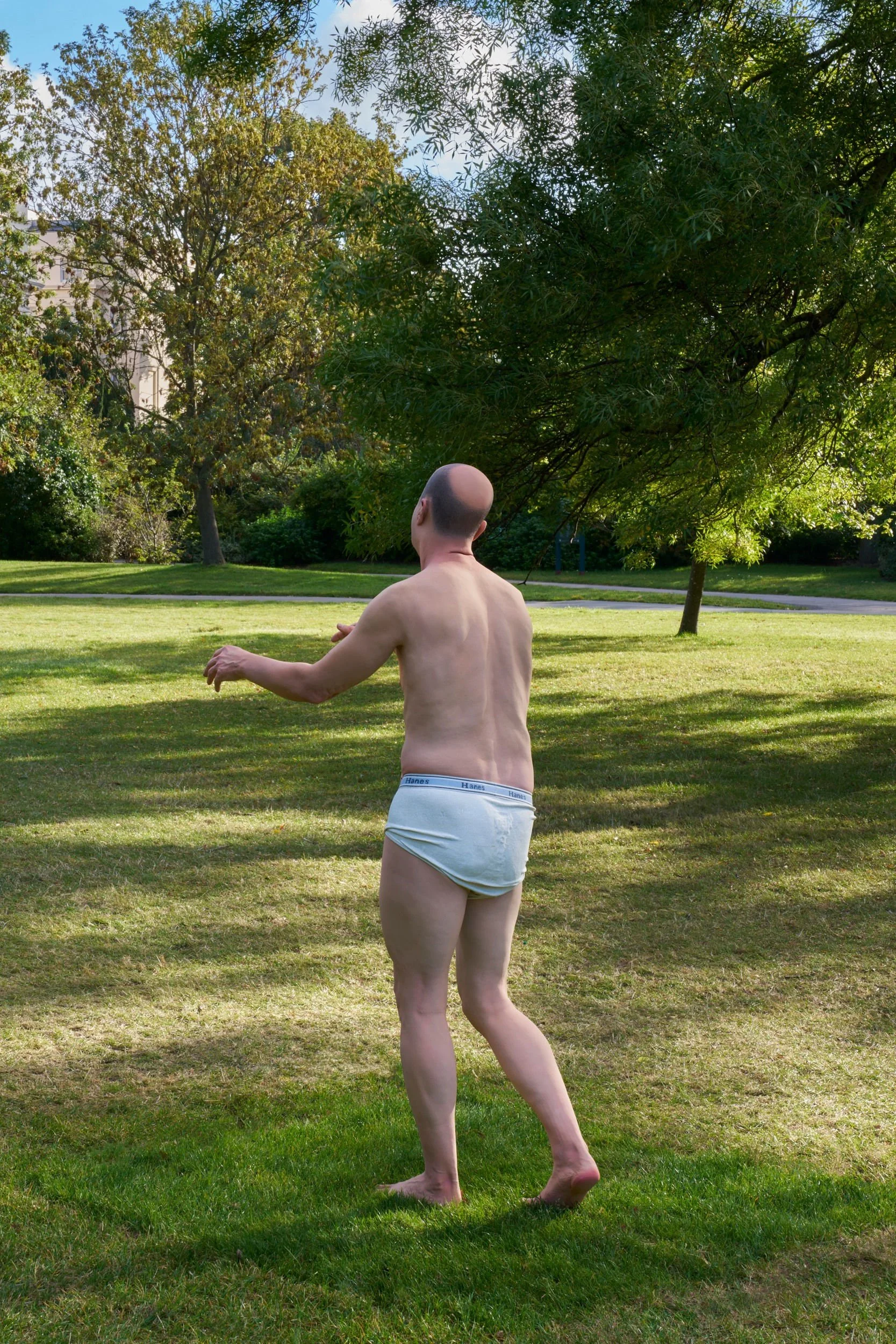
This is the disorientating invitation behind Tony Matelli’s Sideways Dinner, opening at MARUANI MERCIER in Knokke on 8 August 2026. Across new sculptures, painted-bronze flowers, weeds and an extraordinary life-size self-portrait, Matelli takes familiar things and shifts them just far enough from reality to make certainty feel unreliable.
The effect is comic at first. Then the unease begins.
A still life after gravity
The exhibition takes its name from a new sculpture in which the traces of a shared meal have been tipped upright. Dinner plates, bottles and glasses become a kind of three-dimensional picture plane: recognisable as the residue of human company, but detached from the gestures and functions that normally give those objects meaning.
Still-life painting has always dealt with time. Fruit ripens, flowers fade and an abandoned glass suggests that someone has just left the room. Matelli extends that tradition by making time appear physically suspended. Nothing falls, spills or decays. The scene has been preserved at the exact point where familiarity becomes impossible.
His realism works like delayed information. Recognition arrives first; doubt follows half a second later.
Matelli draws upon readymade objects but reconstructs them through materials including bronze, silicone and resin. Surfaces appear completely persuasive, while weight, function and behaviour tell a different story. What looks temporary may be permanent. What looks delicate may be metal. What appears casually left behind has been meticulously made.
Flowers that refuse their season
That tension becomes especially vivid in Matelli’s Arrangements and Weeds.
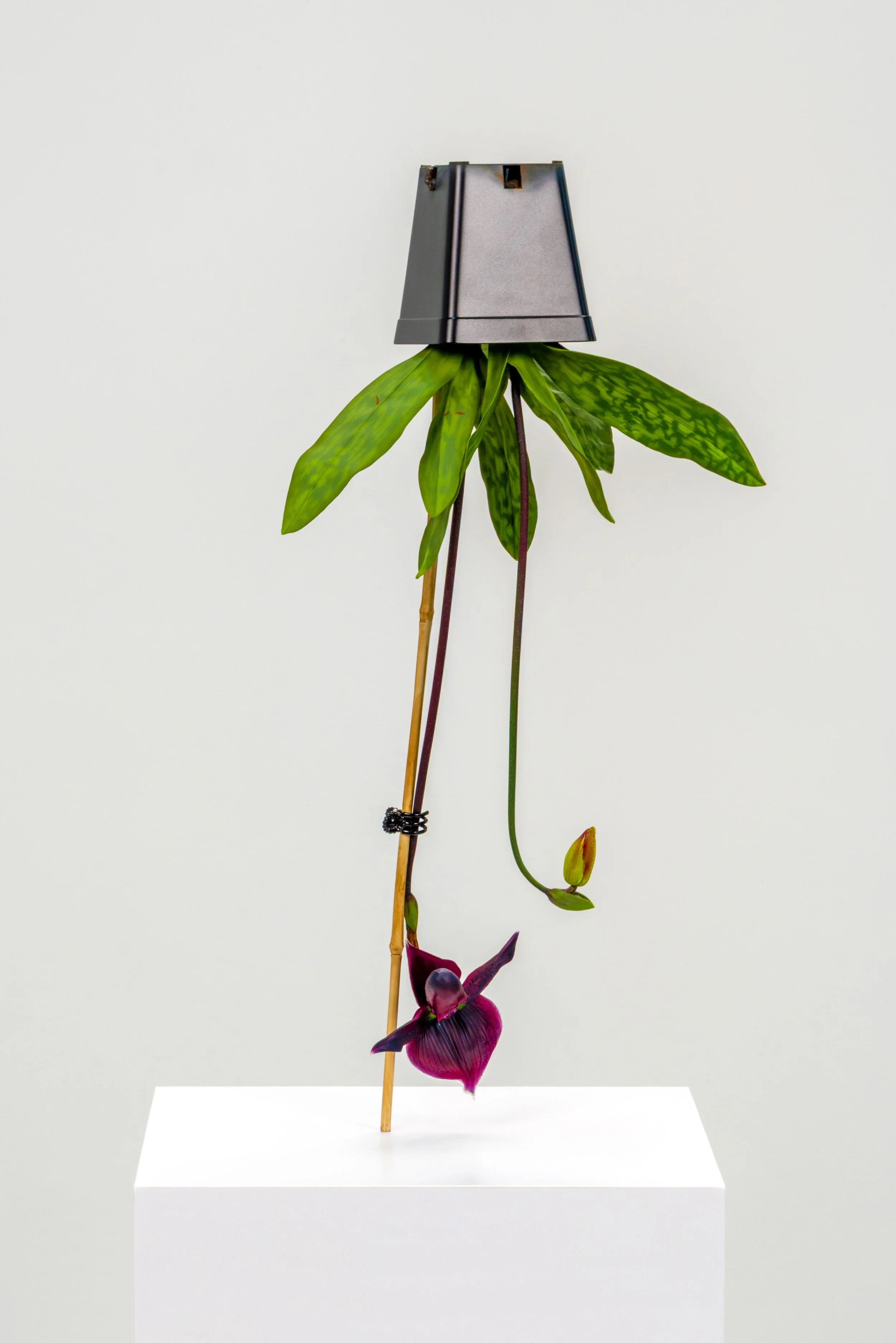
In Arrangement (658), a deep-purple orchid hangs upside down from a single bamboo support. Its leaves, stem and bloom appear vulnerable to the slightest movement, yet the sculpture is executed in painted bronze, stainless steel and resin. Material strength disguises itself as botanical fragility.
The work does more than demonstrate technical precision. By reversing the flower’s orientation, Matelli removes it from the familiar language of decoration. It becomes less like a bouquet and more like an idea of one: a mental image made physical, held between growth and collapse.
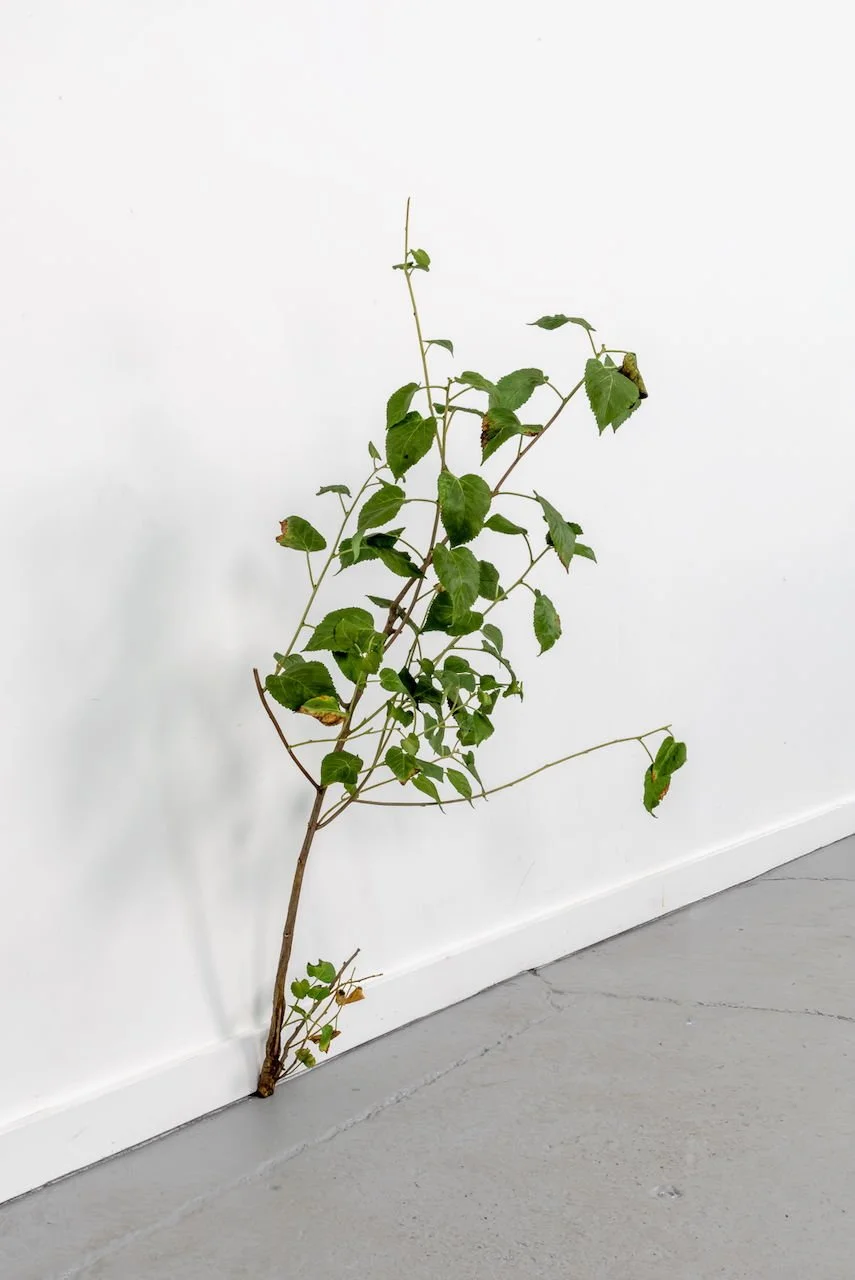
His weeds perform a related reversal. Ordinarily unwanted and overlooked, they are reproduced with the care associated with precious objects. In Weed 830, an unruly plant climbs upwards as though it has discovered a crack in the gallery itself. Painted bronze assumes the appearance of soft leaves and uncertain stems, giving permanence to something normally pulled from the ground and discarded.
Matelli does not monumentalise nature in a heroic sense. He pays attention to the things that survive at the edges.
The body, slightly out of joint
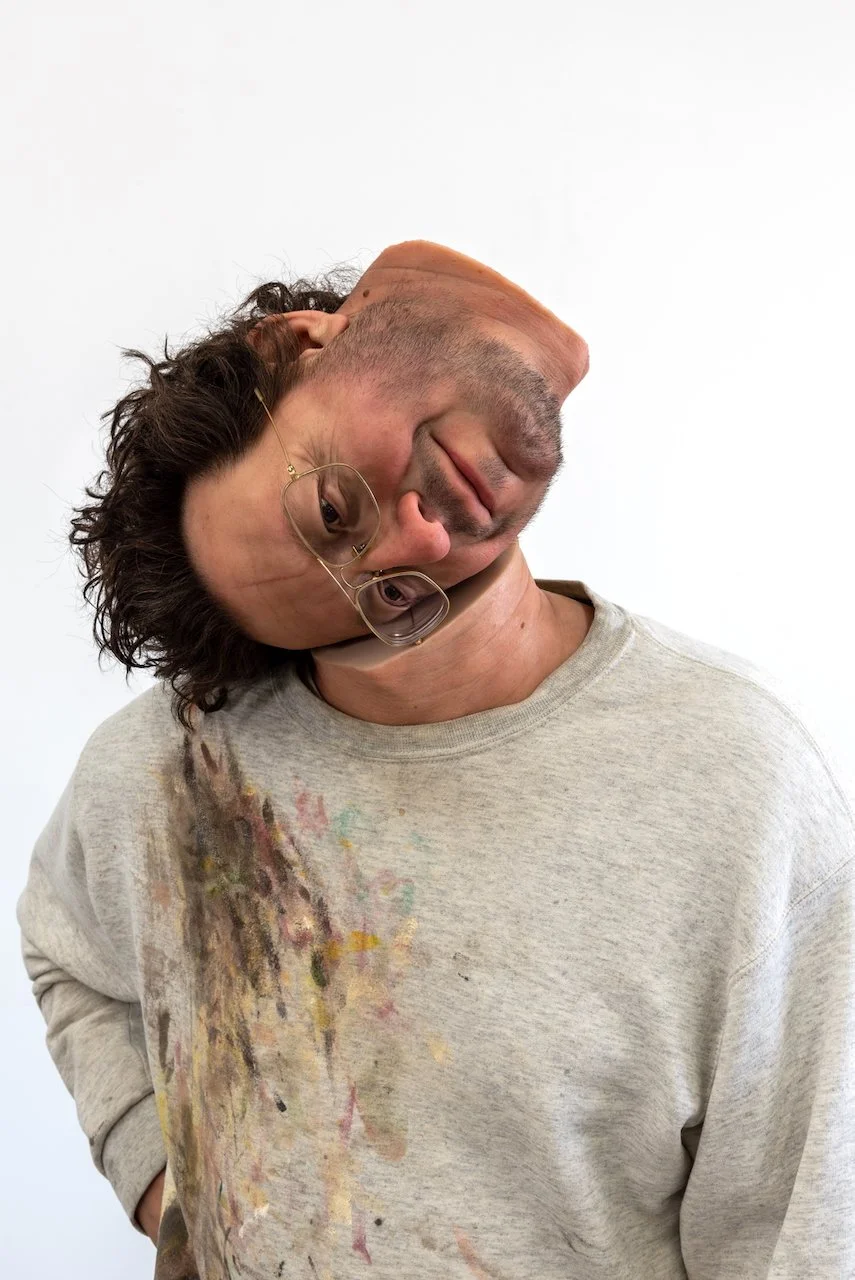
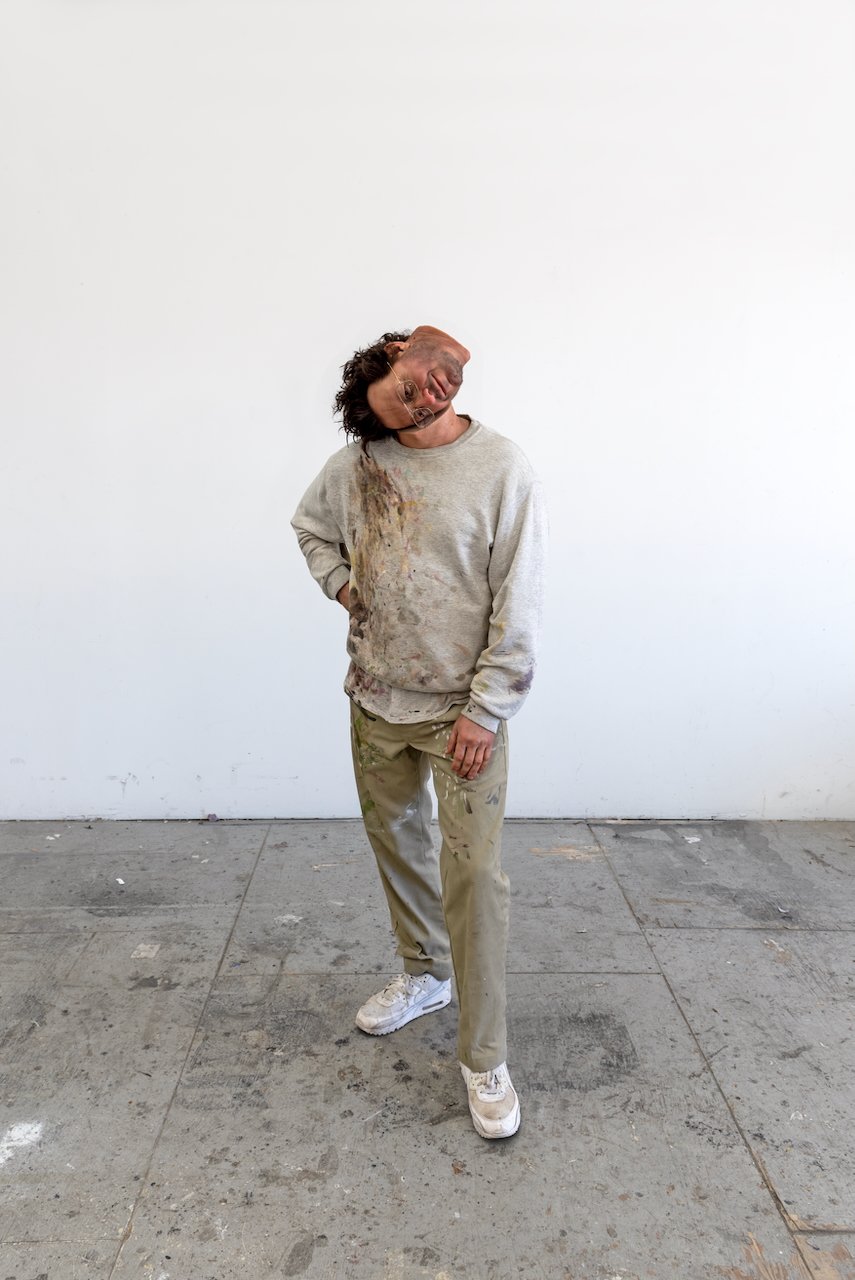
The exhibition’s emotional centre may be Matelli’s life-size self-portrait, Arrangement (548).
The figure wears the artist’s actual studio clothes and stands in a relaxed contrapposto pose associated with classical Greek sculpture. Yet any suggestion of composure is disrupted by the head, twisted away from the body and resting sideways against the shoulder.
It is a startling image, but also a deeply deadpan one. The artist appears present and absent at once: physically convincing, psychologically elsewhere.
The sculpture turns the philosophical separation of mind and body into something literal. Its craftsmanship insists that the figure is real, while its anatomy makes that reality impossible. The result is not simply grotesque or humorous. It captures the familiar experience of feeling out of alignment with oneself of inhabiting a body while the mind seems to have moved somewhere else.
What remains after the table is cleared
Sideways Dinner is ultimately an exhibition about things that resist their expected ending.
A flower refuses to wilt. A weed becomes permanent. A body separates from its own logic. The remains of a dinner outlive the people who gathered around it.
Together, these works create a world in which the everyday has been moved sideways—not far enough to become fantasy, but just enough to reveal how strange reality already is.
Exhibition details
Tony Matelli: Sideways Dinner
8 August–6 September 2026
Public opening: Saturday 8 August, 4–8pm, in the presence of the artist
MARUANI MERCIER — Knokke Kustlaan
Kustlaan 90
8300 Knokke, Belgium
View the official exhibition information.
Images © Tony Matelli. Courtesy of the artist and MARUANI MERCIER, Belgium.