HUMBLE Selects: Three Names From Fashion Scout’s Ones To Watch Edition 03
BAM-BAM, Yukito Lim and Raxada move between wearable art, material memory and regional craft in three distinct visions of emerging fashion.
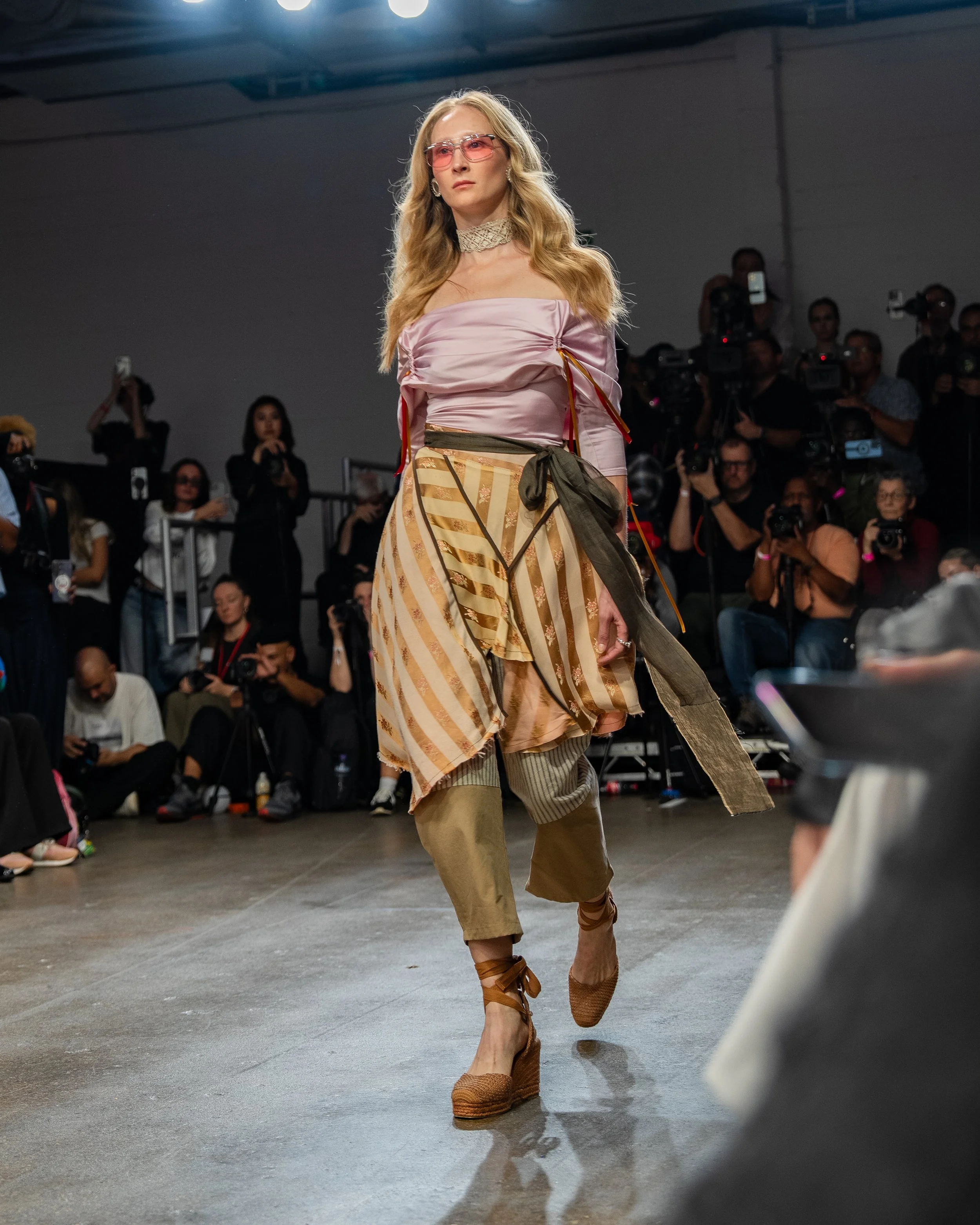
Fashion Scout closed its Ones To Watch programme on Sunday 20 September during its 20th anniversary London Fashion Week season. Edition 03 brought a new group of emerging designers to its Shoreditch runway, but three caught HUMBLE’s attention for very different reasons: BAM-BAM, Yukito Lim and Raxada.
What connects them is not a shared aesthetic. It is the insistence that clothes can carry something beyond silhouette. For BAM-BAM, fashion begins with drawing and self-expression. Yukito Lim reconstructs garments around memory and displacement, while Raxada looks towards the mythology, landscape and craft traditions of Asturias.
BAM-BAM: From drawing to body
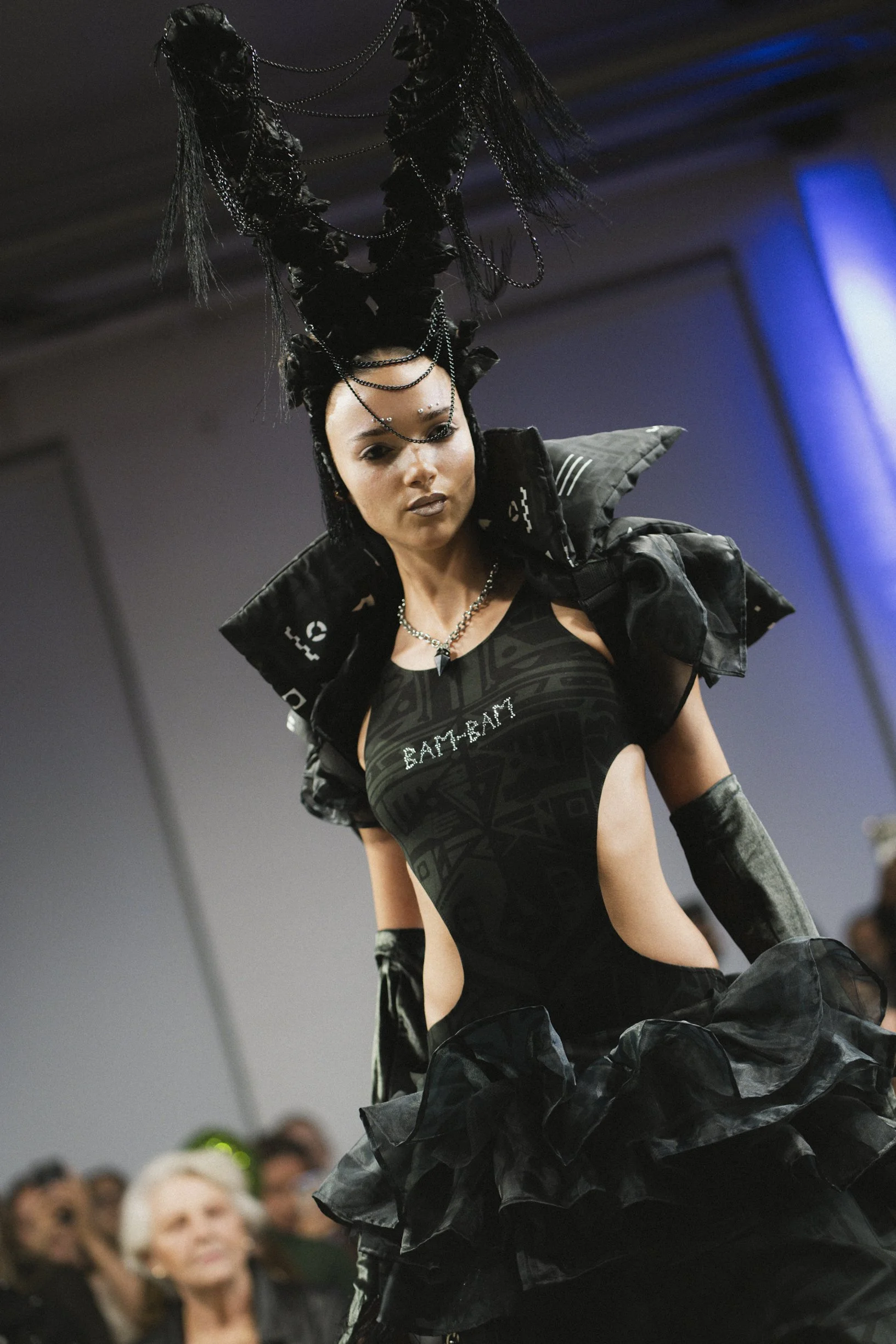
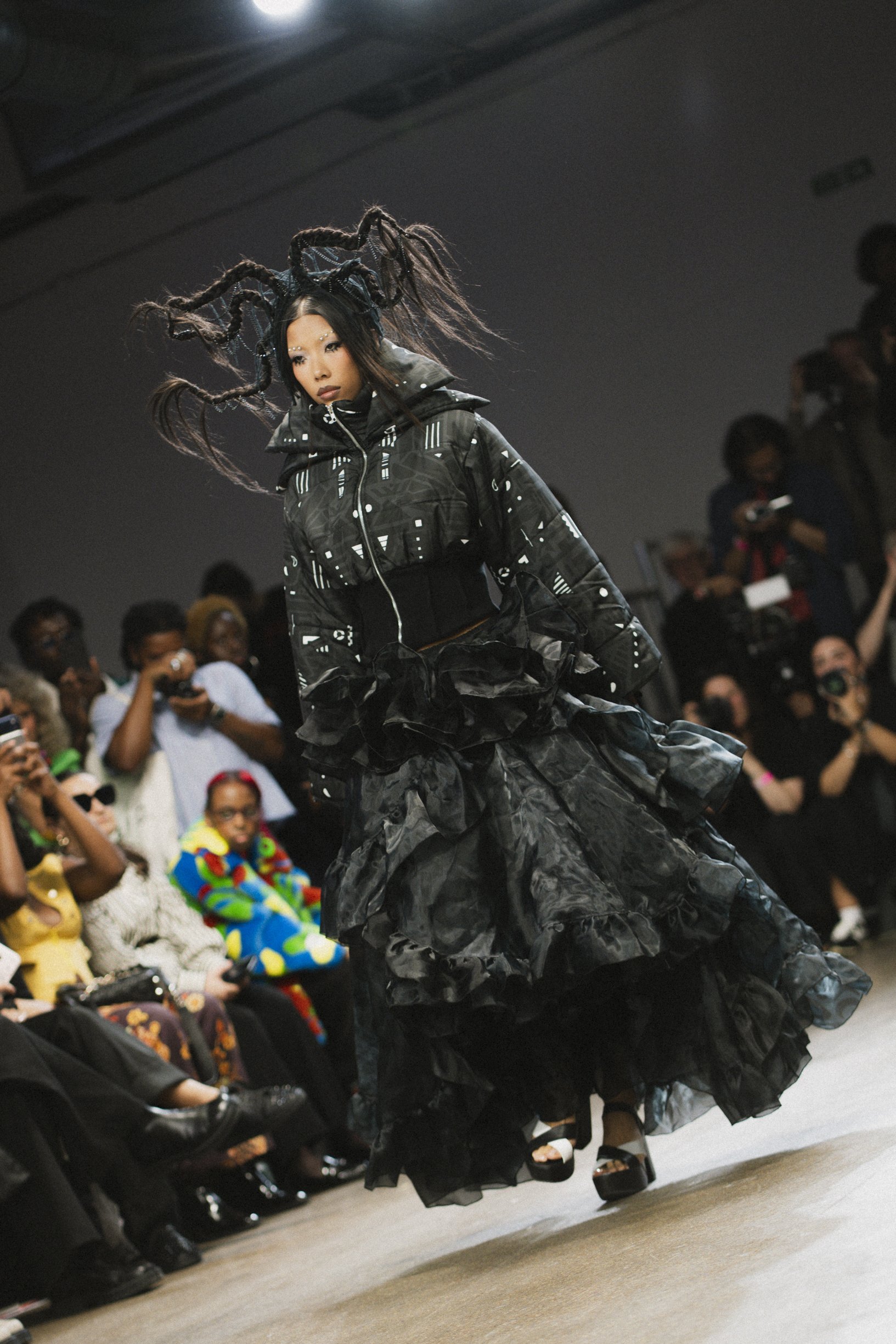
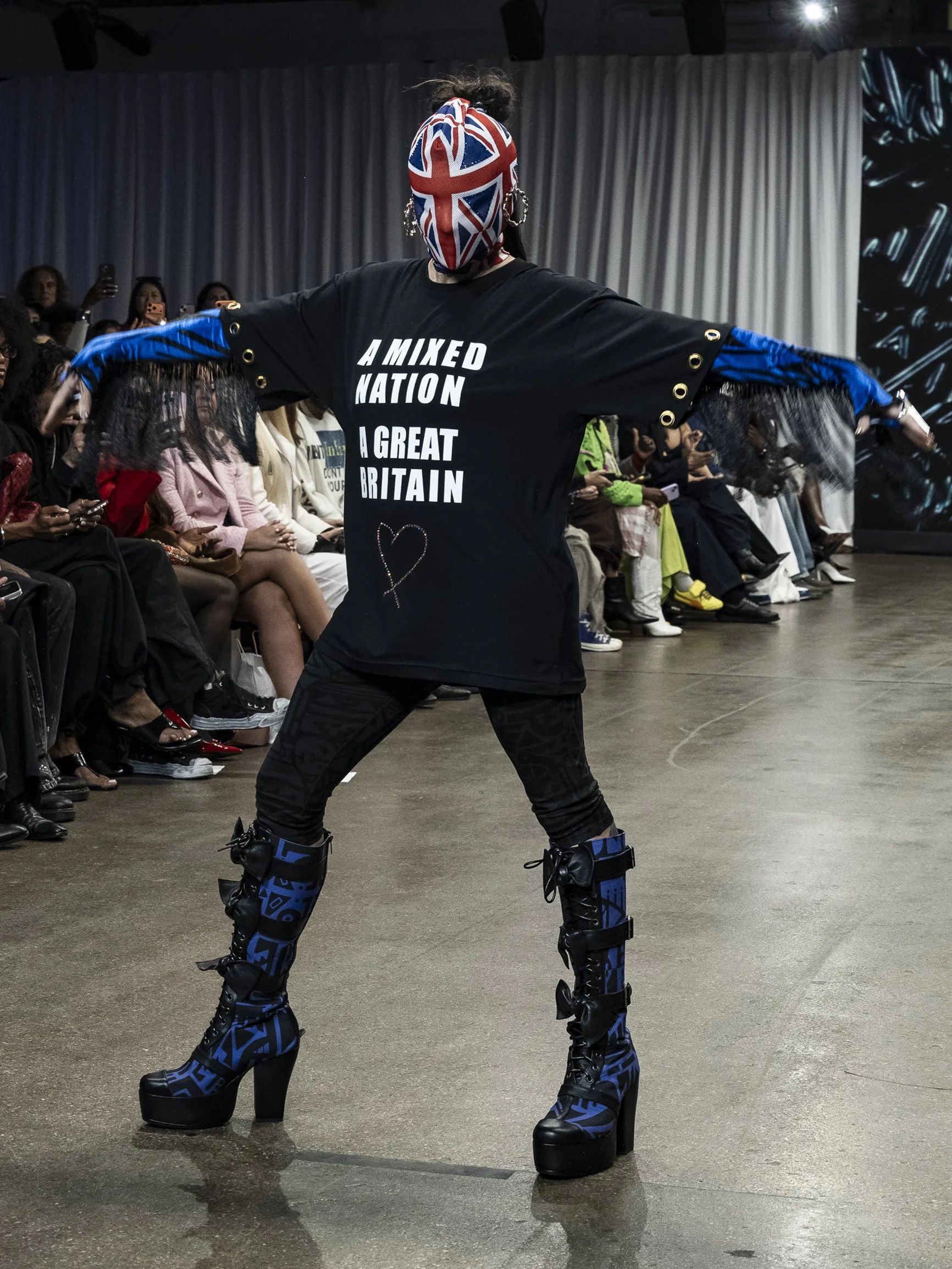
That is the starting point for BAM-BAM, whose visual language develops from hand-drawn illustrations described by the label as Abstract Cubist Patternism. Those drawings are transformed into textile designs before moving onto the body through loose tailoring, streetwear silhouettes and highly recognisable patterns. The process makes an important distinction. Pattern is not being added as decoration at the end of the design. It is where the clothes begin.
BAM-BAM describes its work as wearable art, but the idea becomes more convincing through the relationship between image and movement. These are clothes intended to be inhabited rather than simply observed, moving between shirts, trousers, kimonos, sportswear and more gender-fluid forms with an emphasis on freedom and individuality.
There is also a slower production story underneath the visual immediacy. The mixed-heritage British label, now based in Indonesia, works with a small artisan team, while much of its clothing uses bamboo, cotton and linen fabrics and hand-screen-printed textiles.
Yukito Lim: Clothes remember things
Where NMCG begins with inherited symbolism, Yukito Lim begins with the object itself.
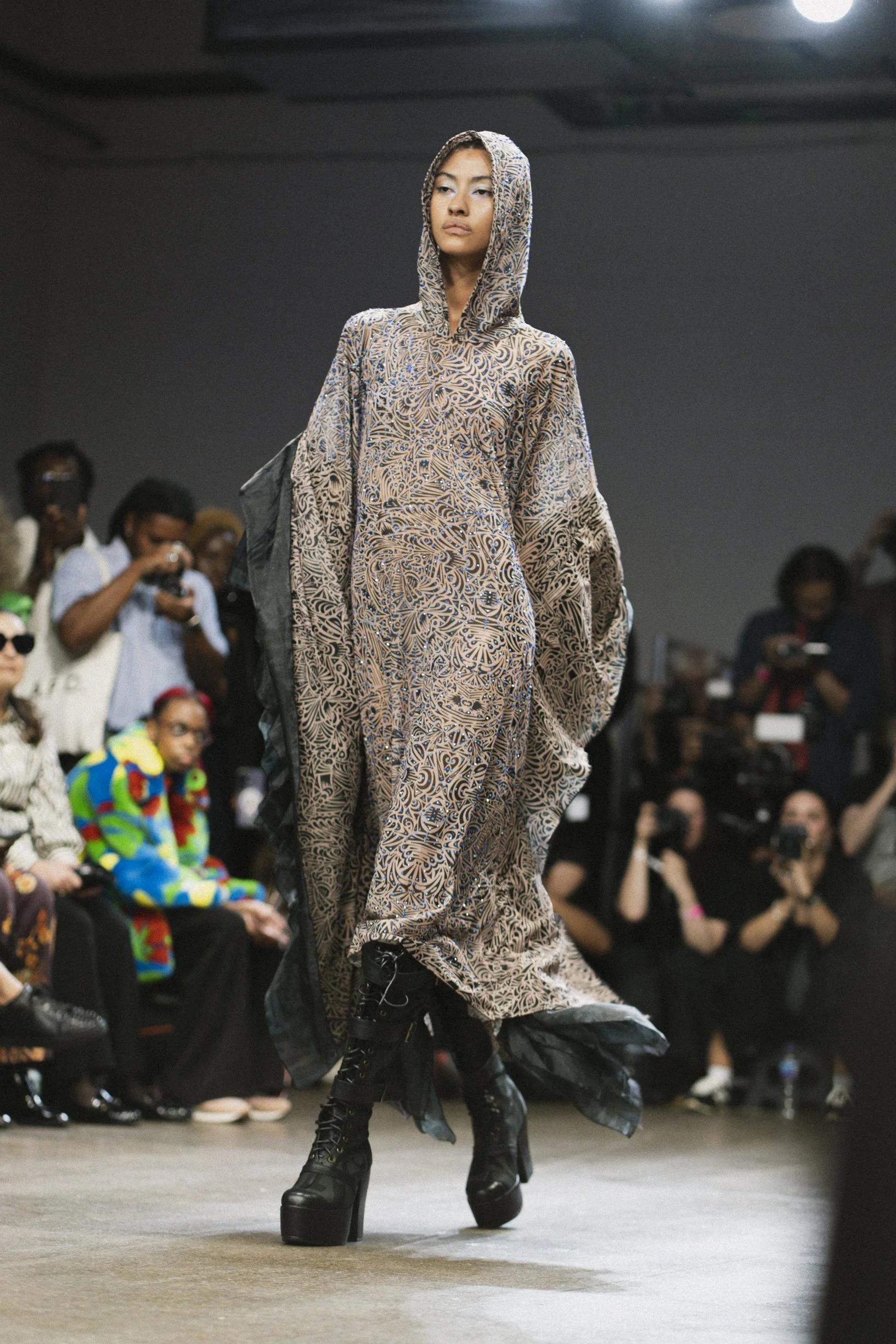
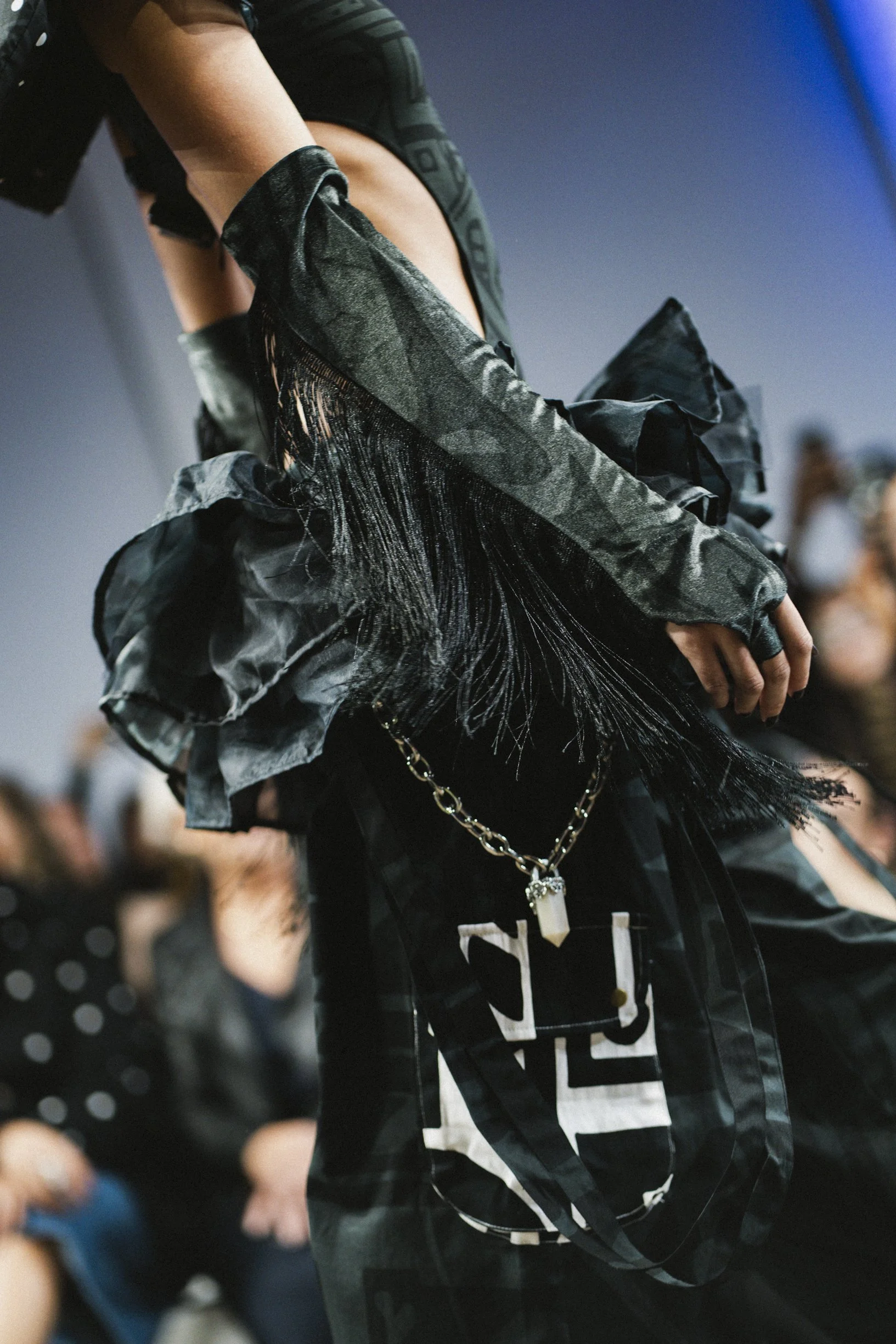
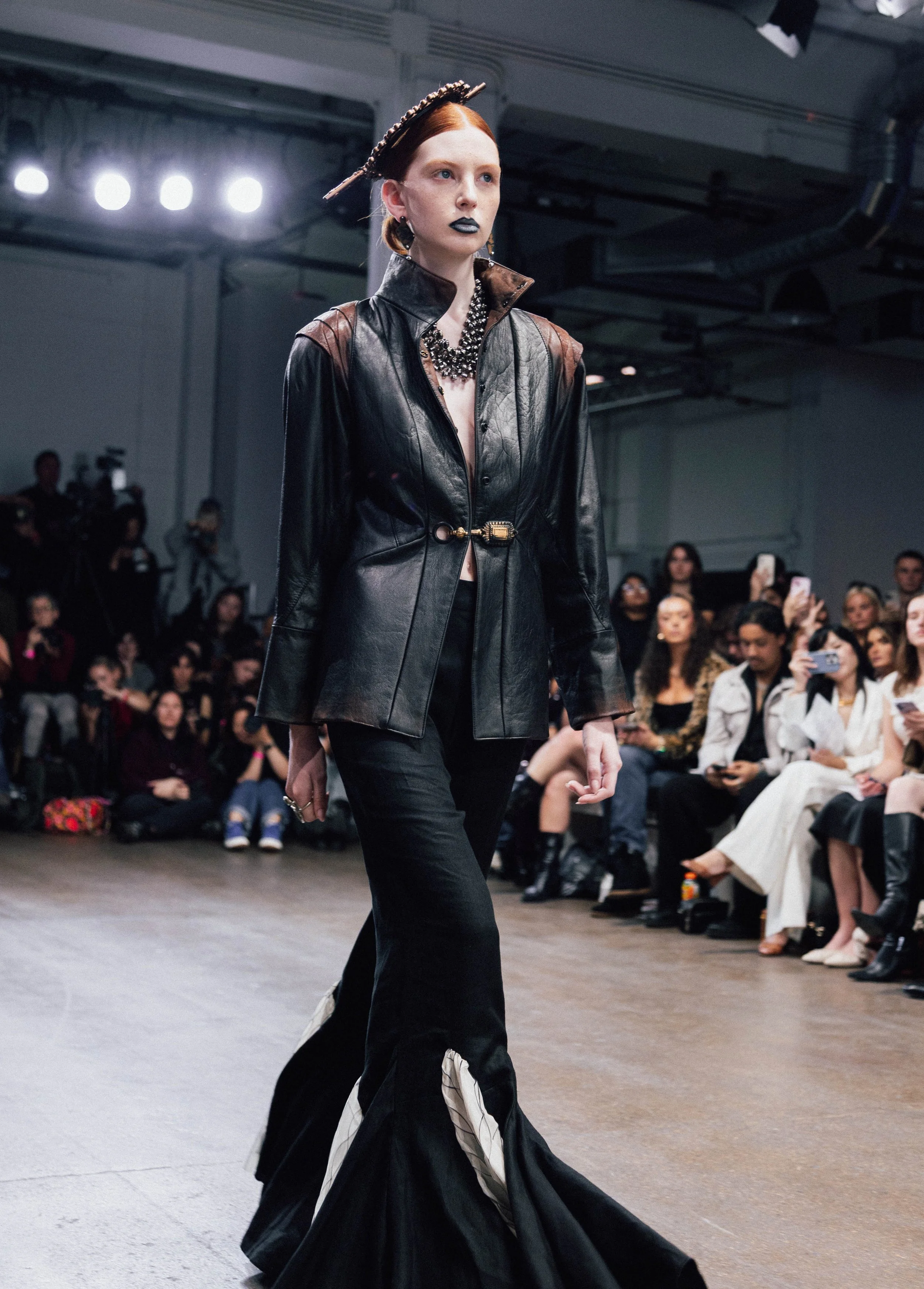
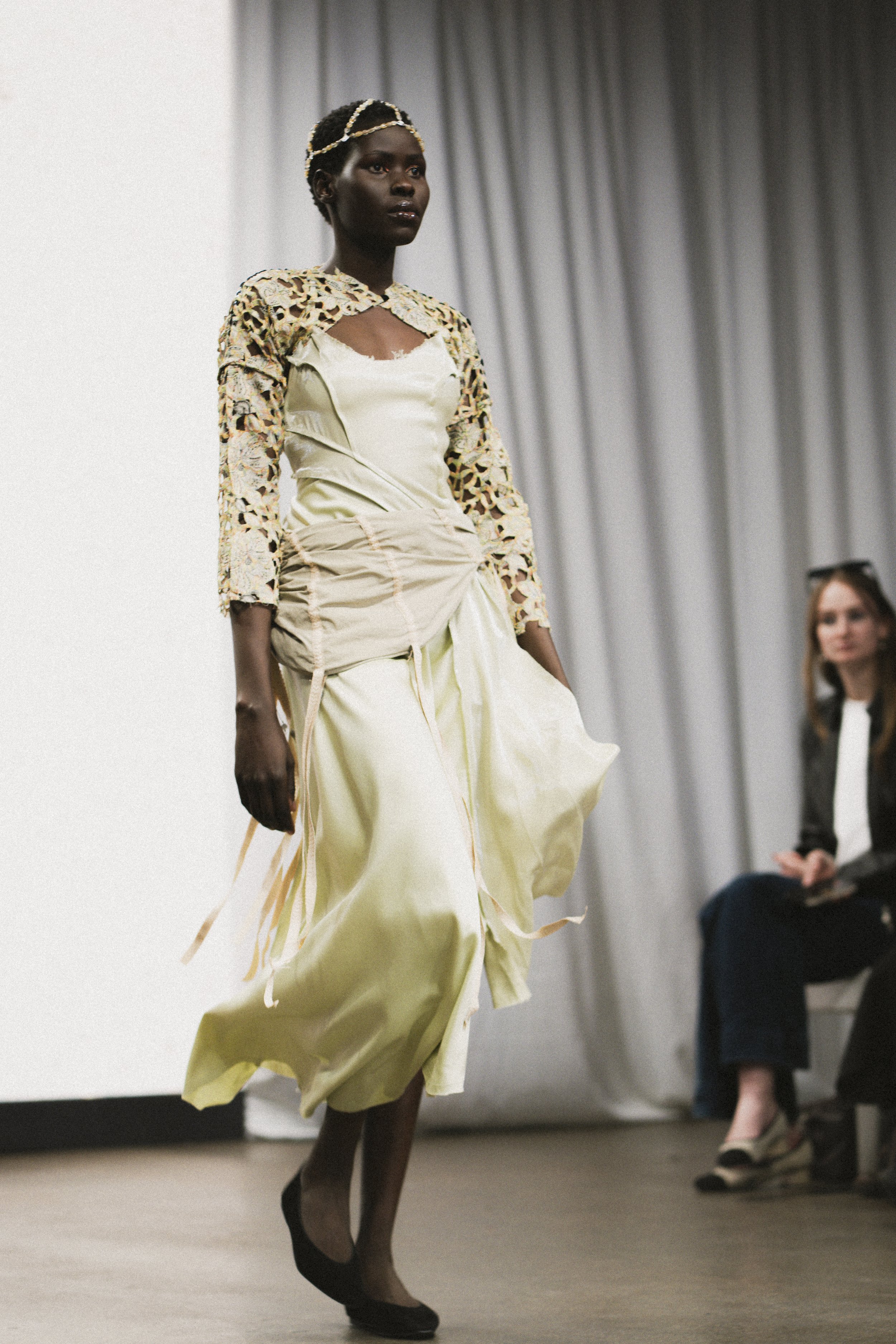
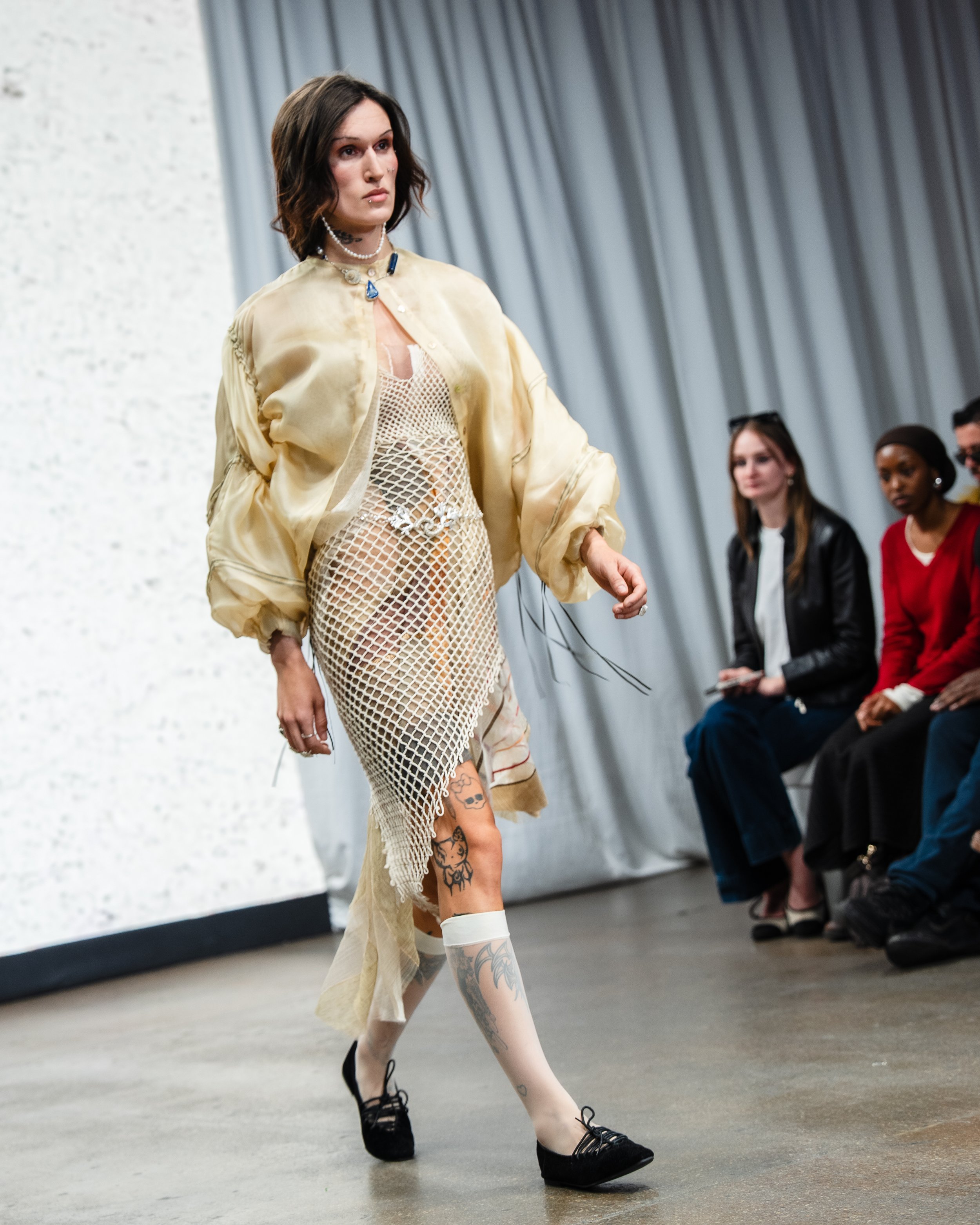
The London-based designer works with deadstock textiles, second-hand clothing and discarded materials, reconstructing them through techniques including deconstruction, embroidery, knitting, printing and laser cutting. Crucially, the transformation does not necessarily erase what came before. Marks, surfaces and fragments of a garment's previous existence are often deliberately retained. It changes the conversation around reuse.
Rather than sustainability functioning as an external justification for the collection, the history of the material becomes part of its emotional language. An old garment does not arrive as an empty resource. It has already belonged somewhere.
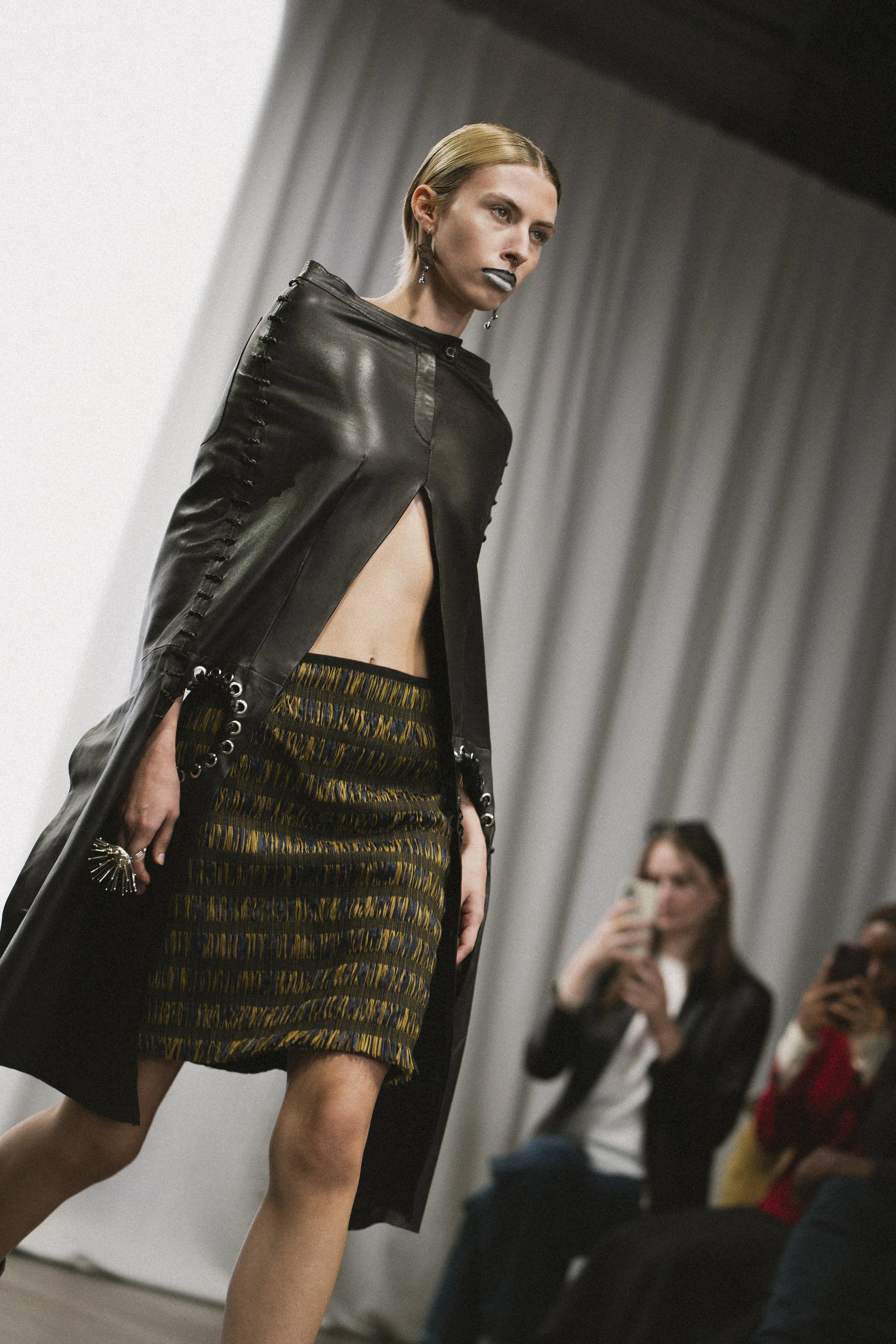
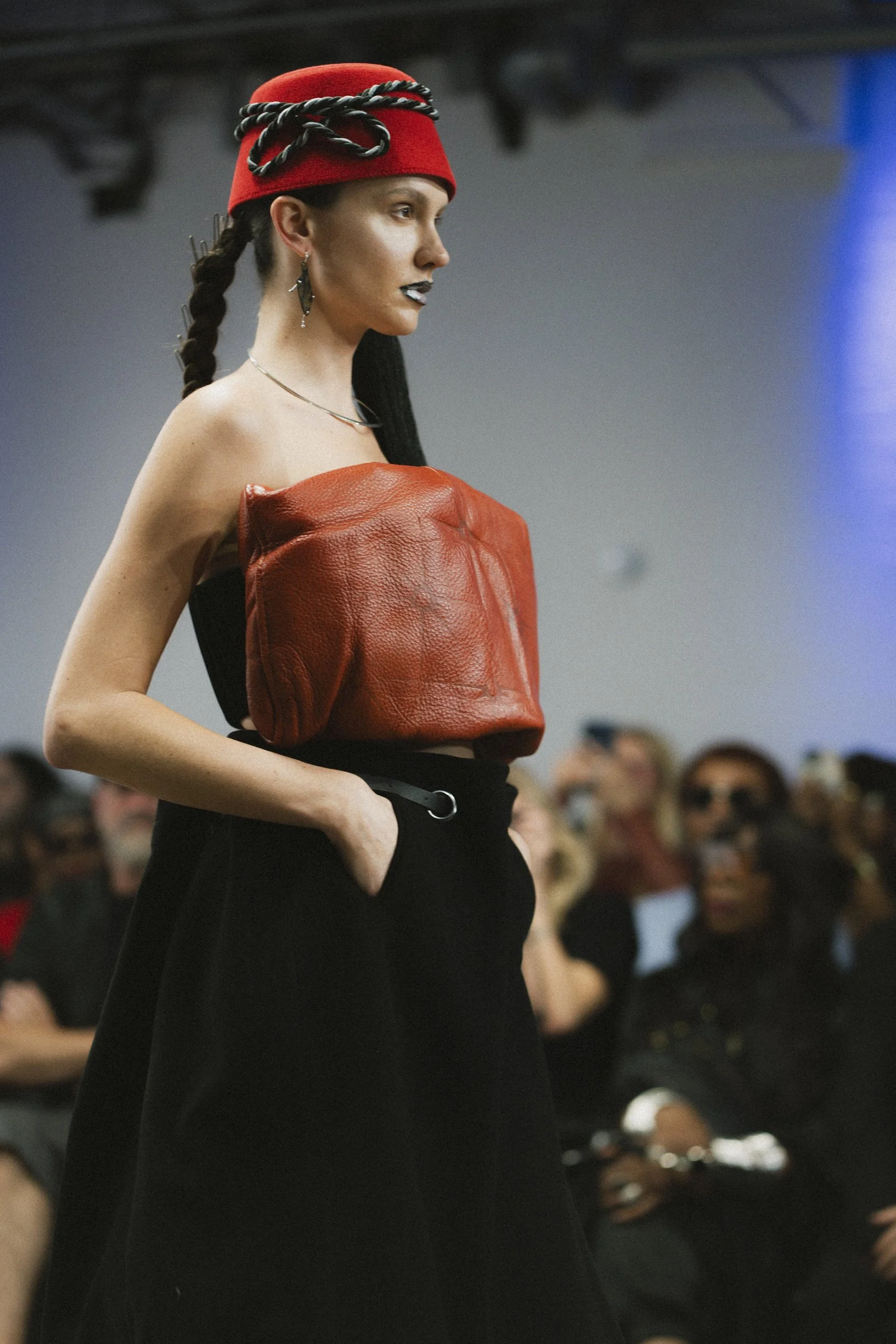
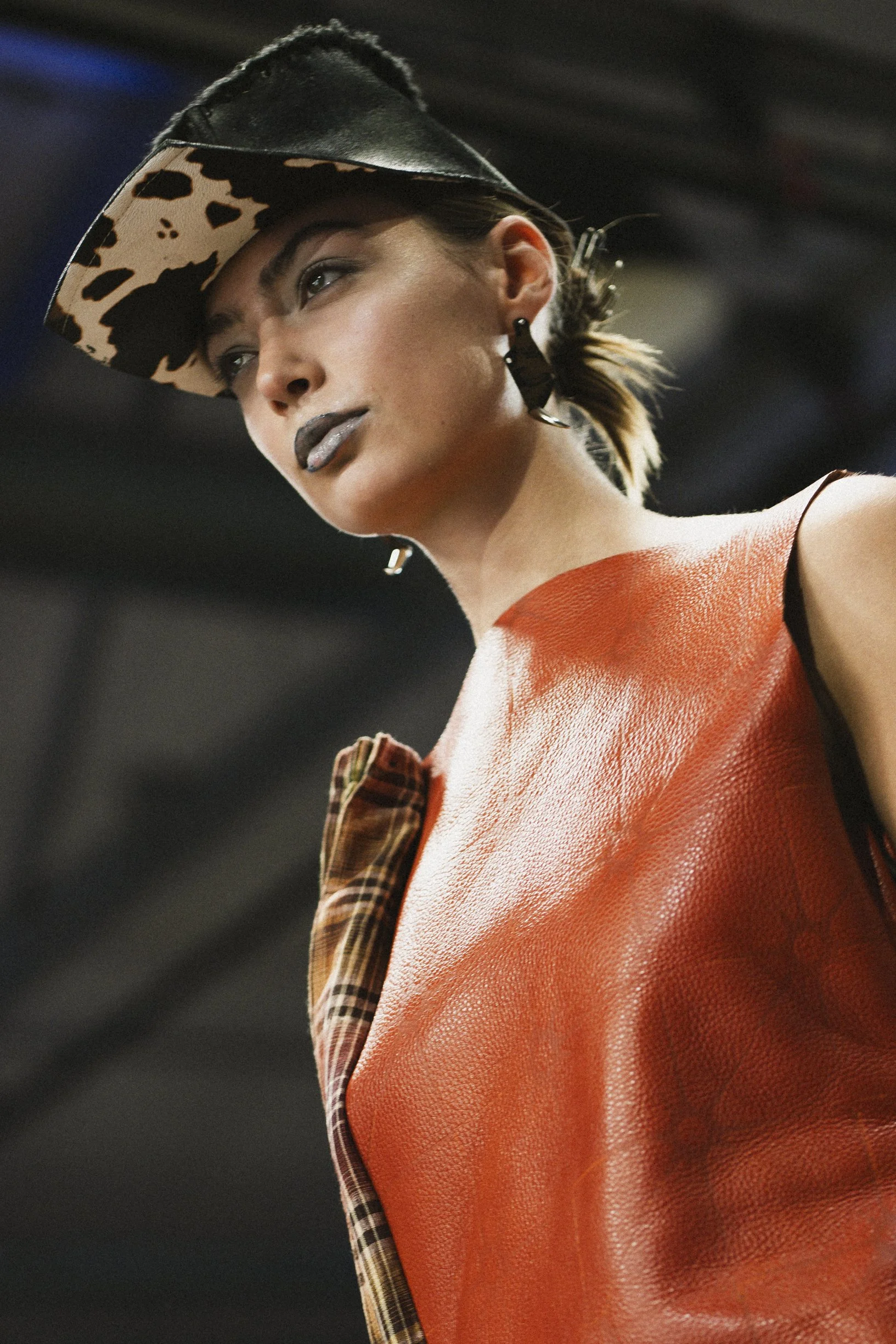
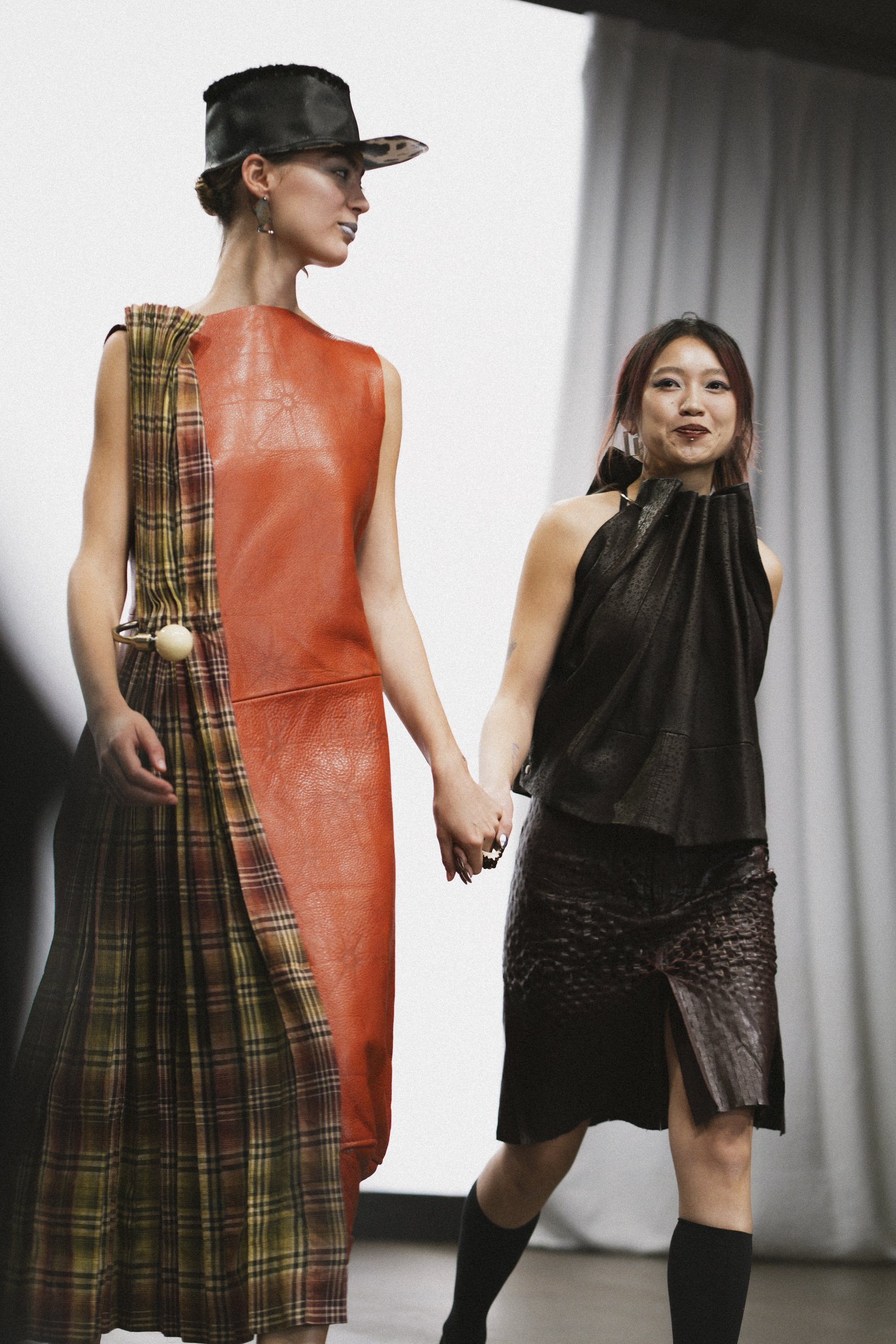
Lim connects this approach with questions of memory, identity and displacement, producing sculptural silhouettes in which reconstruction becomes both technique and metaphor. The designer also presented at Beijing Fashion Week in March 2026, extending a practice that already moves between different geographic and cultural contexts.
At a point when "upcycling" can easily become another fashion keyword, Yukito Lim's work suggests a more interesting possibility: that using existing material can fundamentally alter the story a garment is capable of telling.
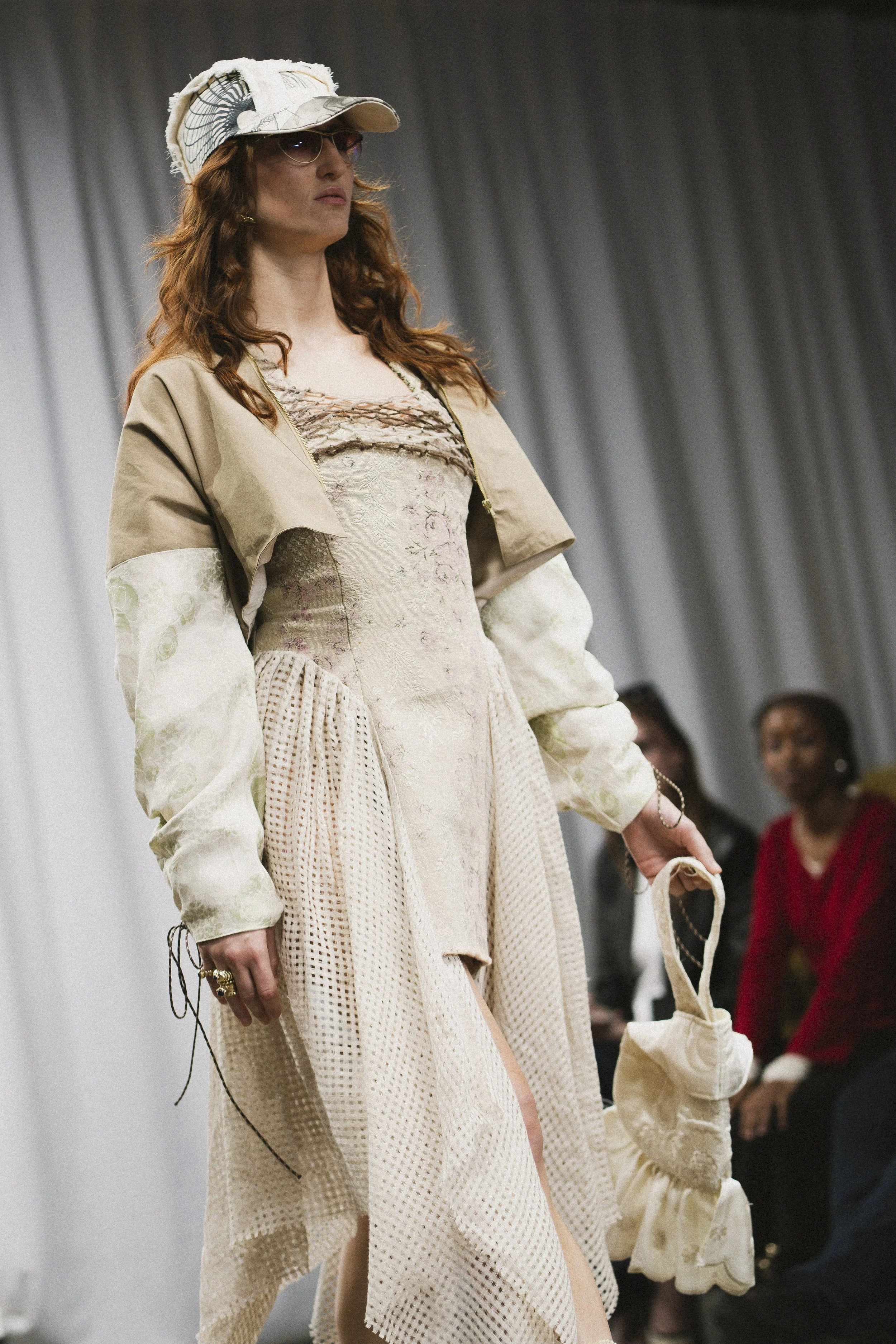
Raxada: Making from a place
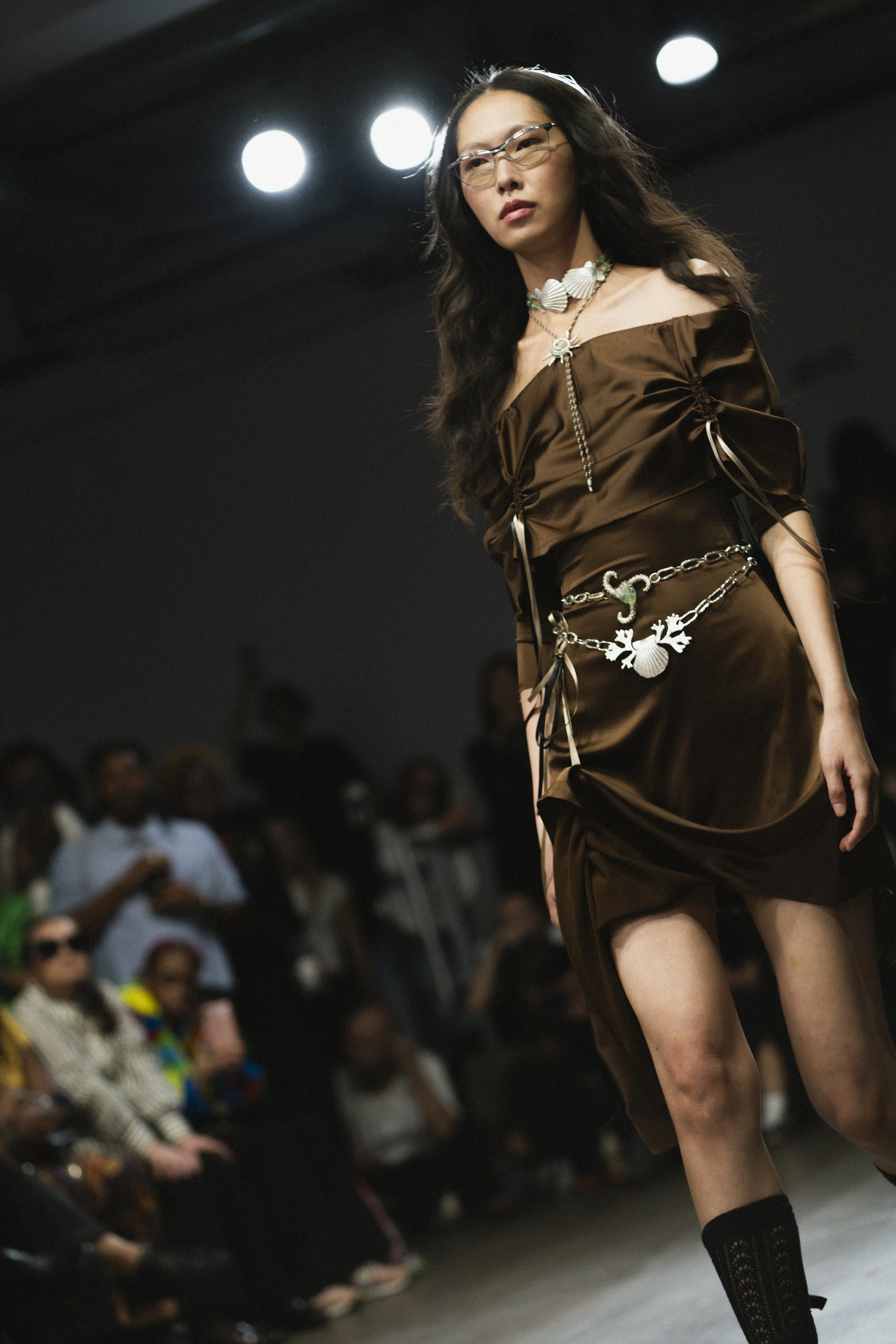
Founded by María Puente Silva and Marina Palacio Silva, the independent label builds its world around Asturias in northern Spain, drawing from its landscapes, mythology, oral histories and craft traditions. The name itself translates as a "ray of sun".
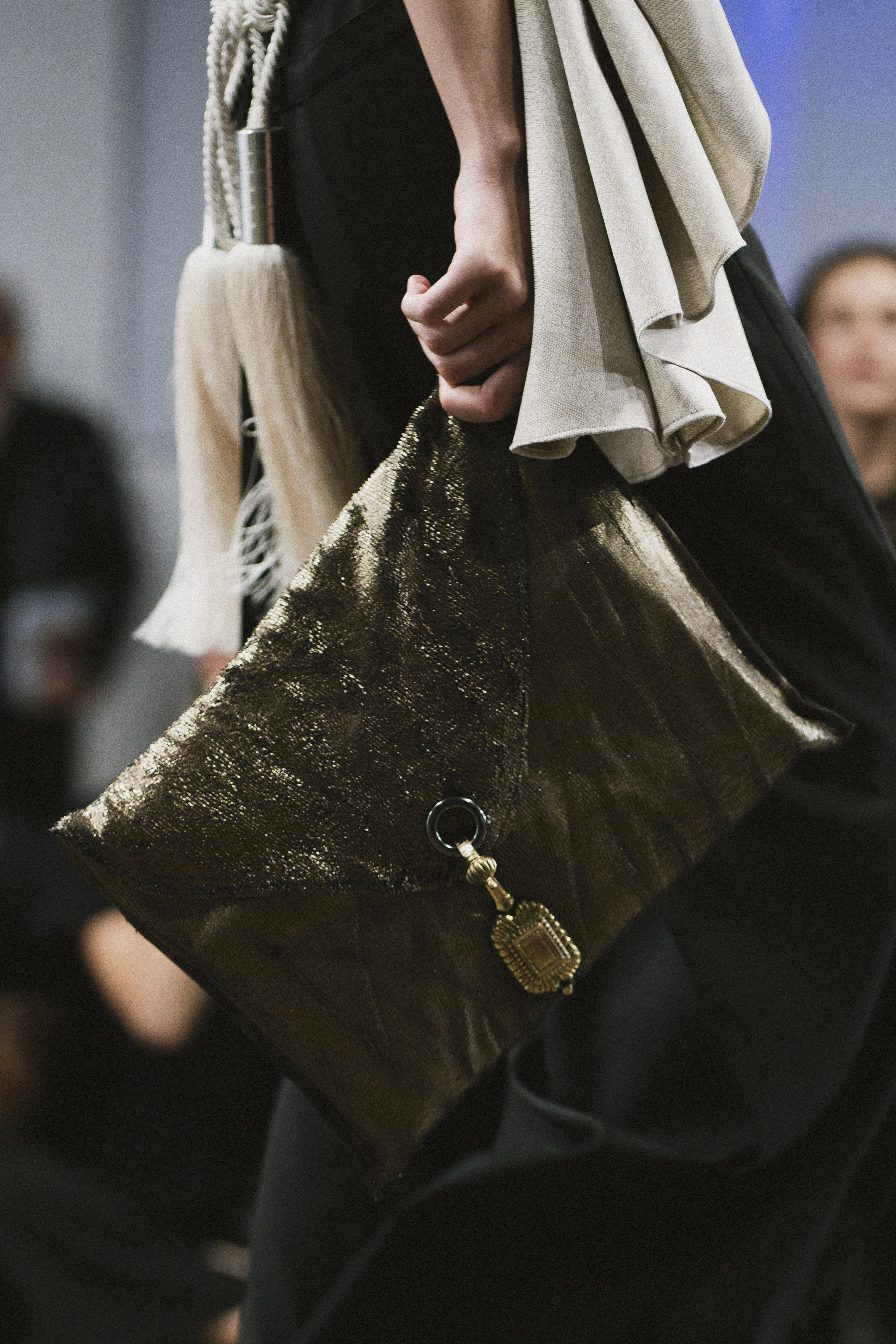
Here, locality is not reduced to visual inspiration. Raxada works with artisans in Asturias and describes its pieces as a way of carrying regional techniques and stories into contemporary fashion rather than simply reproducing them. Its current universe moves through references to witches, spells and folktales alongside silk, organic cotton, recycled silver and locally made details. That difference matters.
Fashion has spent years borrowing the visual language of craft while frequently separating the finished object from the people, knowledge and places responsible for producing it. Raxada's proposition is more relational. The region is not a moodboard. It is part of the production structure.
The result sits somewhere between fashion, jewellery, folklore and cultural preservation, without needing to become costume. Asturias remains visible, but the clothes are allowed to exist in the present.
BAM-BAM: bam-bamart.com / @bam.bam.billa
Yukito Lim: yukitolimwork.co.uk / @yukitolimofficial
Raxada: raxadaproject.com / @raxadaproject
Production: Fashion Scout / @fashionscout
Show Production: Paul Swaby @cult_of_fashion
Styling: Rebekah Roy @rebekahroy_
Hair: Sally Beauty | UNITE Hair. Hair led by Narad Kutowaroo @naradkutowaroo, UK Creative Director and Ambassador for @unite_hair_uk / @sallybeautyuk
Make-up: AOFM Makeup Academy. Make-up led by Mandy Gakhal @mandygakhal for AOFM Makeup Academy @aofmakeup
Show PR: Black PR @blackprgroup
Backstage Food: People Pleaser Salads @peoplepleasersalad
Steamers: Propress @propressuk
Photography: Nici Eberl @nicieberlphoto, Yuri Stuppia @yuriweaver, Eli Hopkinson @eiahopkinson, Ellis Carroll @ellistcarroll, Manas Godara @manasgodara, Henry Morgan De Witt @henrydewitt, Shaurya Bhardwaj @shau_b.studio, Pranav Gunturu @pranav_gooner, Chris Yates @Itschrisyates
Individual photography credit corresponds to the photographer named in each supplied image file.