AGRO Studio’s Prophet Turns LFW SS26 Into Harmonious Chaos
At its London Fashion Week debut, George Oxby and Angus Cockram turned tarot, school uniforms and couture-scale volume into a collection built for uncertain times.
There are collections that resolve a contradiction, and others that understand the contradiction is the point. For AGRO Studio, the tension between certainty and confusion became the foundation of Prophet, the London label’s Spring Summer 2026 runway debut.
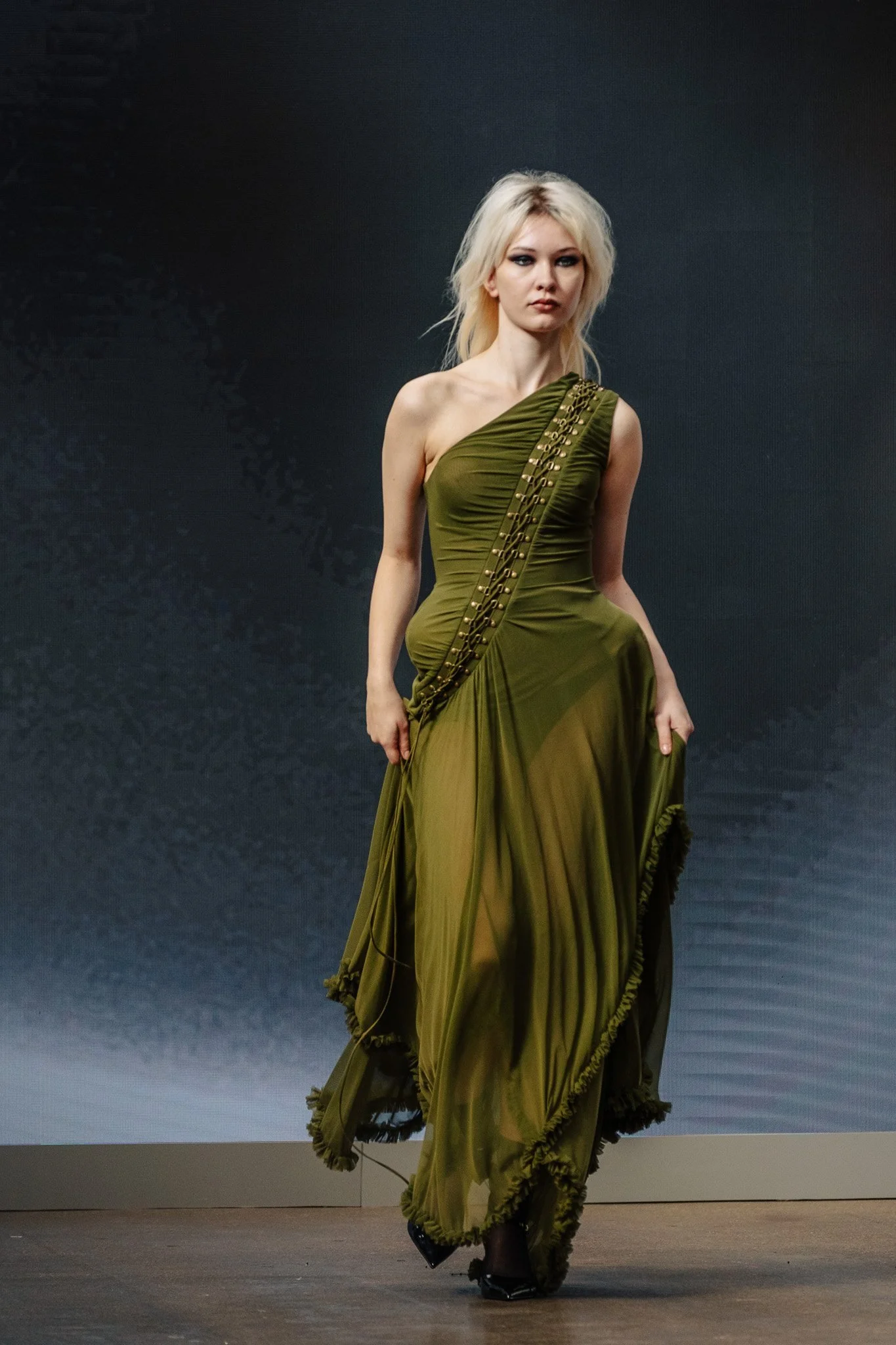
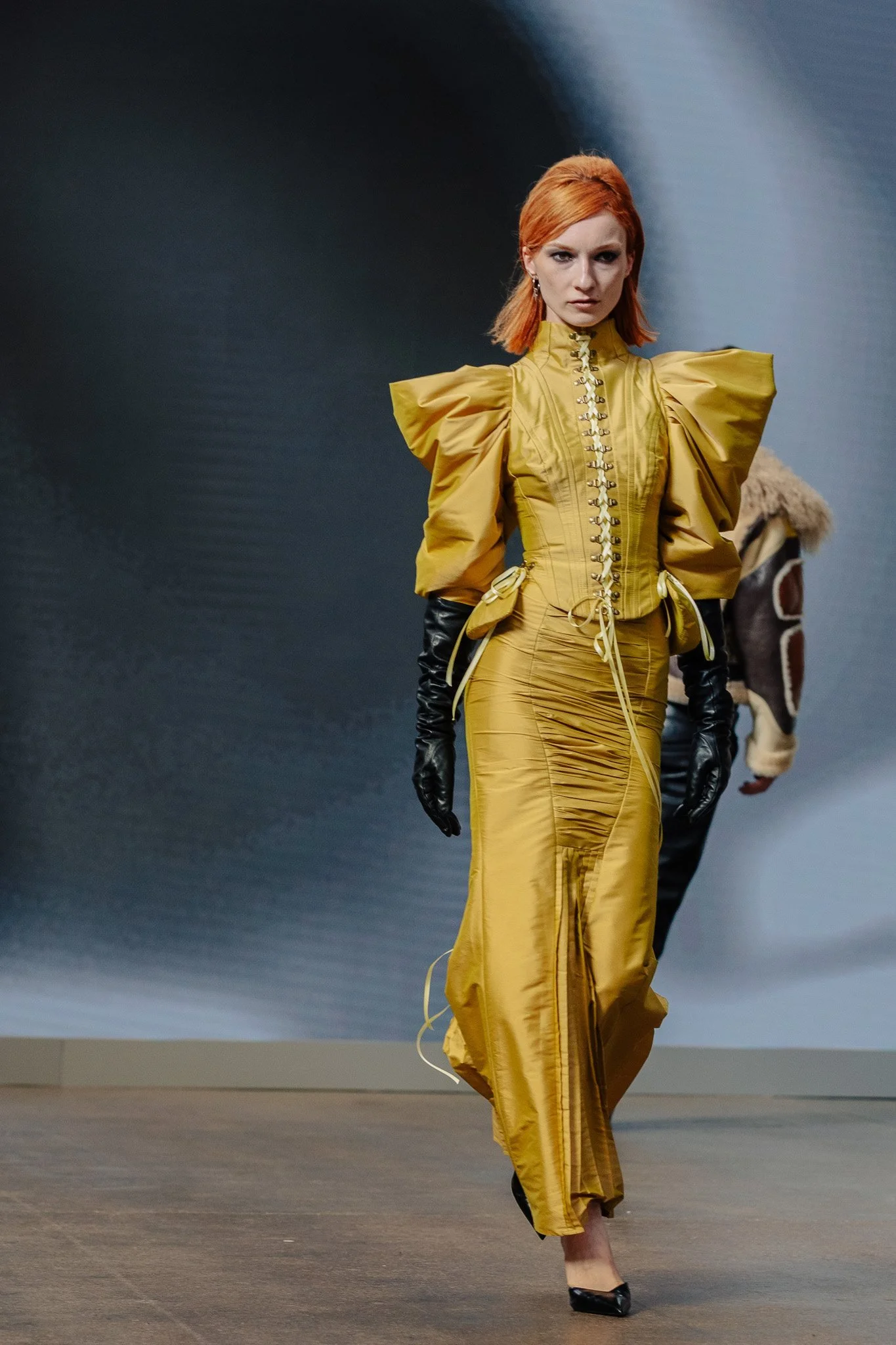
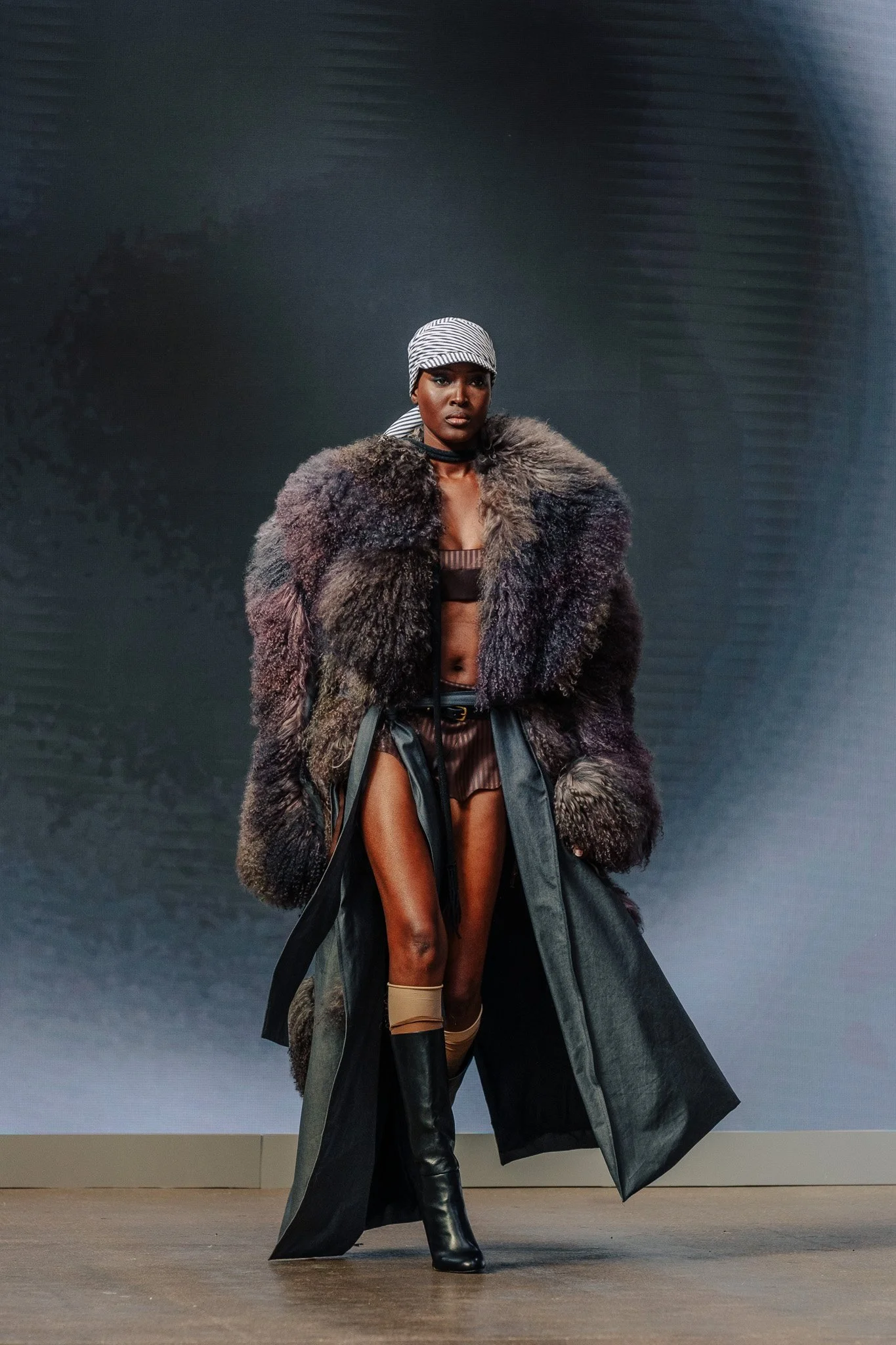
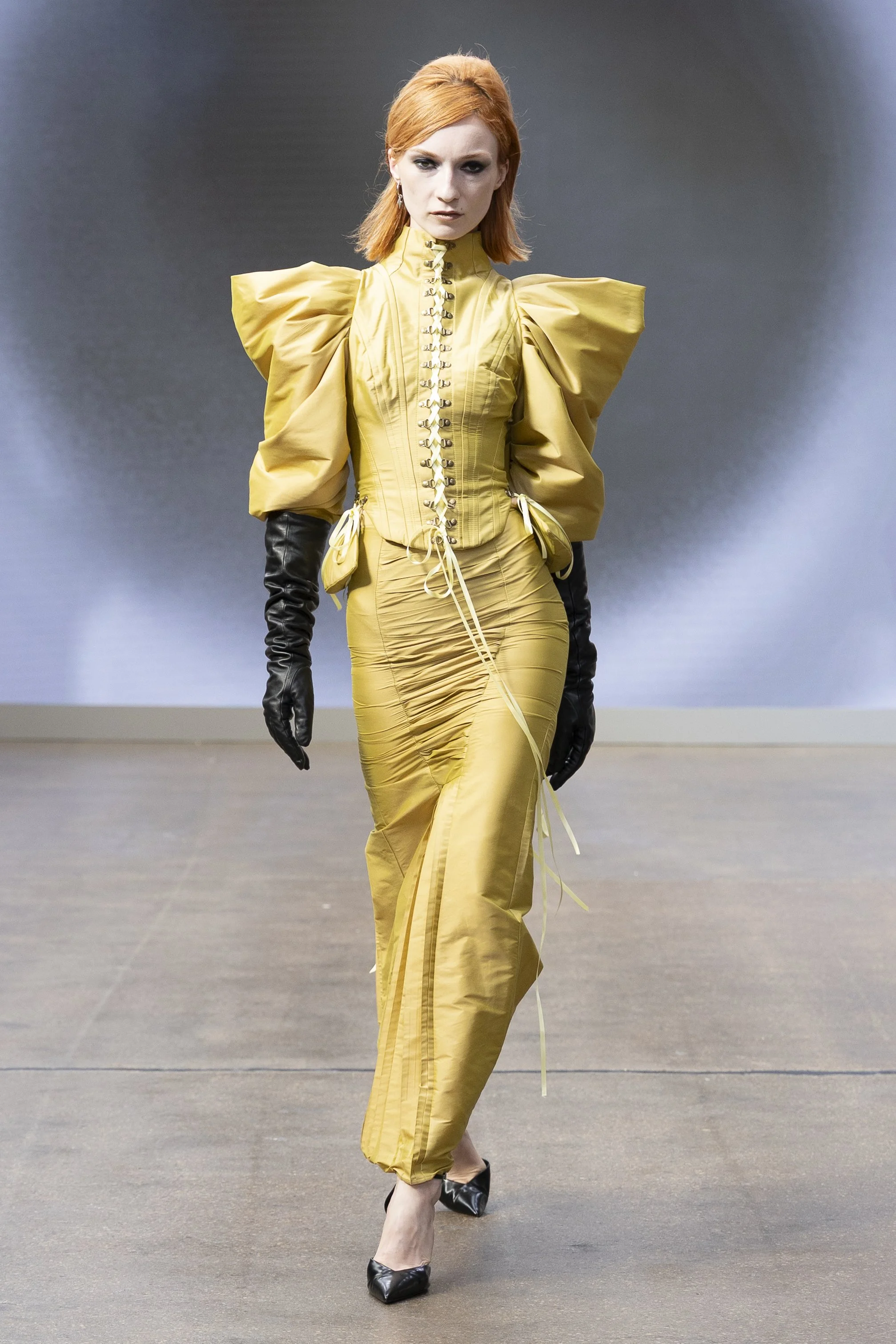
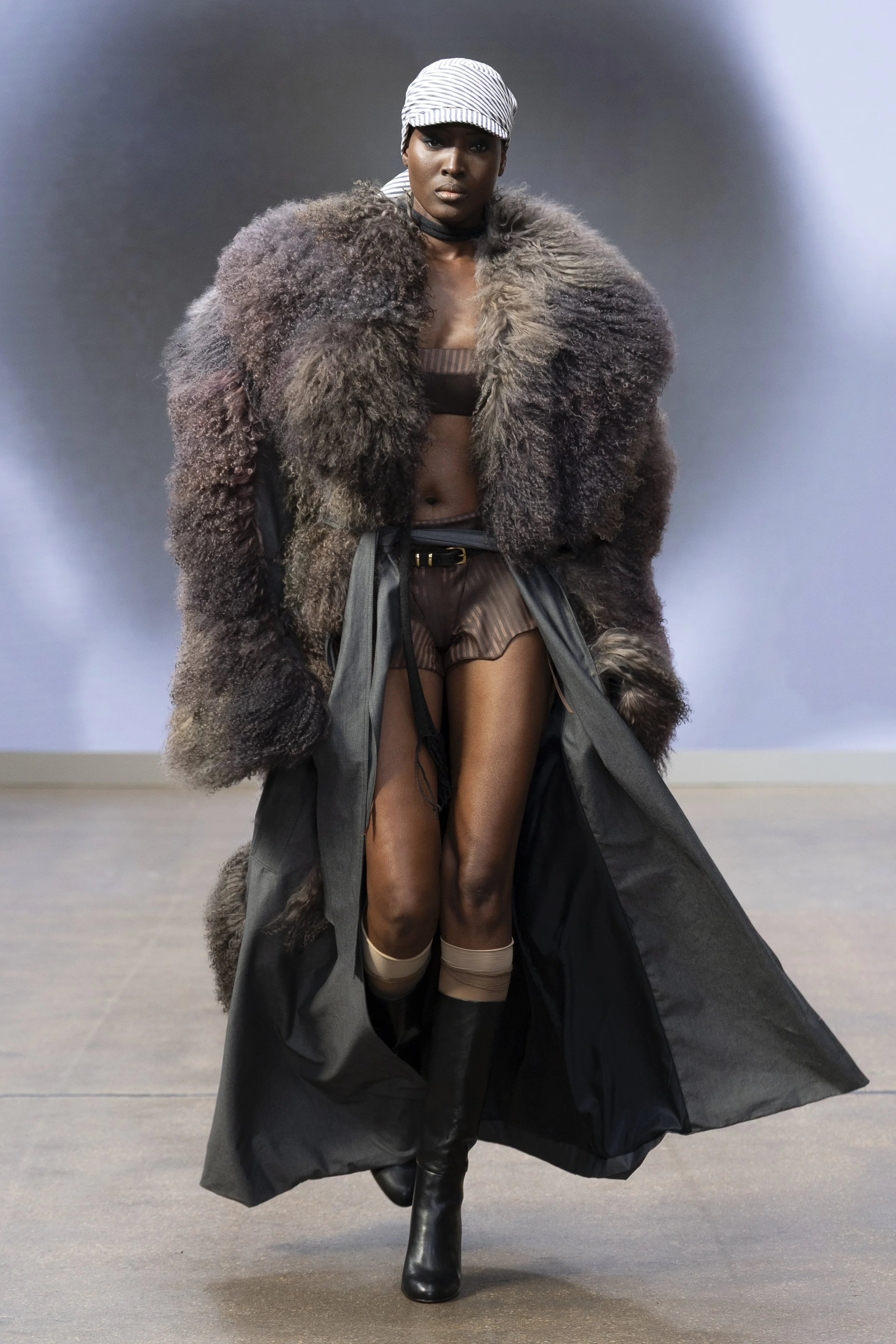
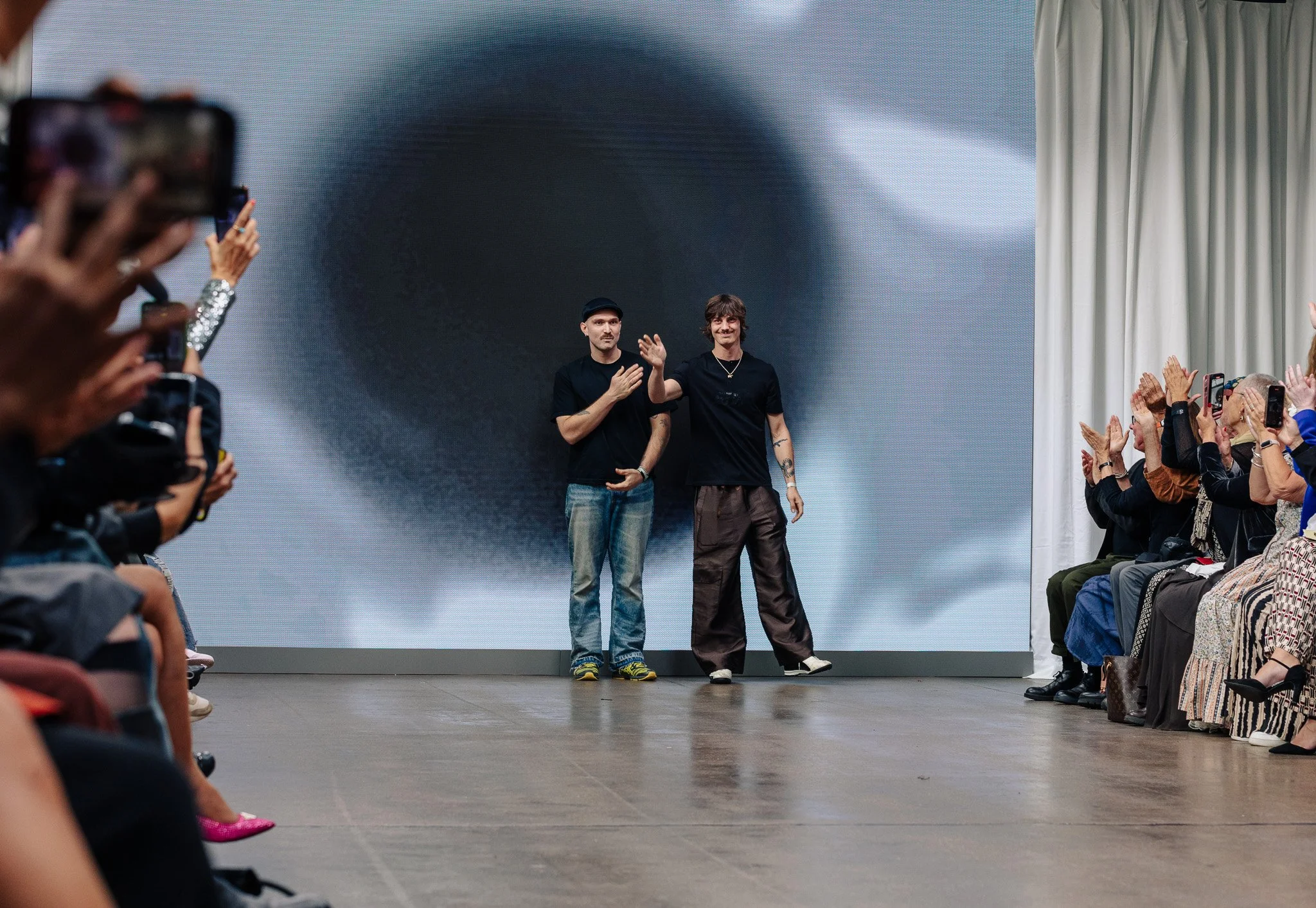
Presented at Protein Studios in Shoreditch on 21 September 2025, the show introduced AGRO’s made-to-measure world to a wider audience. British school shirting met corseted ball gowns. Shearling collided with technical cloth. Leather, tulle and hand-painted surfaces moved through a palette of bruised neutrals, deep black and sudden yellow.
The effect was not disorder for its own sake. It was what the designers call “harmonious chaos”, a way of dressing for a moment in which confidence and uncertainty often occupy the same body.
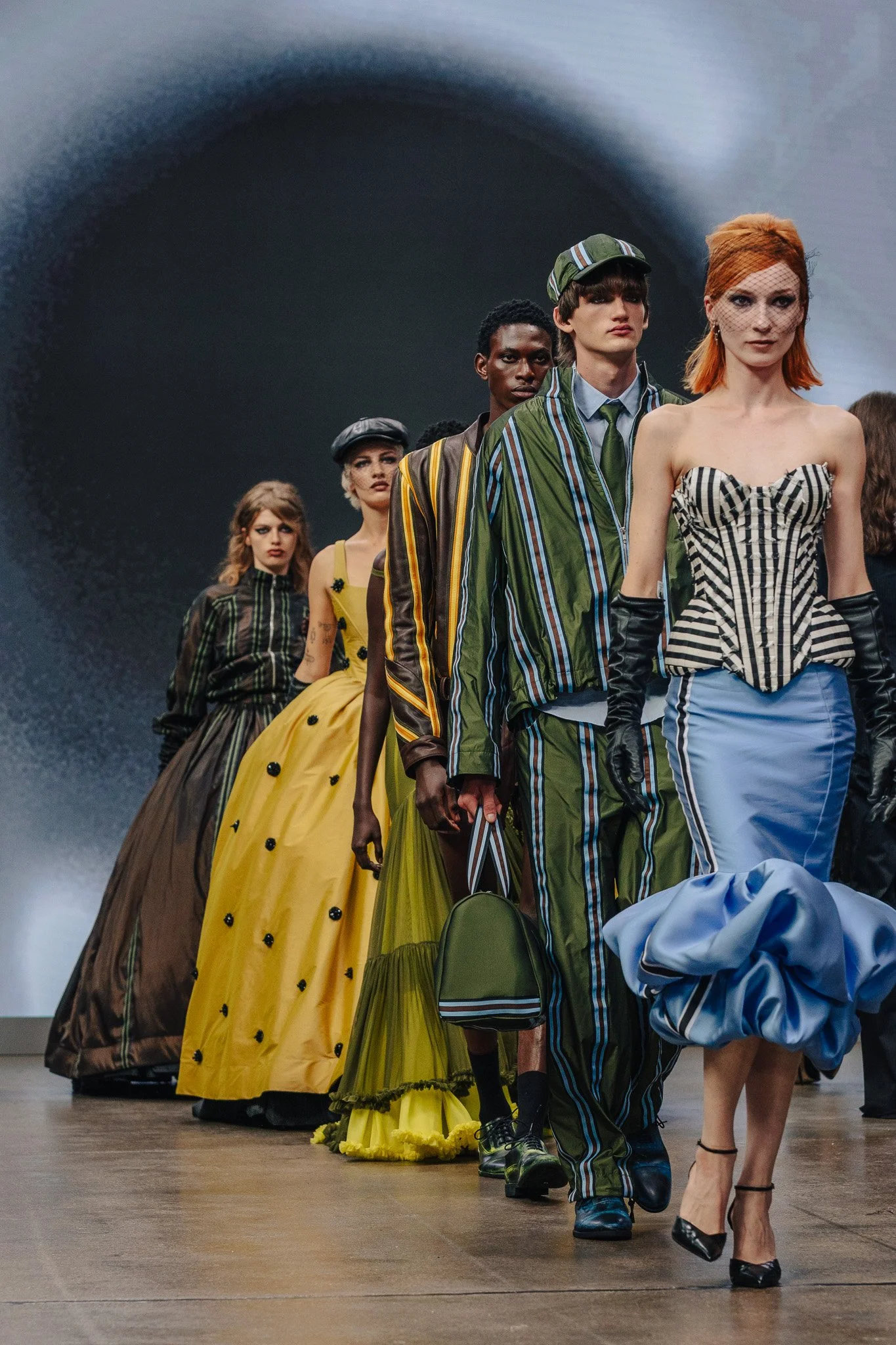
AGRO Studio, Prophet, Spring Summer 2026. Photograph by Gala Netylko.
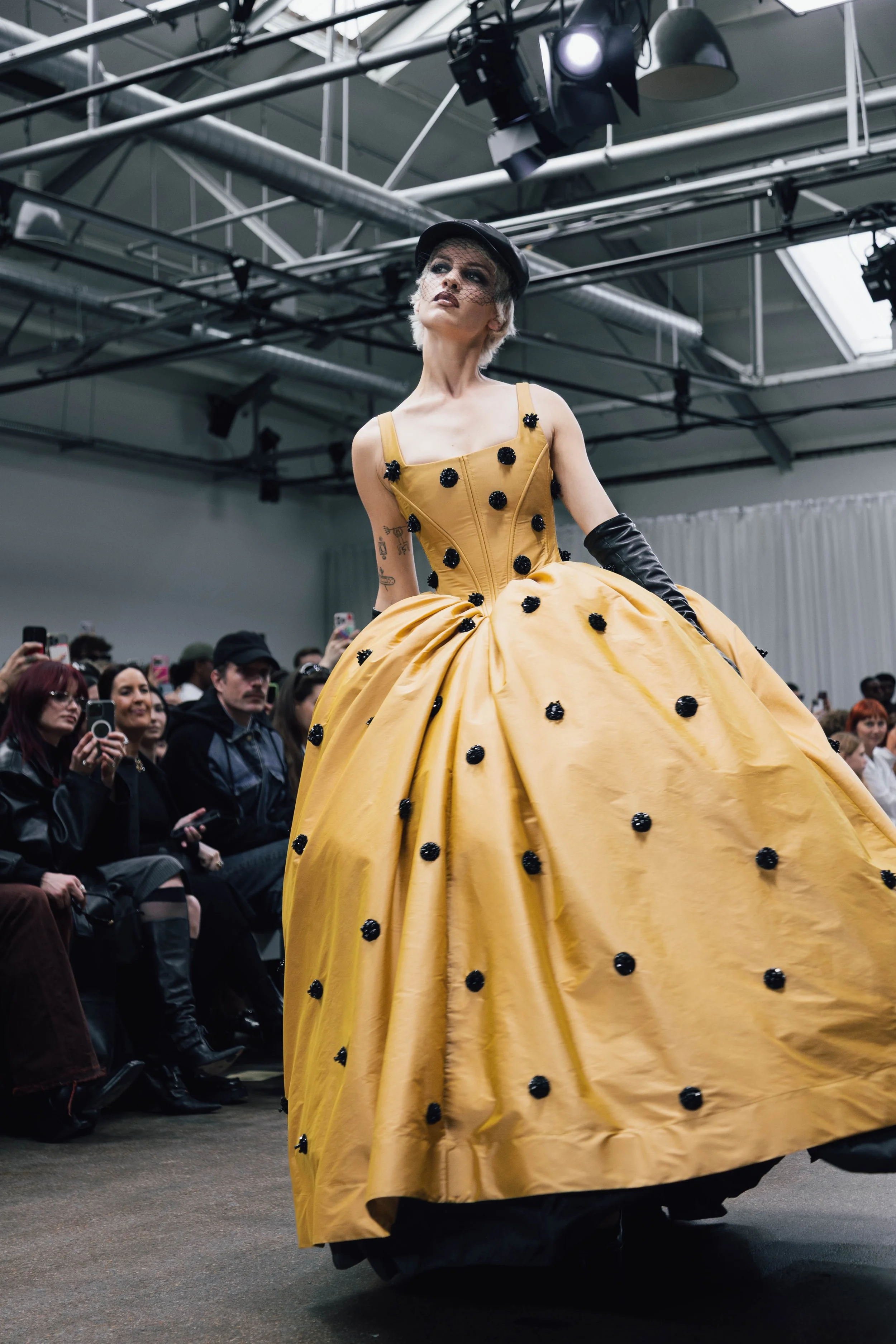
A prophecy written in contradictions
Prophet takes its symbols from tarot, the jester and the unstable logic of the present. The jester can be comic and unsettling, foolish and unexpectedly truthful. AGRO uses that duality as a design method.
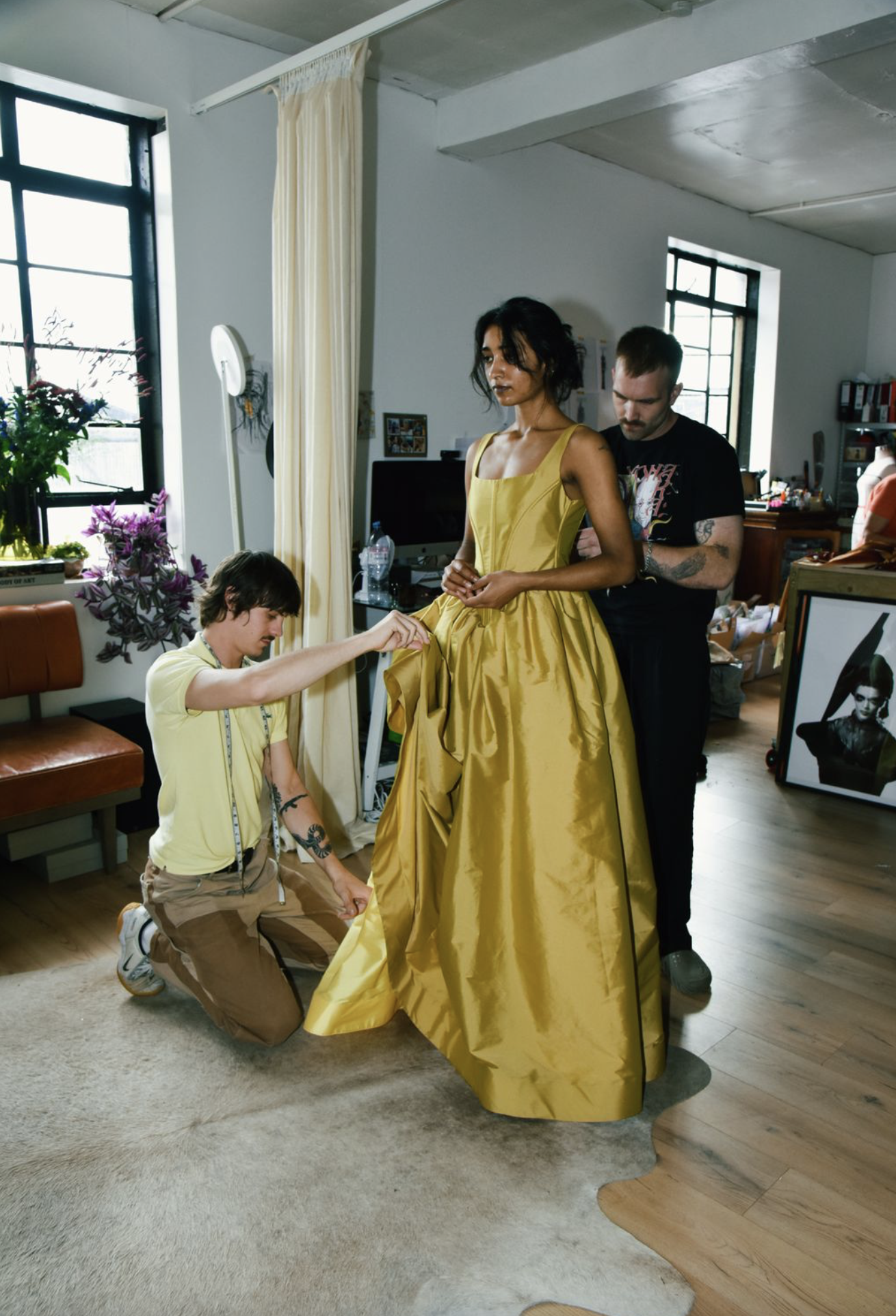
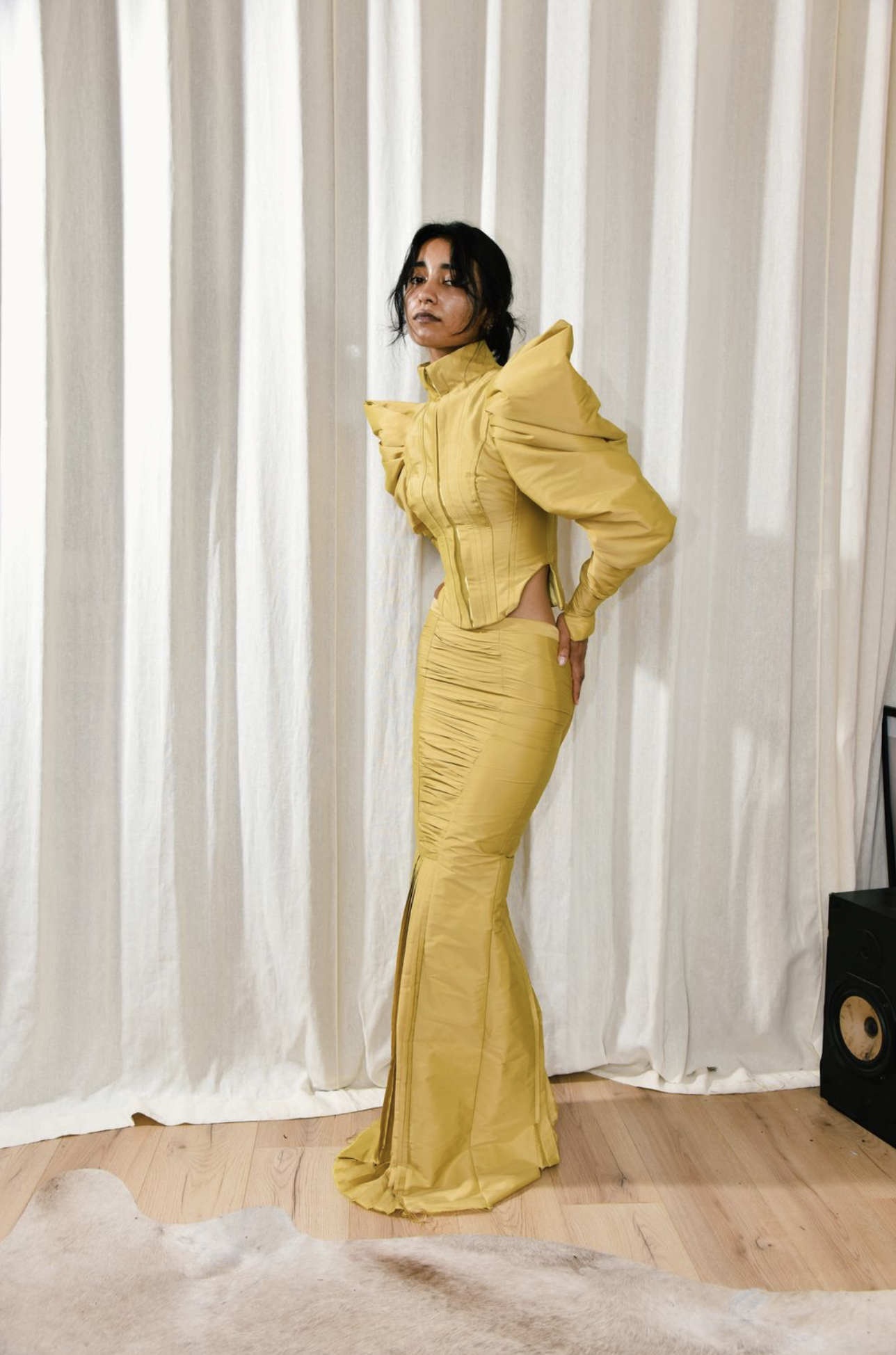
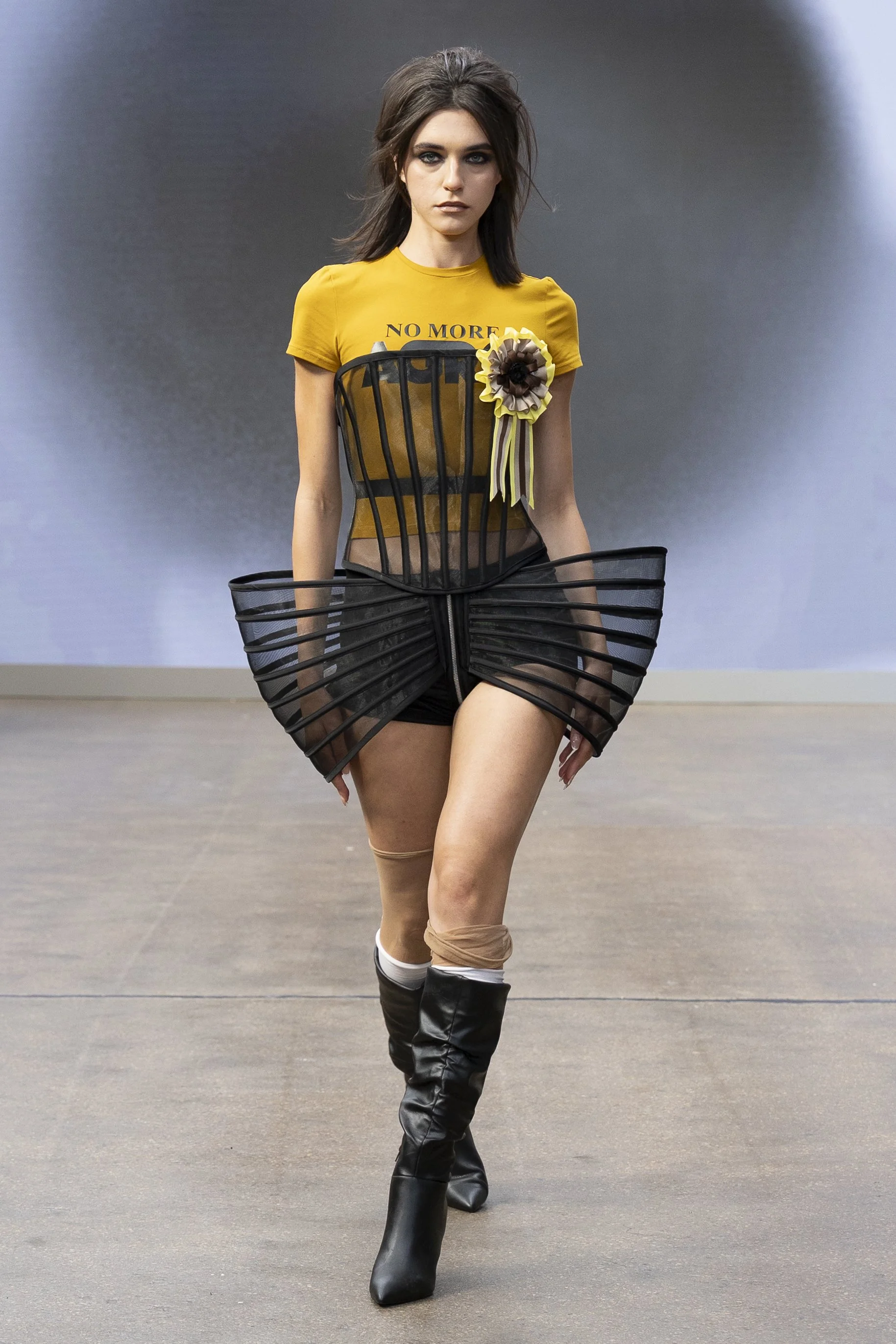
A yellow ball gown expands with old-world ceremony, then black polka dots and a sharply tilted cap disturb its sweetness. Elsewhere, narrow tailoring is stretched, slashed or interrupted by exposed skin. A school shirt no longer behaves like a uniform. A corset slips away from nostalgia and becomes architecture.
The strongest looks do not ask the viewer to choose between romance and abrasion. They insist on both. This is where AGRO’s grunge-inflected glamour feels most convincing: not as a mood board, but as construction that makes opposing references coexist.
Made in London, built by hand
Founded in 2021 by London College of Fashion graduates George Oxby and Angus Cockram, AGRO developed through styling, tailoring, set work and one-off pieces for music and film. That cross-disciplinary beginning still shows. The clothes understand how a silhouette reads from a distance, but they reward a closer look.
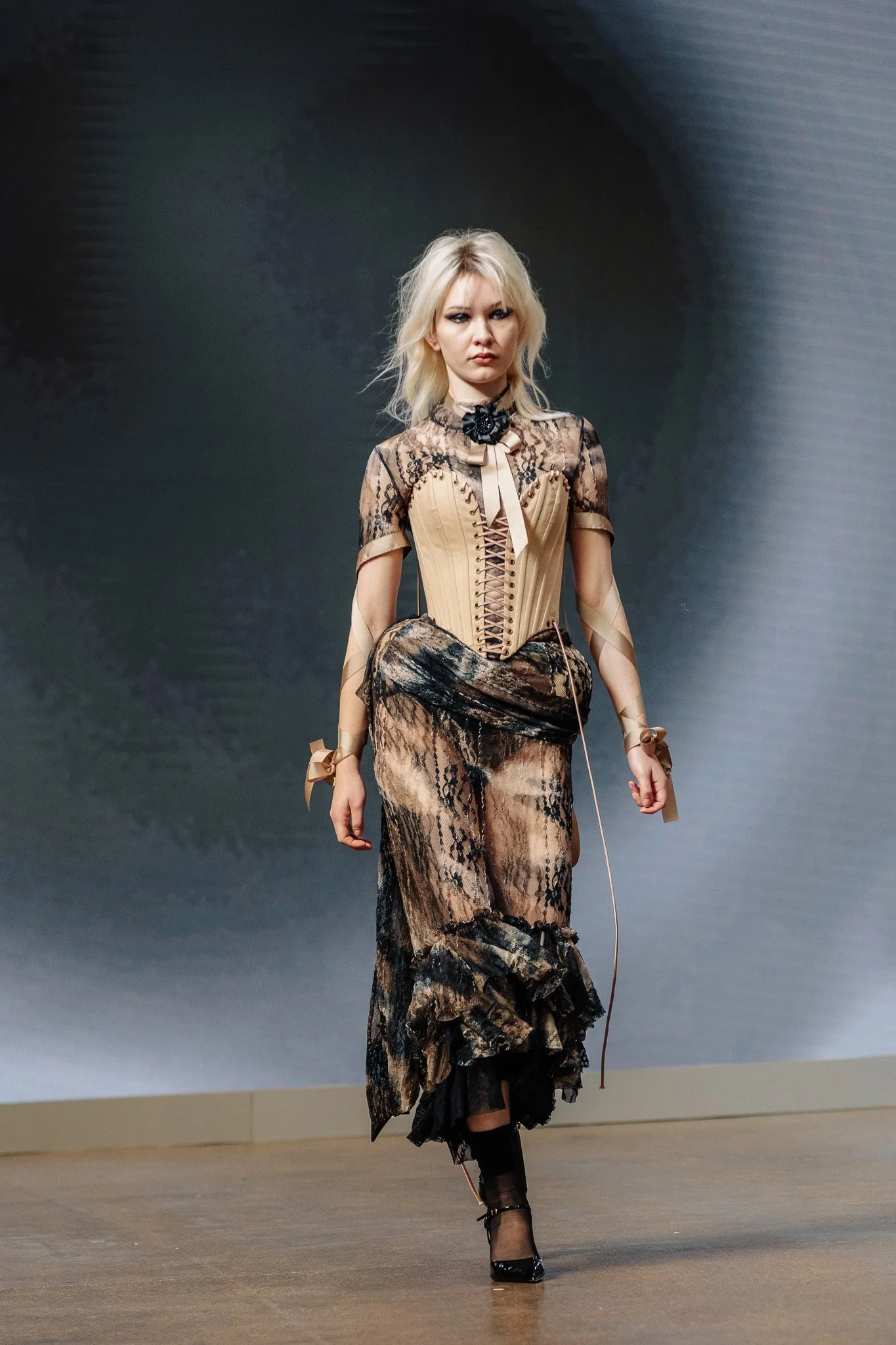
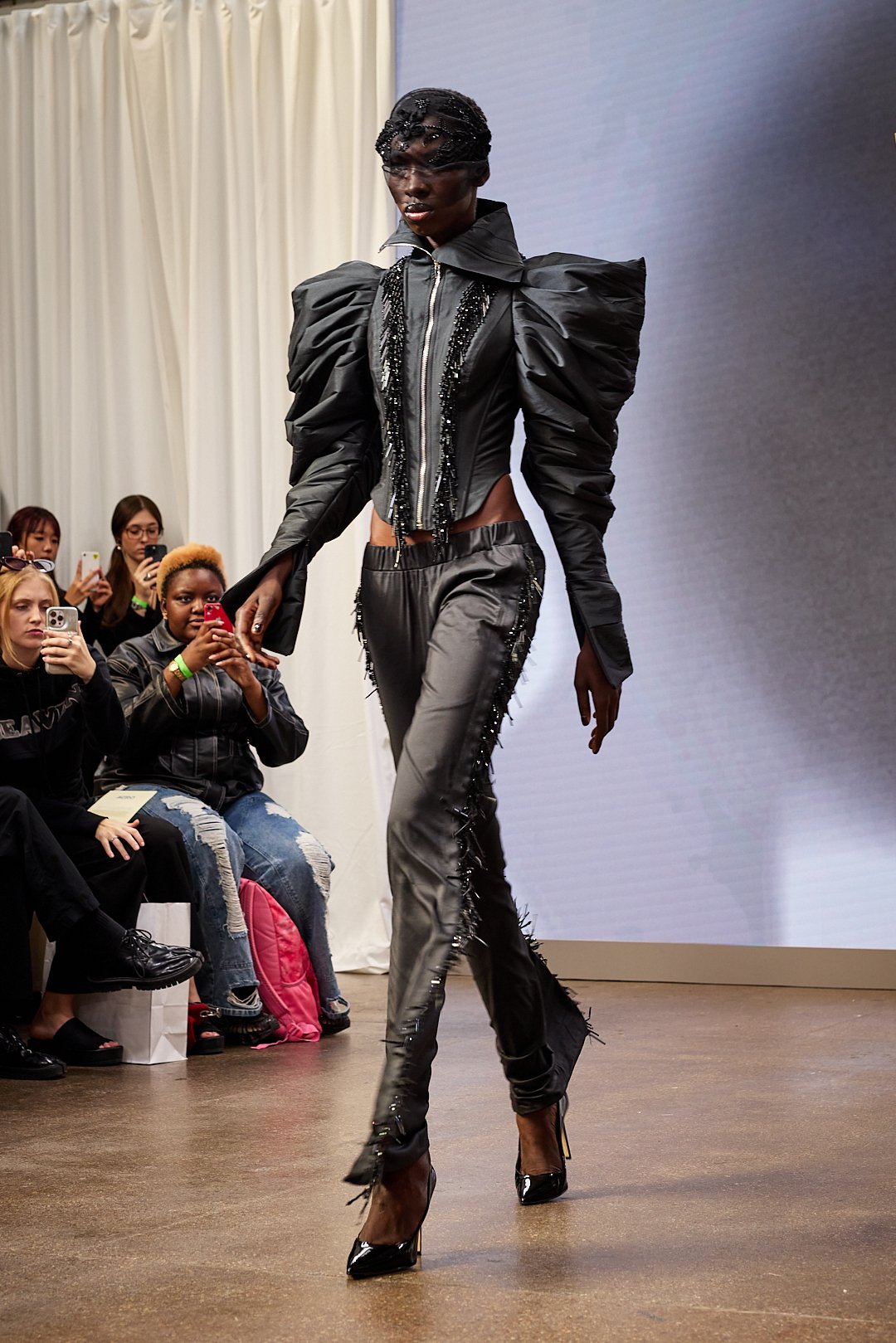
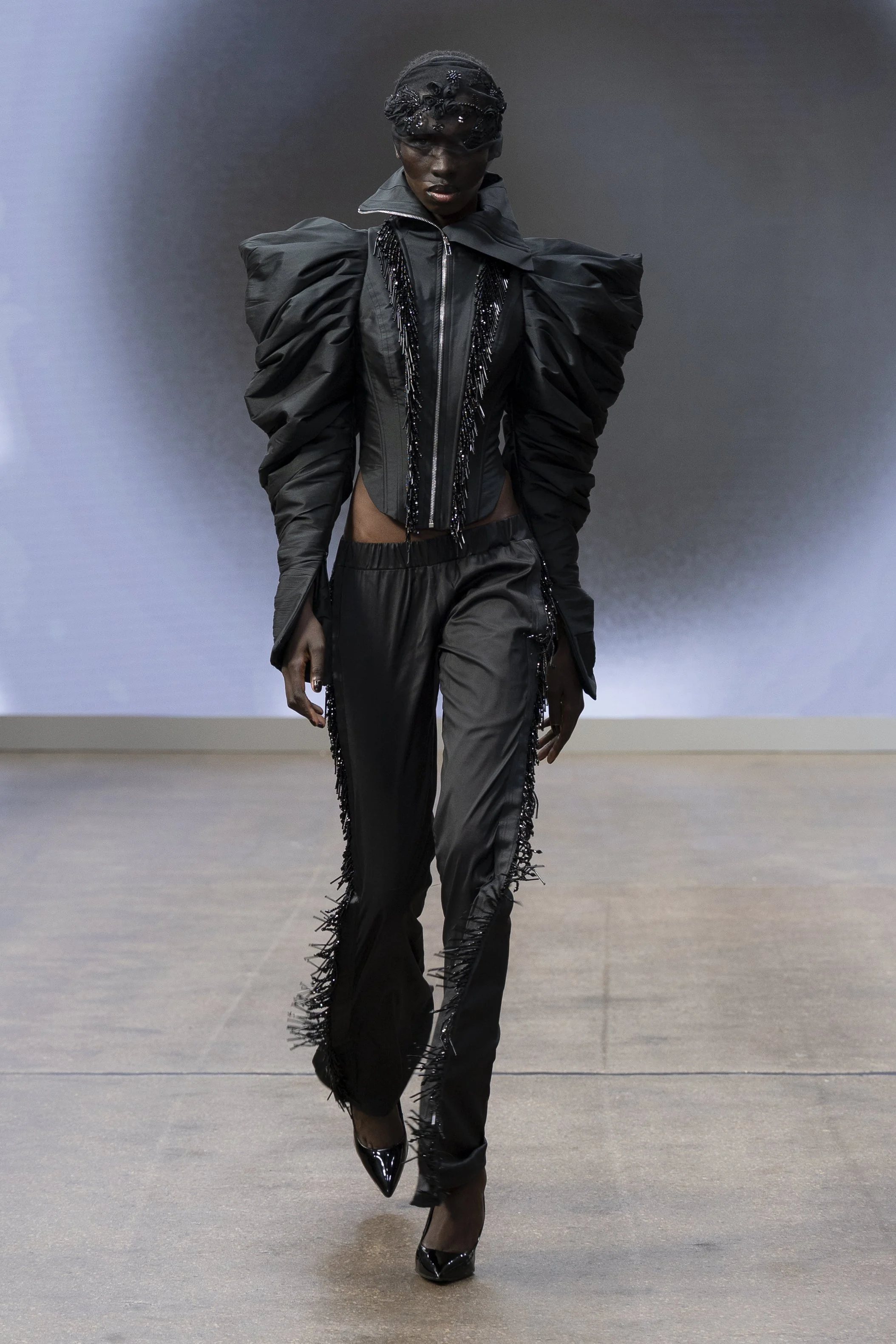
Traditional corsetry sits beside streetwear finishing. Leather craft and hand beading sharpen garments that might otherwise dissolve into theatricality. Every piece in Prophet was made in the studio’s London atelier, giving even its grandest gestures a sense of proximity to the hand.
This matters in a fashion system trained to separate spectacle from production. AGRO’s runway fantasy is not detached from the making. The volume, surface and controlled imbalance come from the same small-batch, made-to-order practice that shapes its custom work.
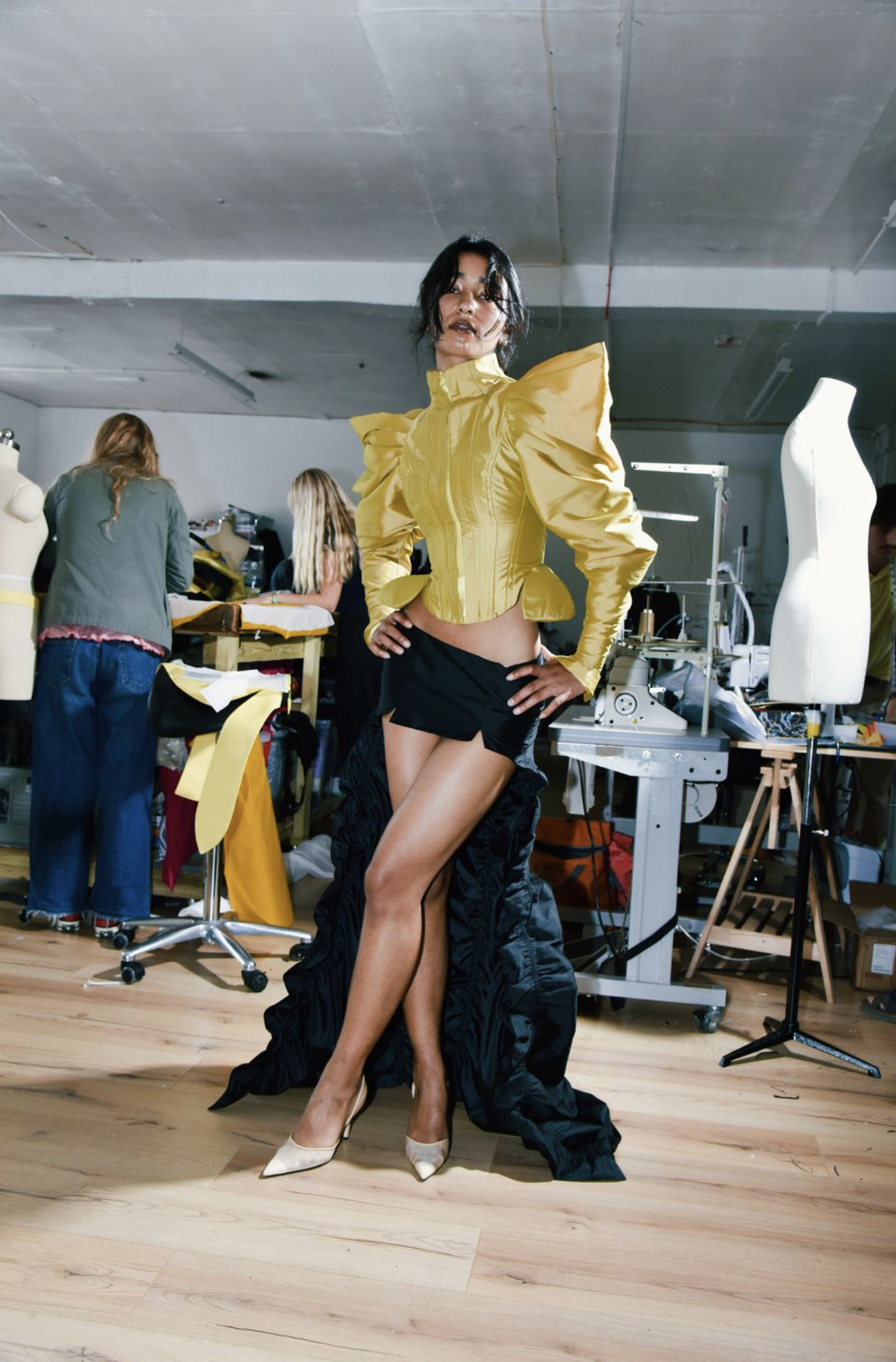
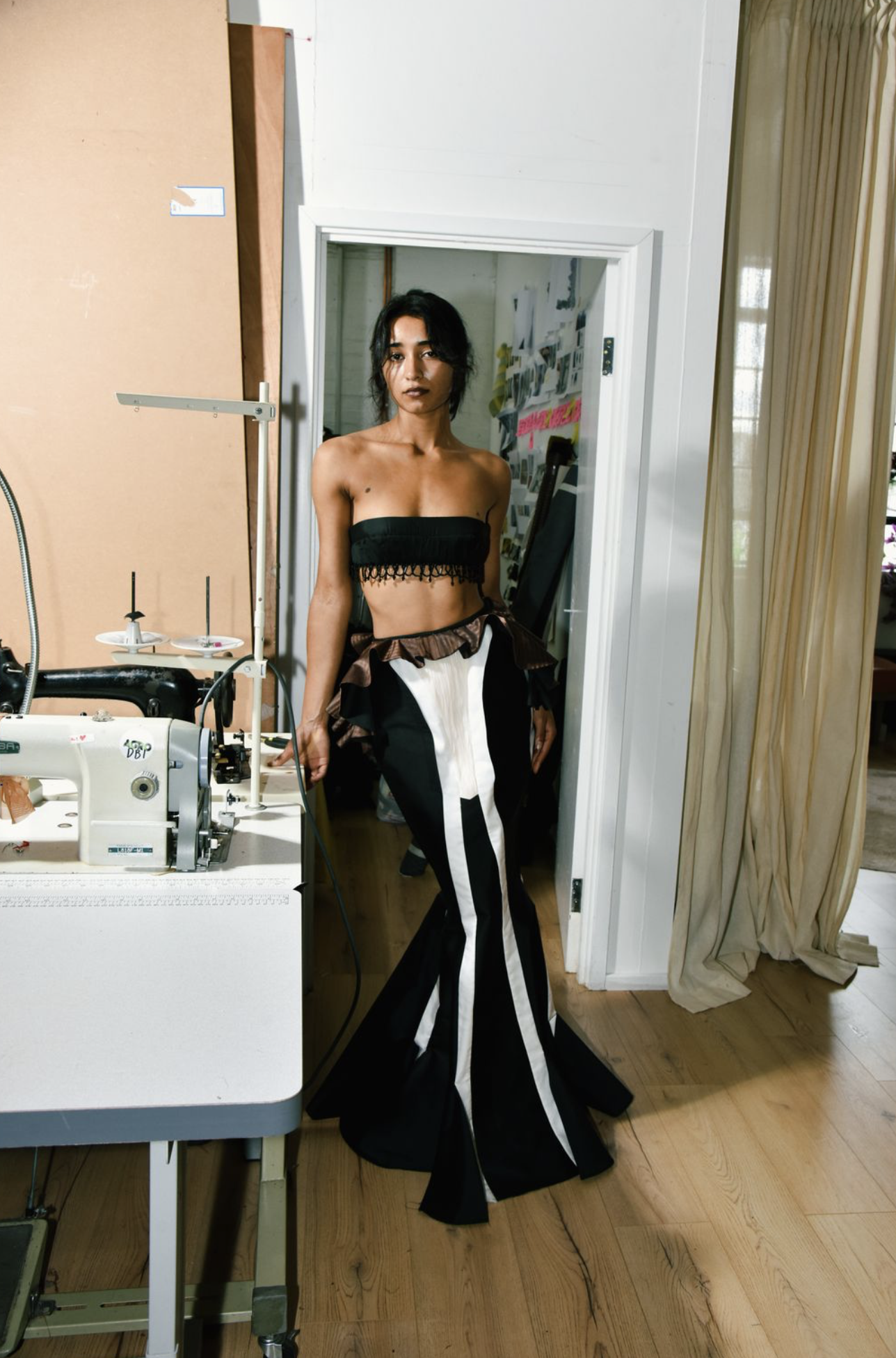
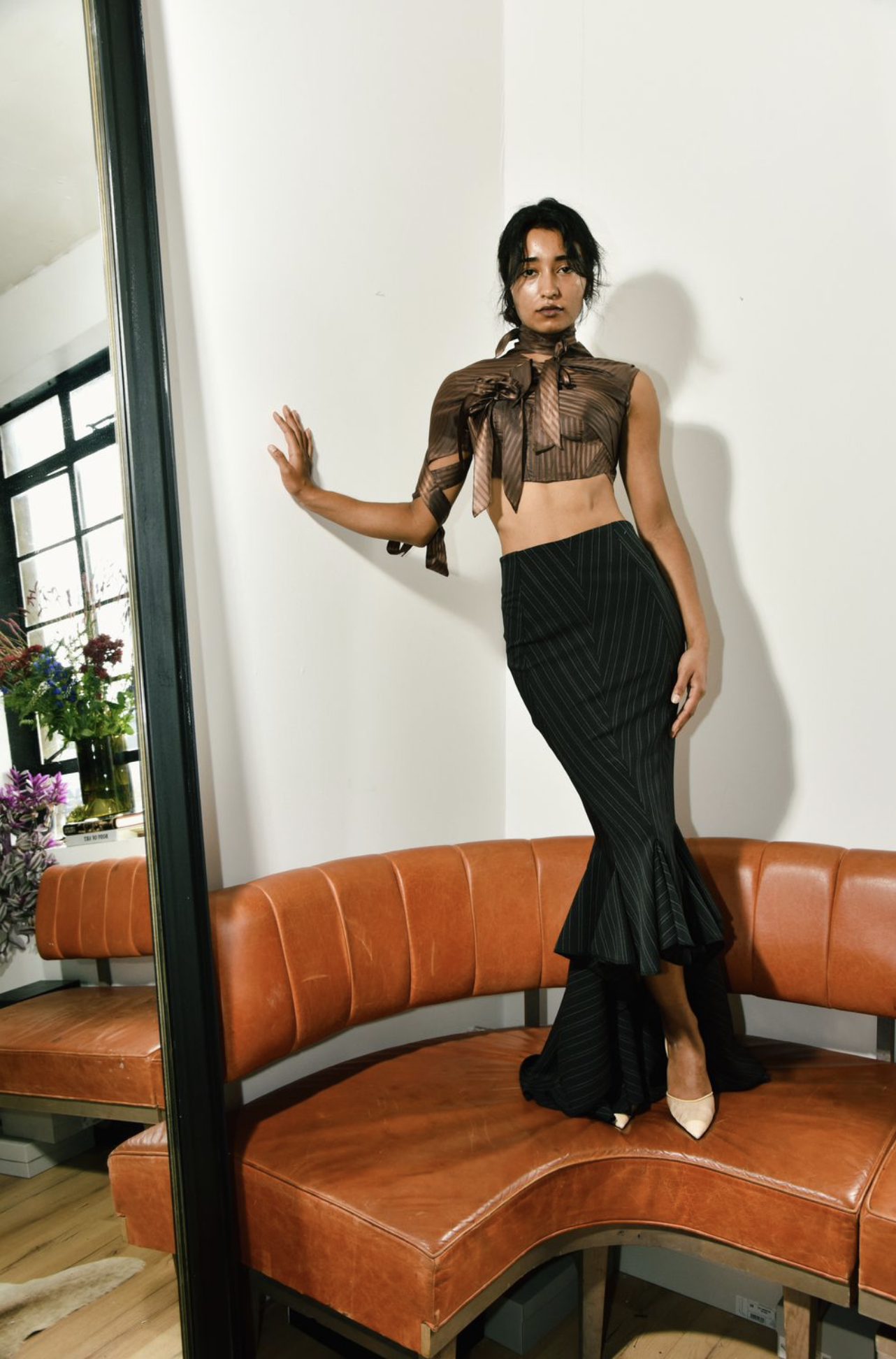
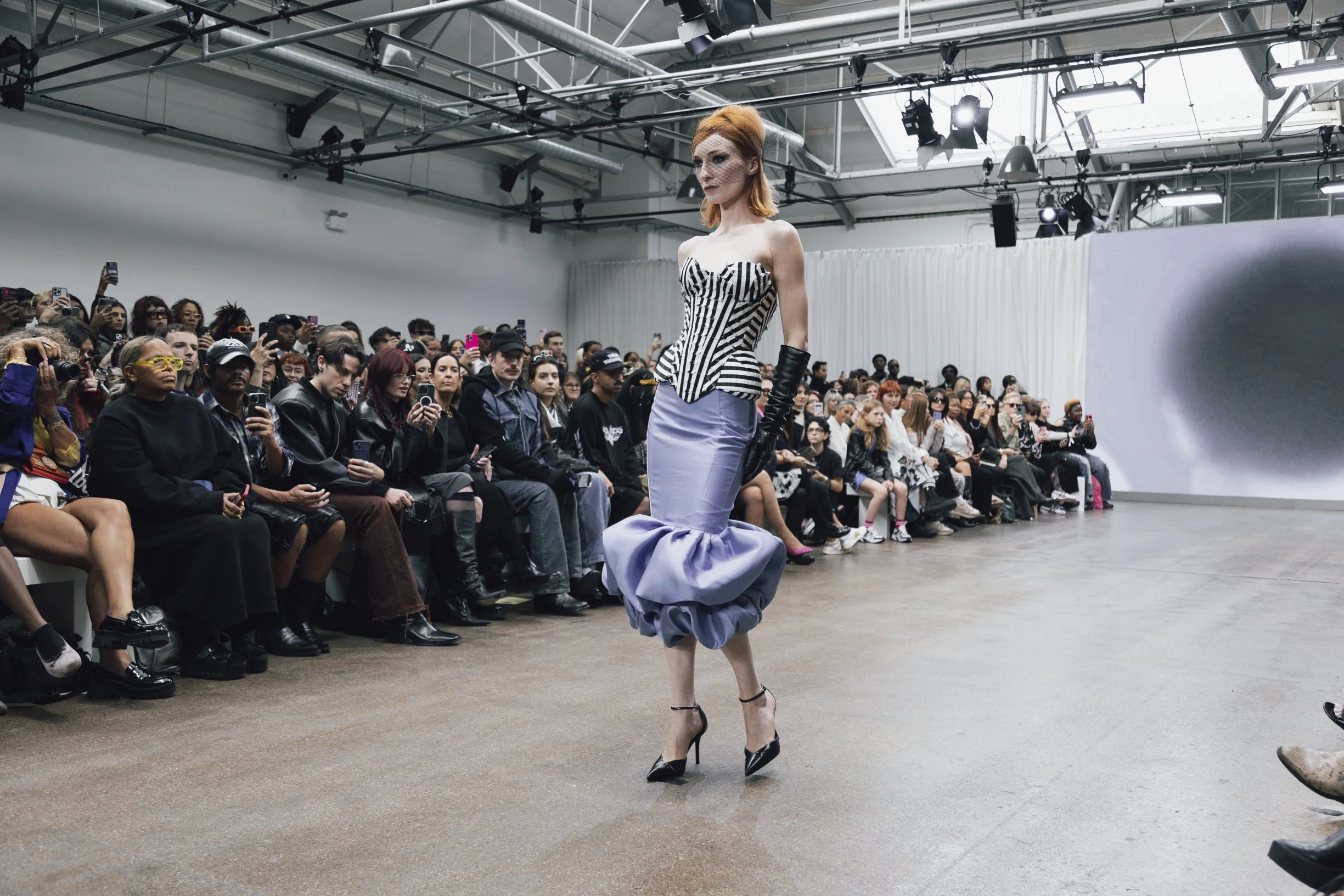
Striped corsetry and sculptural trousers from Prophet. Photograph by Gala Netylko.
The body becomes the argument
Movement director Jorge Fujizaki gave the contradictions a physical rhythm, while a soundtrack by WFB Live pushed the presentation away from static reverence. Styling by Lucy James allowed the silhouettes to speak as a cast rather than a sequence of isolated looks.
On the runway, familiar codes kept changing meaning. Masculine tailoring became exposed and fragile. Eveningwear carried a confrontational weight. Soft tulle and severe leather traded roles. Even yellow shifted between optimism, warning and theatrical light.
The closing volume recalled the transformative finales associated with Vivienne Westwood and Dior, but AGRO’s purpose was not imitation. The gesture placed a young London studio inside fashion history while keeping one boot in the rougher present.
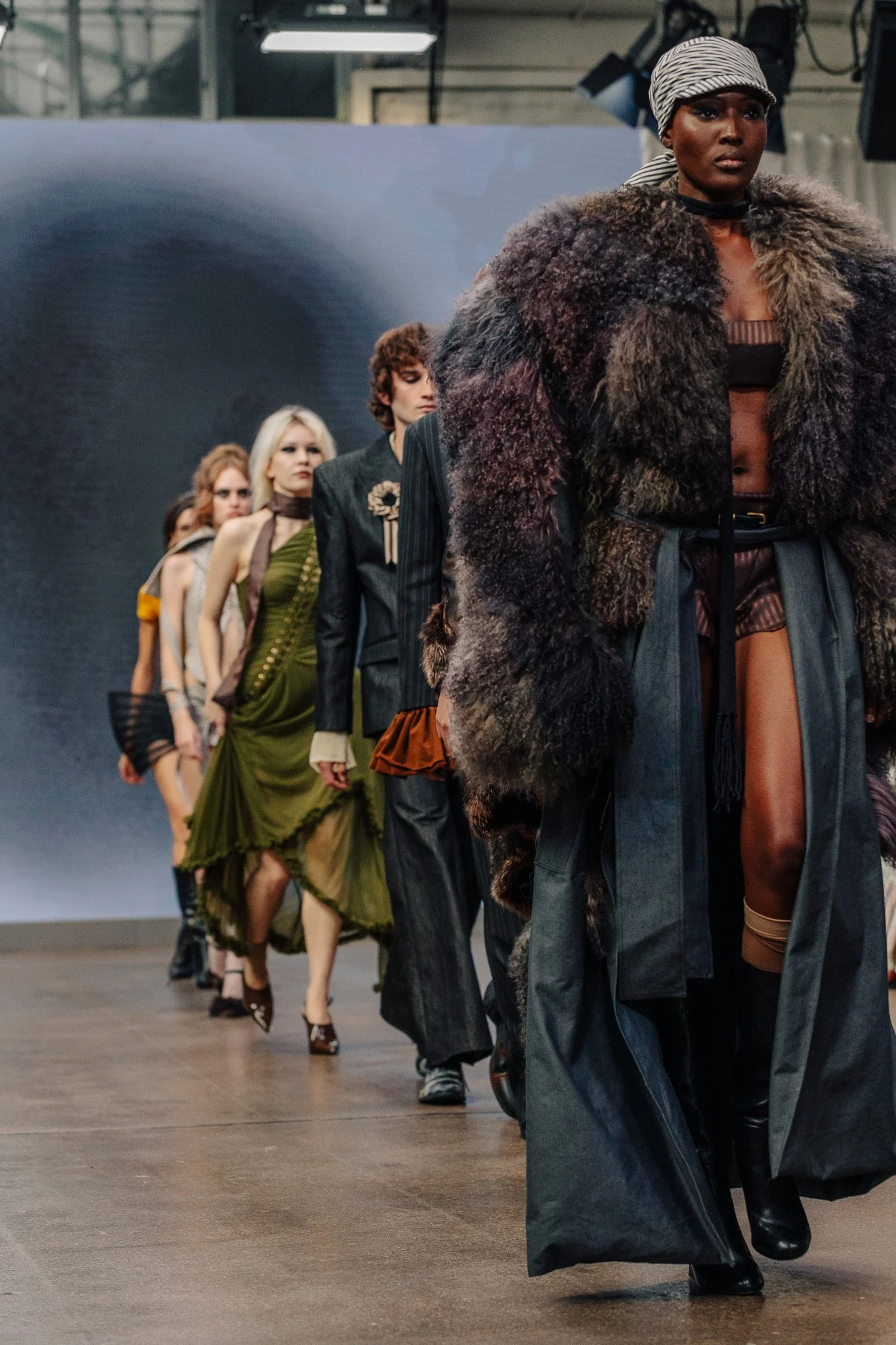
Prophet marked a rite of passage for a studio that had previously worked largely behind the scenes.
It did not abandon the intimacy of made-to-measure clothing to chase scale. Instead, it used the runway to show how a bespoke sensibility can become a shared language.
That distinction feels increasingly relevant. Emerging designers are often encouraged to grow faster than their production can sustain, while audiences are trained to mistake constant novelty for momentum. AGRO proposes another model: focused collections, small-batch production and garments memorable enough to justify their presence.
The studio’s evolution continued beyond the show, including a later limited-edition collaboration with Alfa Romeo. Yet Prophet remains the clearest declaration of its worldview. Raw and technically resolved, romantic and confrontational, it treats uncertainty not as a weakness to disguise, but as material to work with.
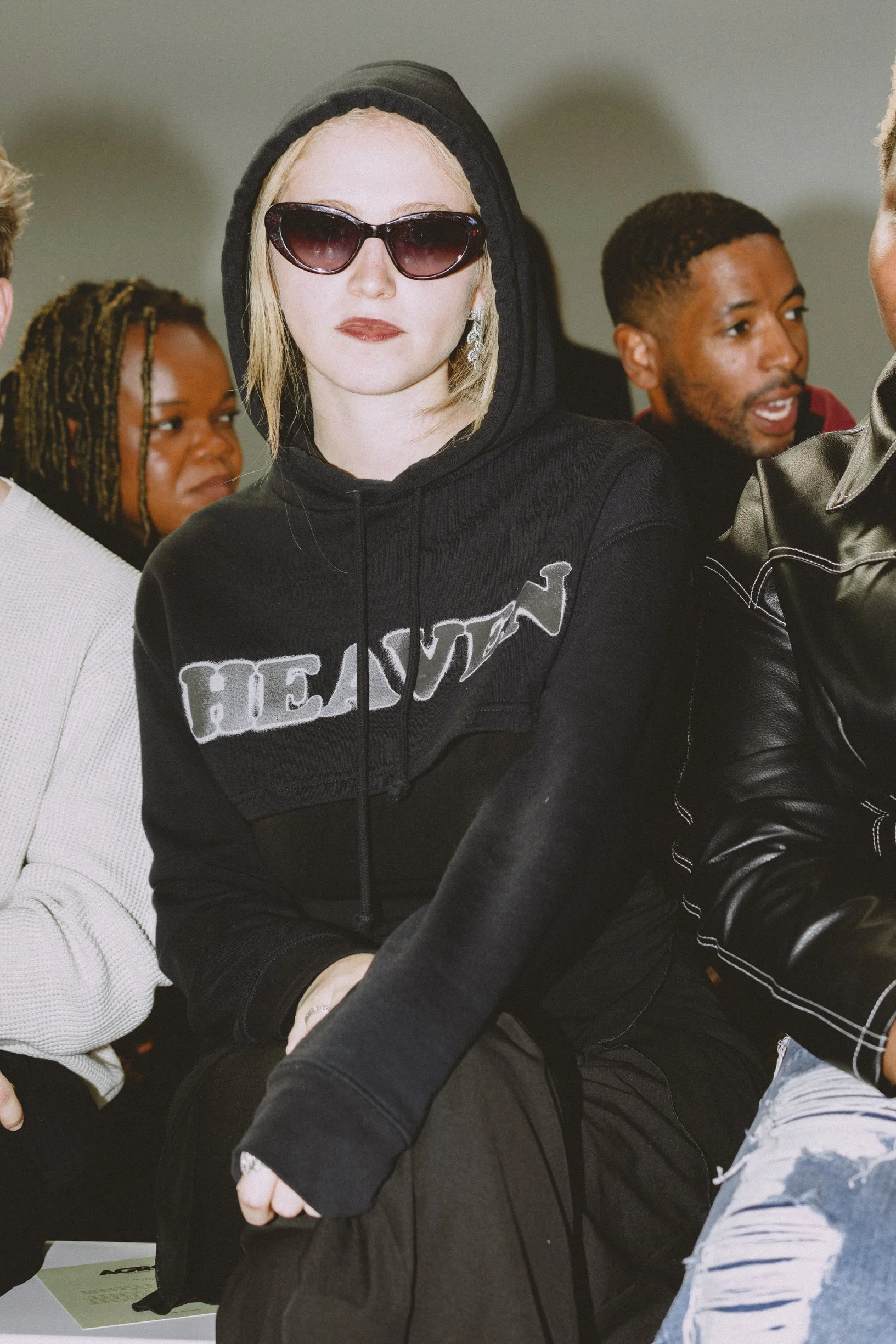
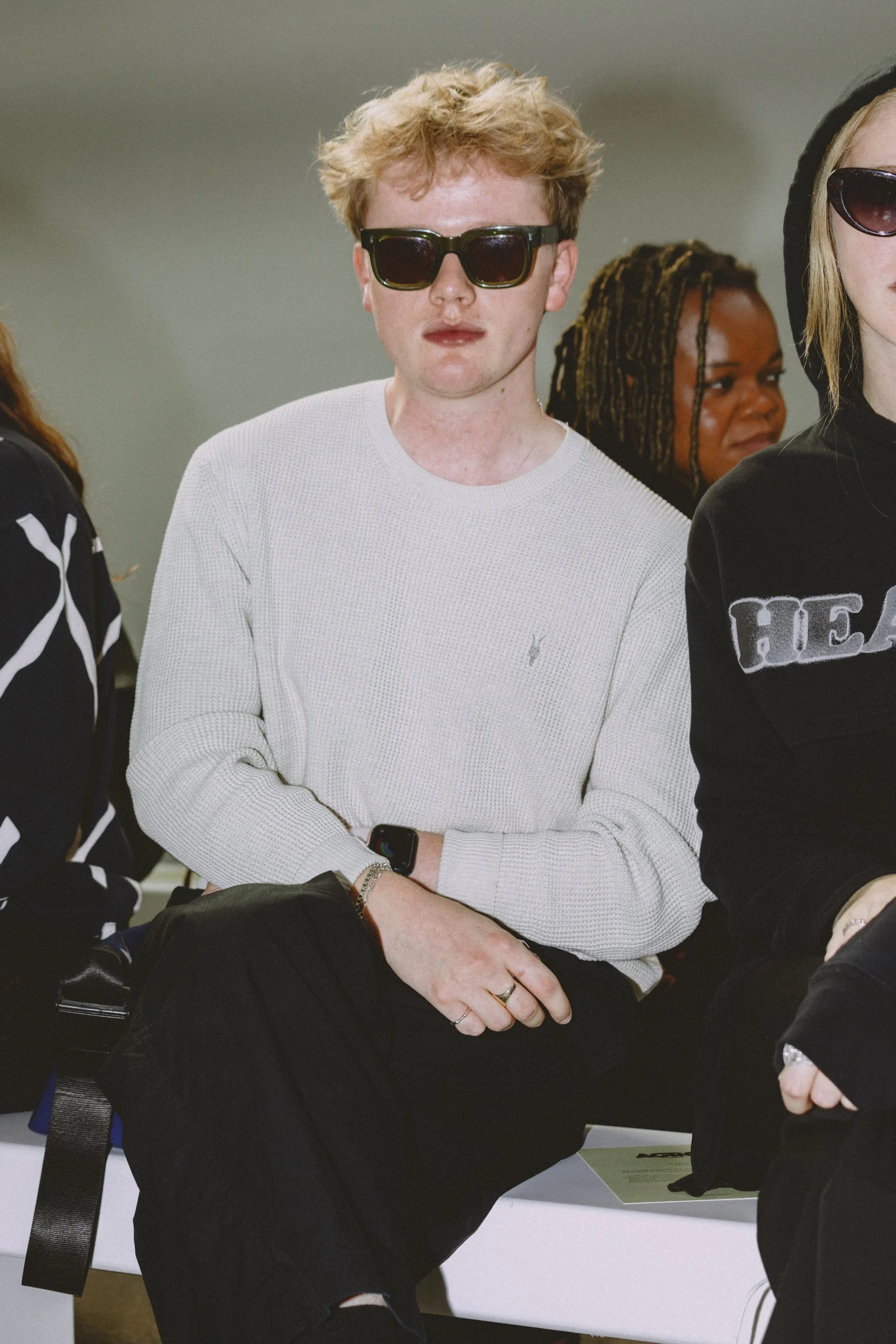
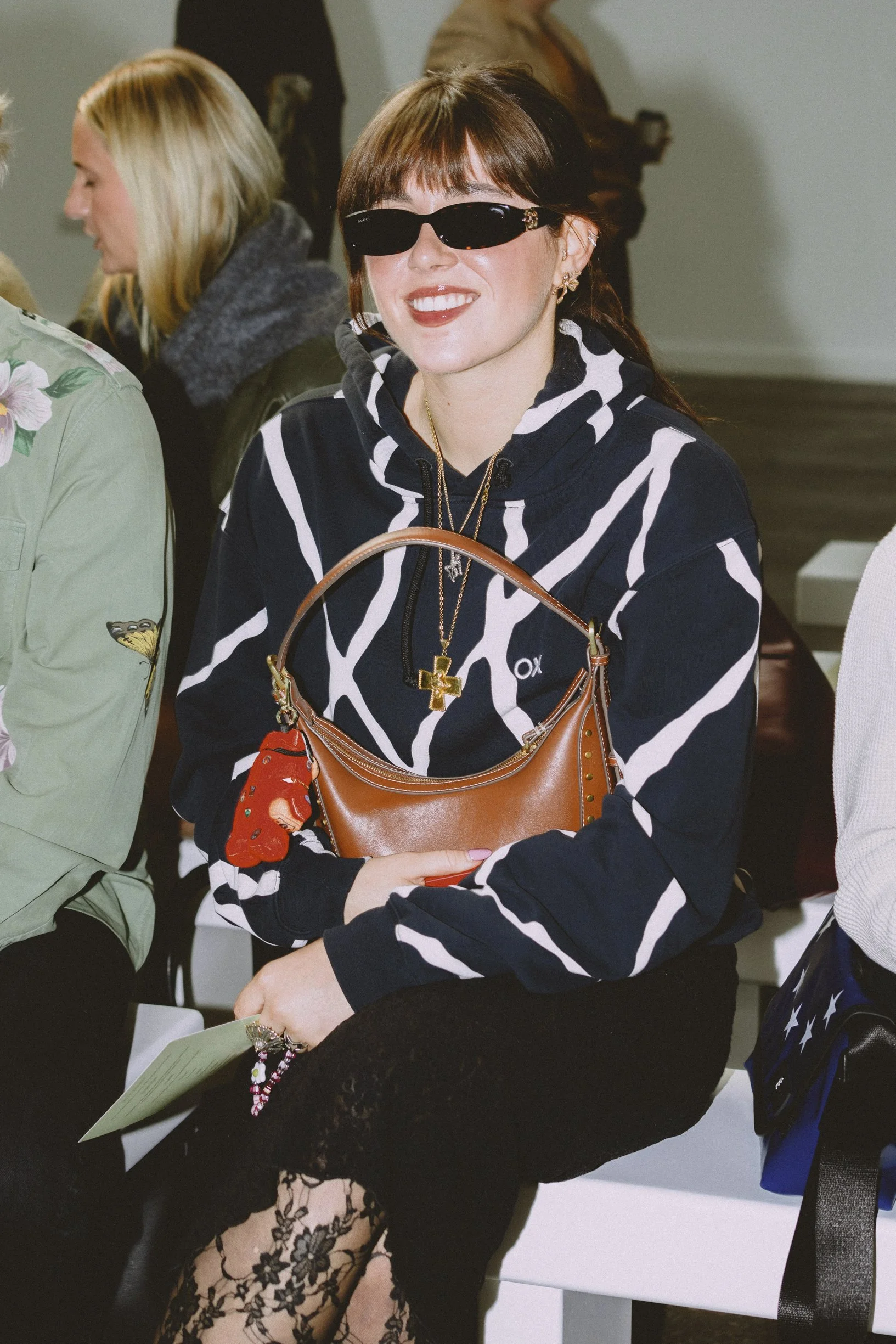
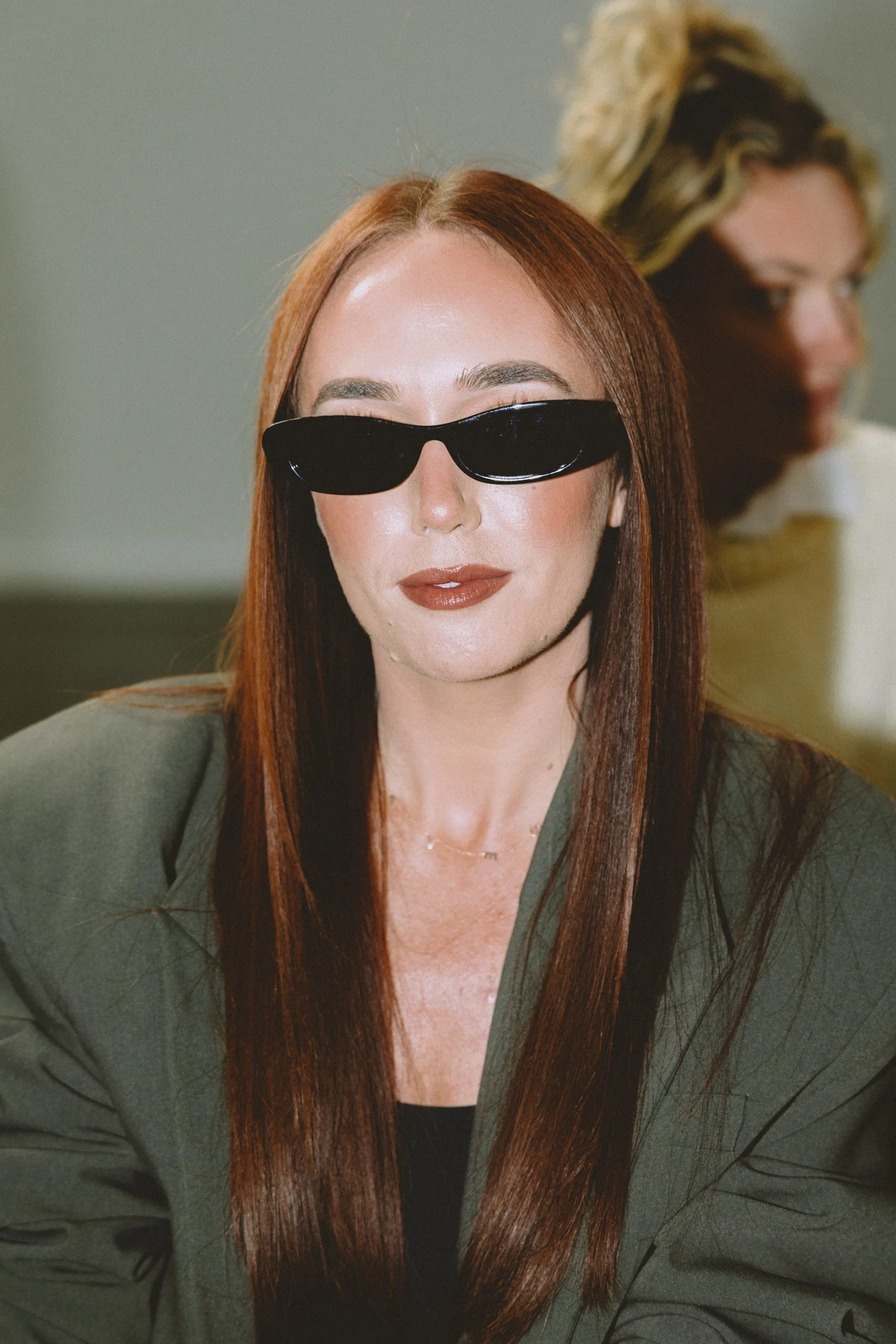
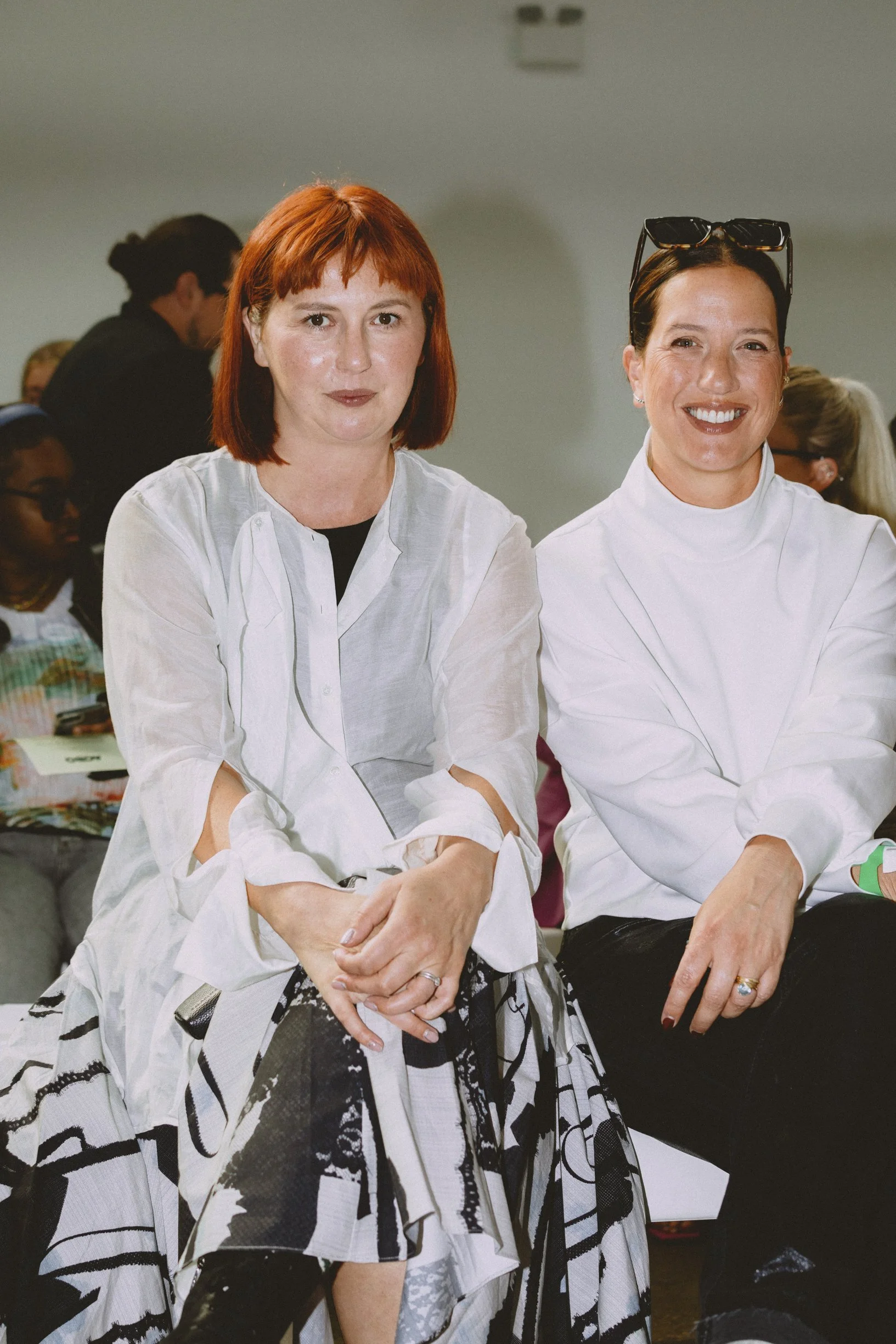
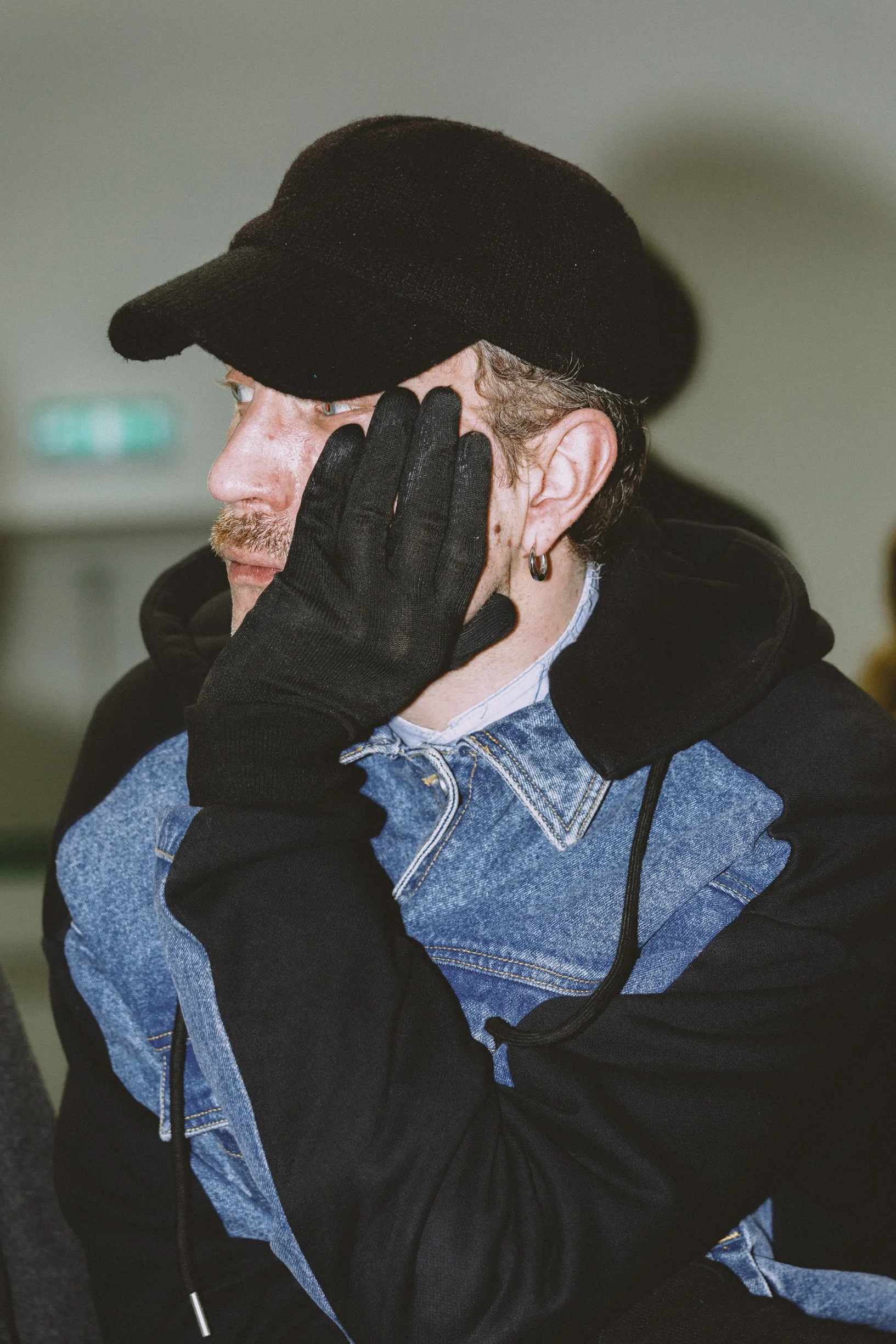
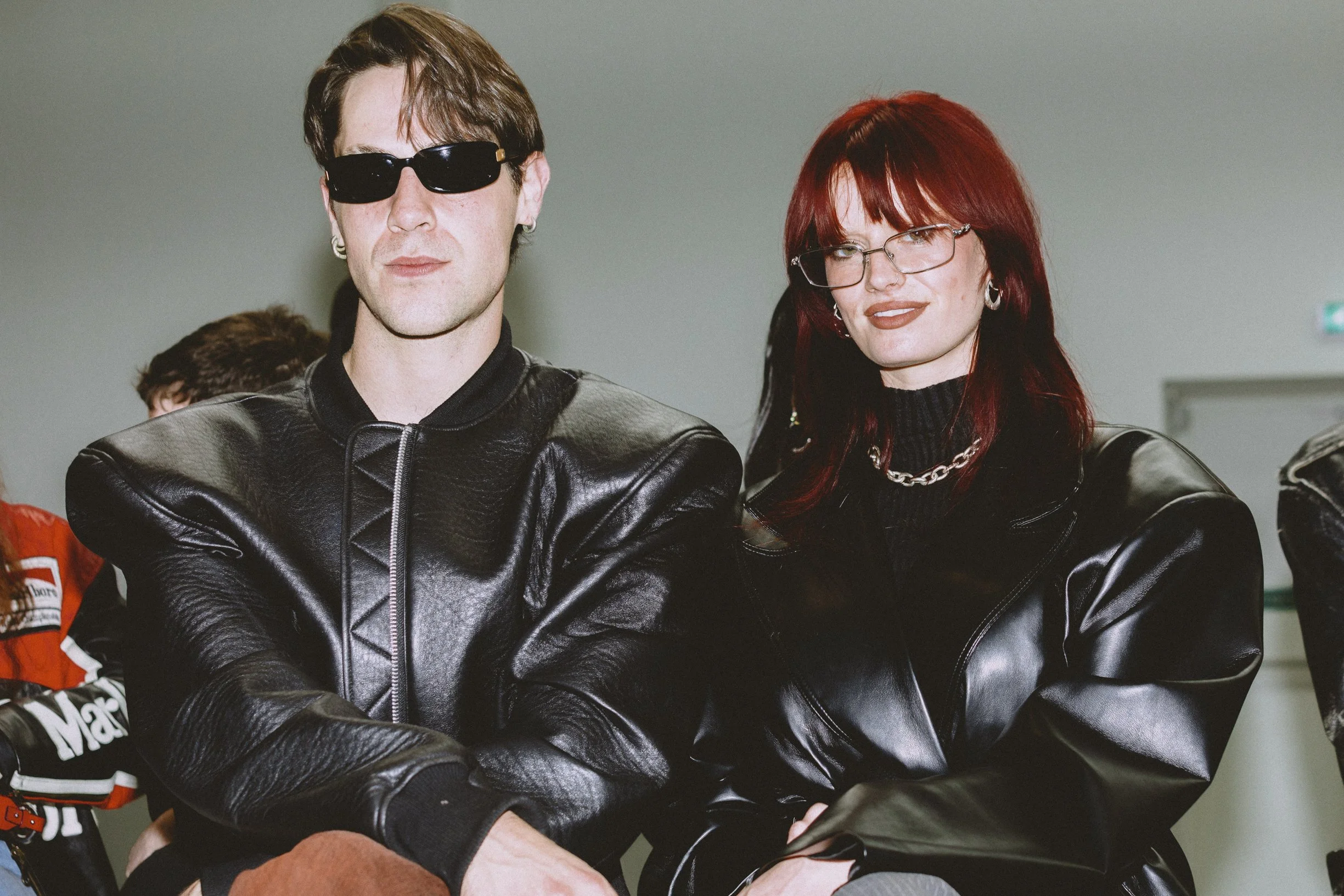
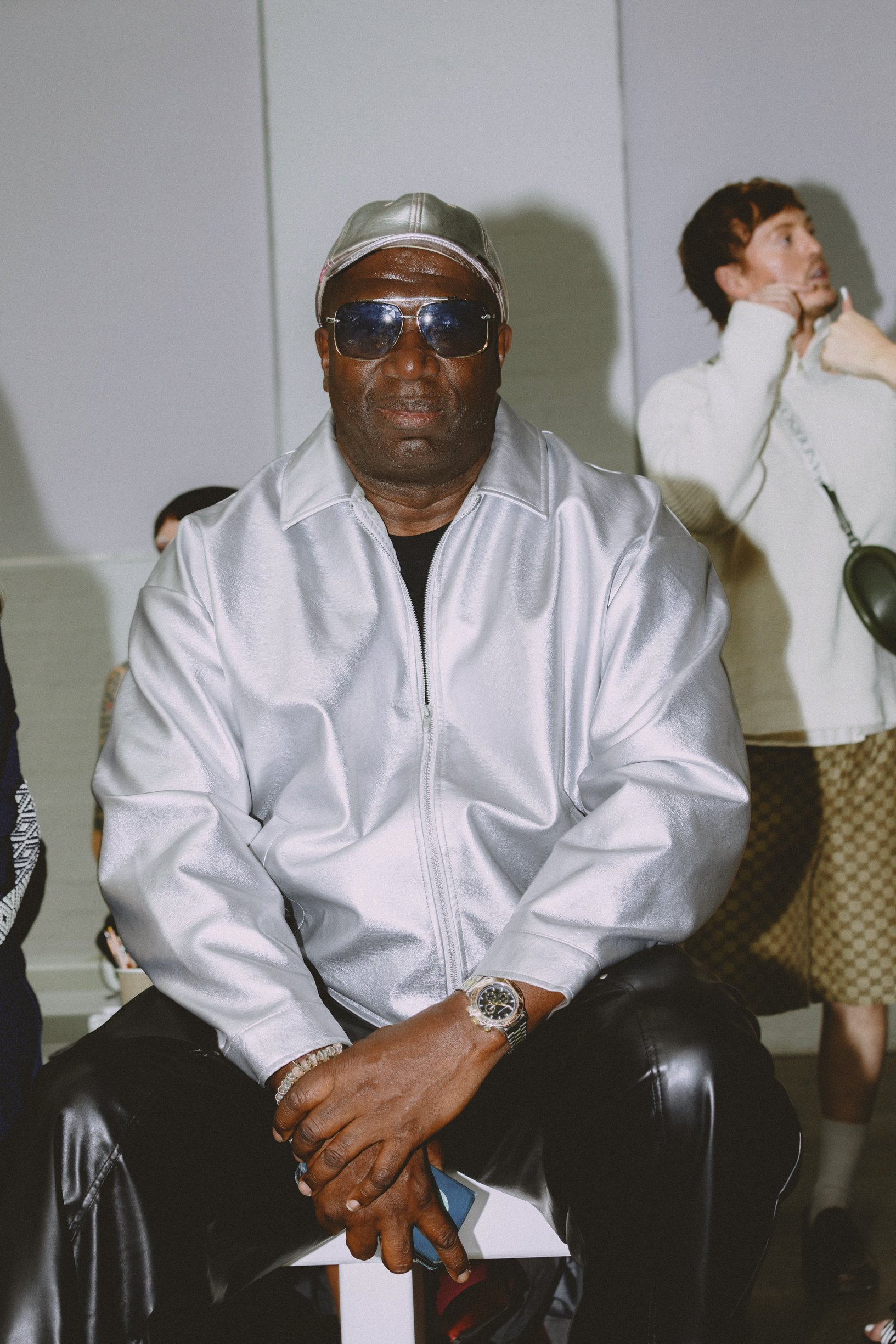
GUESTS