Wild Rose & Sparrow SS27: Proserpine and the Beauty of Returning
For Spring/Summer 2027, Wild Rose & Sparrow descends into the underworld and returns changed. Presented among the ancient stones of Paris's Musée de Cluny, Proserpine transforms the myth of Persephone into a meditation on romance, resilience and the strange beauty of beginning again.
There is something fitting about placing a collection concerned with death, rebirth and memory among ruins.
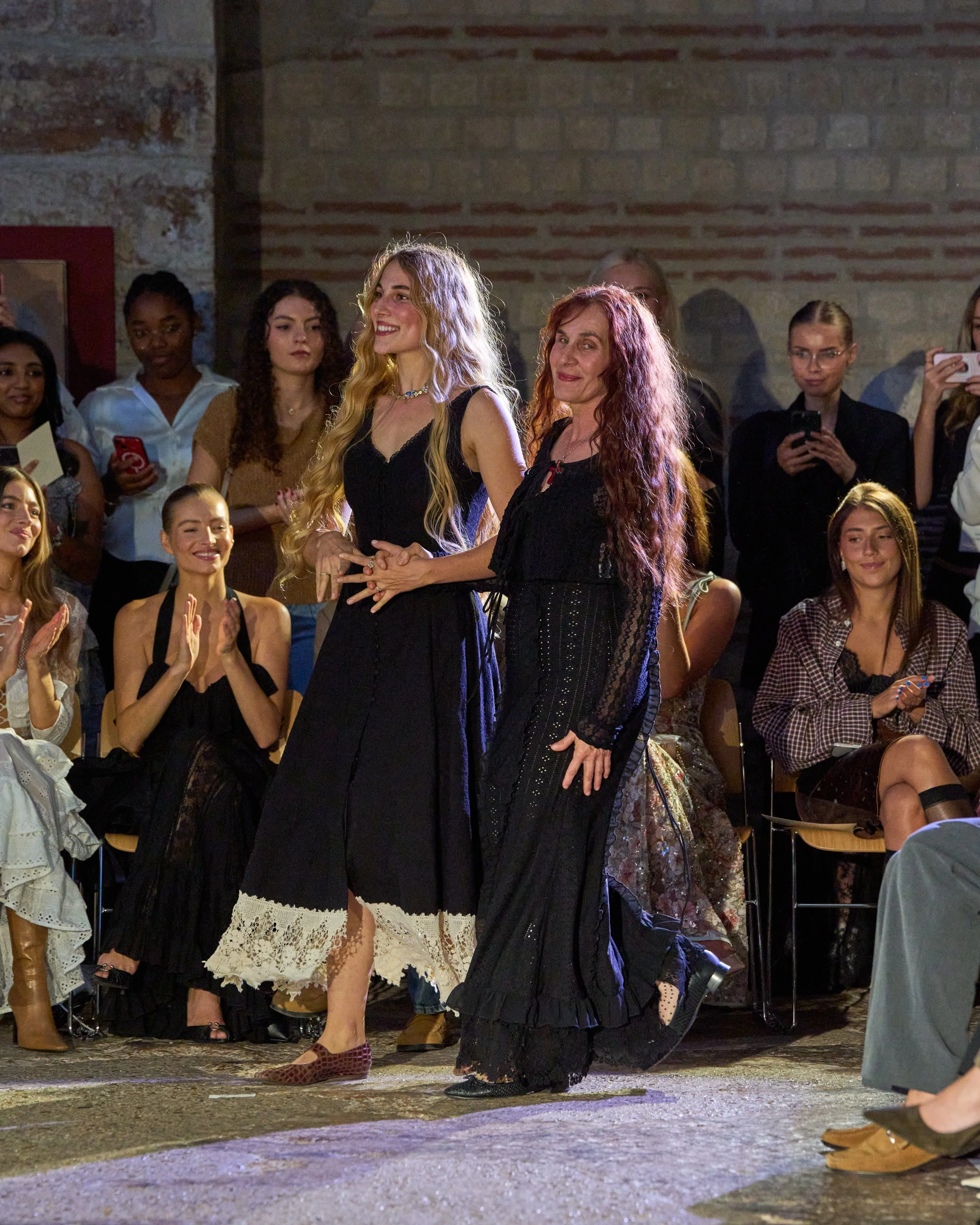
For Spring/Summer 2027, Wild Rose & Sparrow brings Proserpine to the Gallo-Roman remains of the Musée de Cluny in Paris. Co-designers Liana and Ariana Dancu look towards Persephone, or Proserpine in Roman mythology, not simply as a romantic reference but as a way of structuring the collection itself. She disappears, crosses between worlds and eventually returns. The clothes follow her.
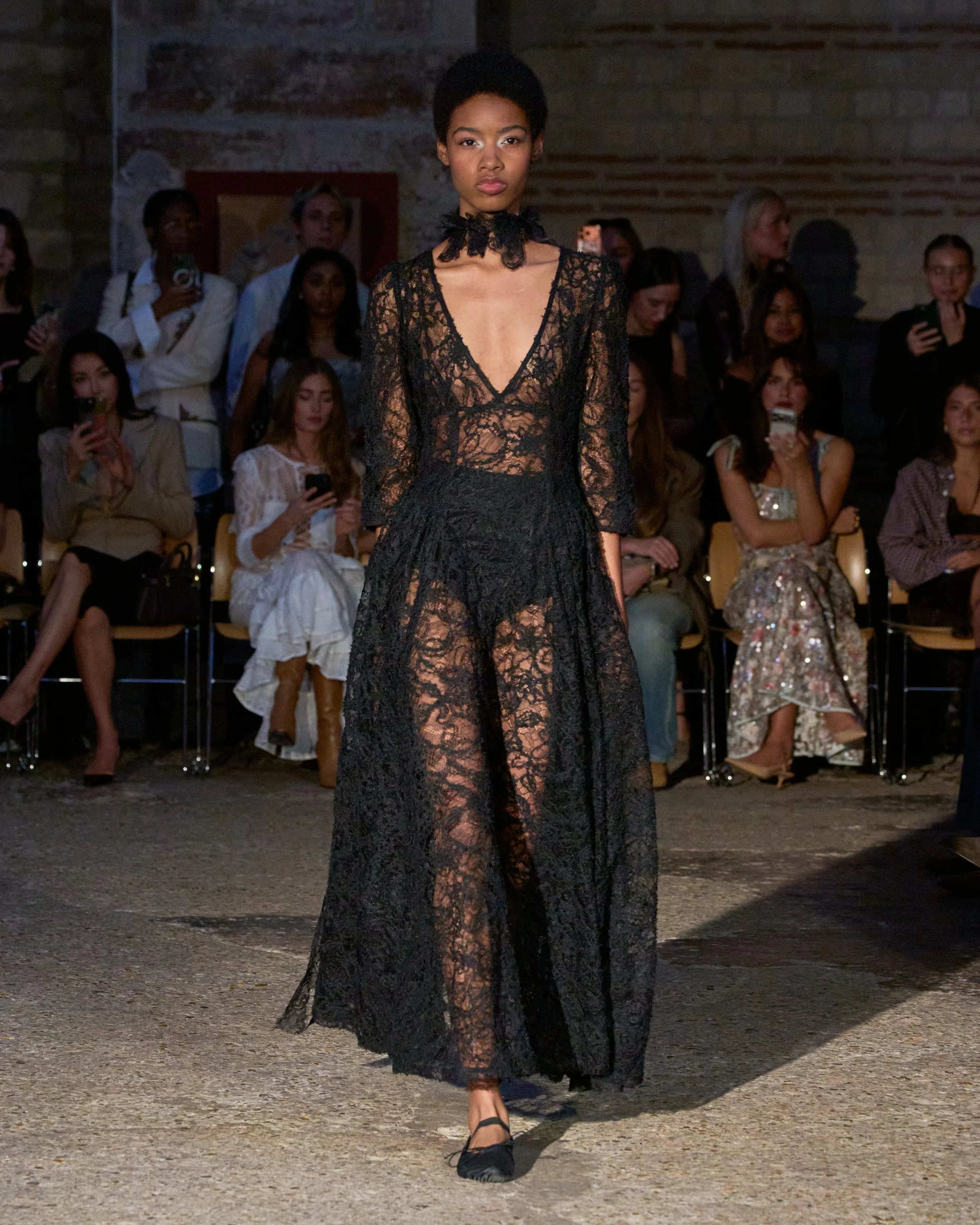
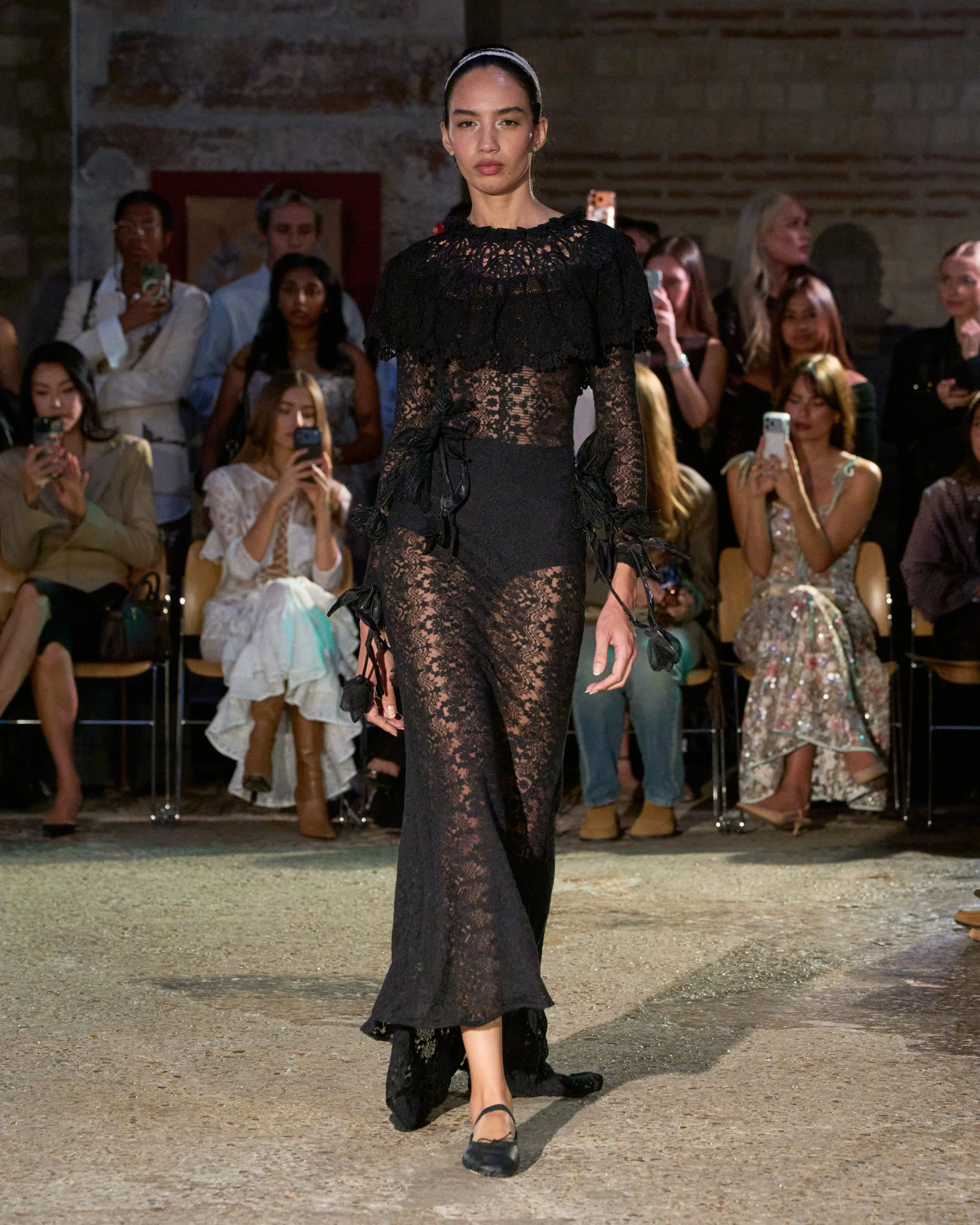
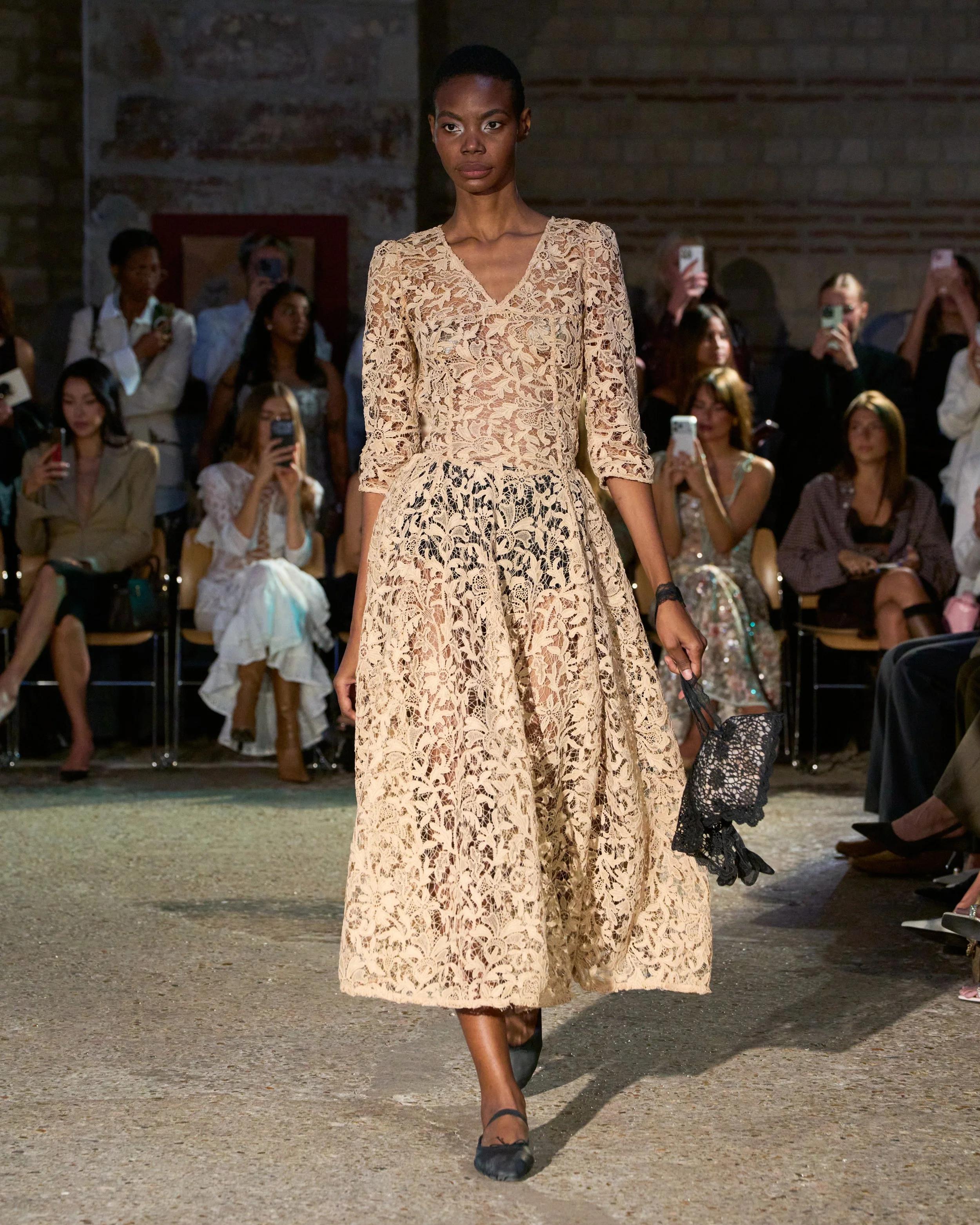
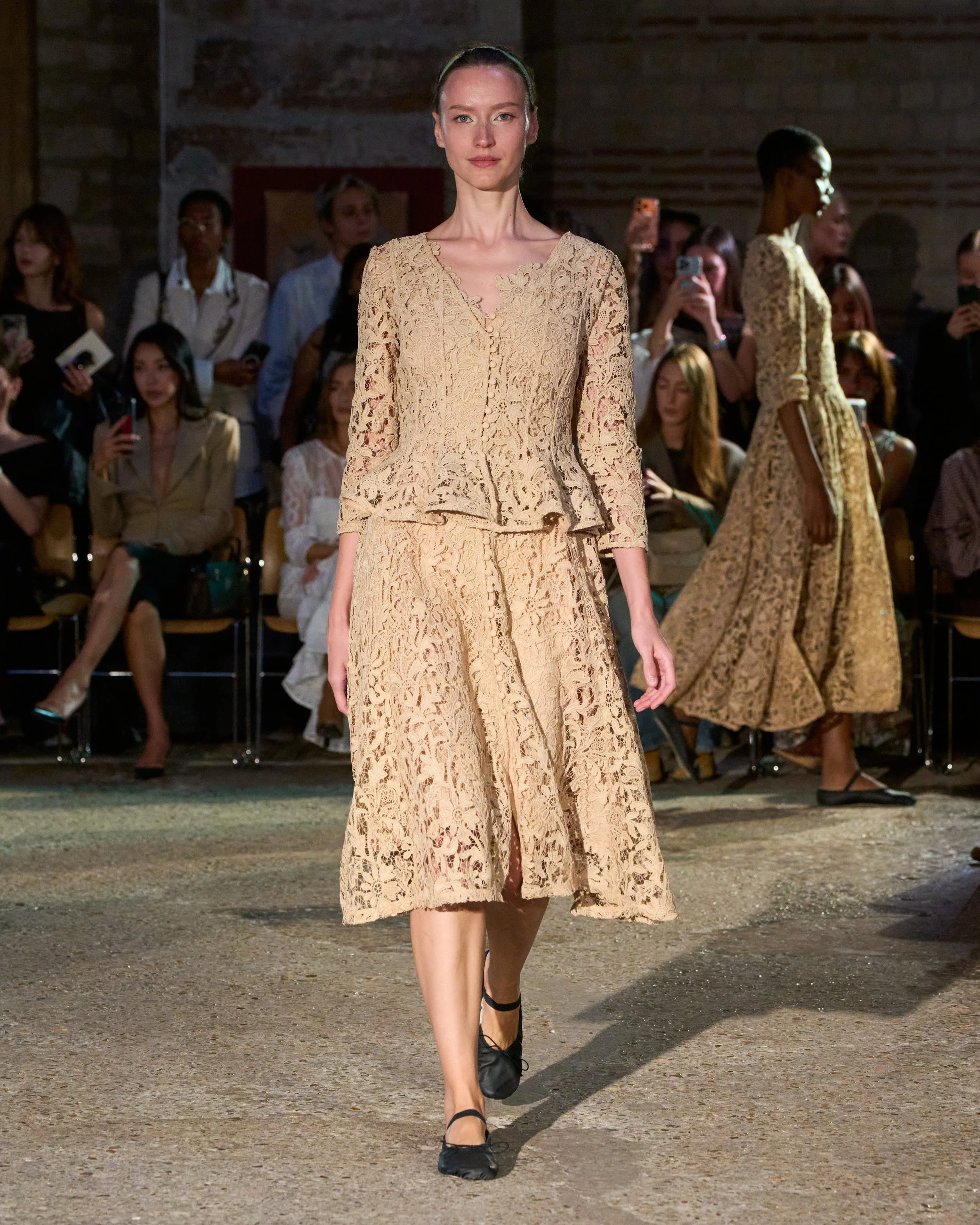
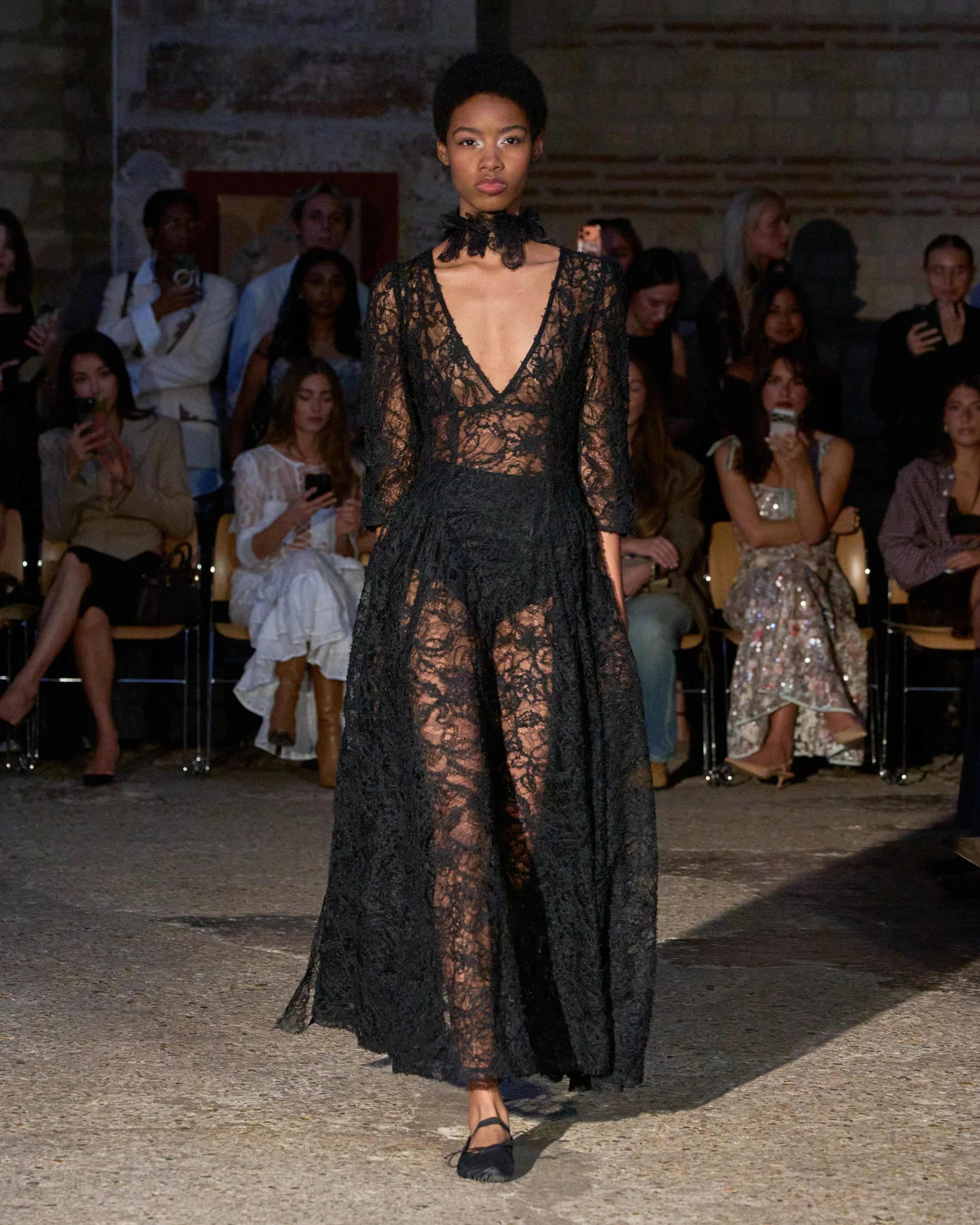
The opening is deliberately shadowed. Black lace, deep wheat tones and bronze macramé give the collection an earthbound quality, while gathered fabrics and hand-worked details appear almost overgrown, trailing across the body like roots or vines. Wild Rose & Sparrow's familiar femininity remains present, but here sweetness is interrupted by something darker and less pristine.
It is a useful tension. Romance without darkness can easily become decoration. Proserpine allows it to become narrative.
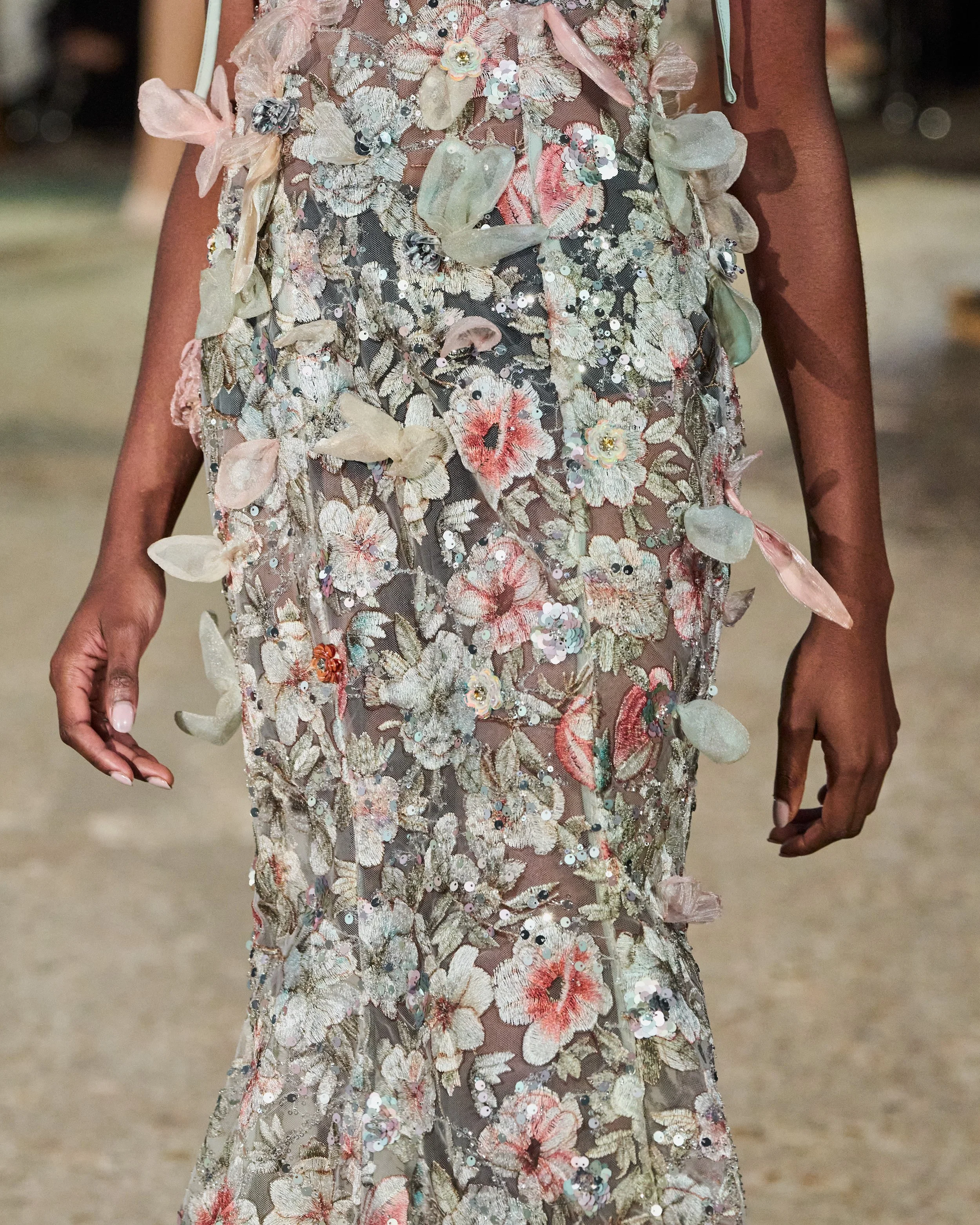
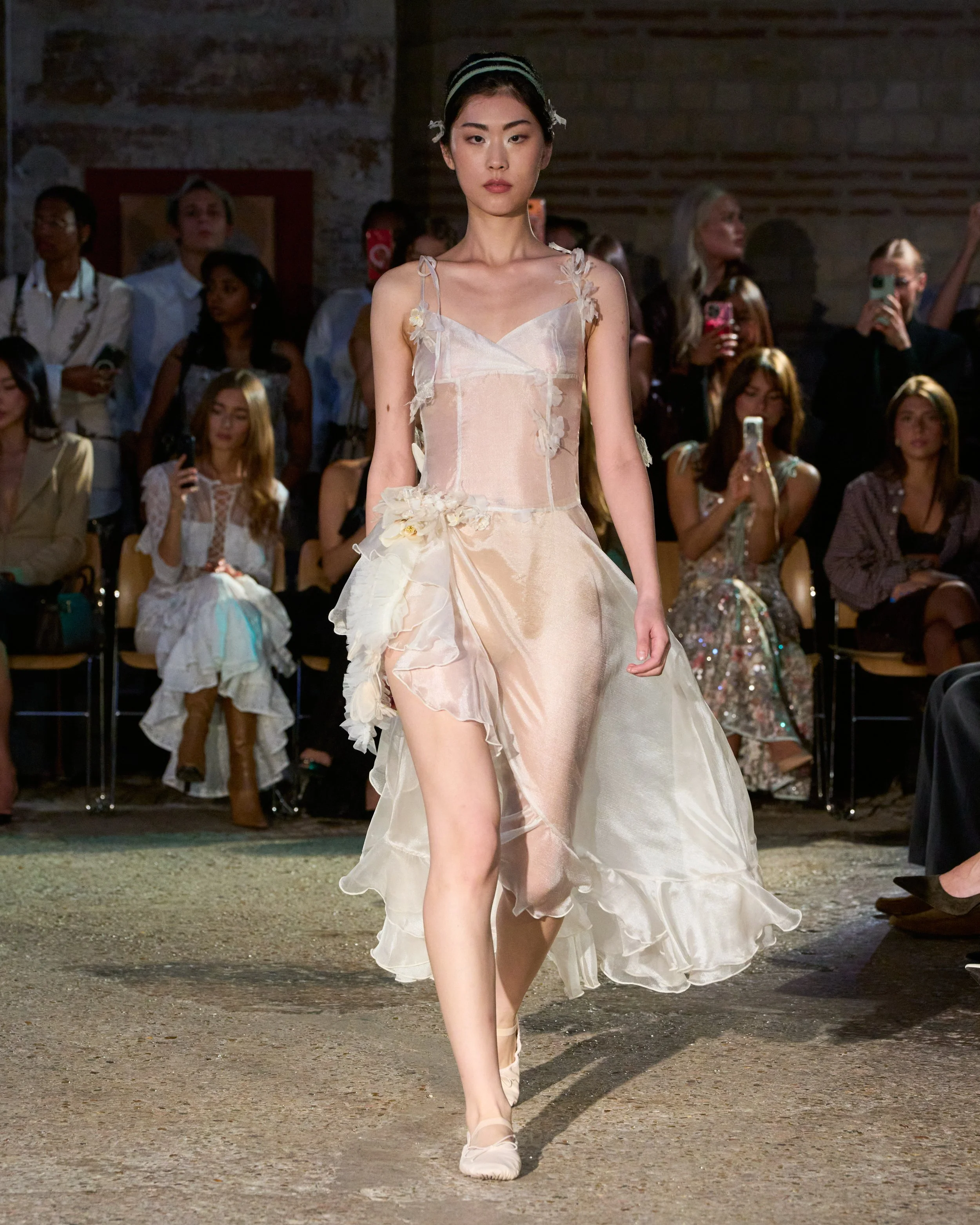
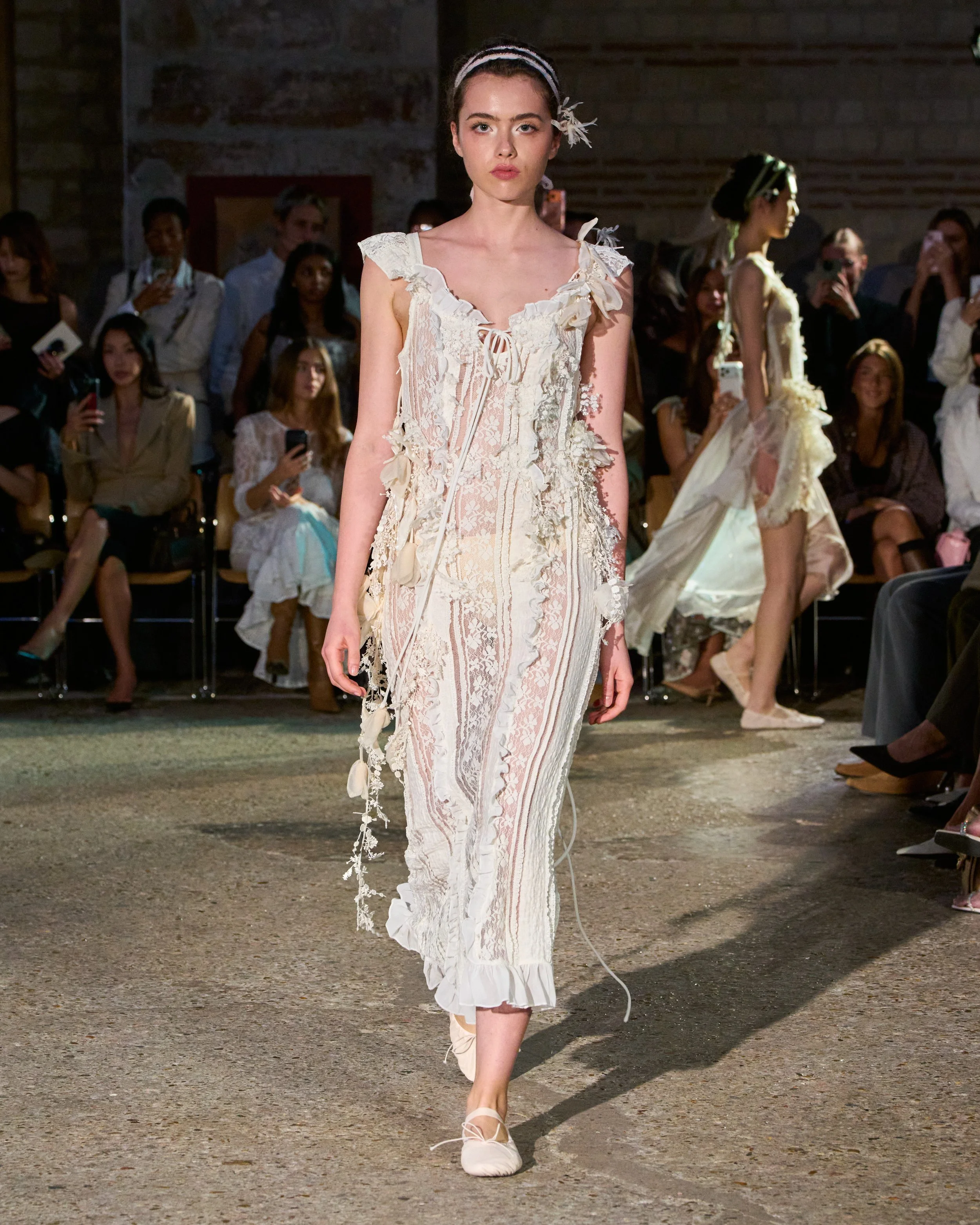
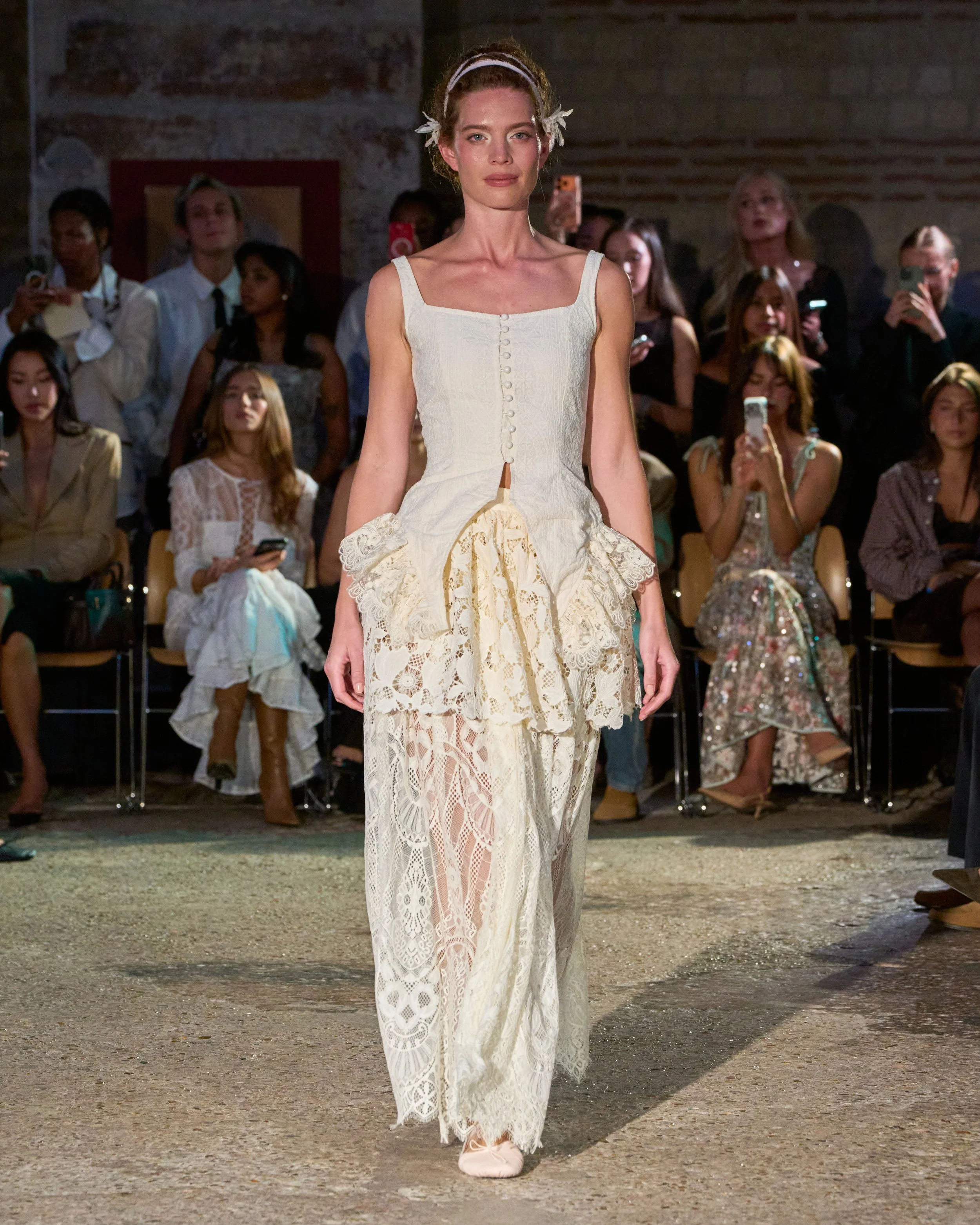
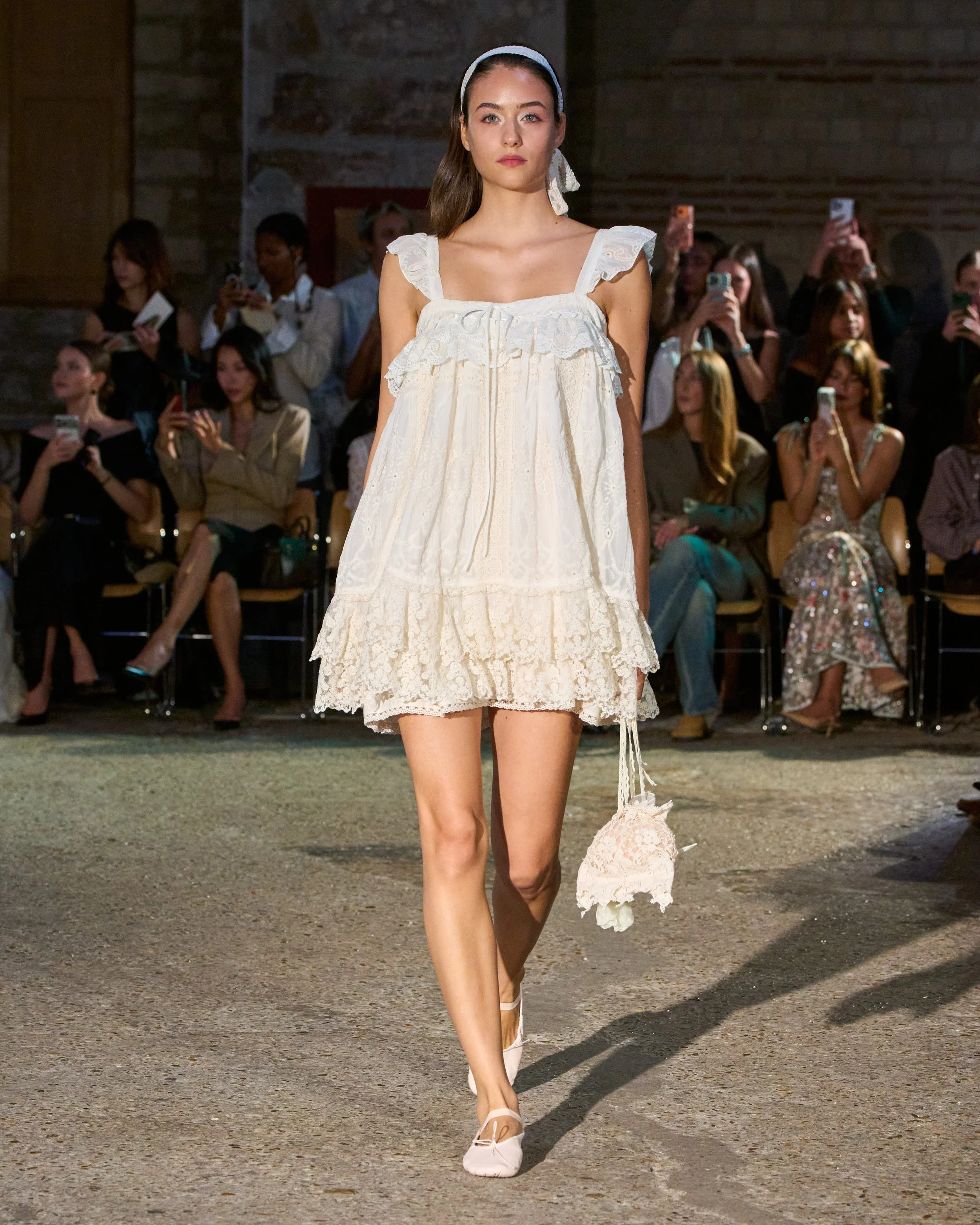
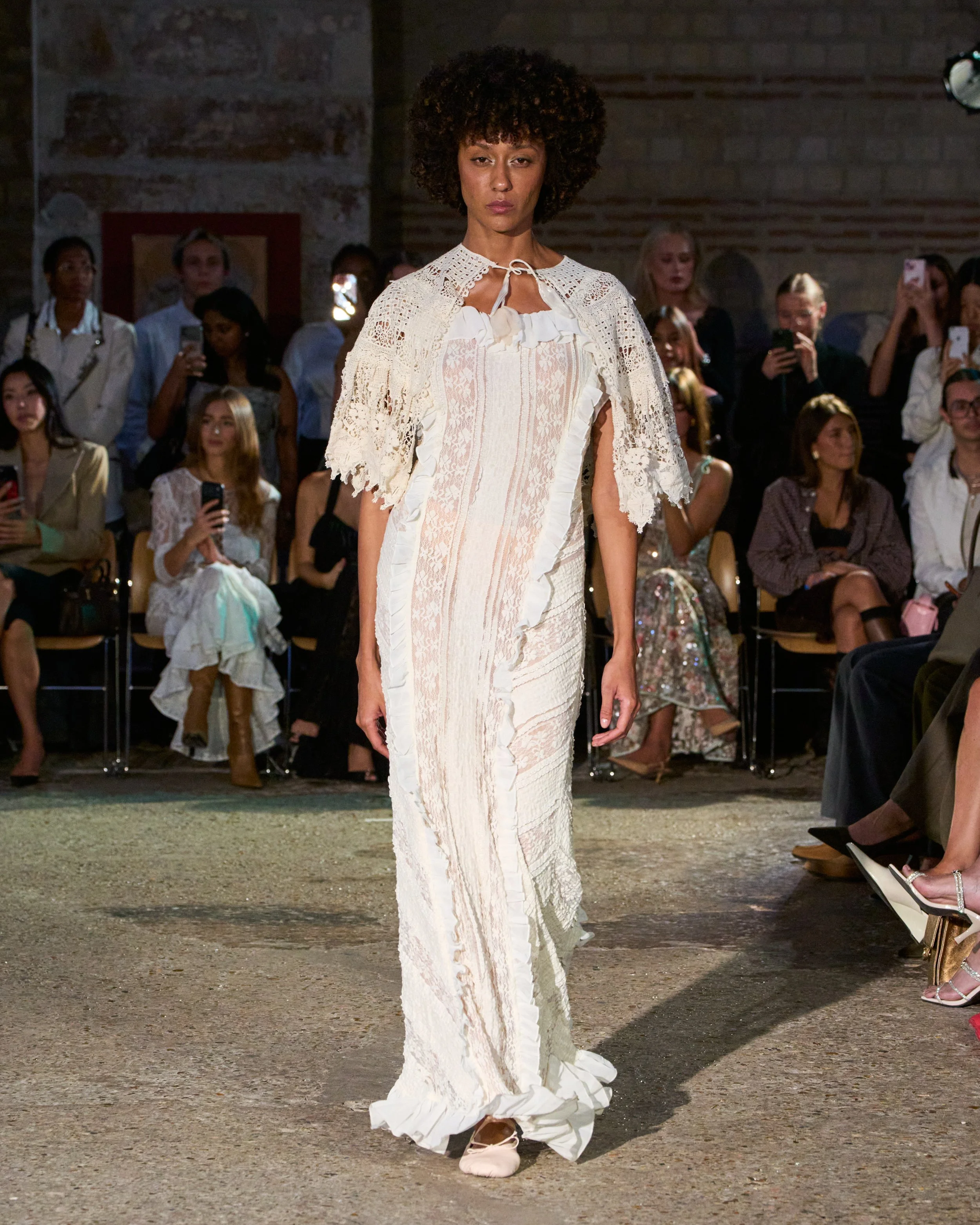
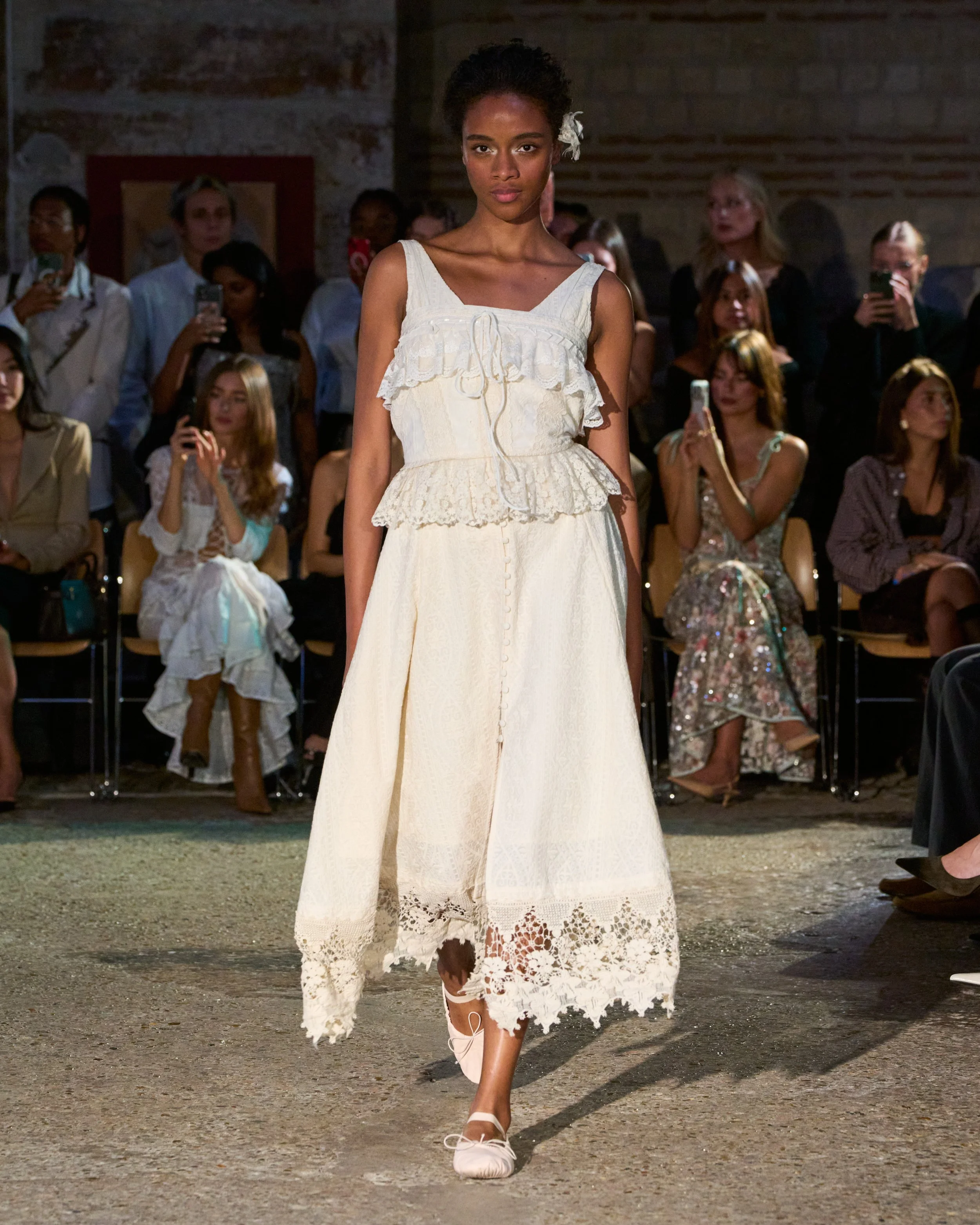
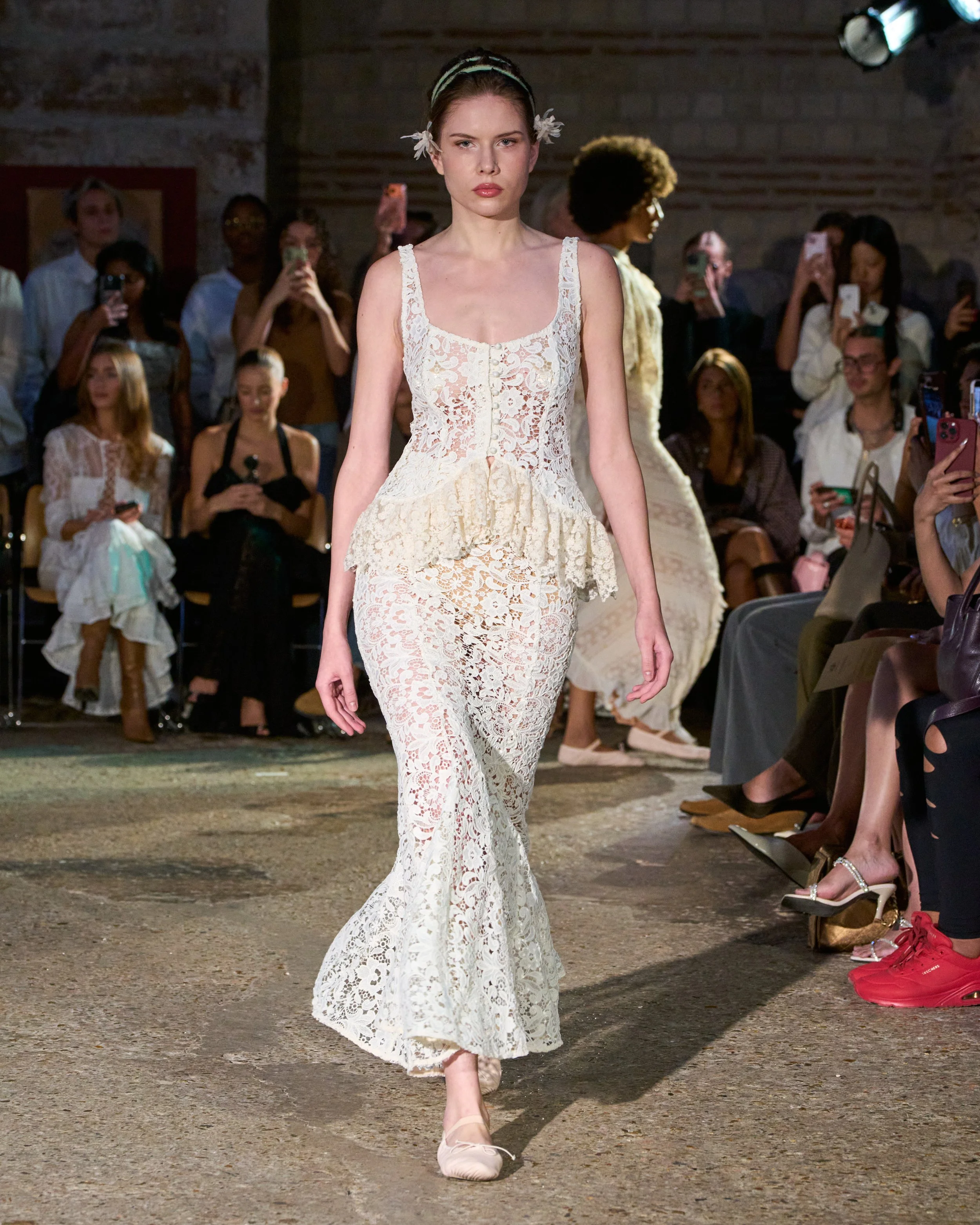
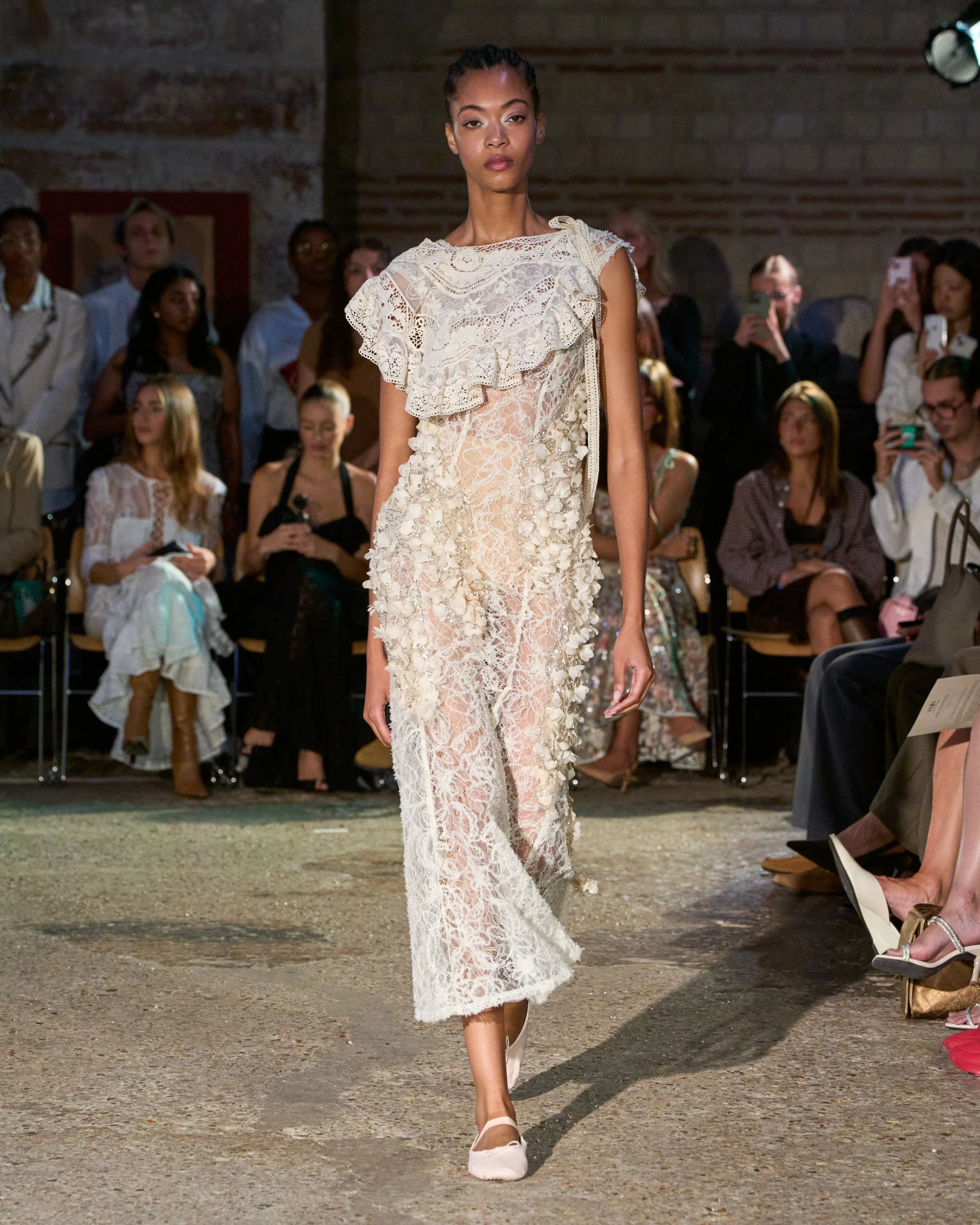
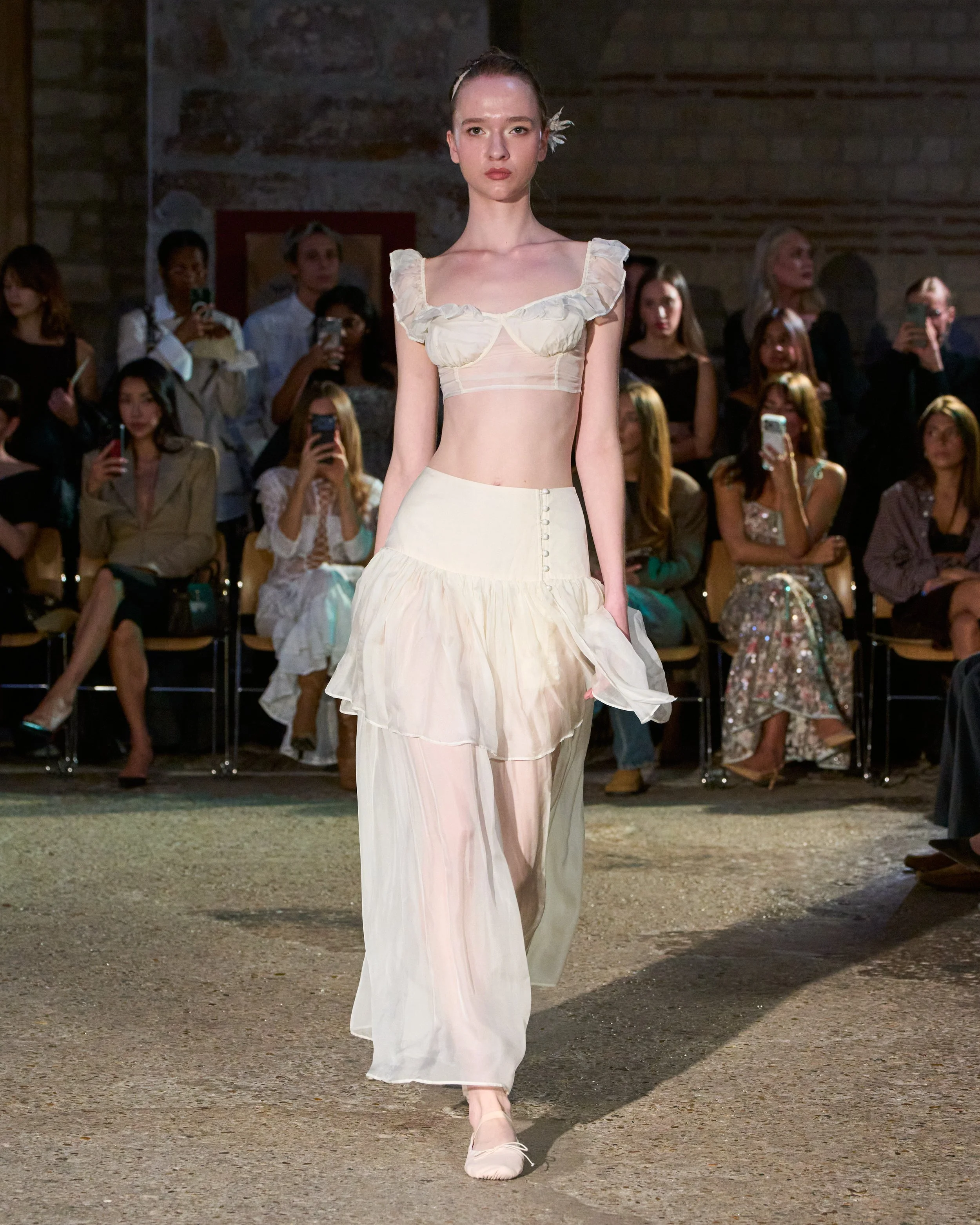
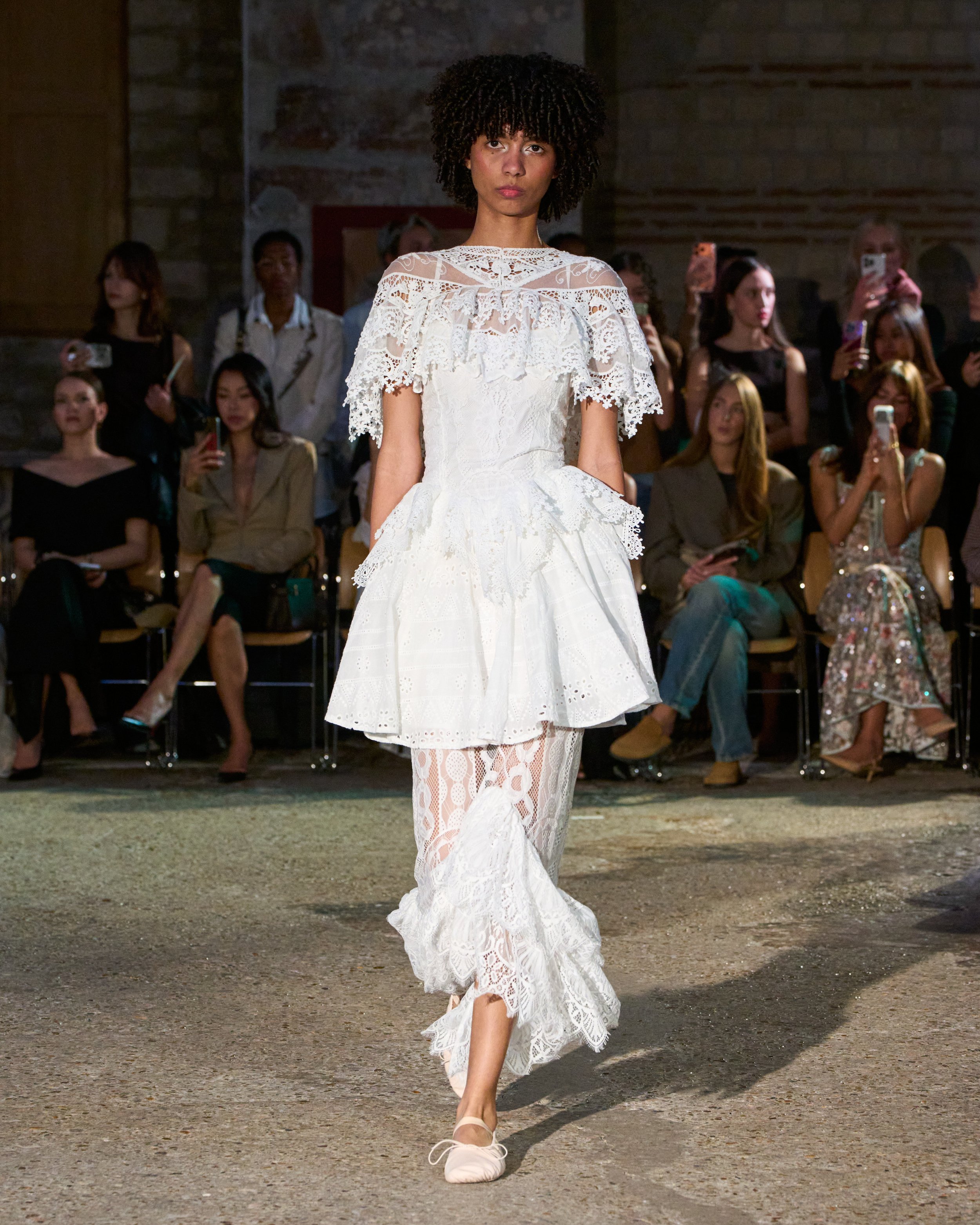
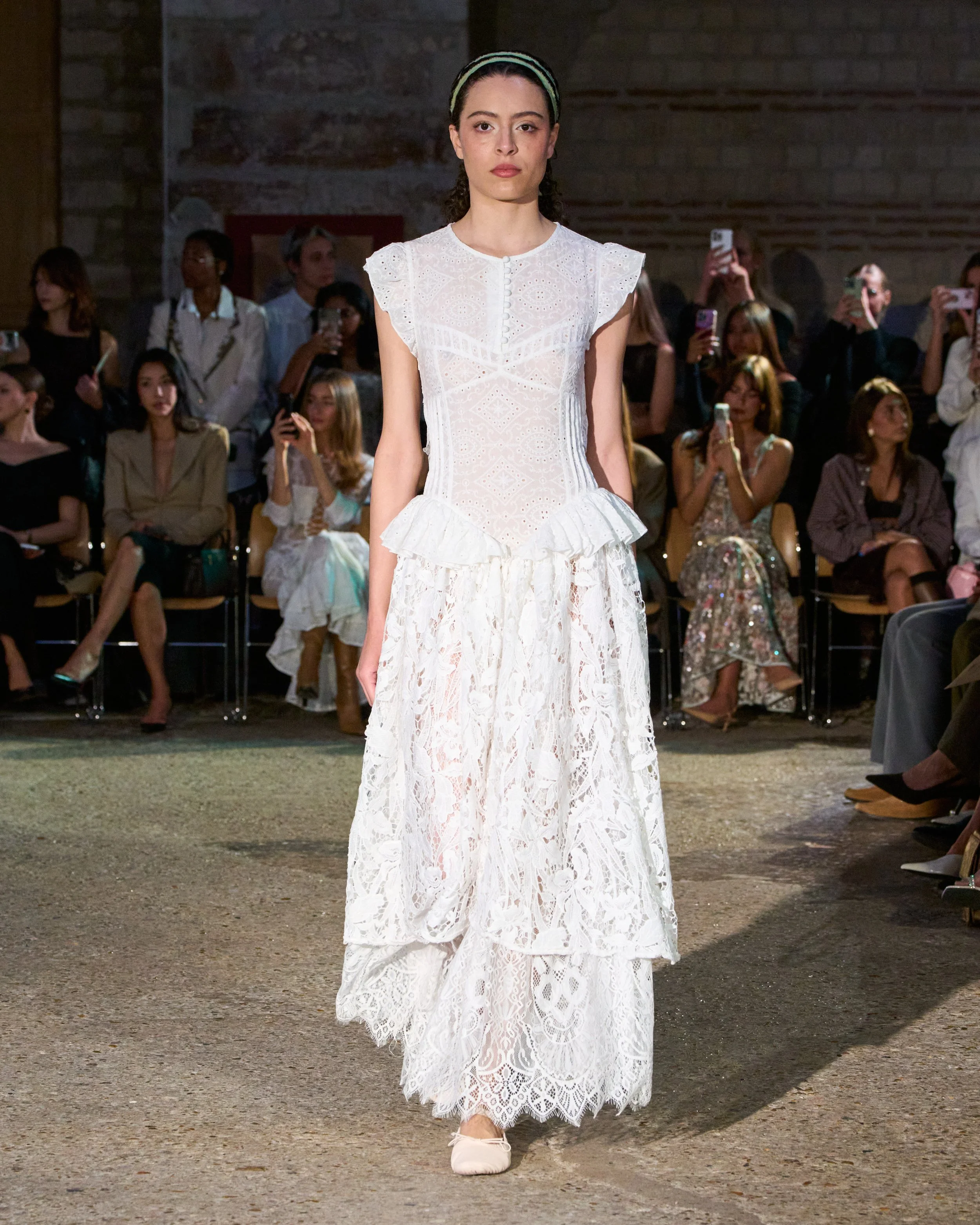
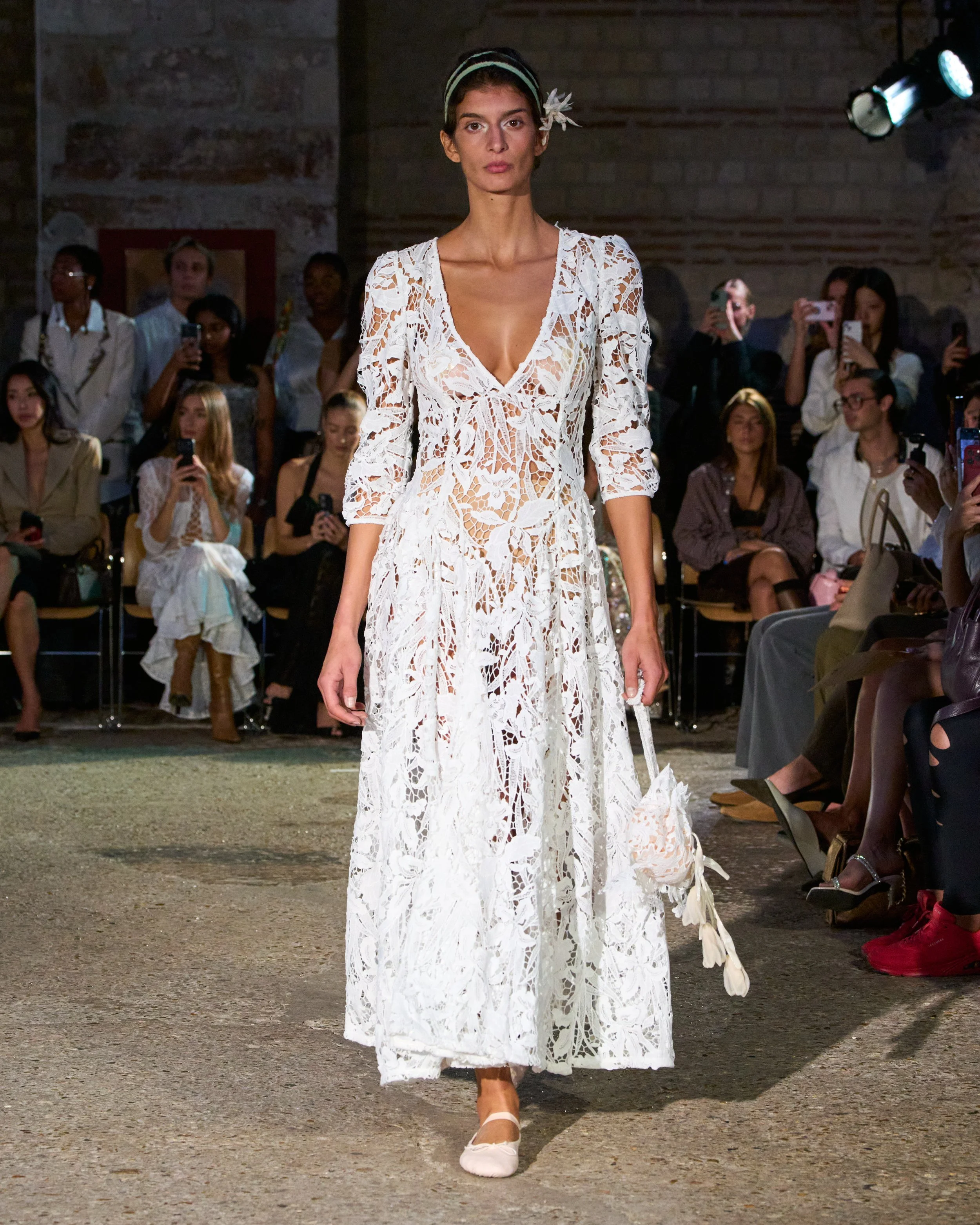
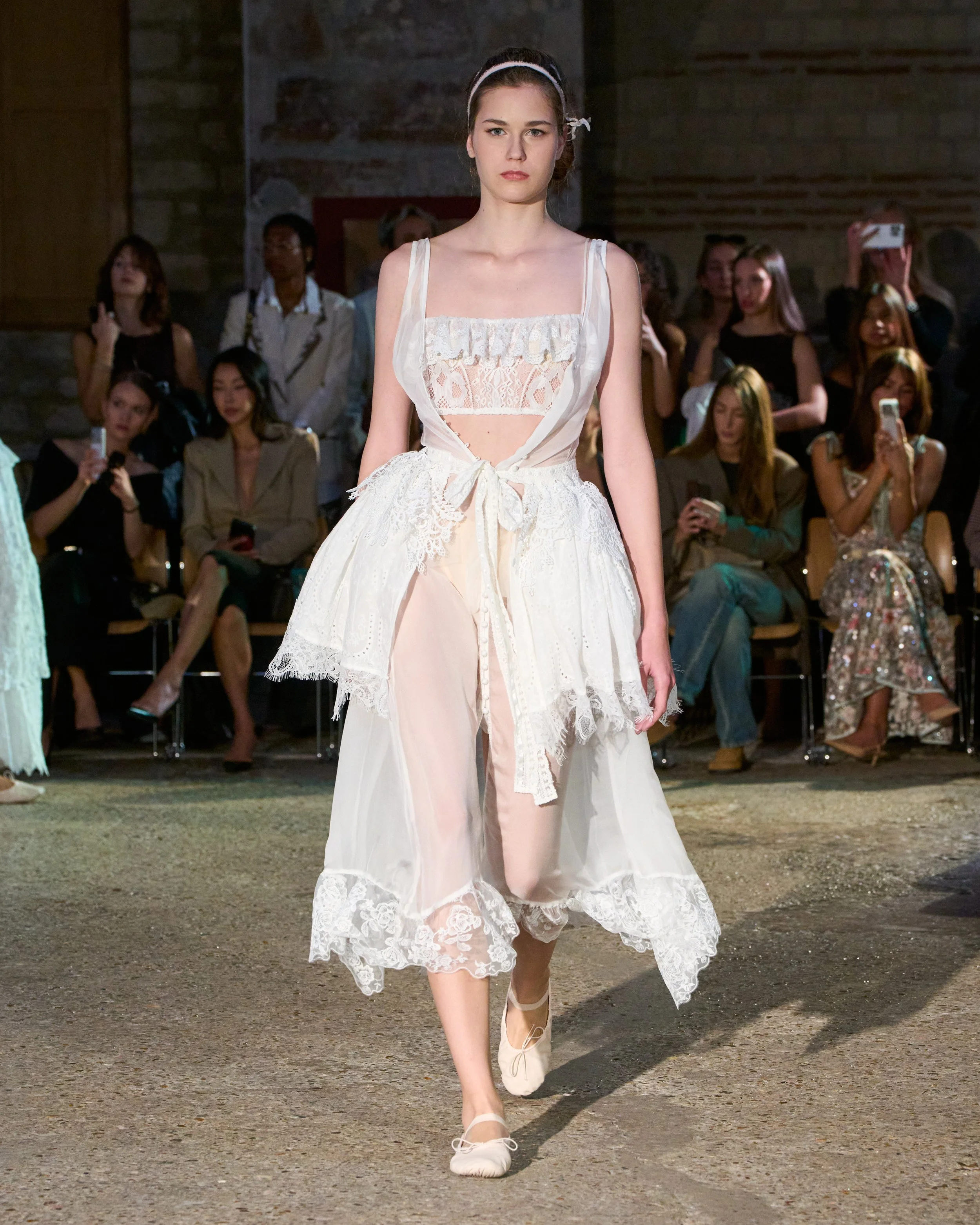
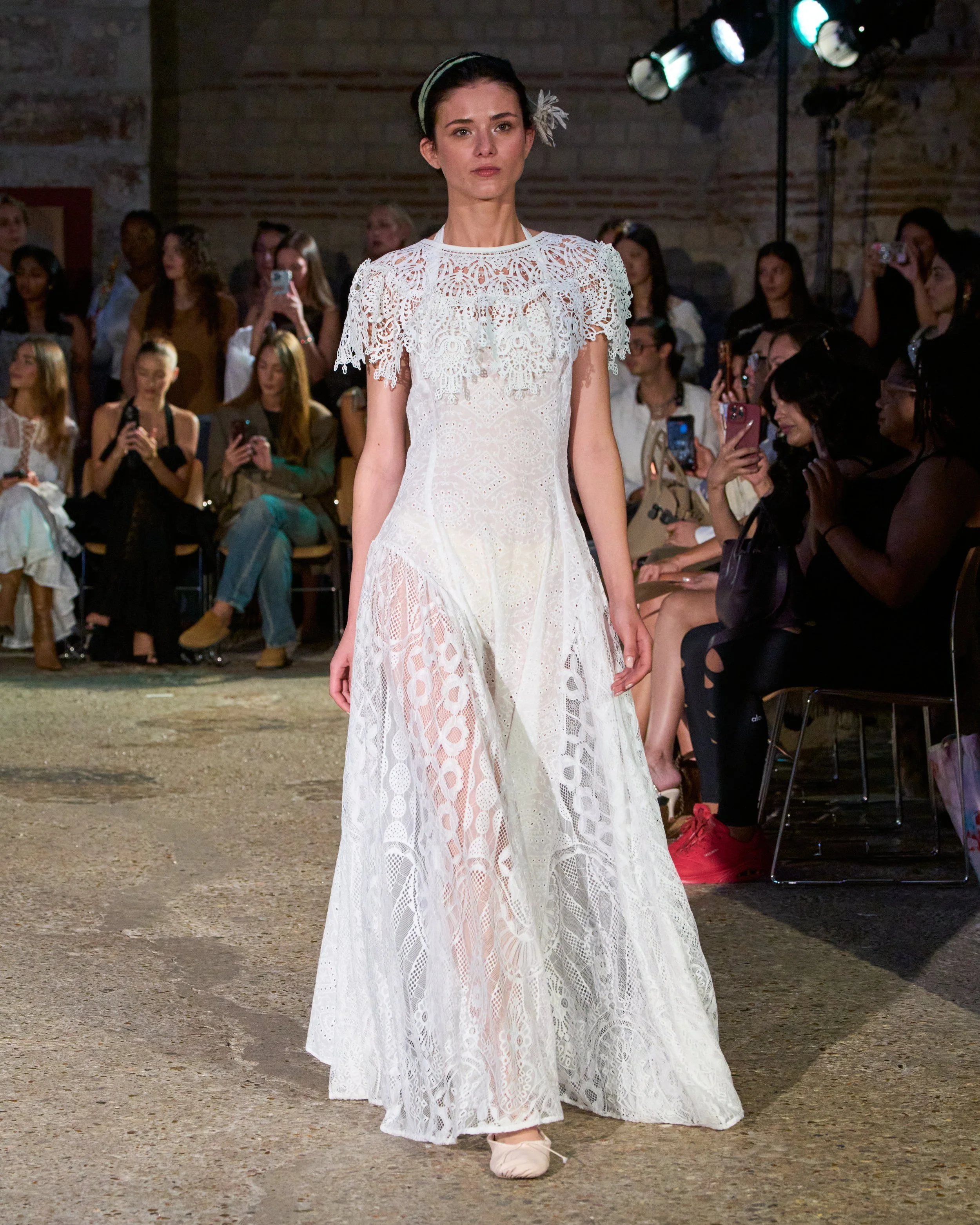
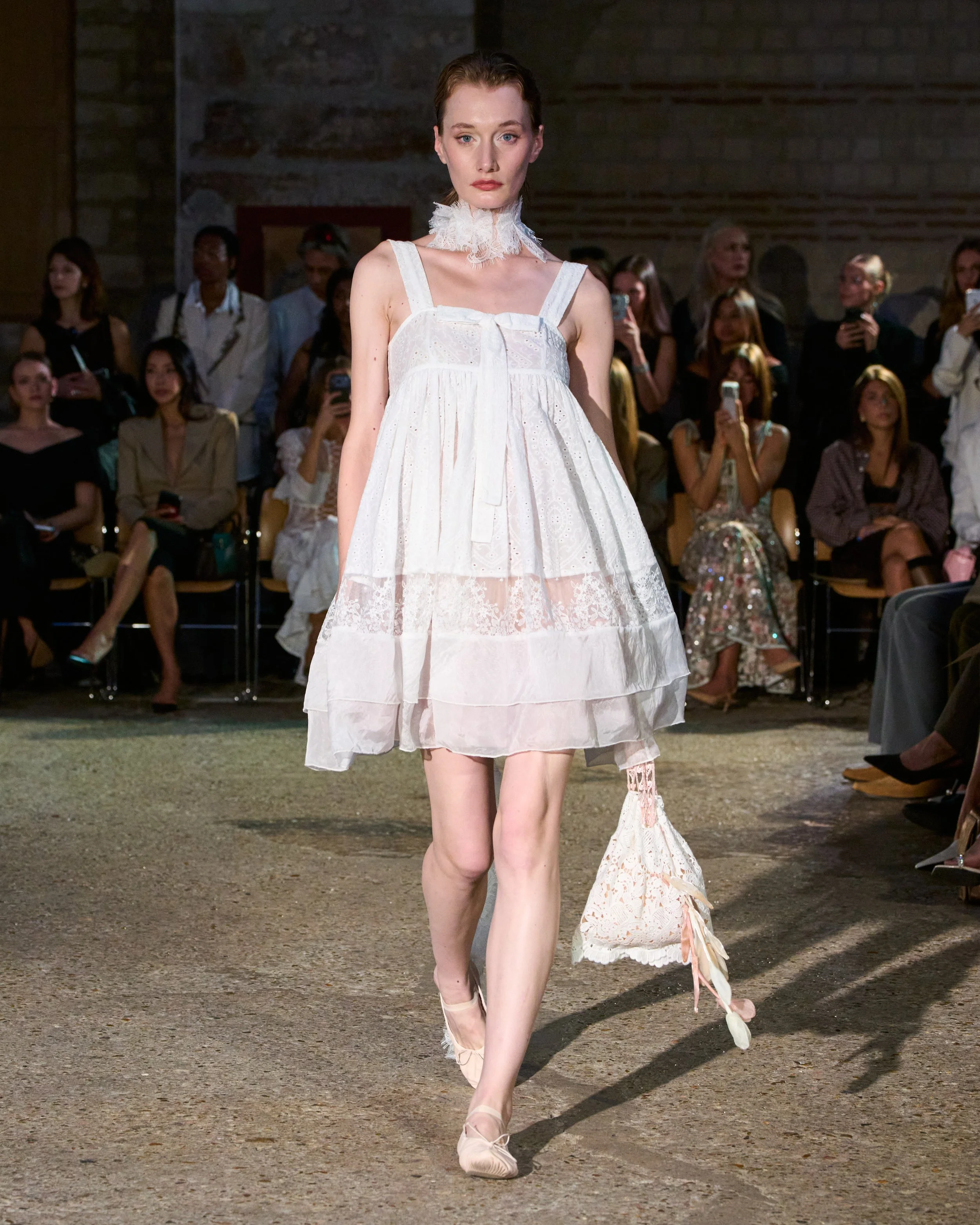
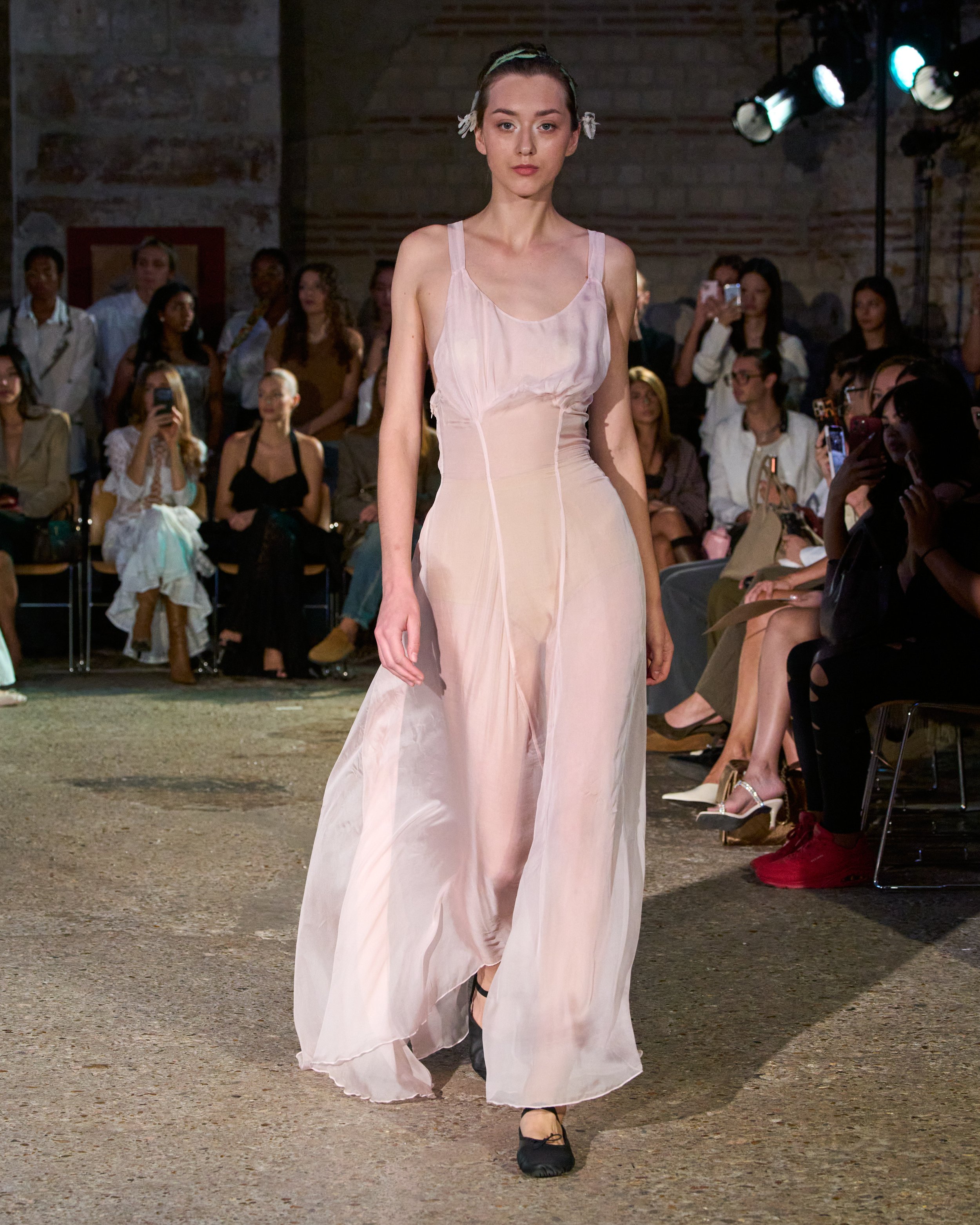
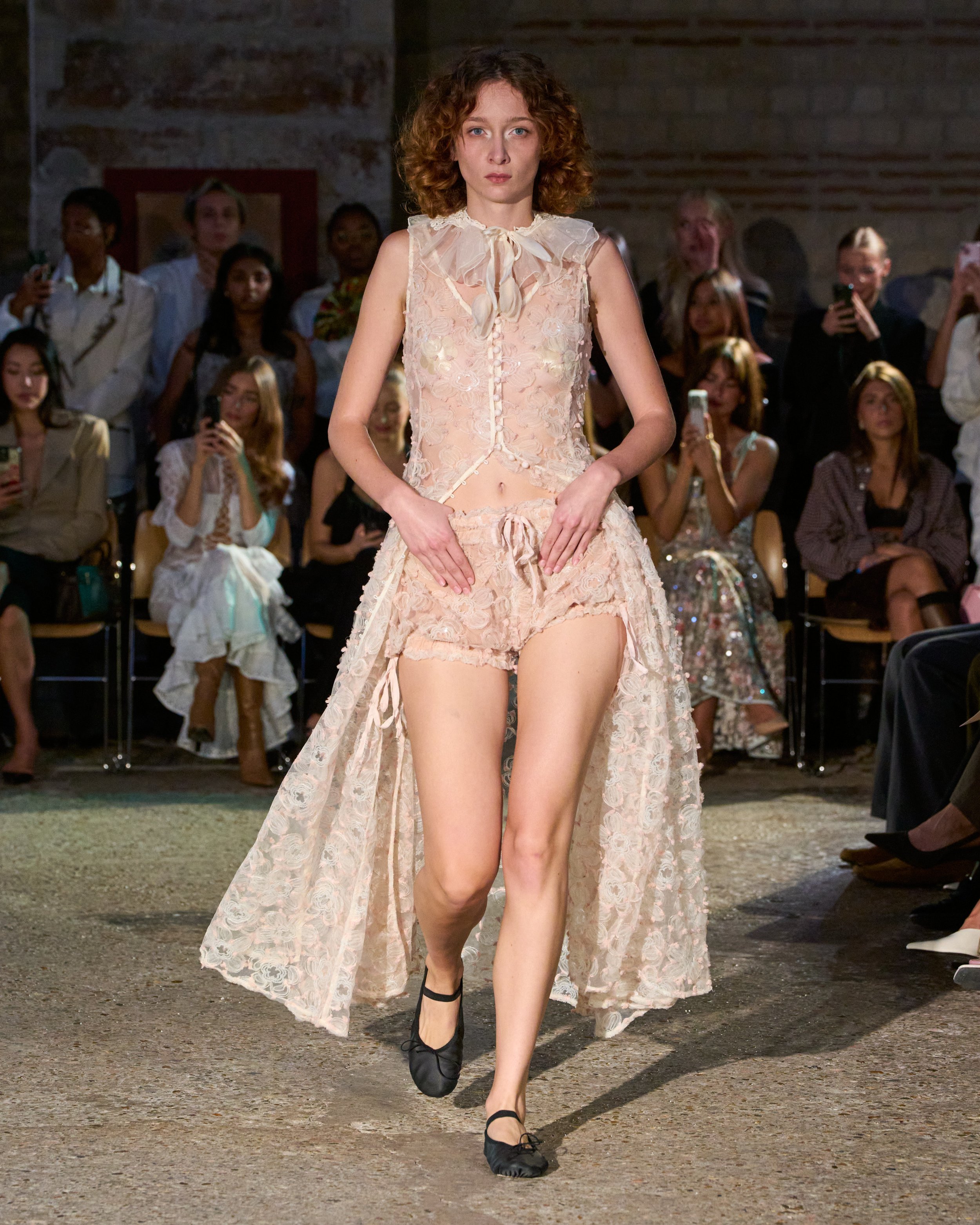
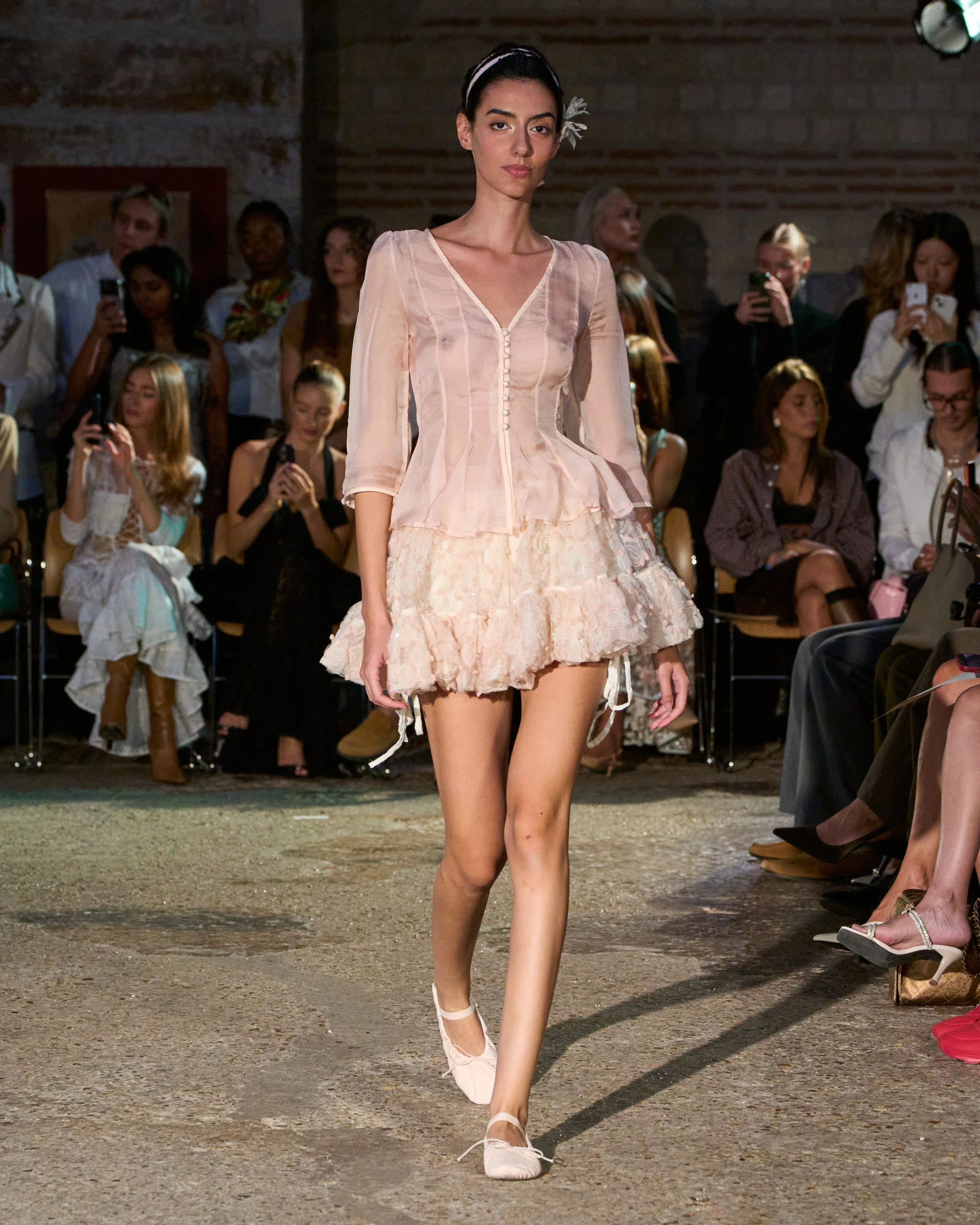
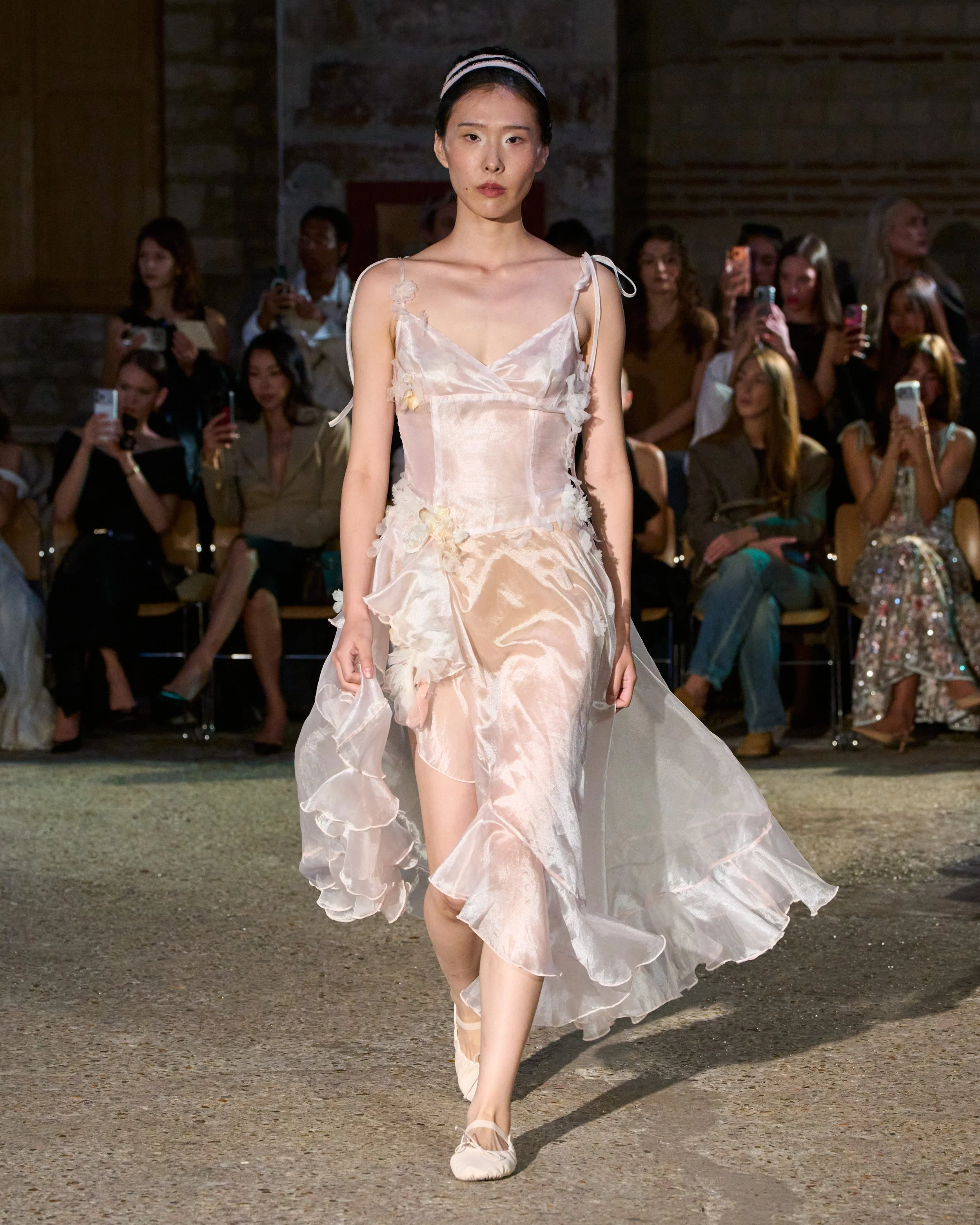
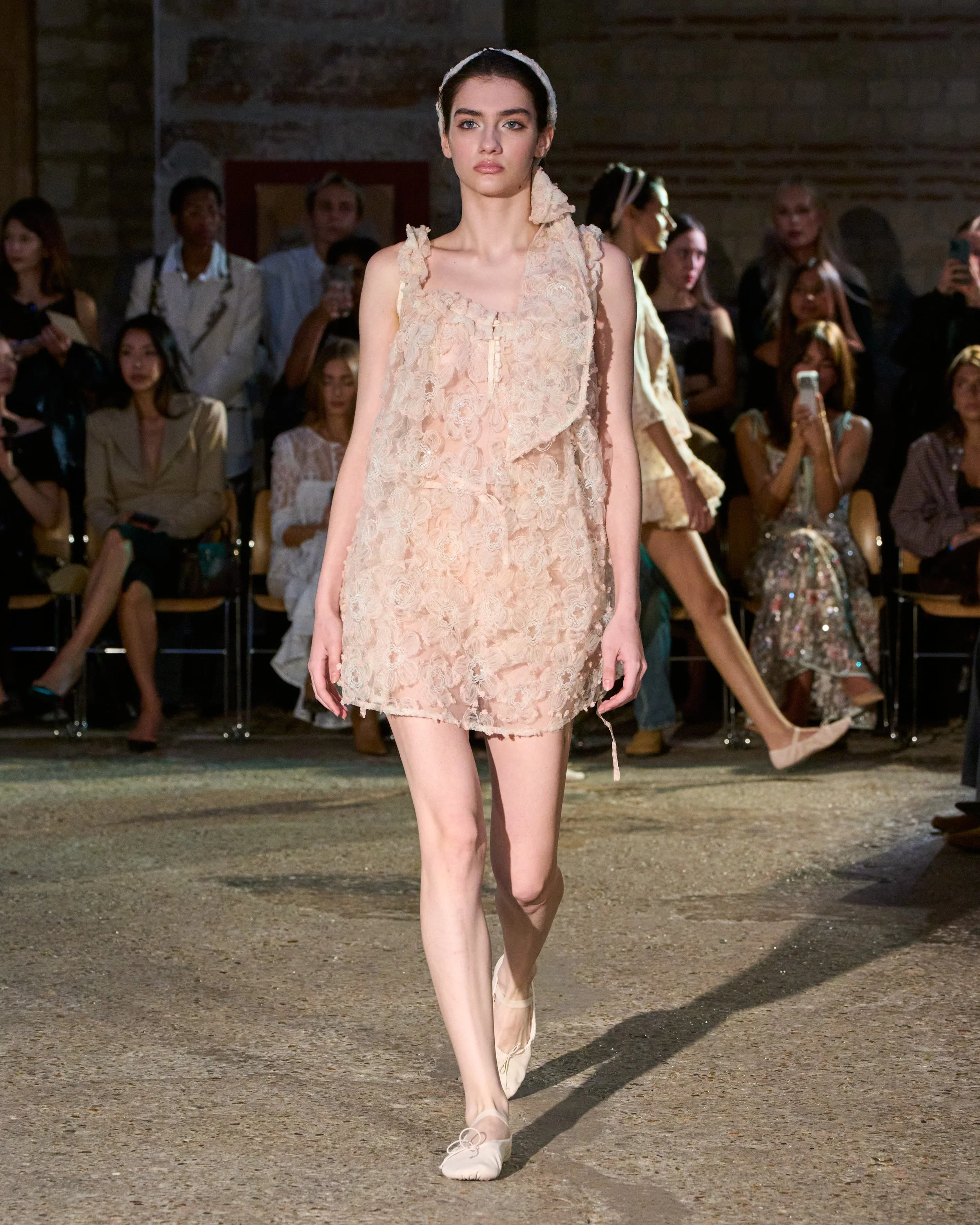
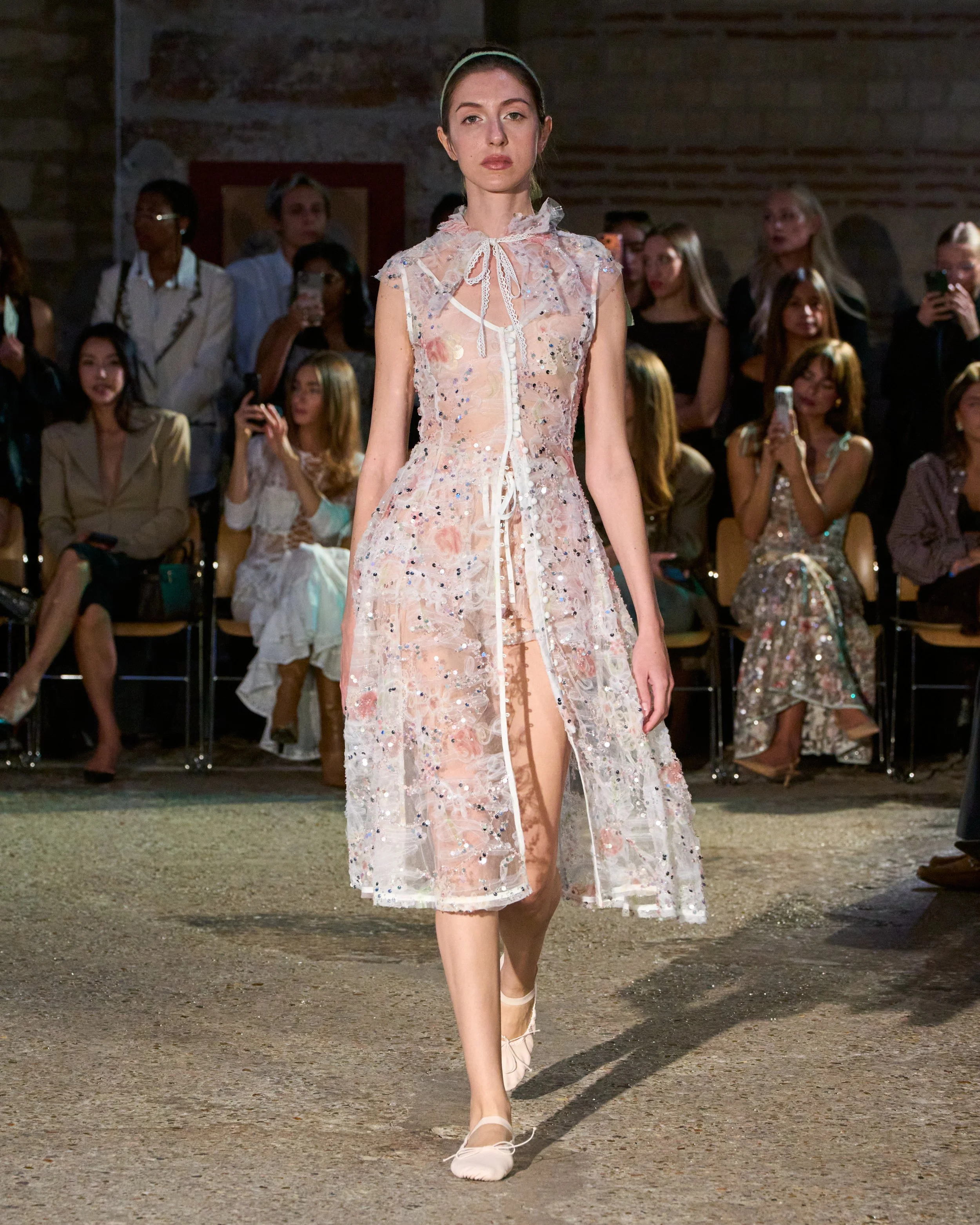
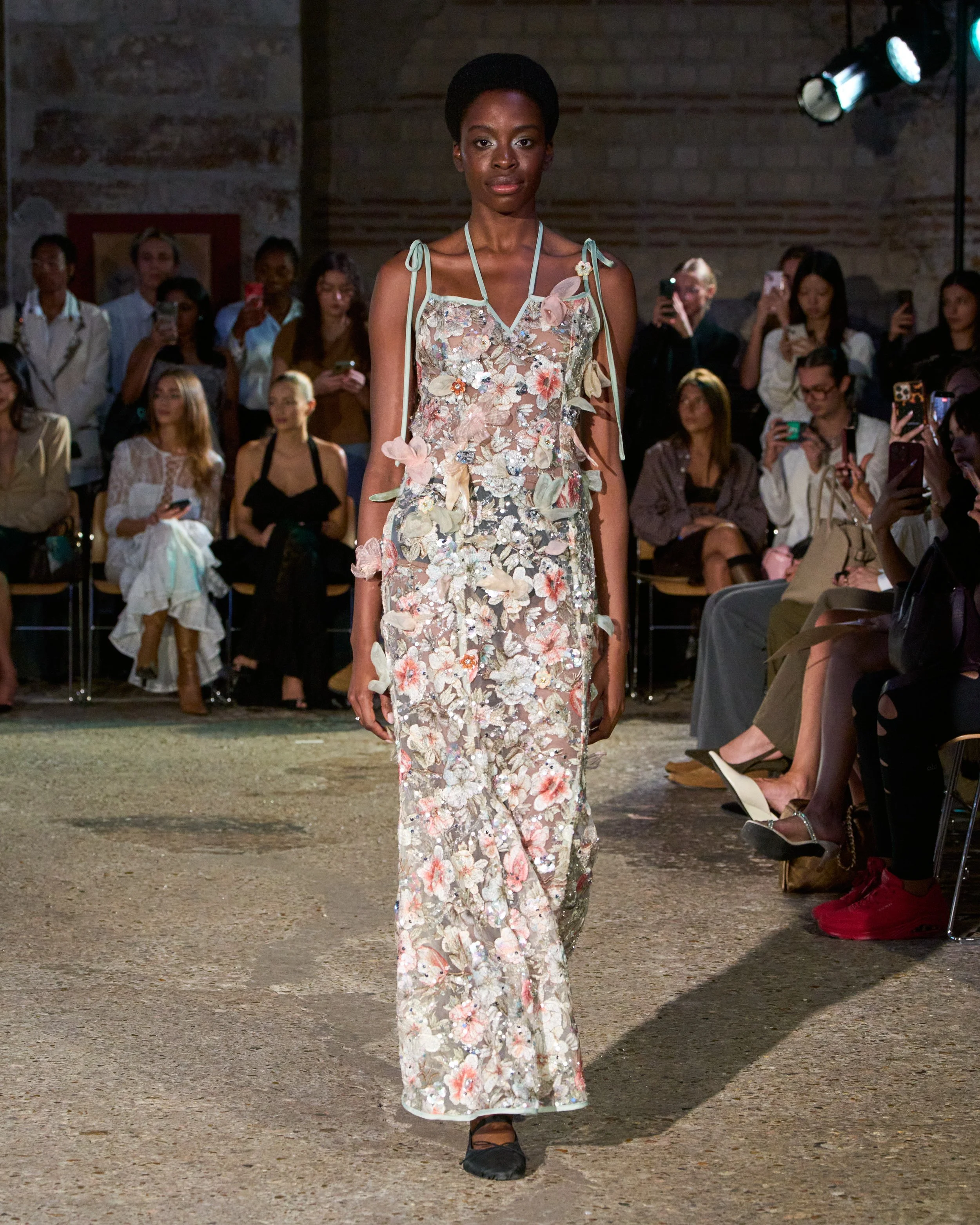
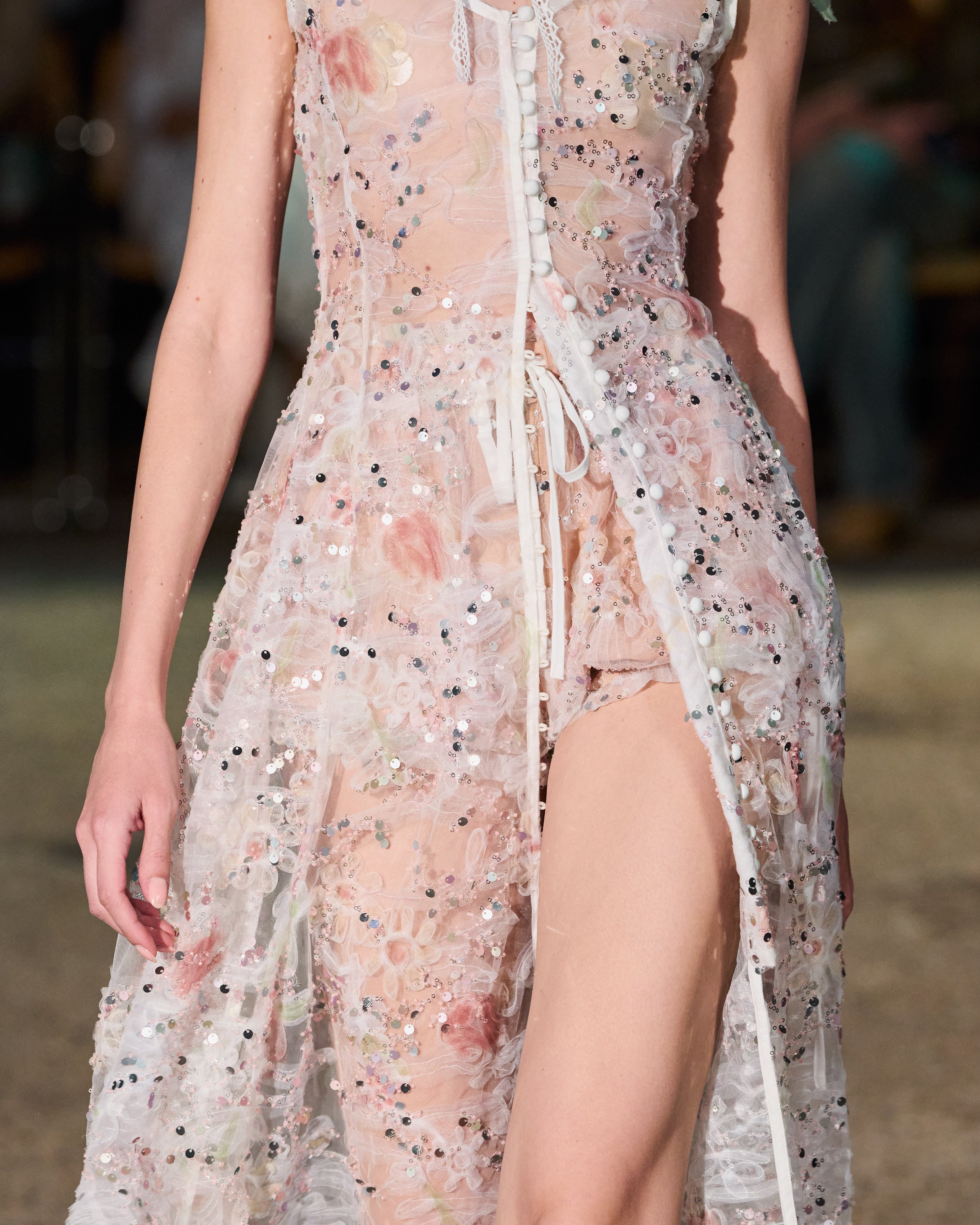
As the collection develops, the underworld begins to loosen its grip. Cream enters first, accompanied by distressed silk flowers, crochet and woven ribbons. Then come petal pinks and pale greens, colours that feel tentative rather than overtly optimistic, like the first signs of growth after a long winter.
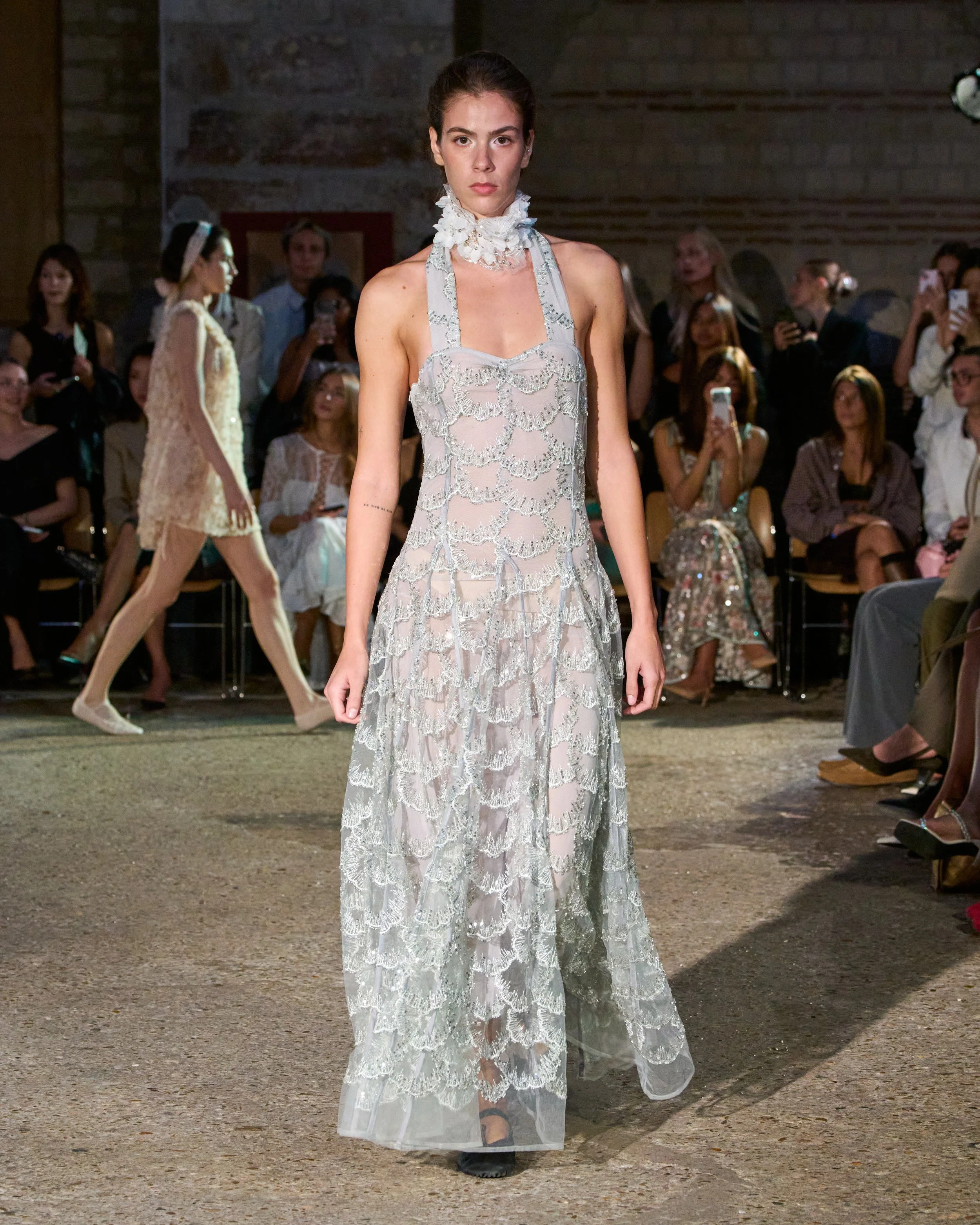
The transition happens through material as much as colour. Cotton gradually gives way to sequined tulle, and increasingly translucent silhouettes appear to hover around the body. The collection becomes lighter without becoming untouched. Its flowers remain weathered. Its softness carries evidence of what came before. That distinction gives the collection its emotional weight.
Wild Rose & Sparrow has long built its visual identity around a heightened version of femininity: lace, historical references, intricate construction and garments that feel slightly removed from ordinary time. The Montréal-based family-founded label describes its work as rooted in Eastern European heritage, art, travel and the idea of clothing as something to be cherished rather than quickly replaced. Place, too, is treated as part of the narrative rather than simply a backdrop.
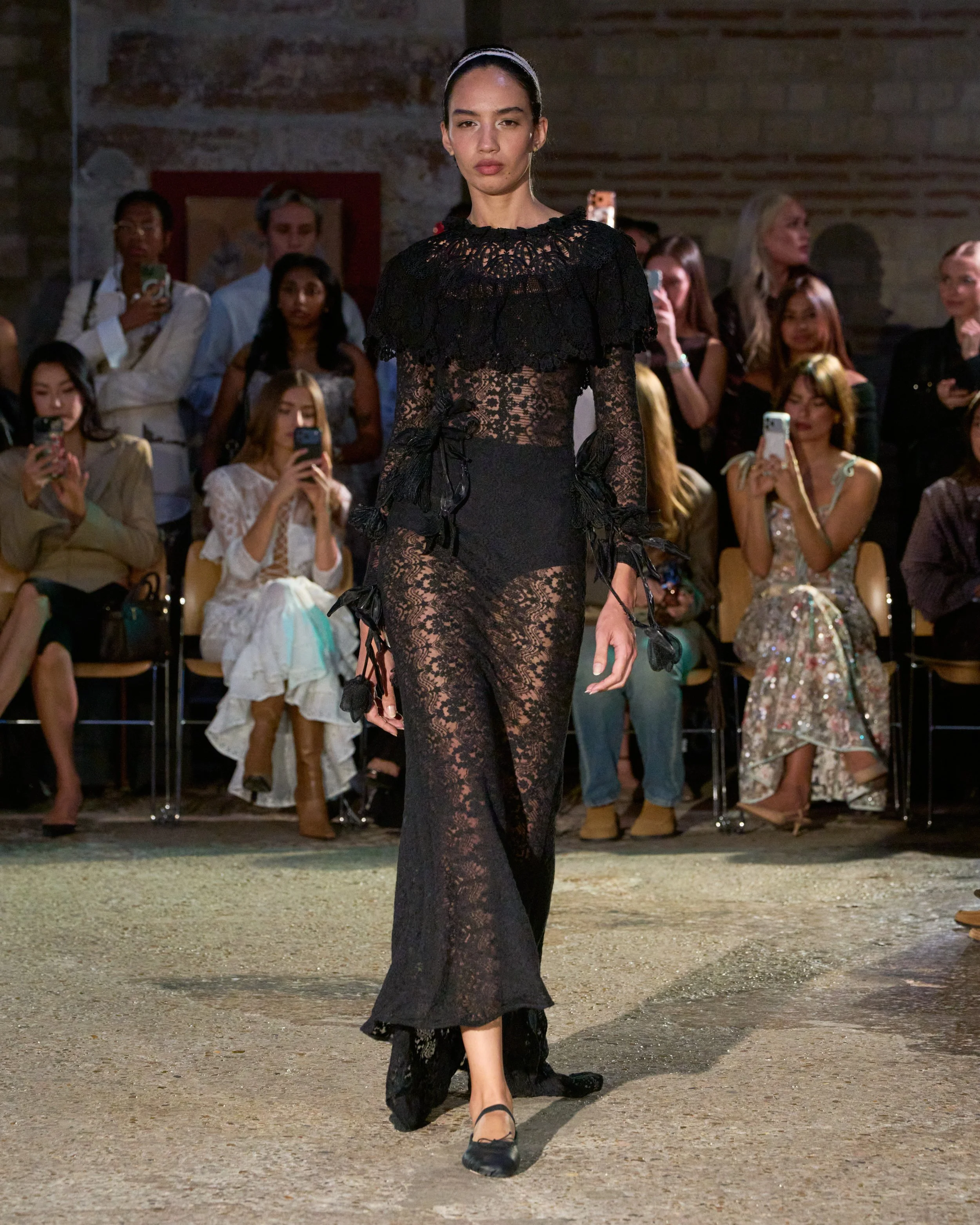
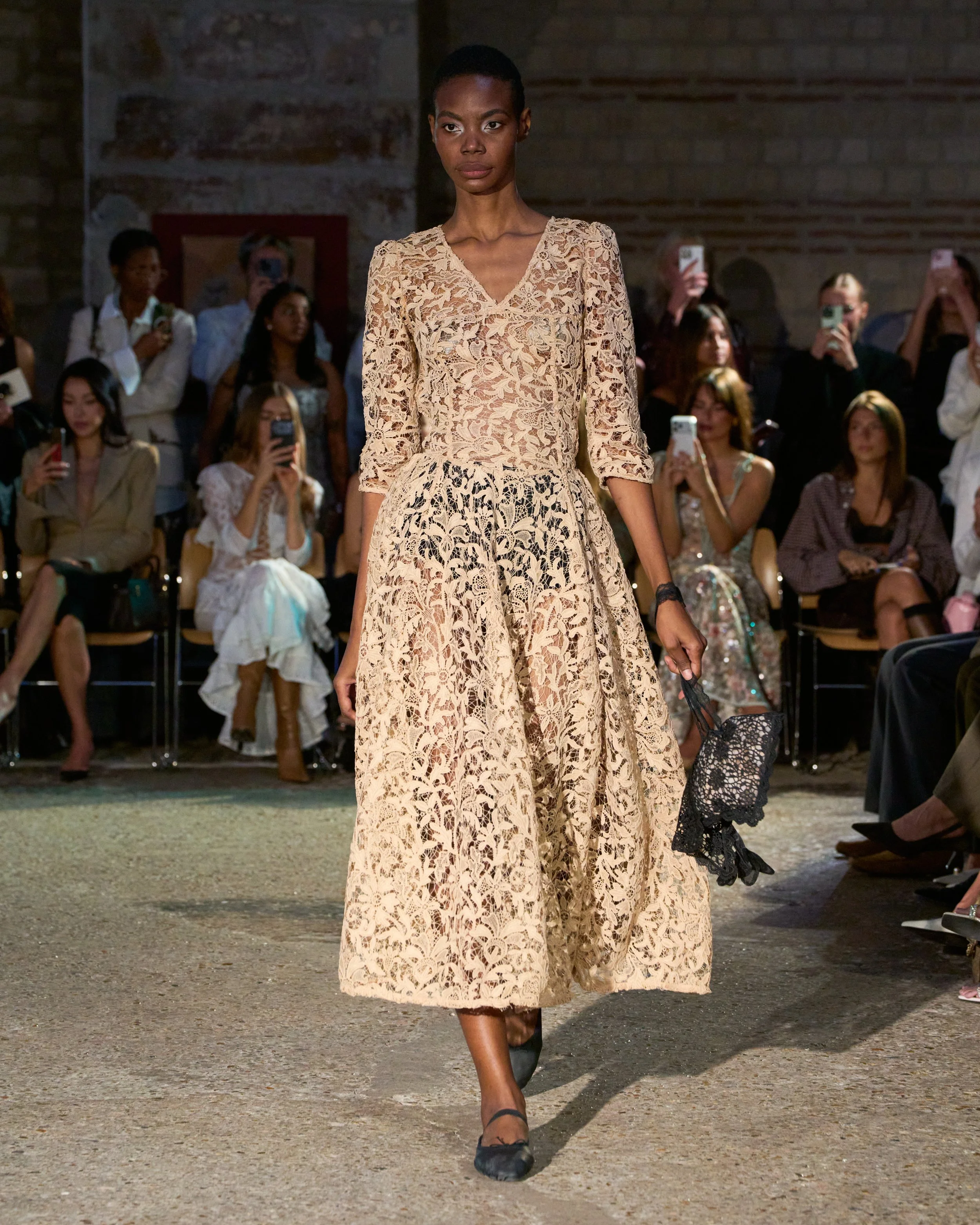
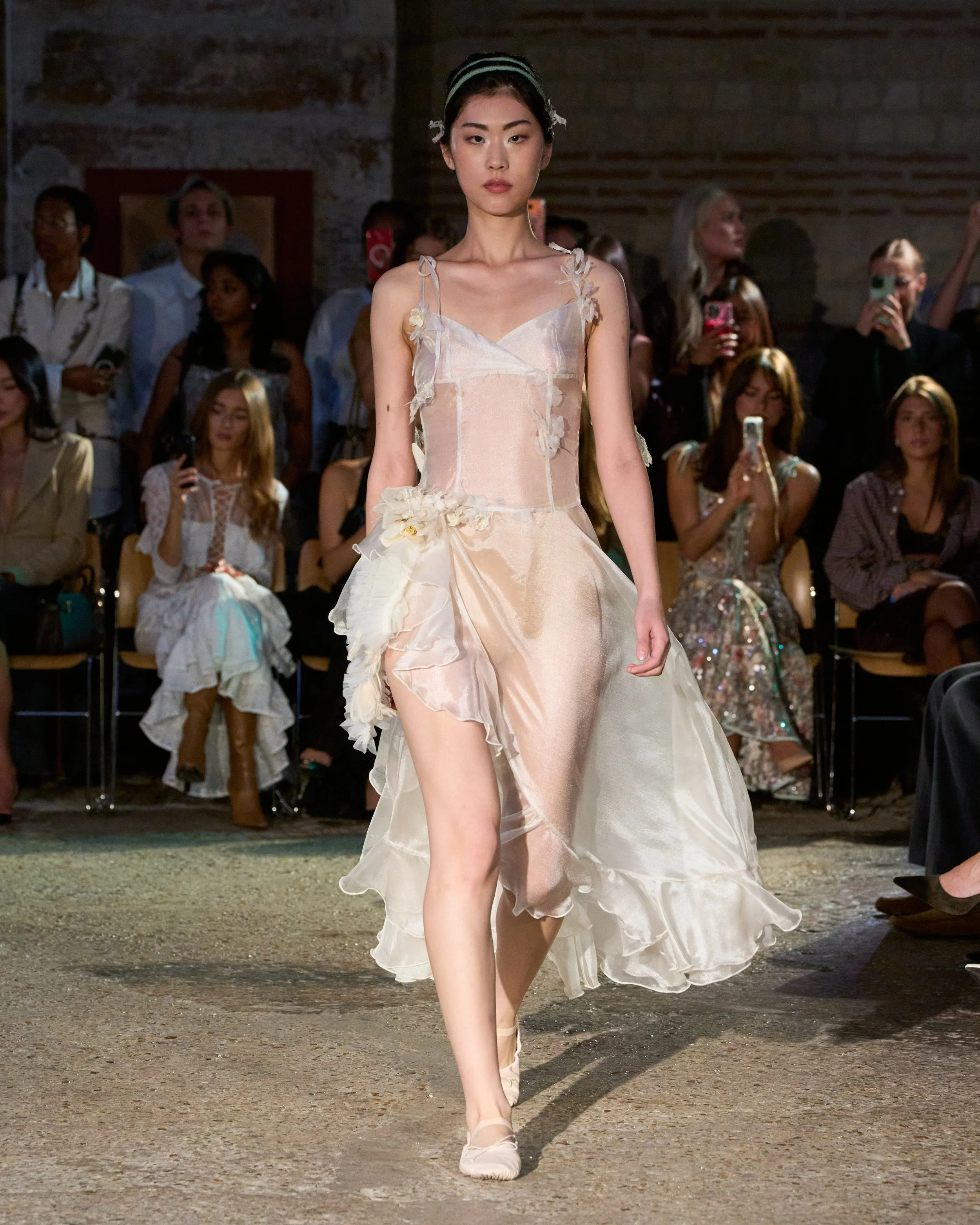
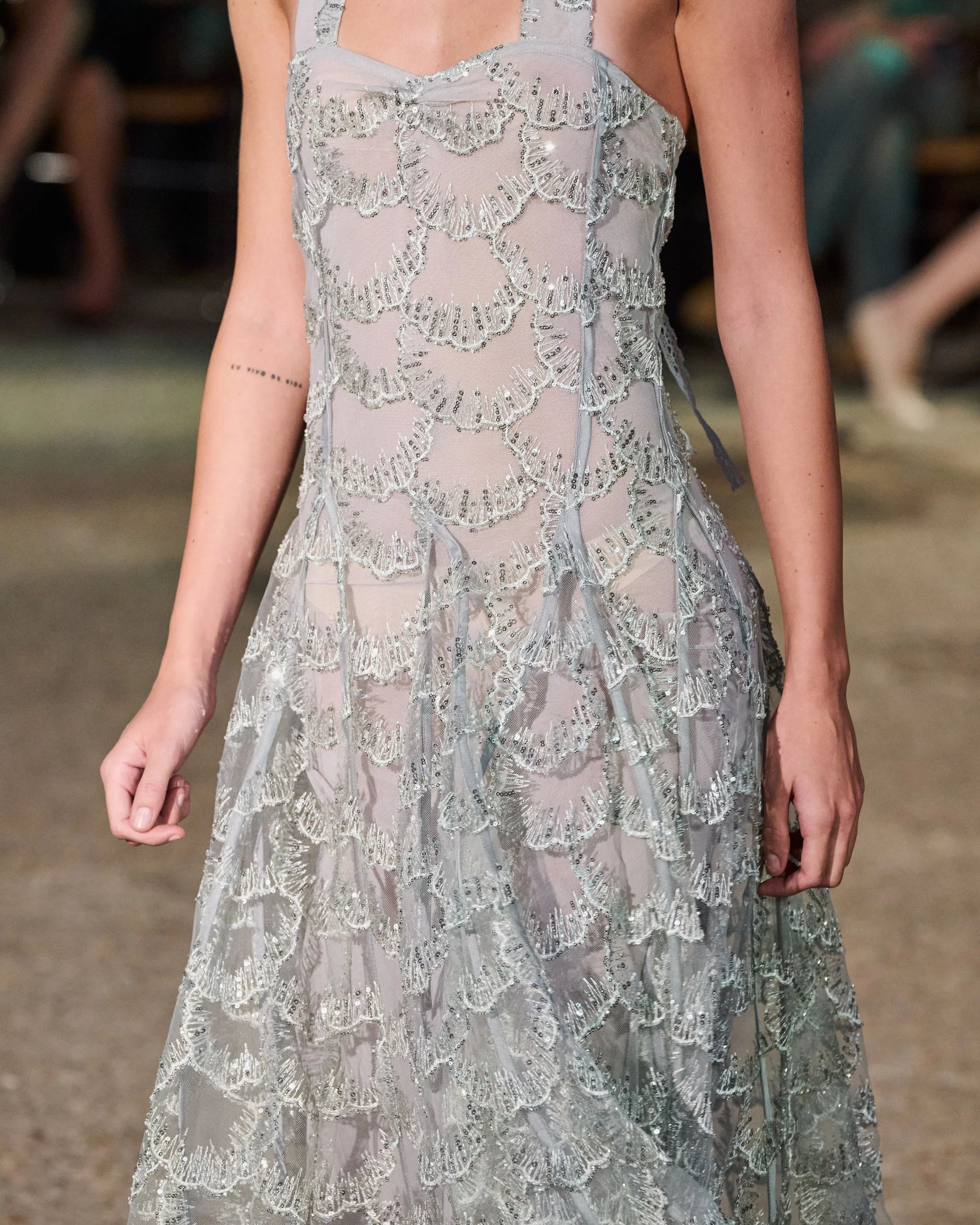
At Cluny, that instinct makes particular sense. The ancient stone is scarred, incomplete and still standing. Against it, unravelled florals and delicate handwork become less about nostalgia than survival. The collection does not attempt to restore the past to some perfect state. Instead, it allows beauty to emerge from what has already been altered. Perhaps that is where Proserpine feels most contemporary.
Fashion has spent years romanticising ideas of rebirth, transformation and new beginnings, but Wild Rose & Sparrow approaches renewal without pretending that returning means returning unchanged. Persephone carries the underworld with her. So do these clothes.
The final silhouettes may be softer, paler and almost spectral, but the darkness from the beginning of the collection never entirely disappears. It becomes part of their beauty.
Proserpine is not a story about escaping winter. It is about understanding that spring means more because winter existed at all.