Back to Black: Miguel Vieira Finds Light in the Absence of Colour
For Spring/Summer 2027, Miguel Vieira strips colour almost entirely from the equation, allowing structure, shadow and movement to speak instead. Fashion has long treated summer as permission for colour. For Miguel Vieira, Spring/Summer 2027 begins by refusing that expectation.
Titled Back to Black
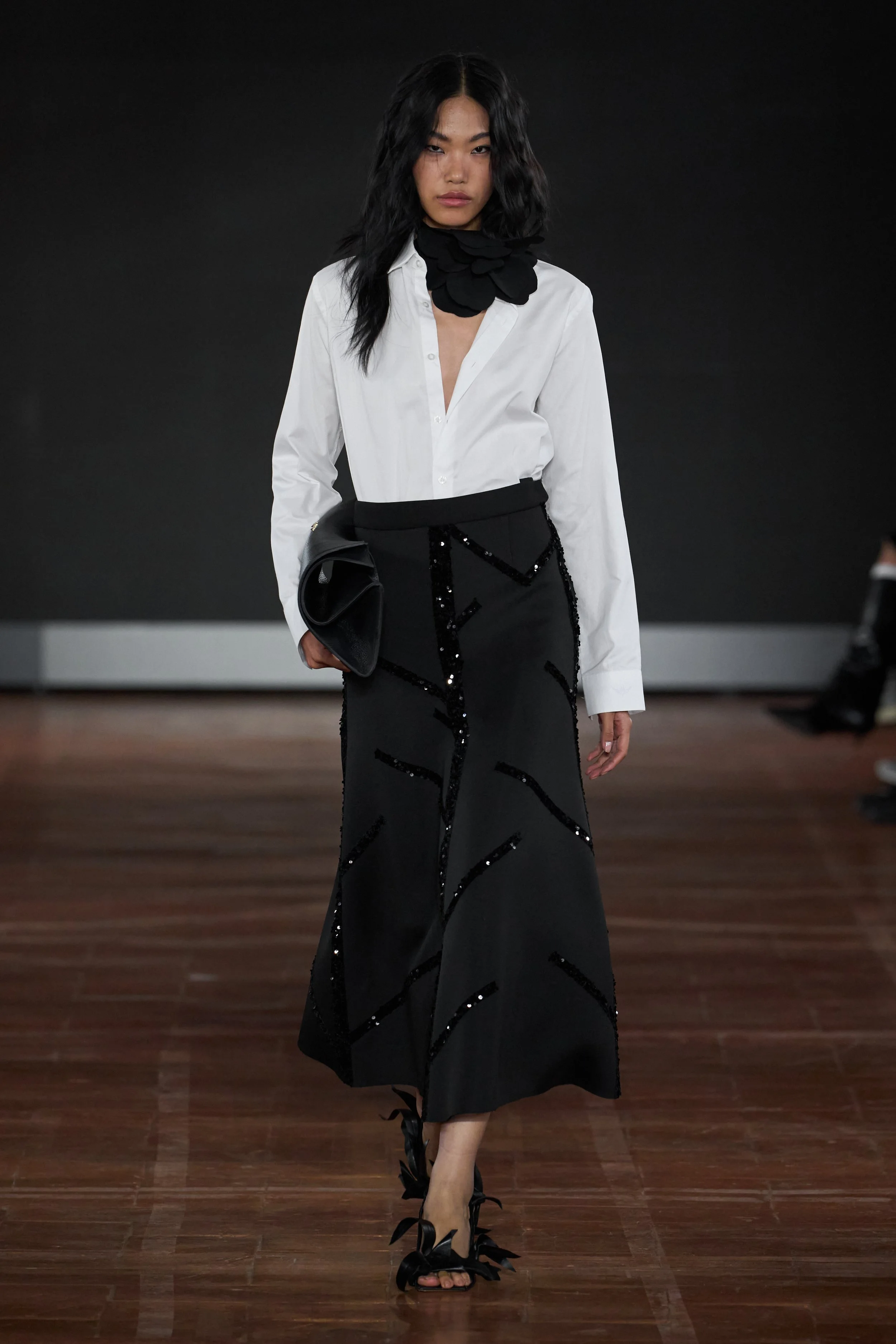
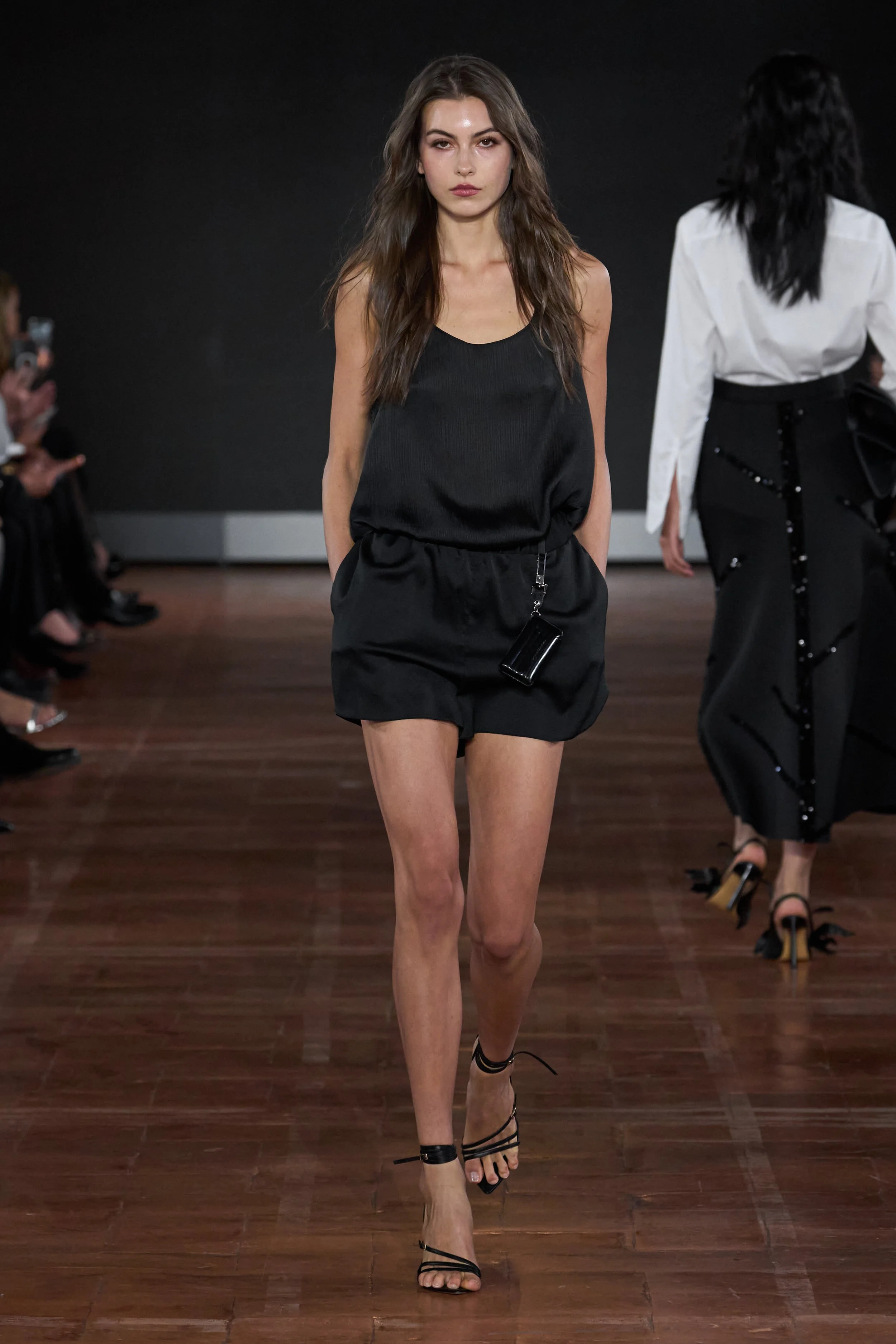
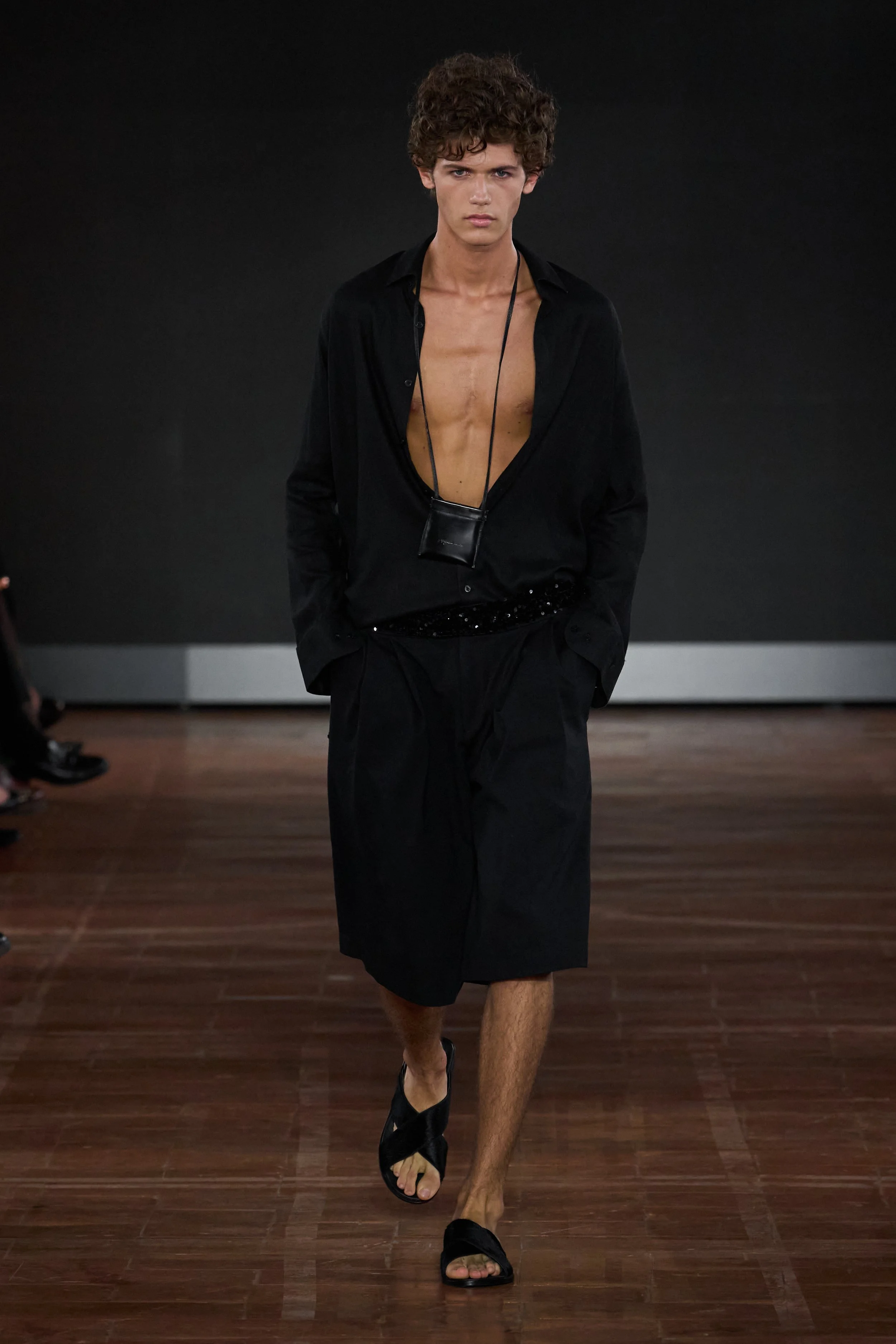
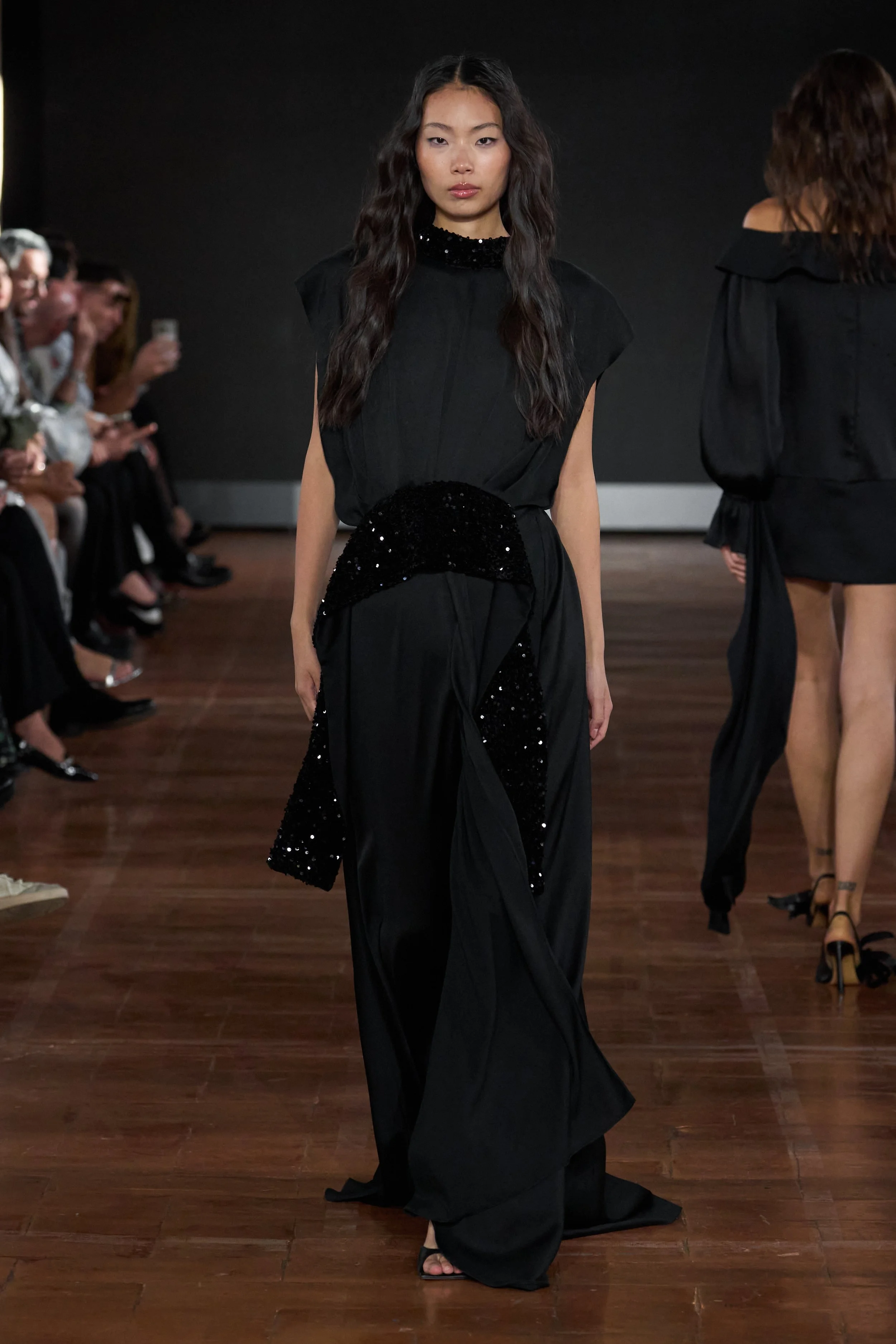
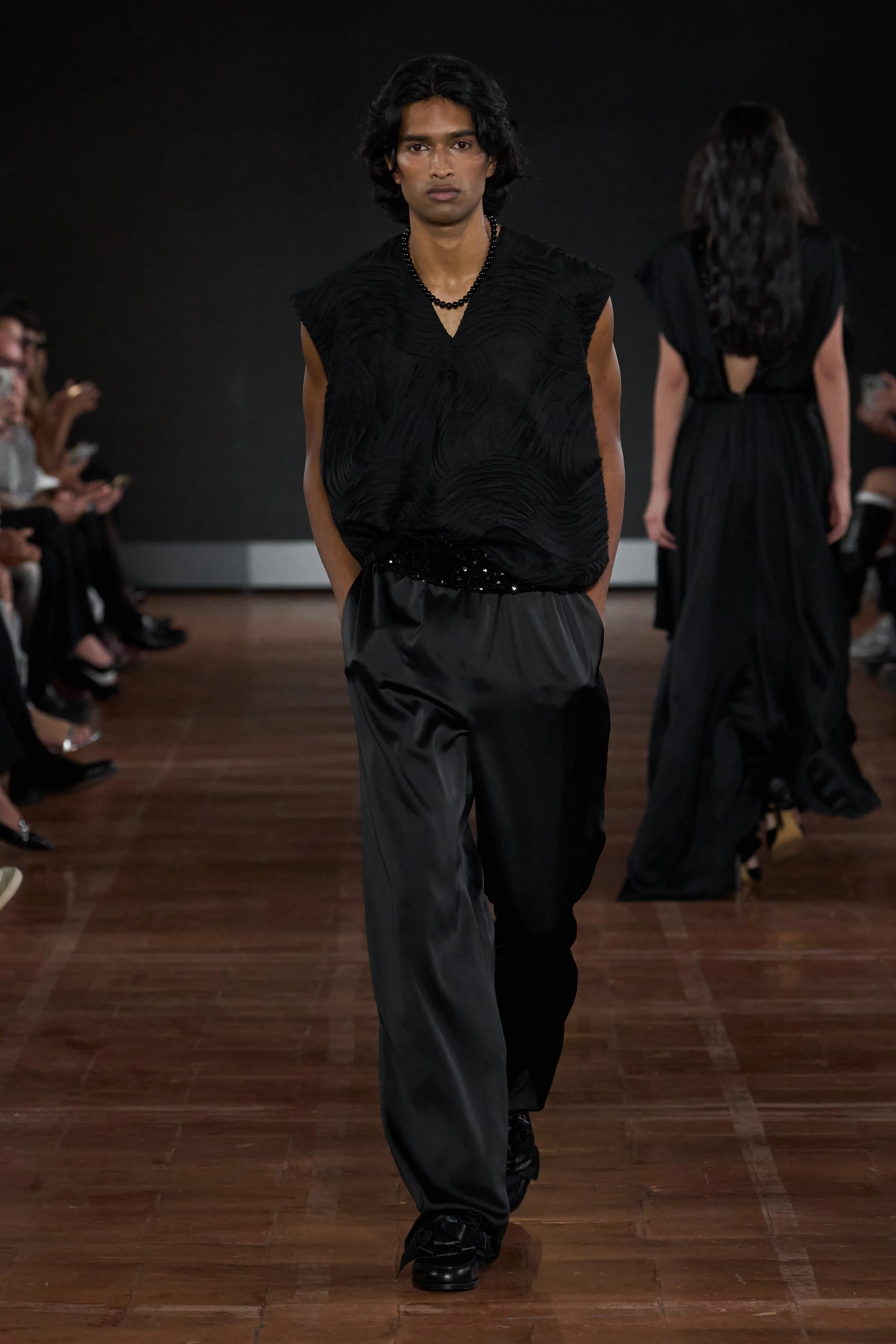
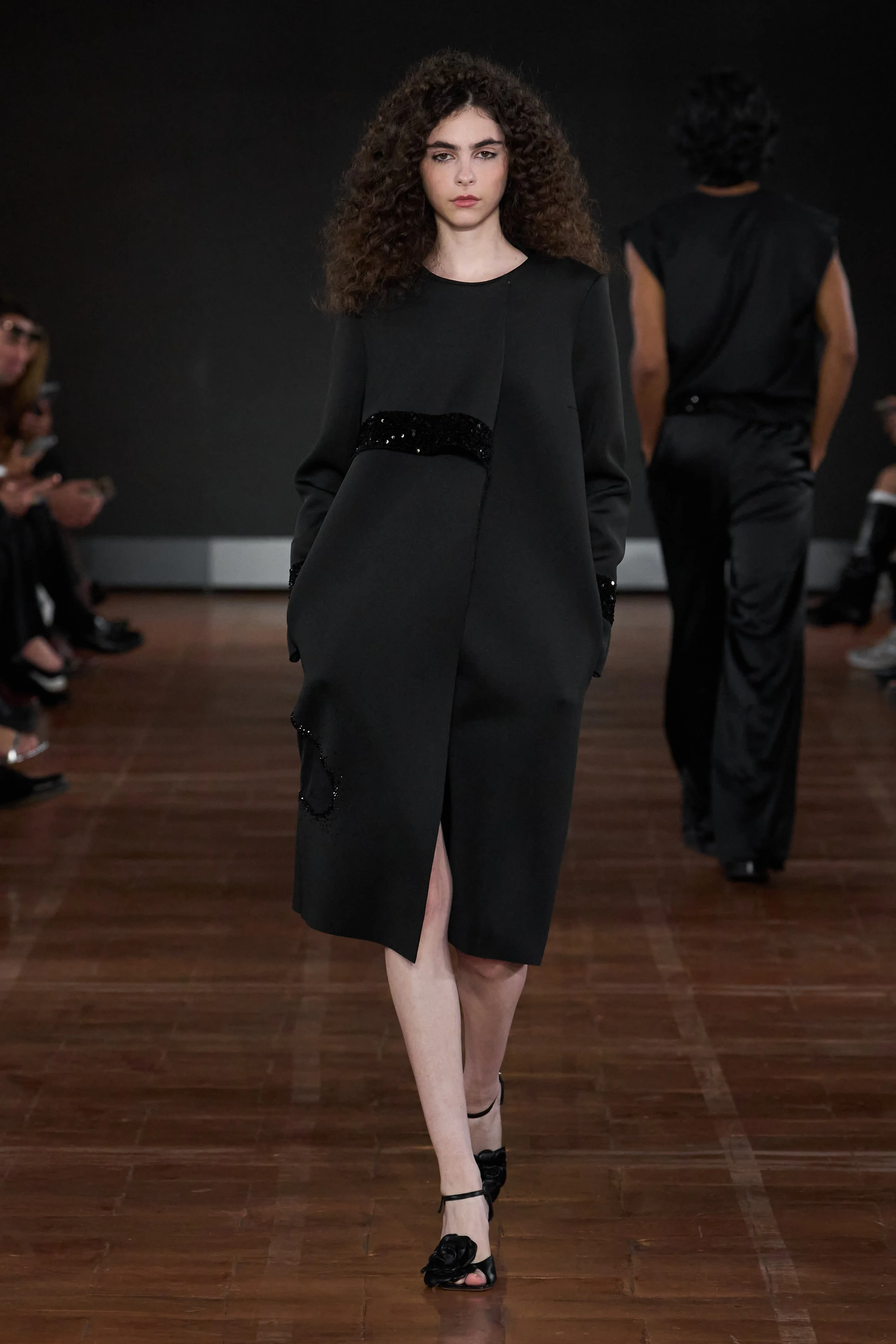
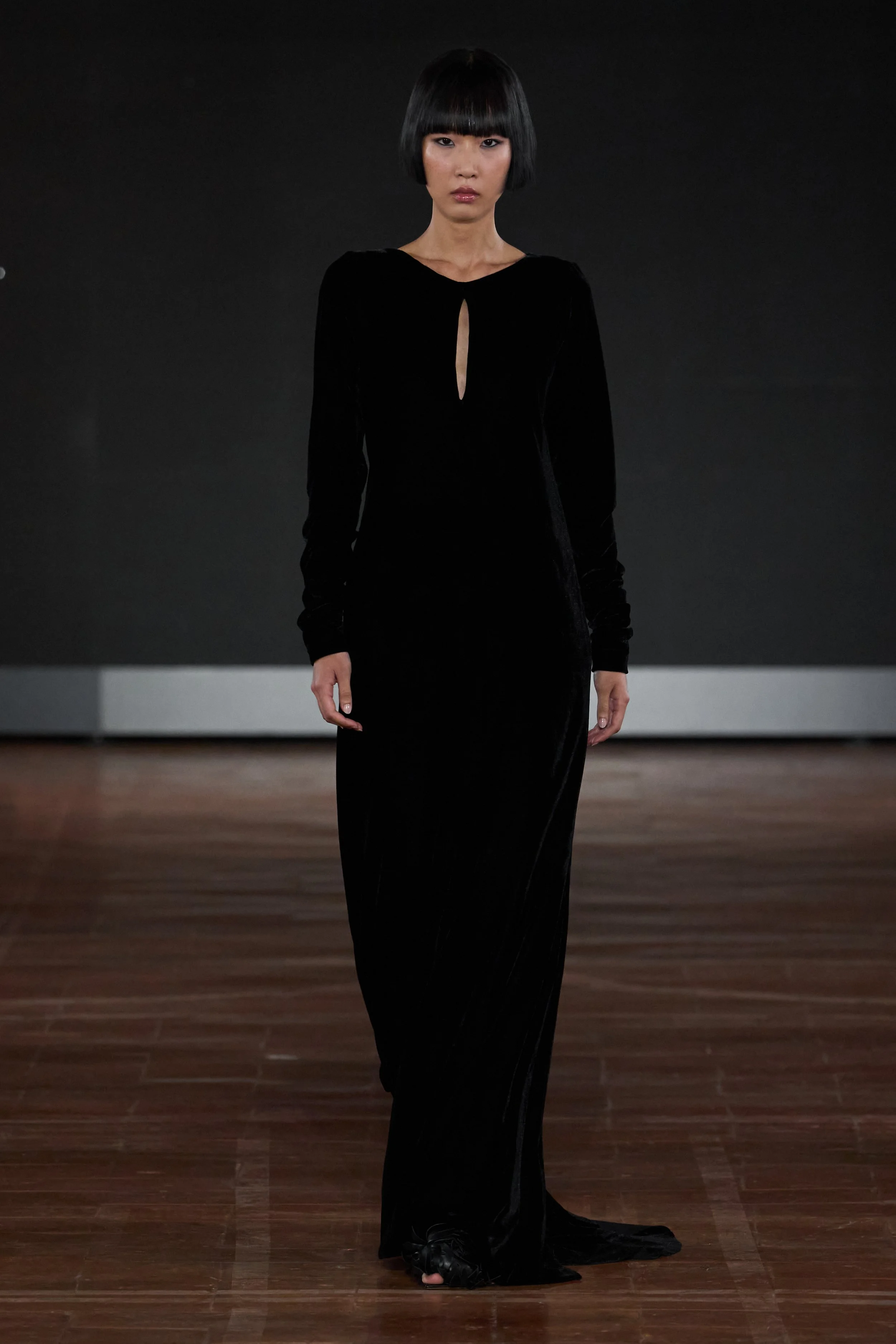
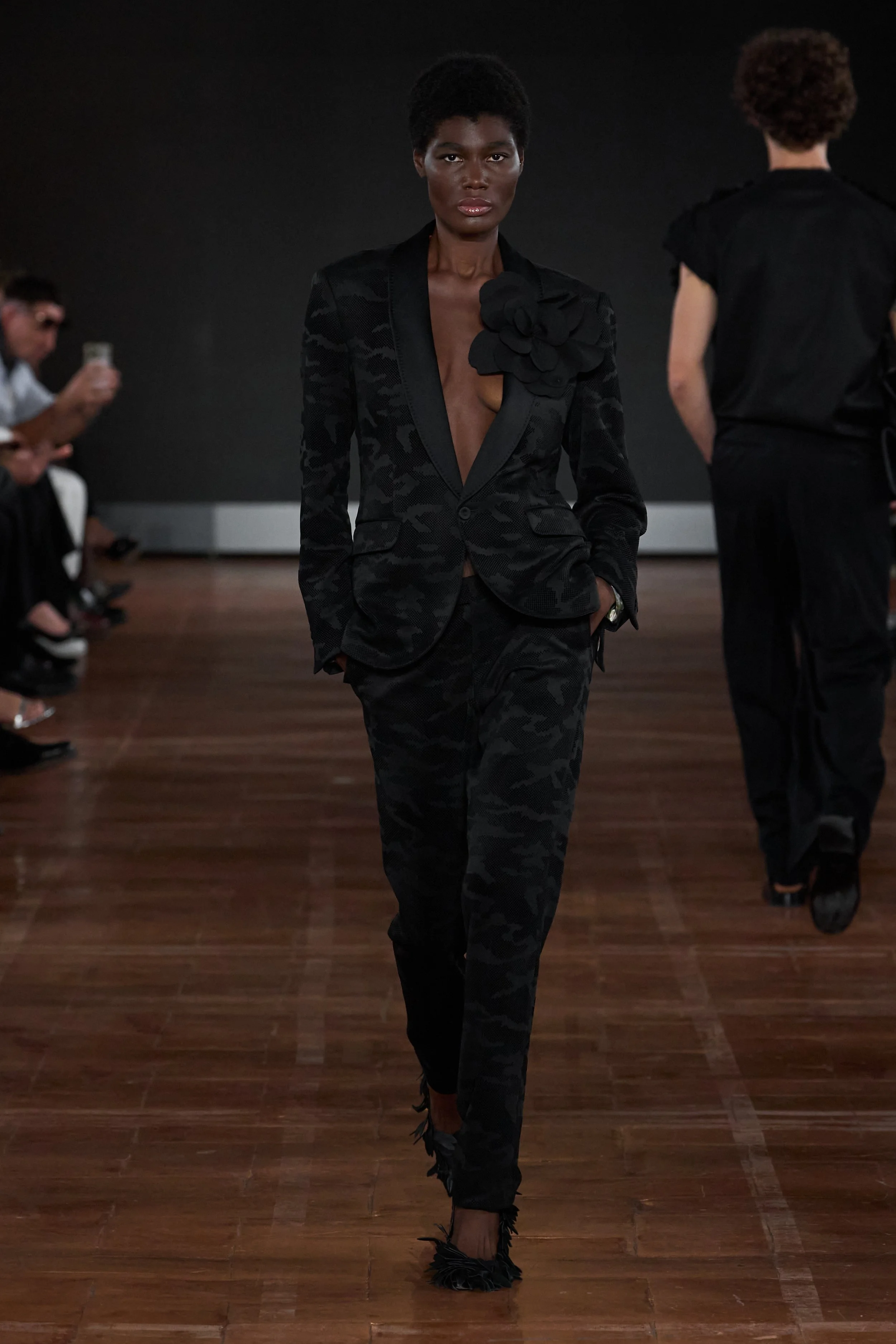
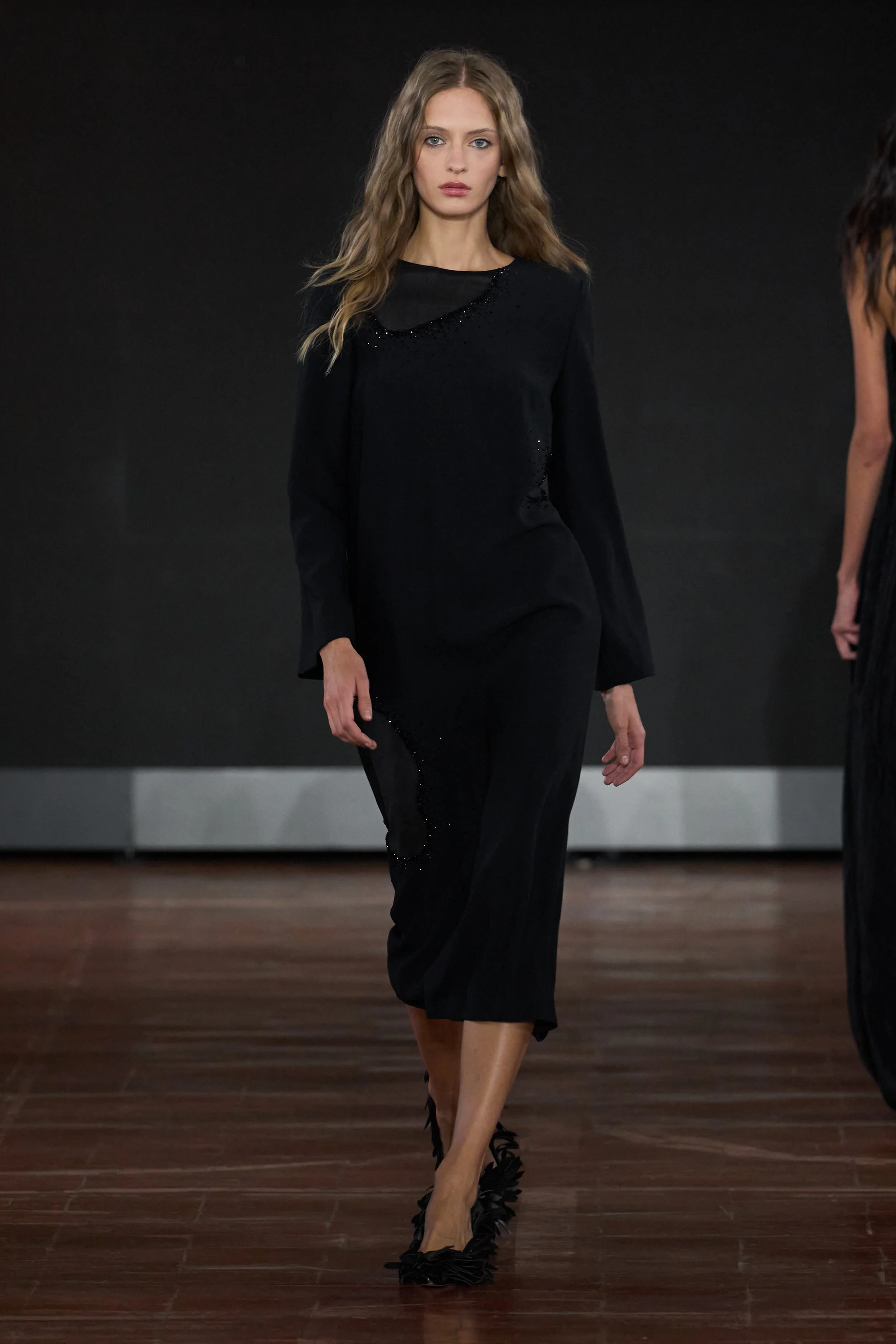
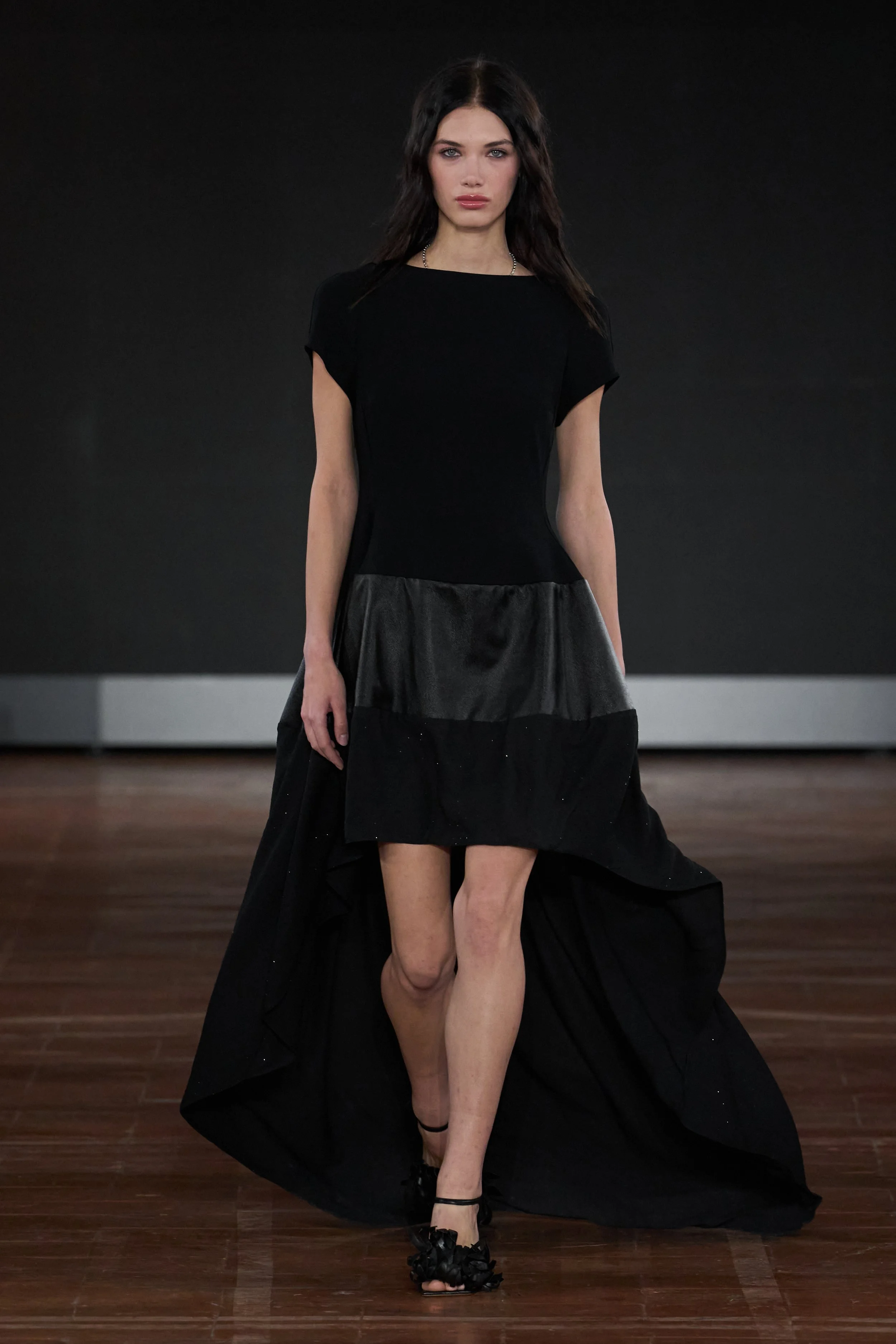
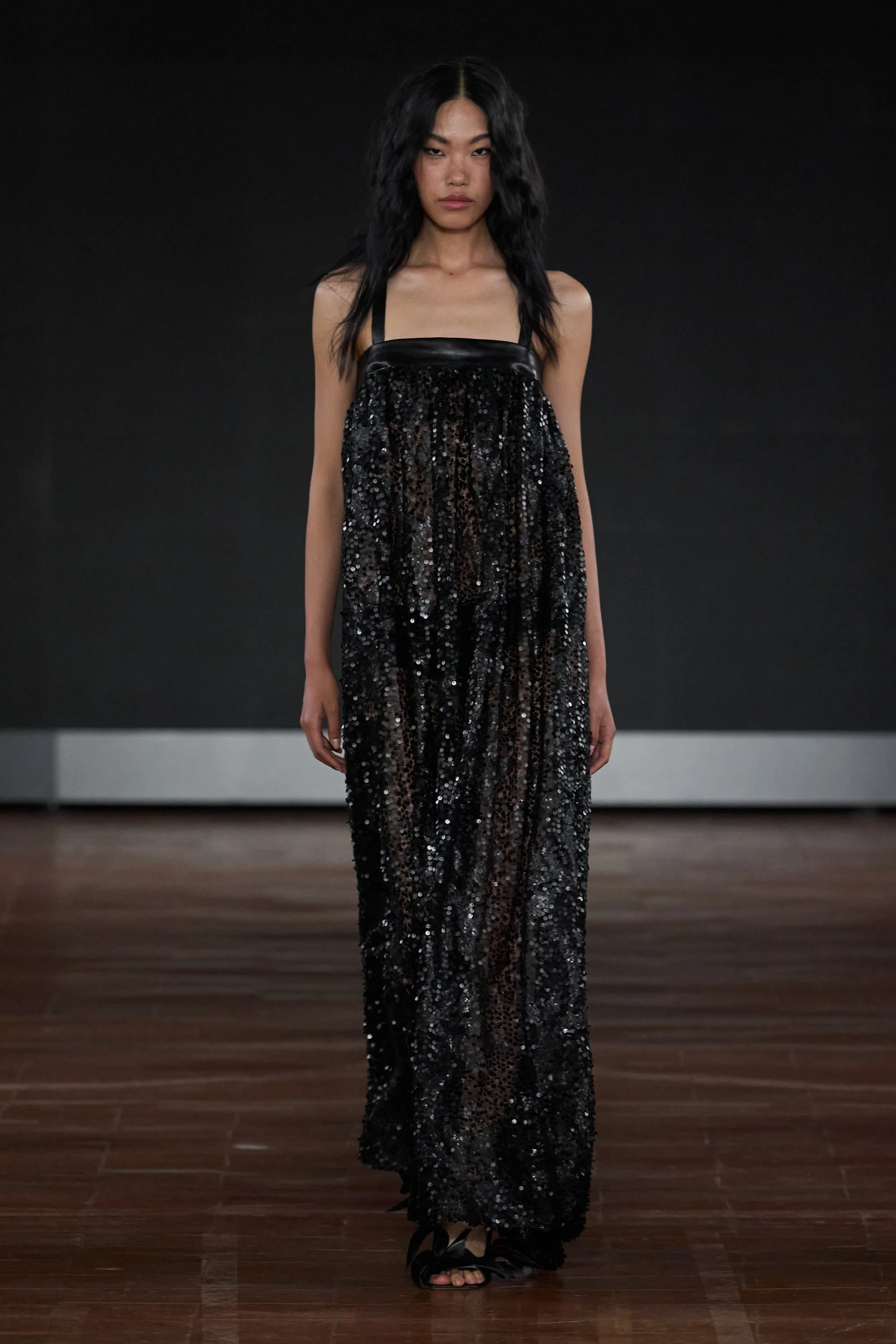
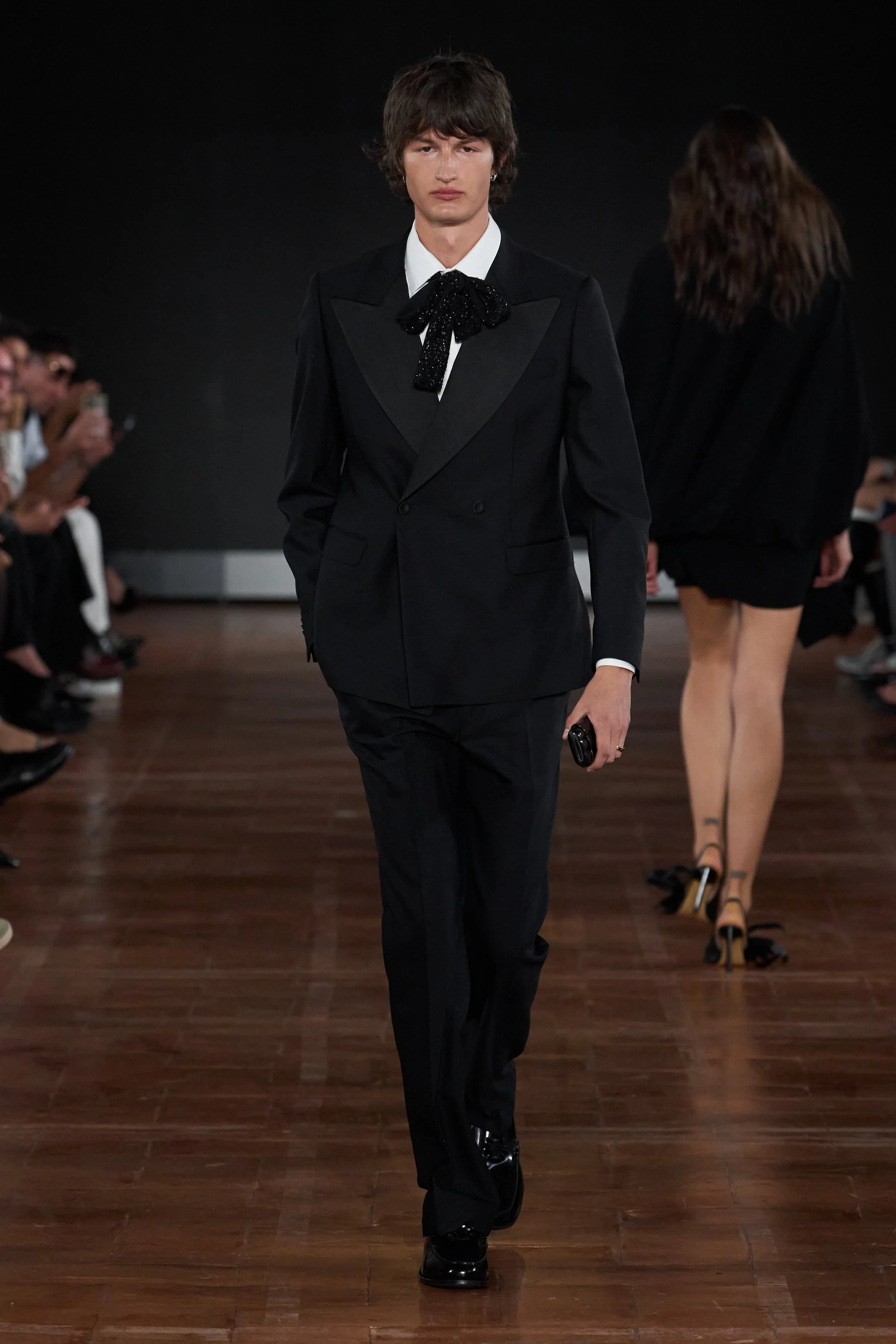
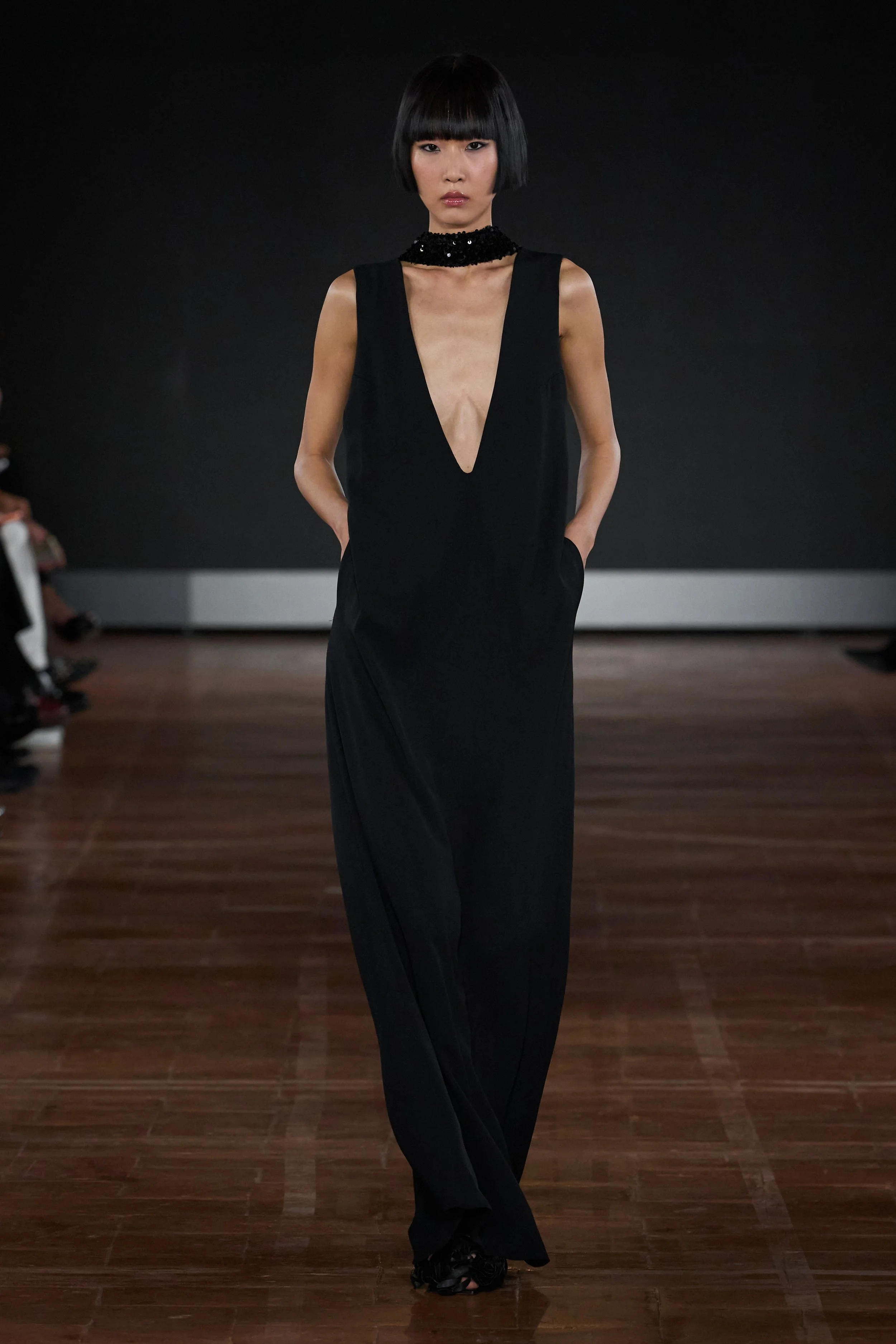
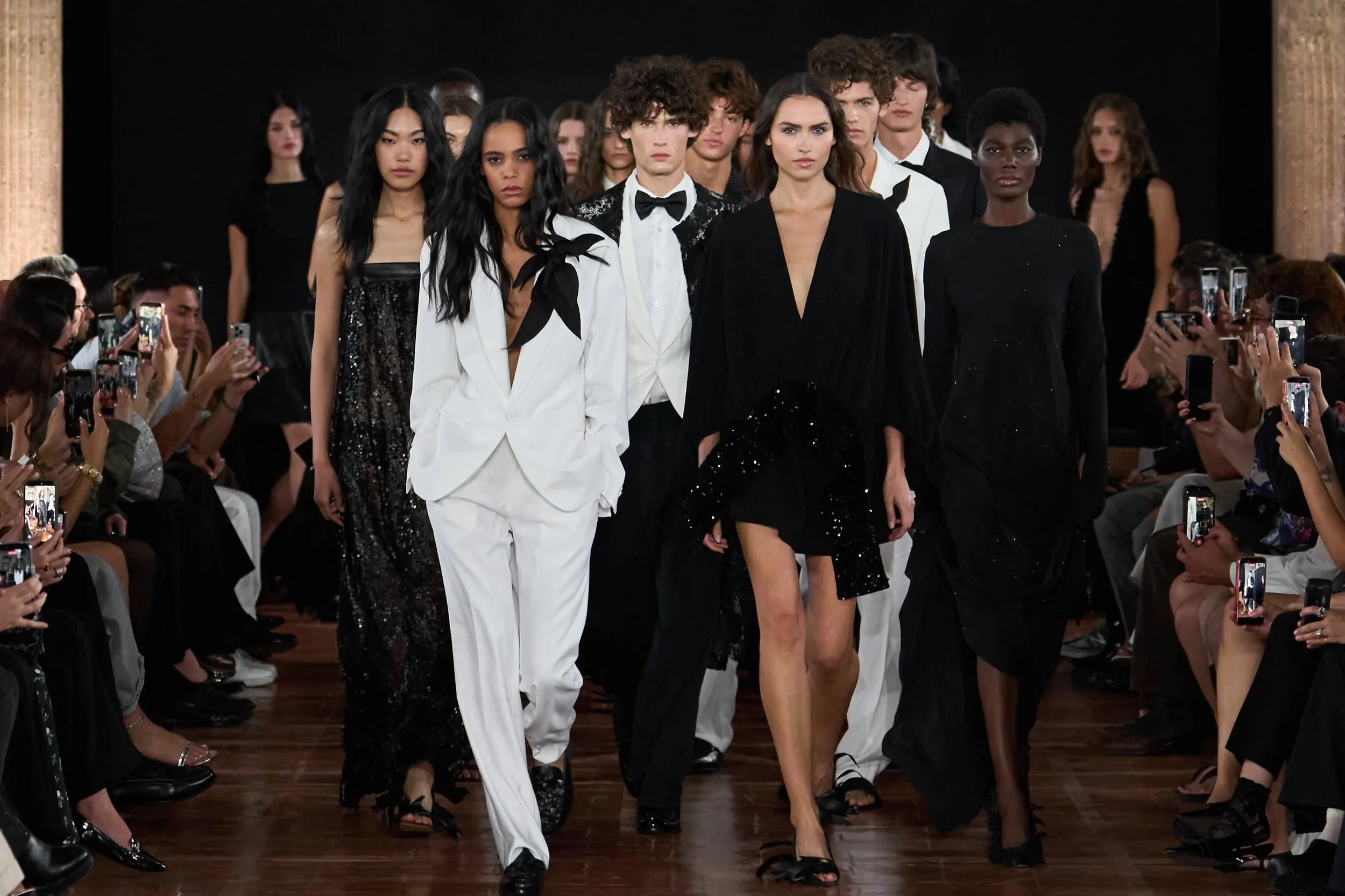
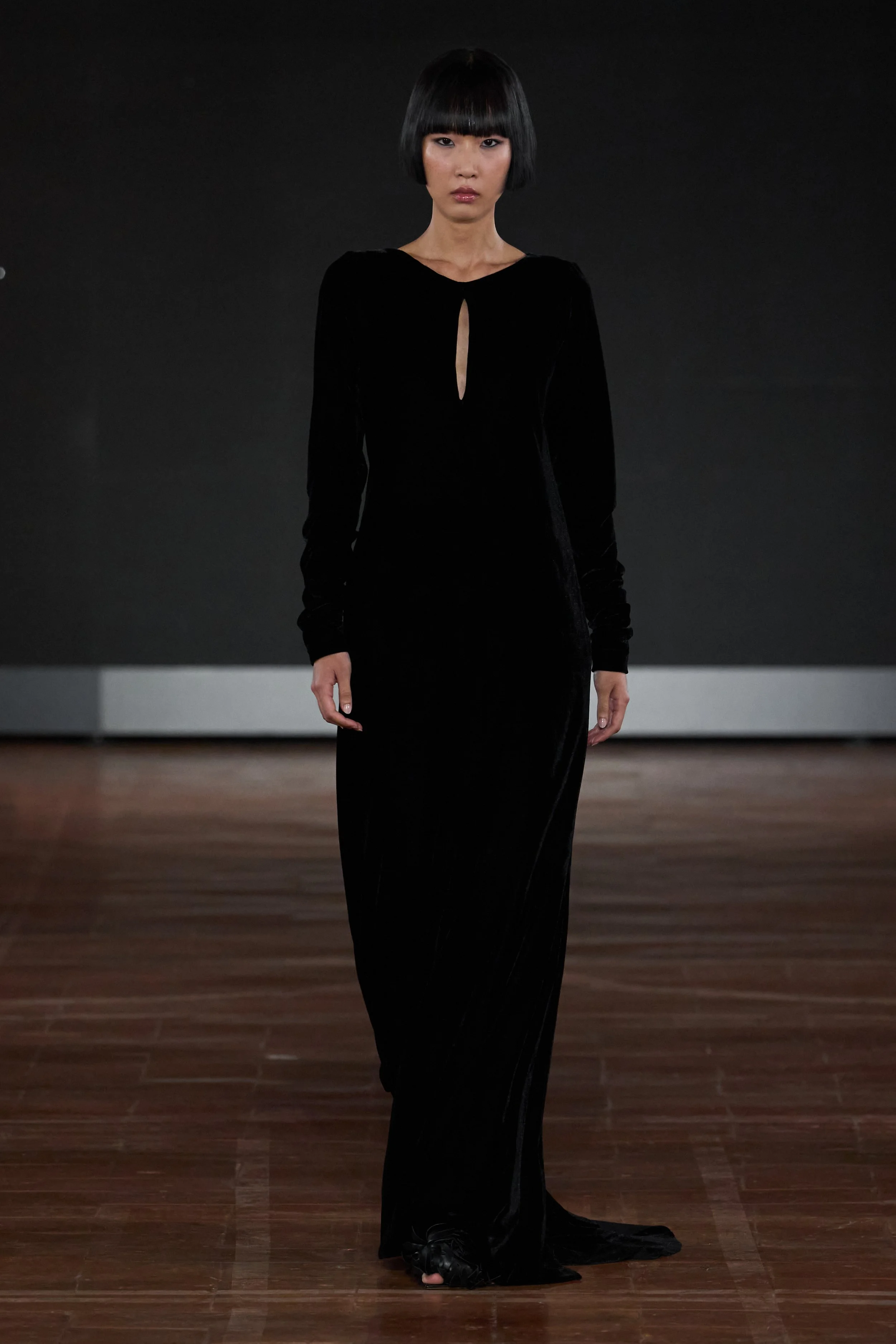
The collection takes one of fashion's most culturally loaded colours and treats it less as a mood than as a material. Black becomes surface, shadow and structure, a way of directing attention towards what remains when decoration is reduced: silhouette, construction and the movement of fabric around the body.
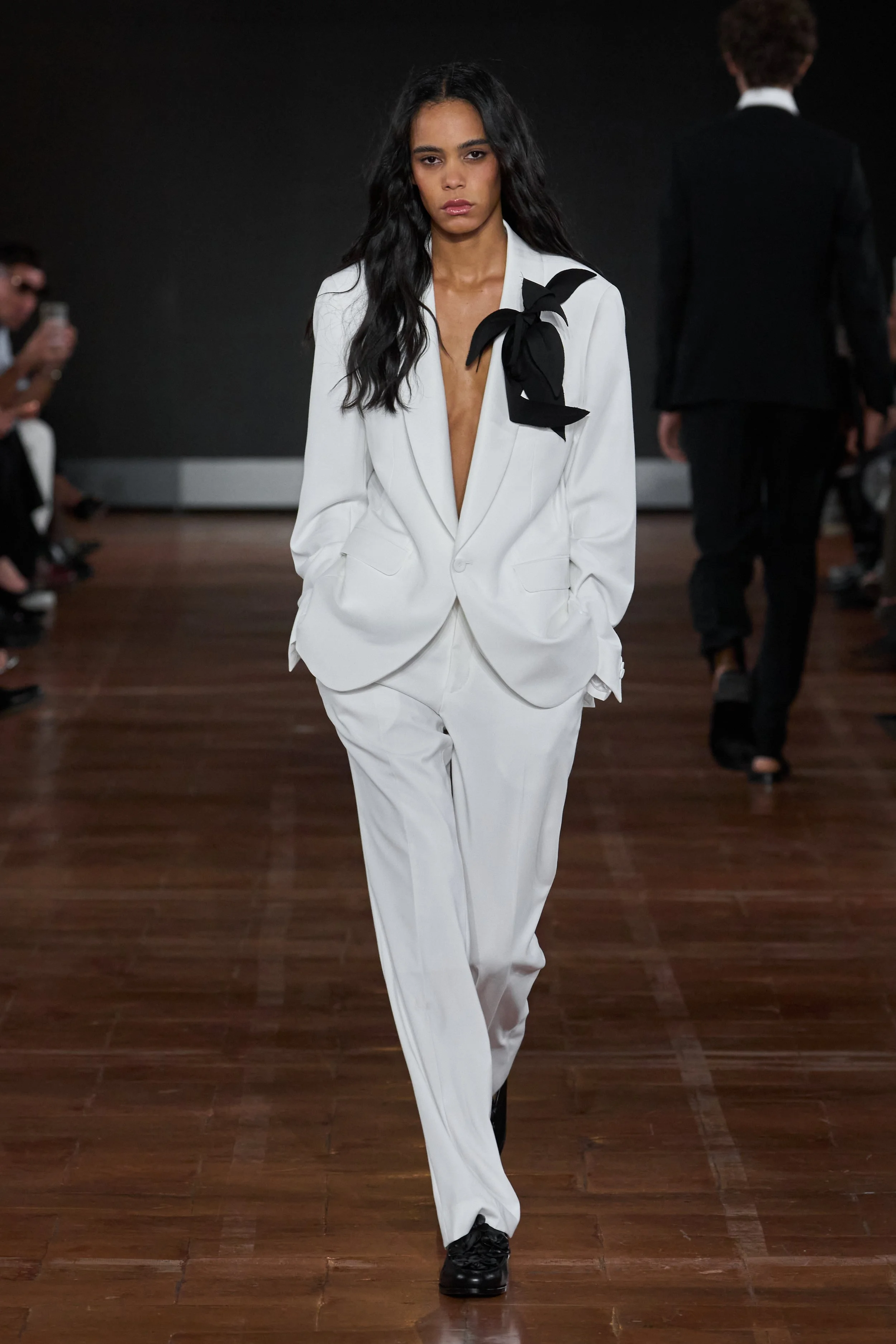
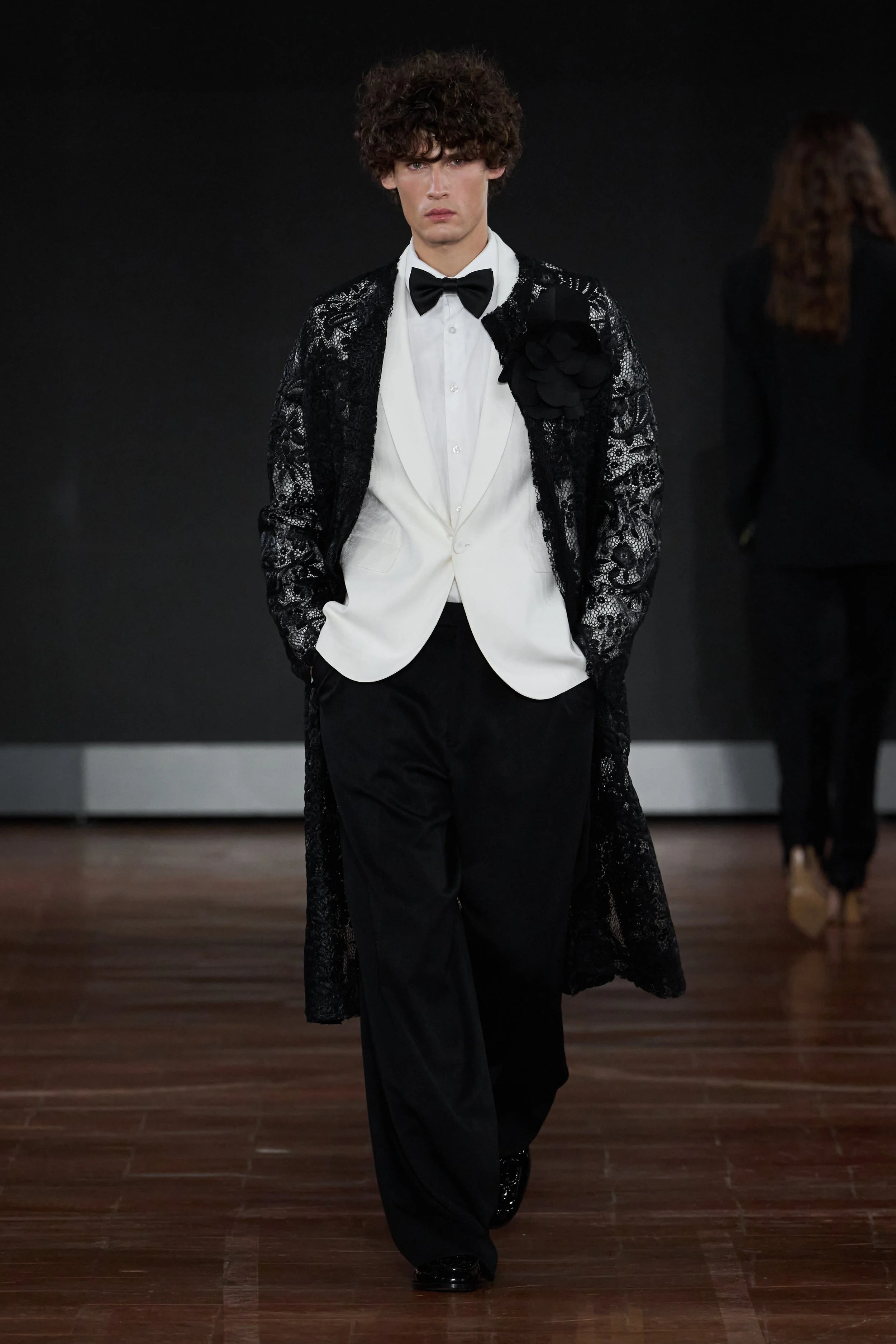
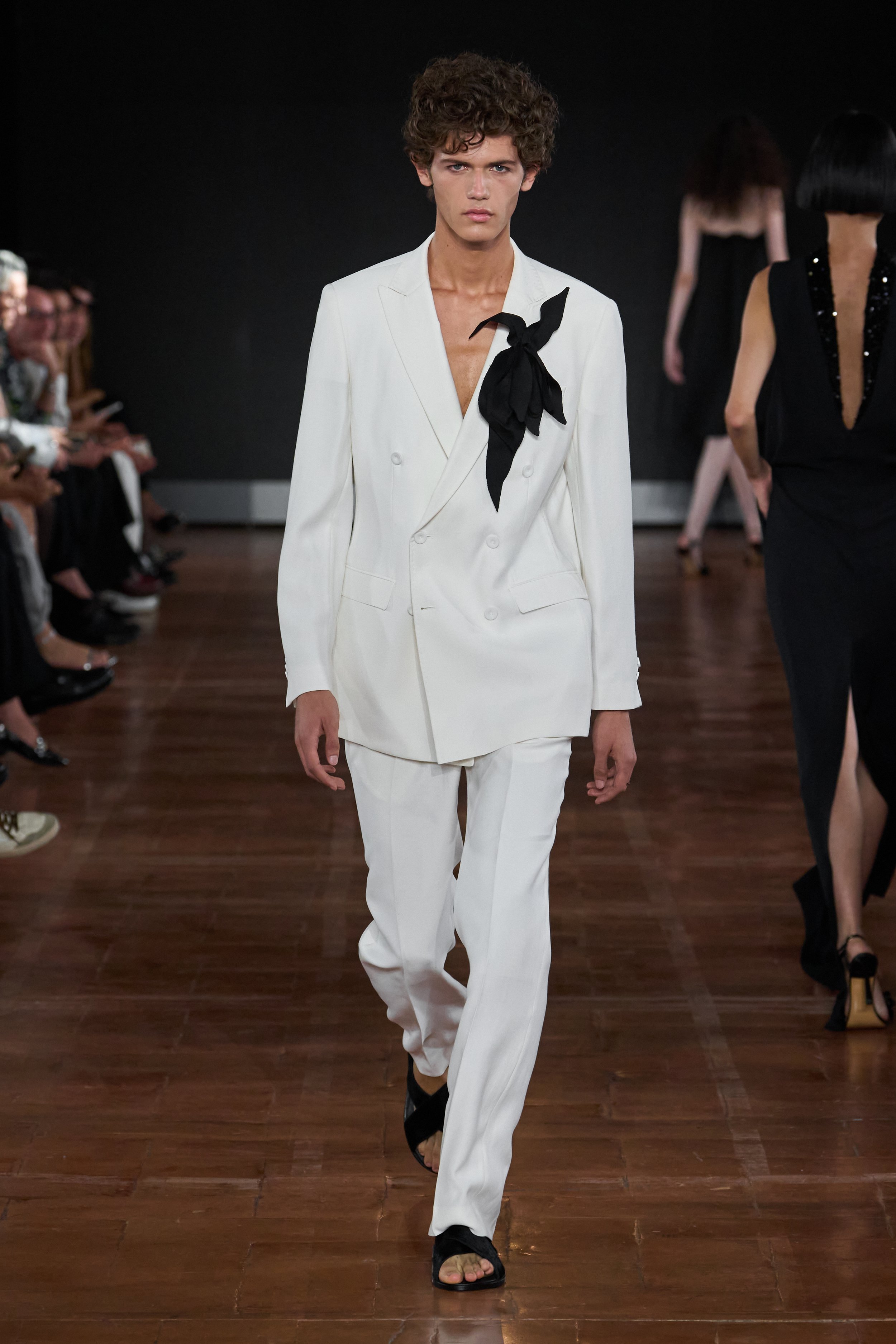
It is also a return to familiar territory. Black and white have long formed part of Vieira's visual vocabulary, appearing repeatedly across a career built around precise tailoring, formal elegance and a controlled sense of glamour. Here, however, that signature feels less decorative and more concentrated. The strongest idea behind the collection is tension.
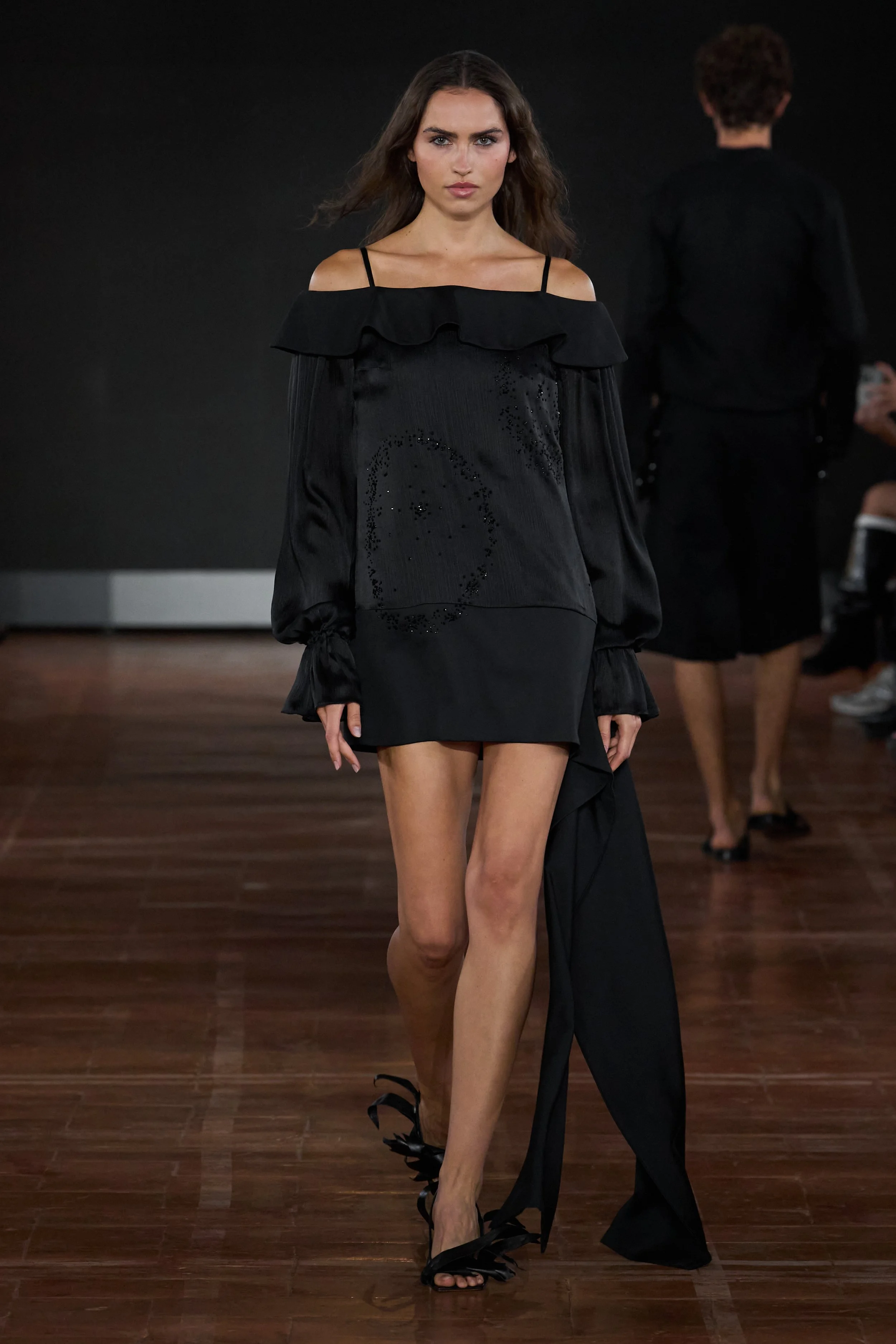
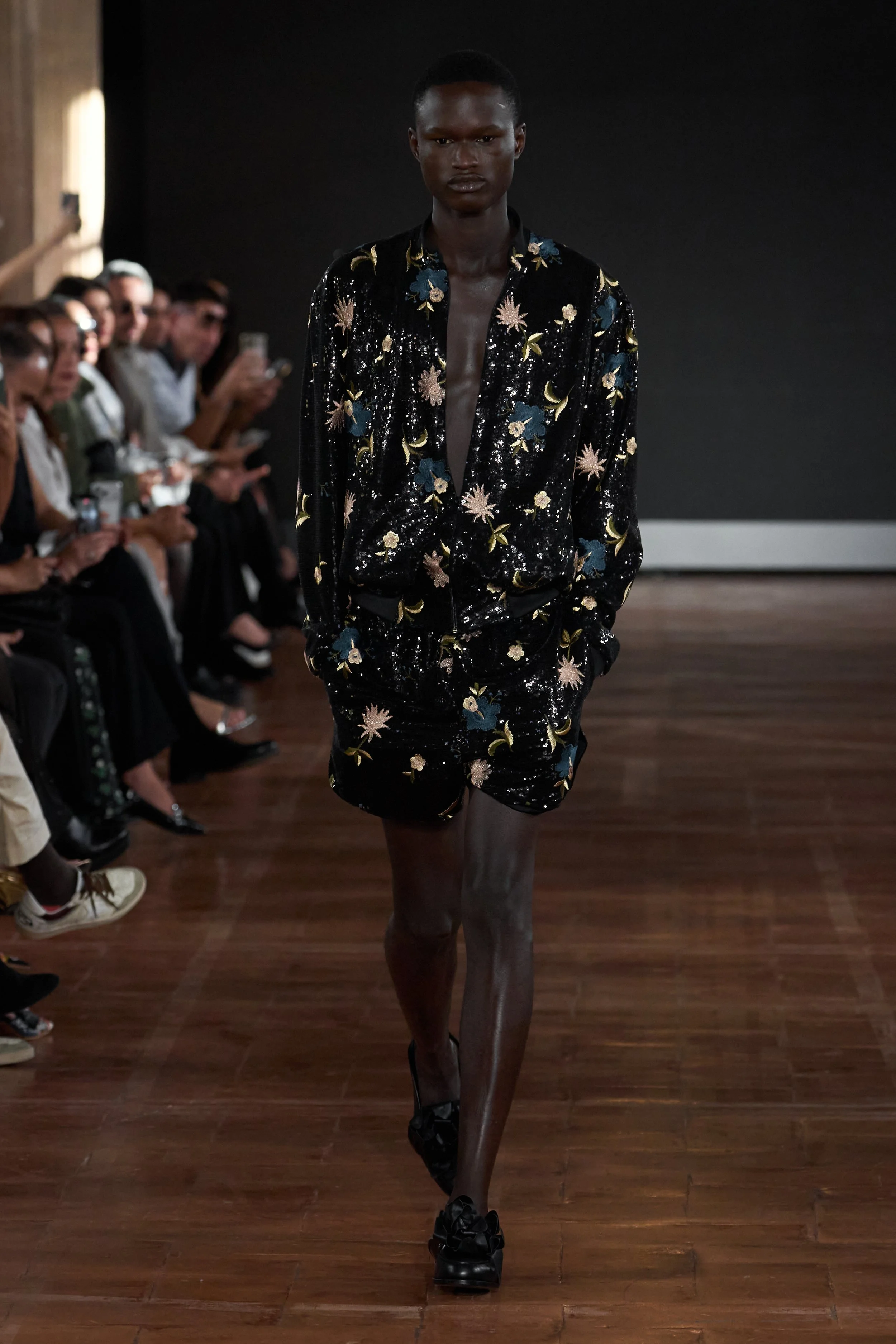
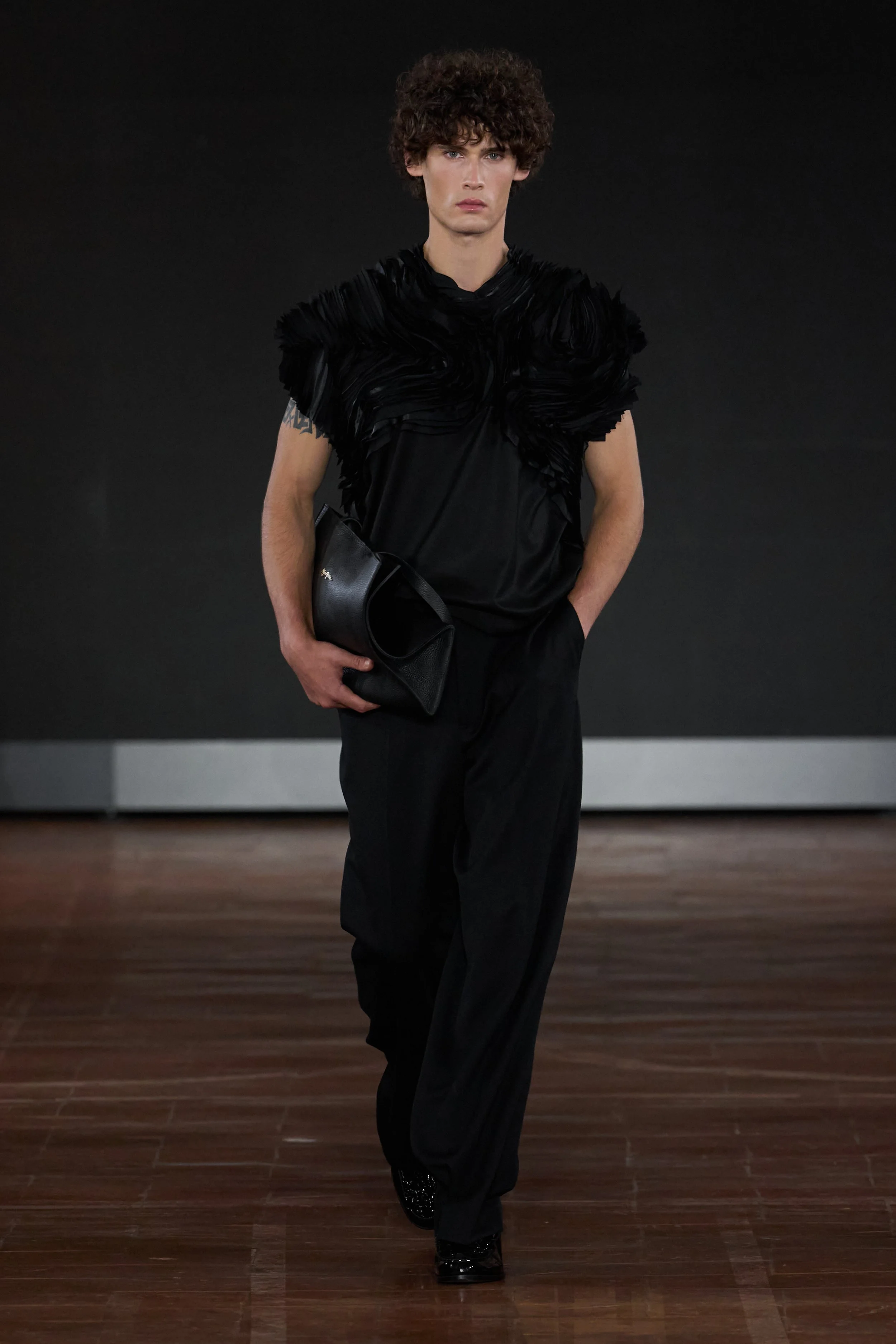
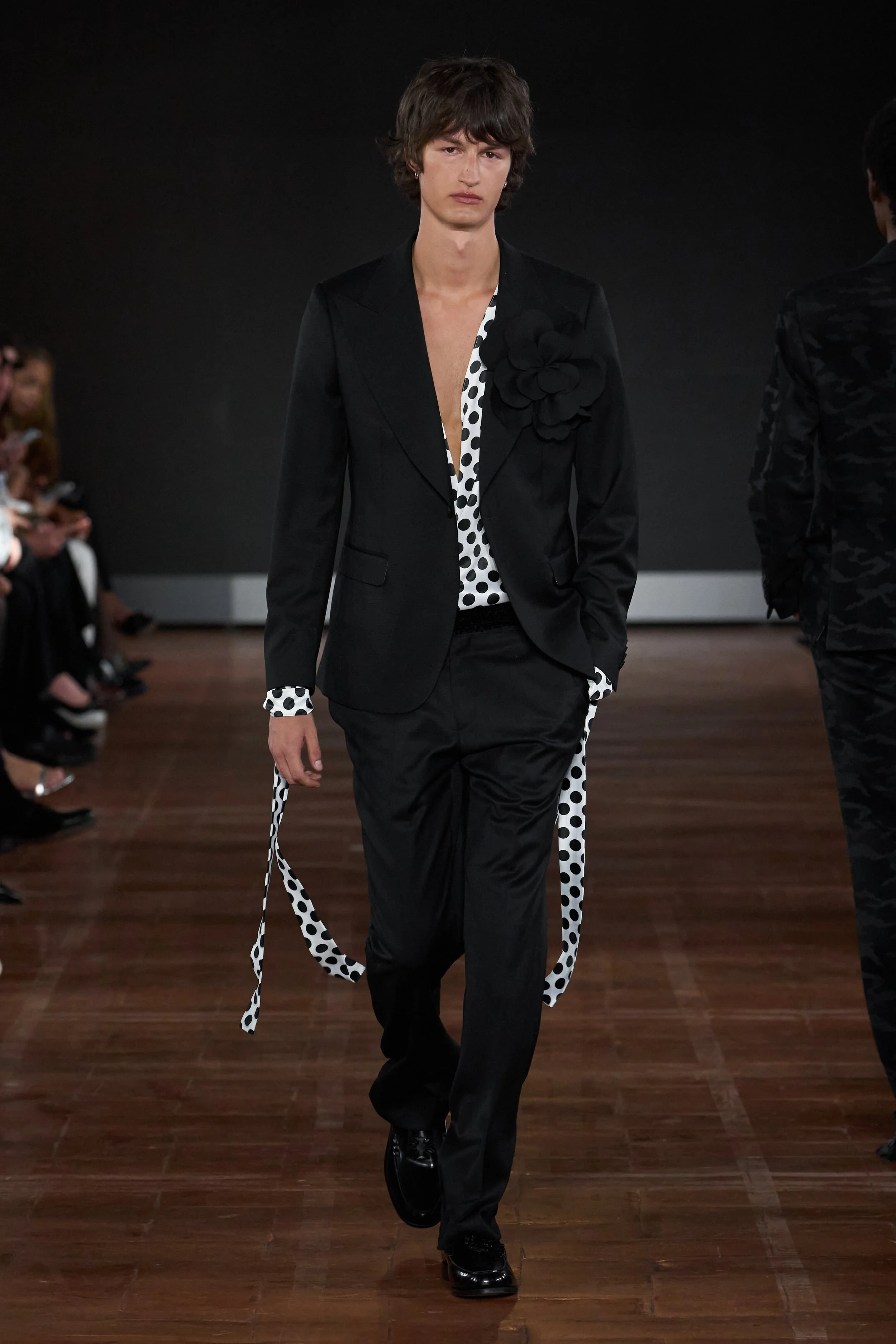
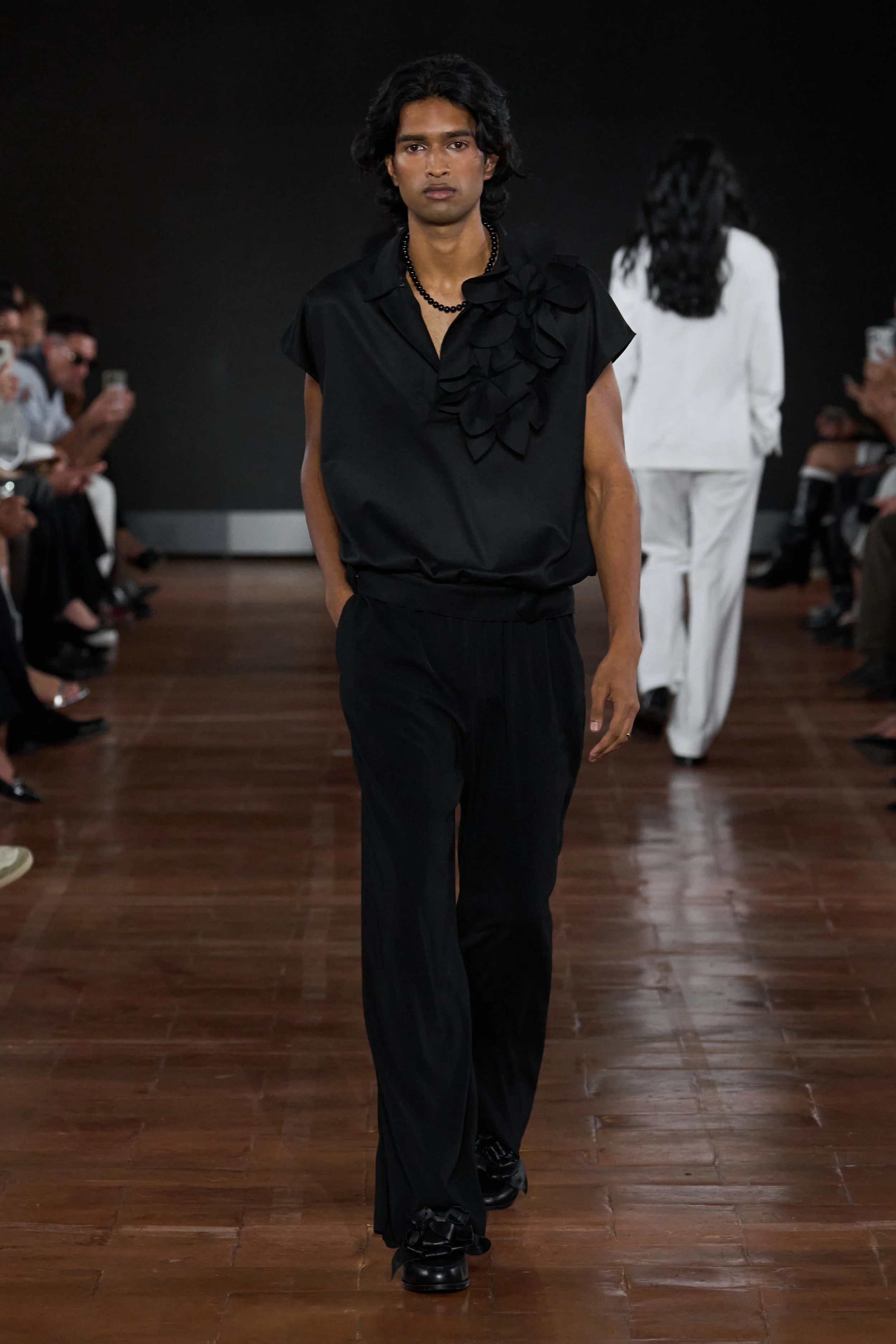
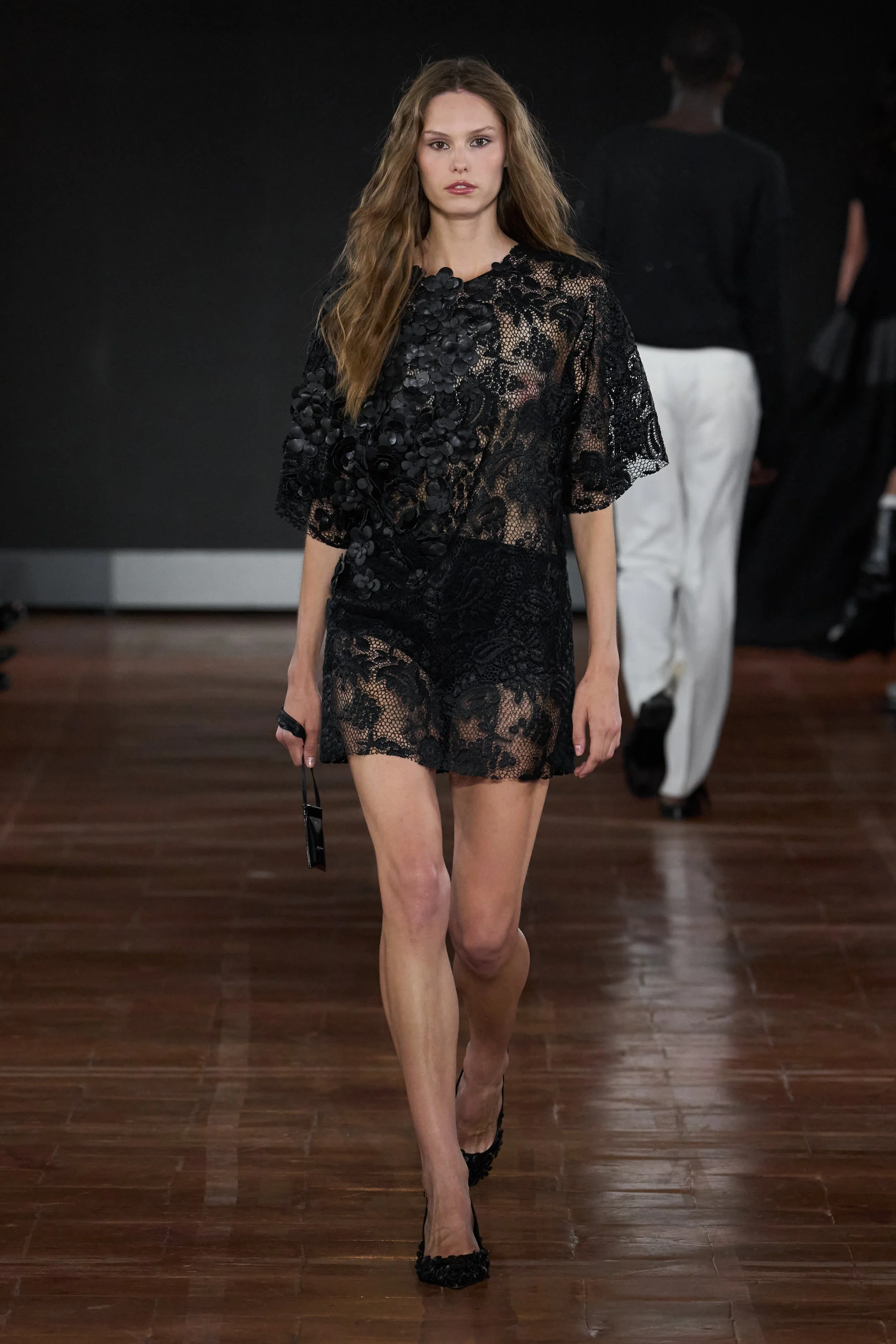
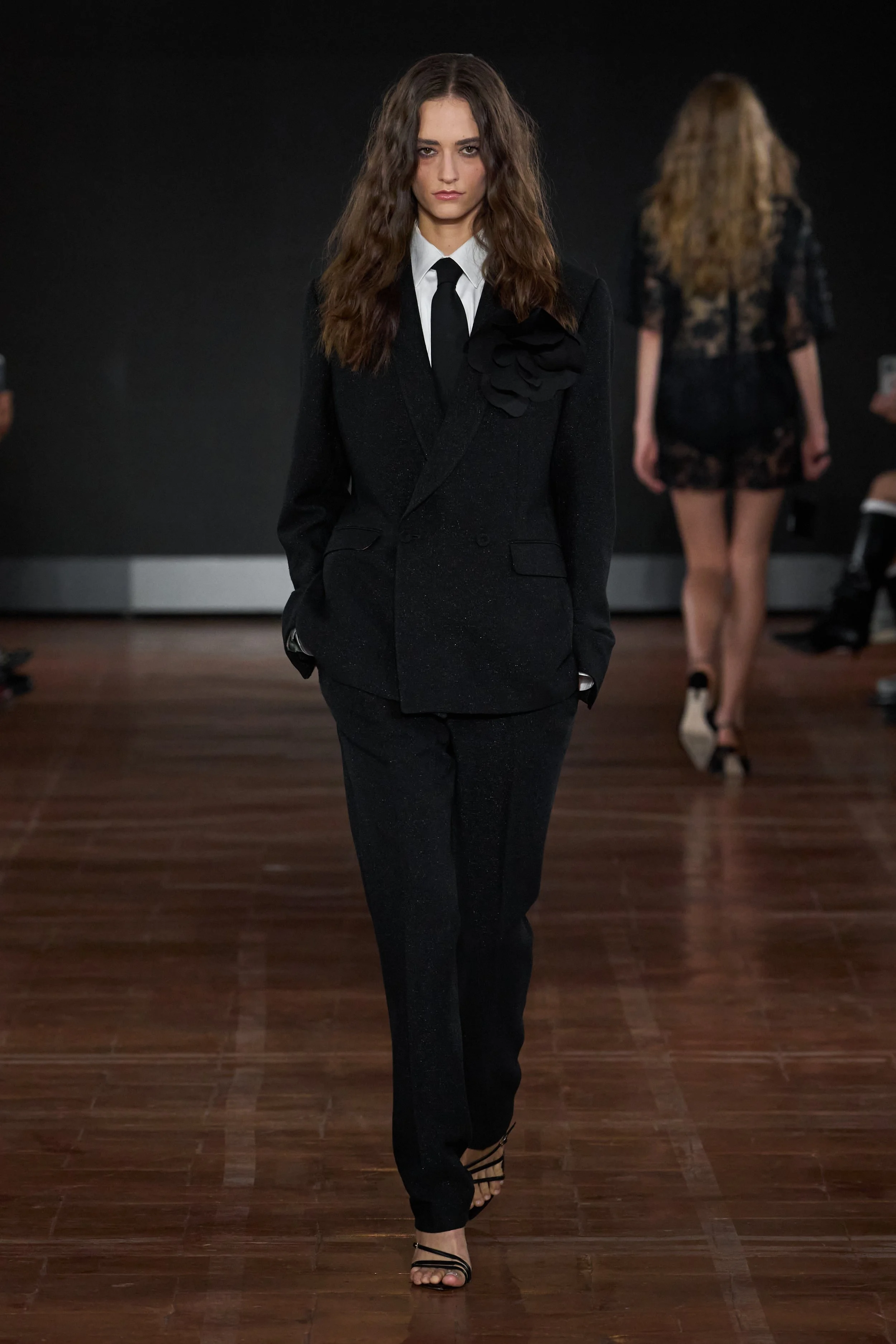
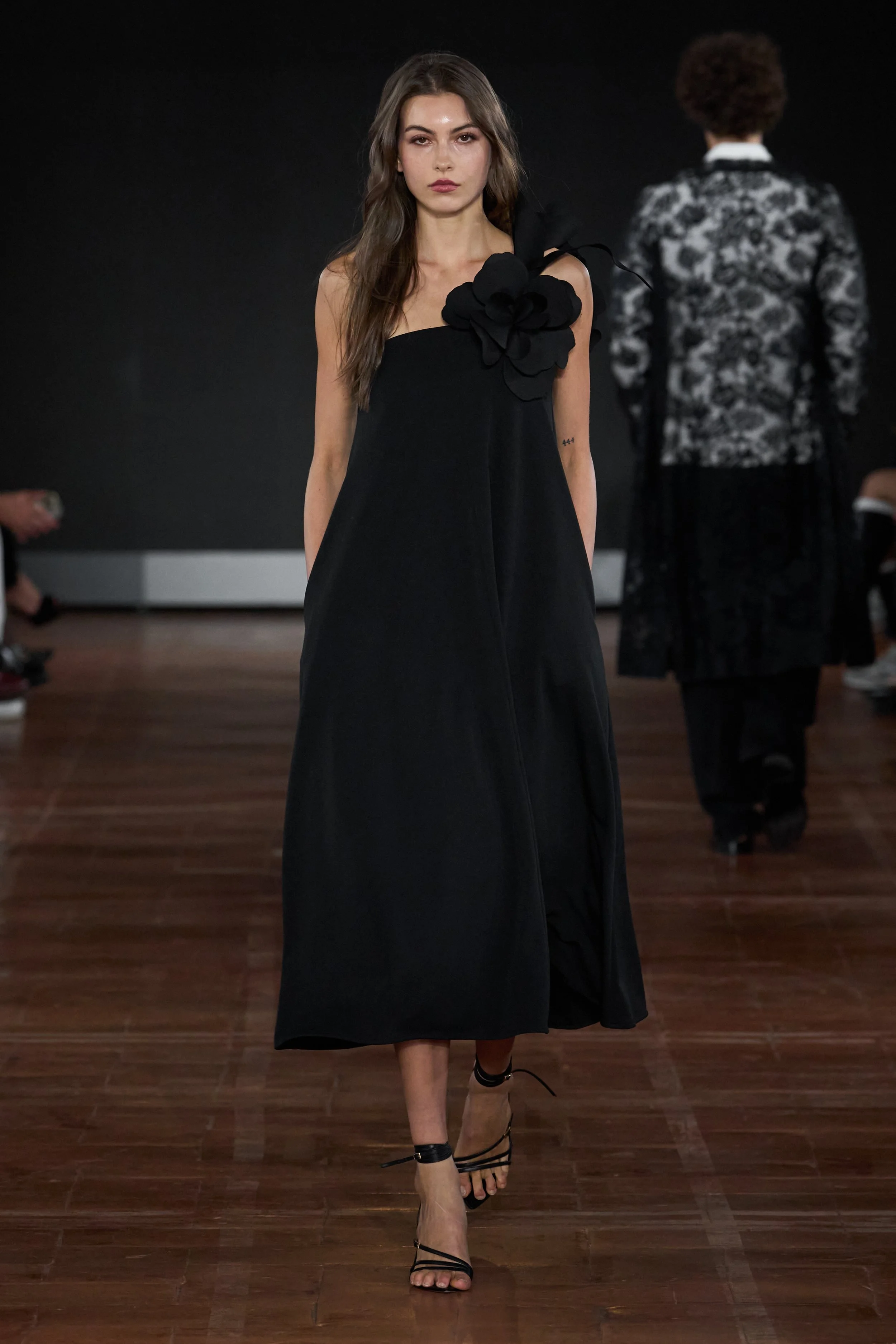
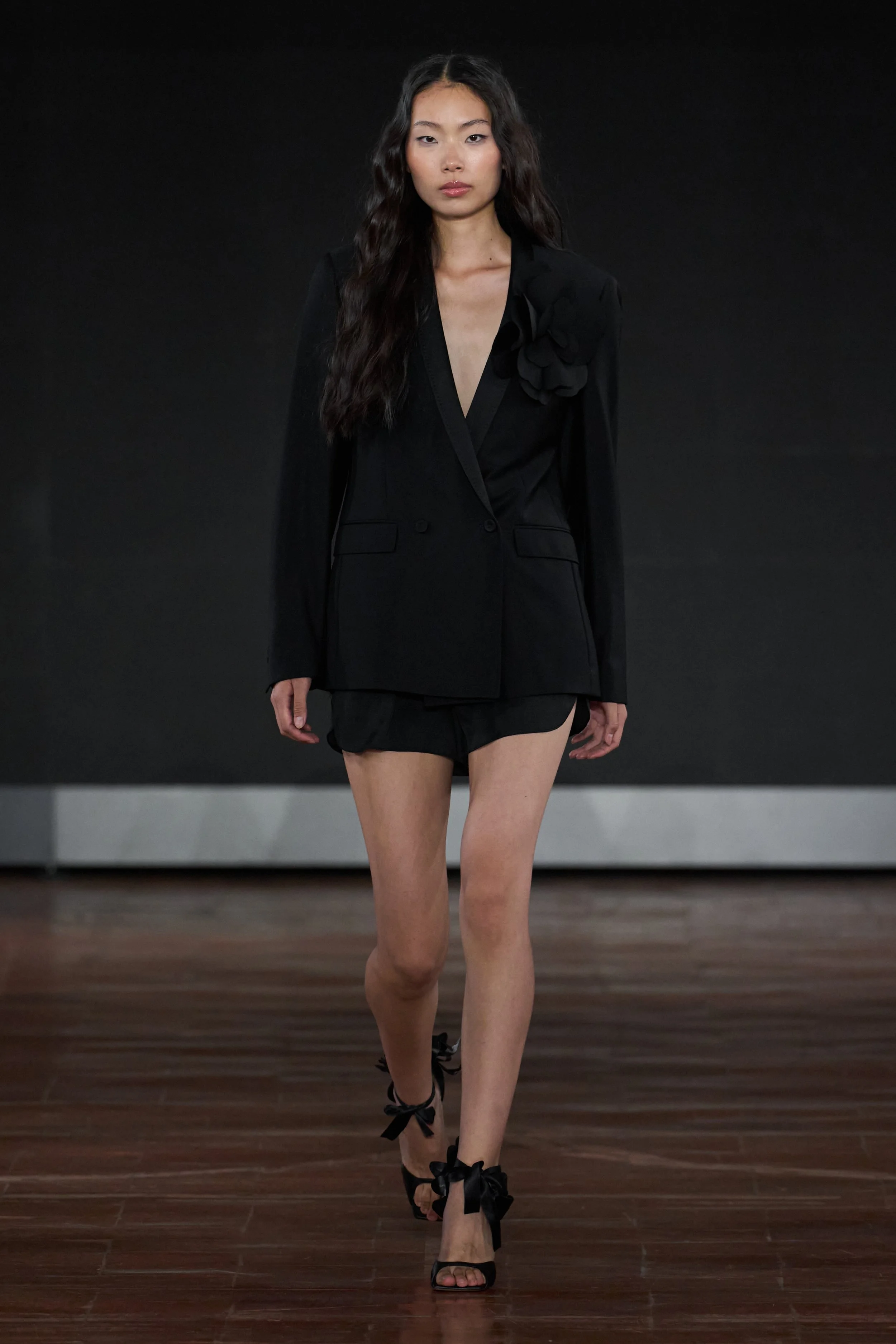
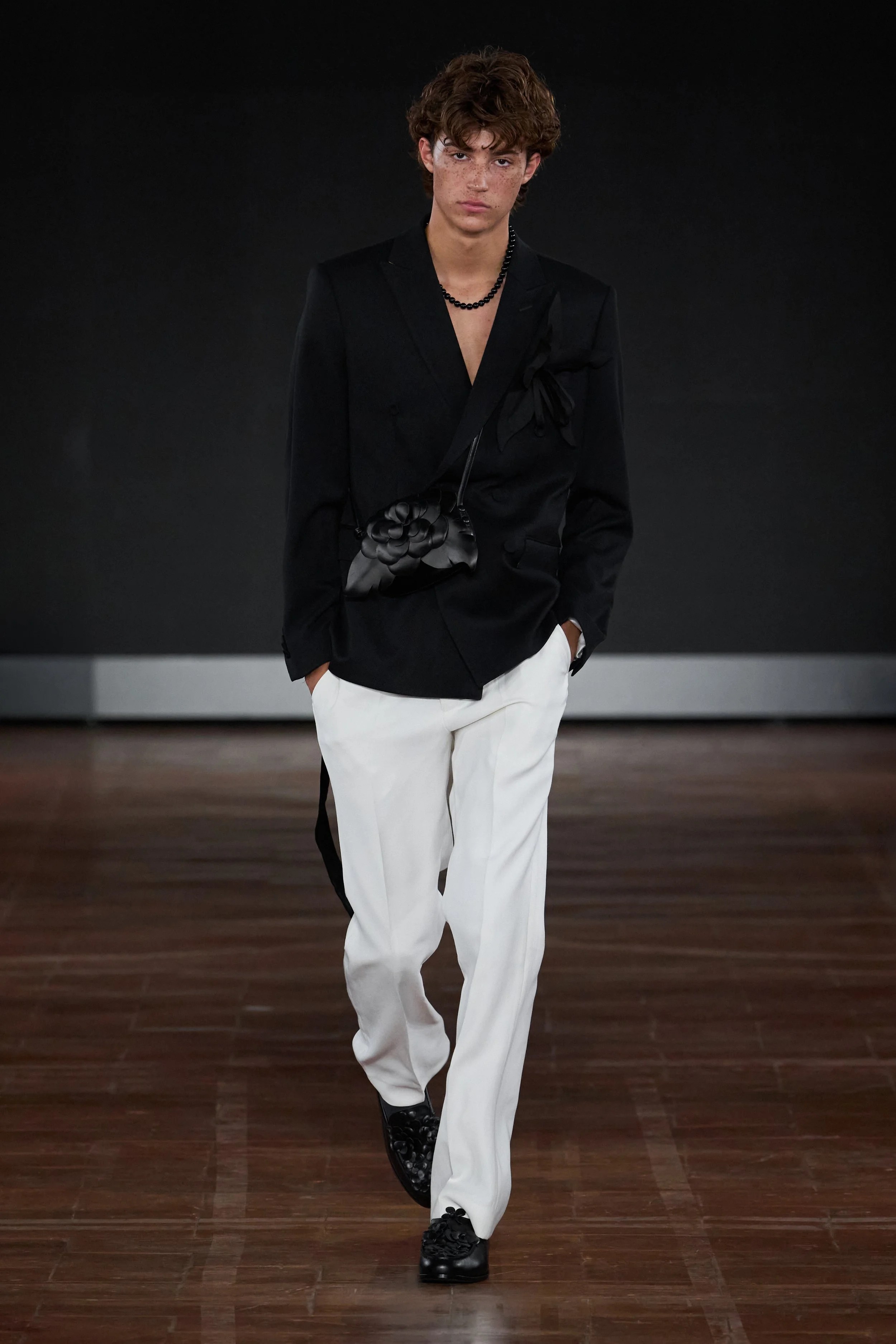
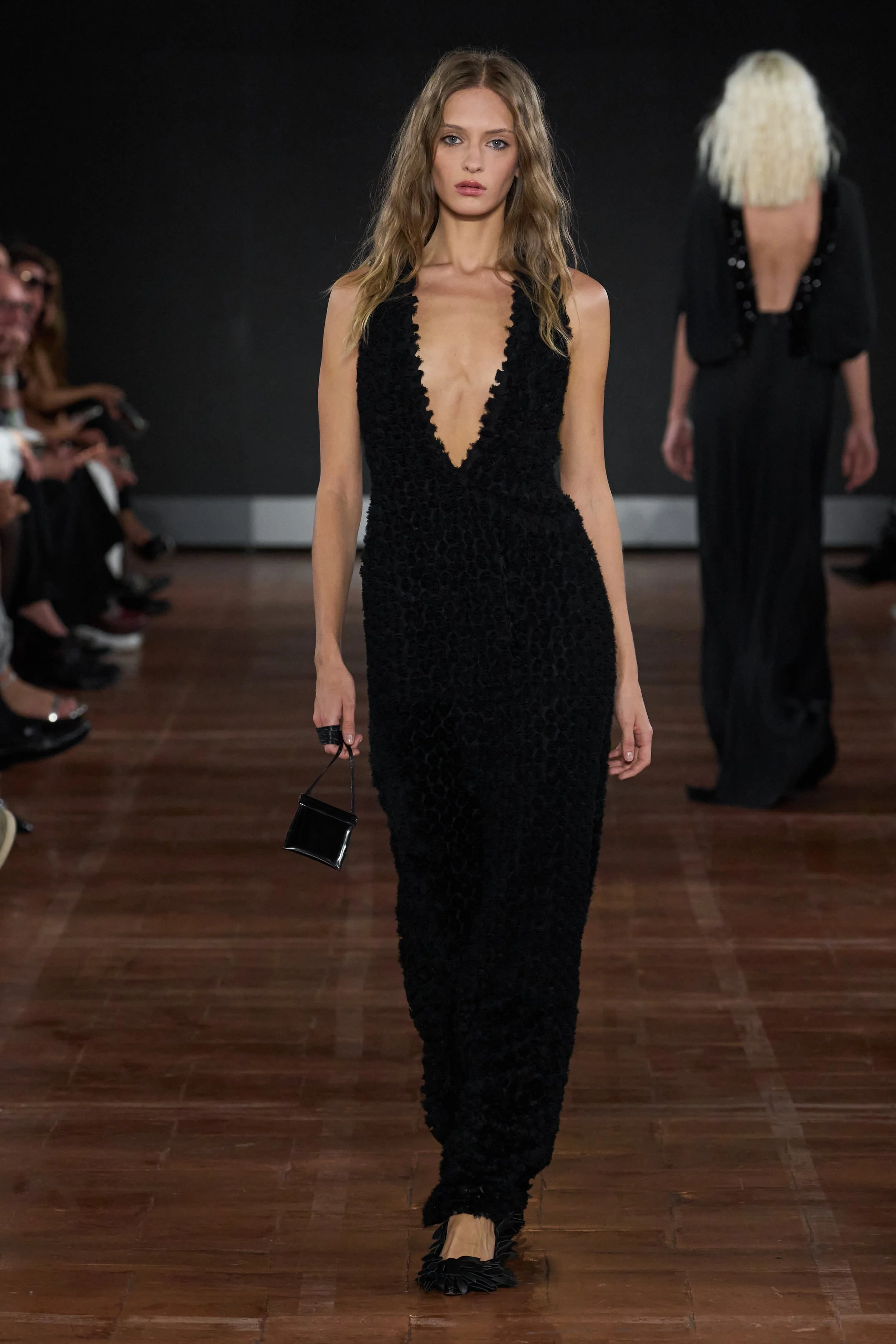
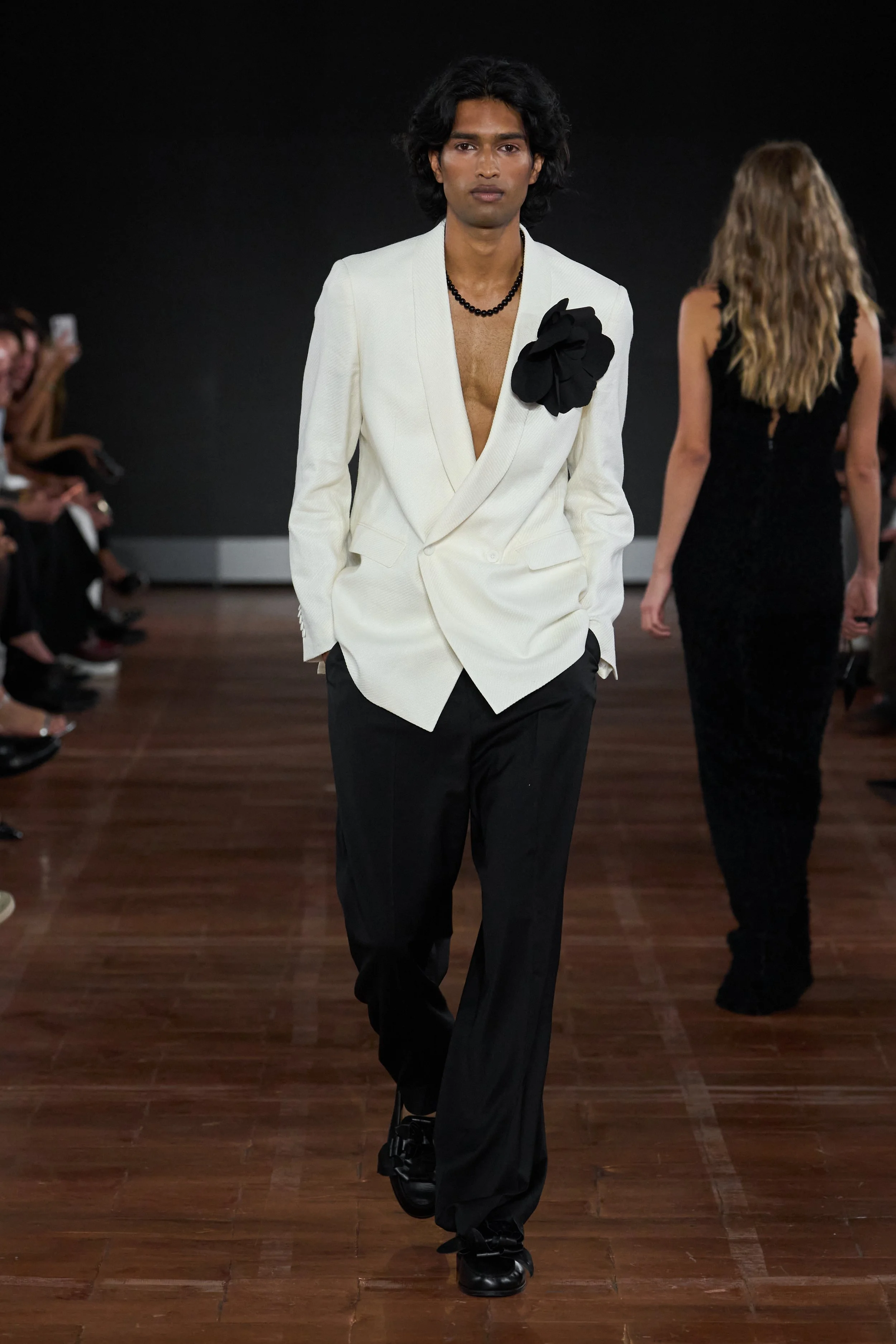
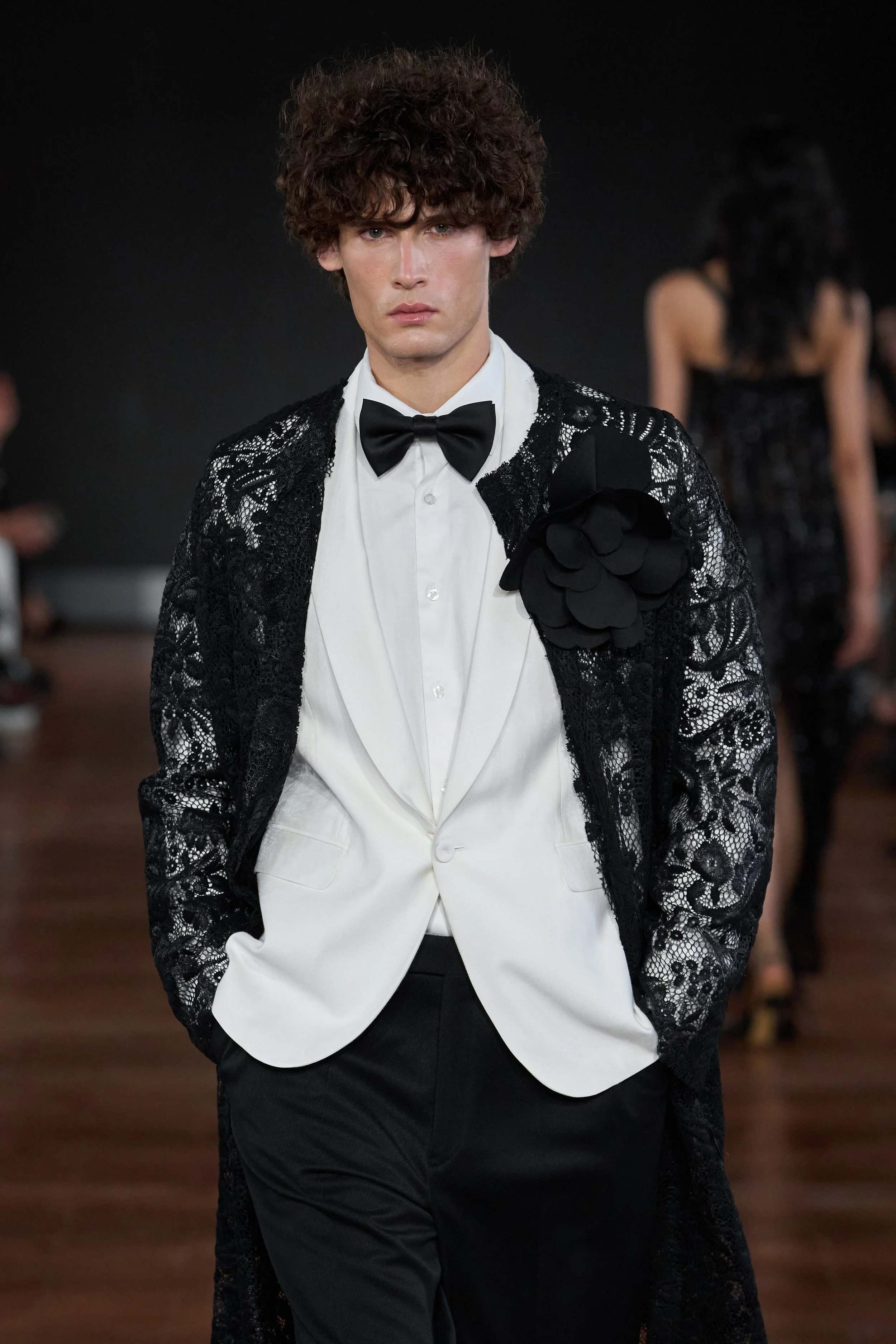
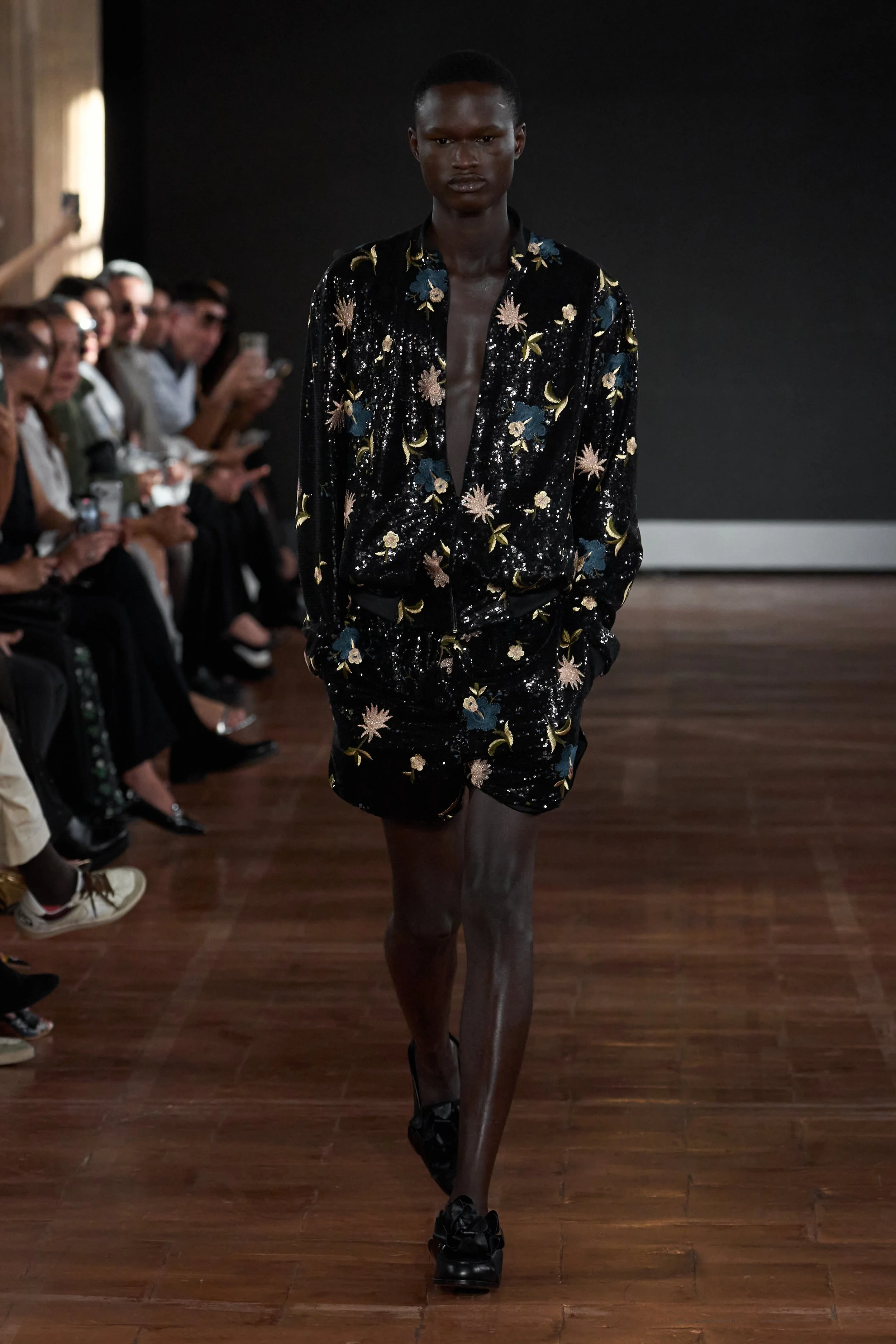
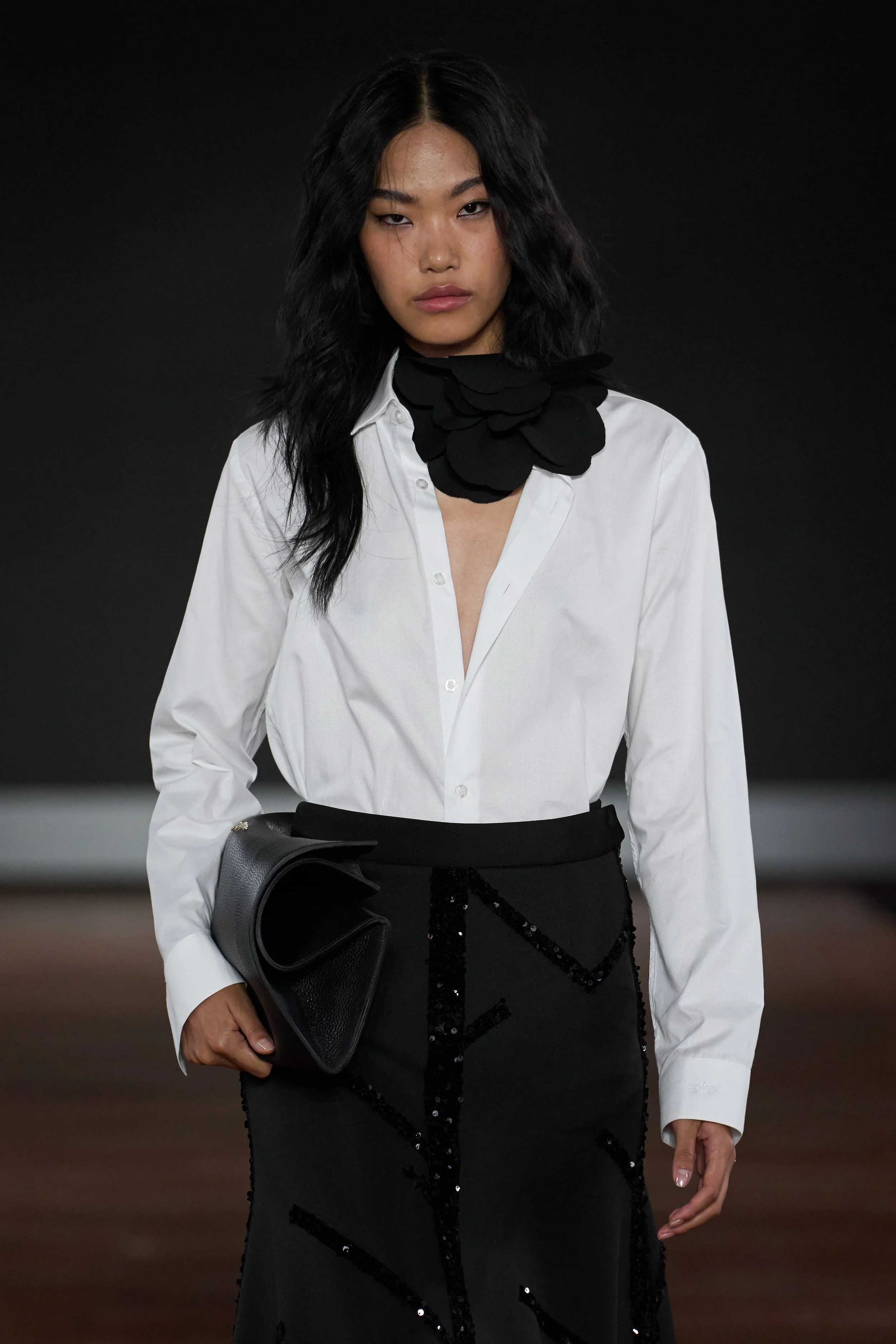
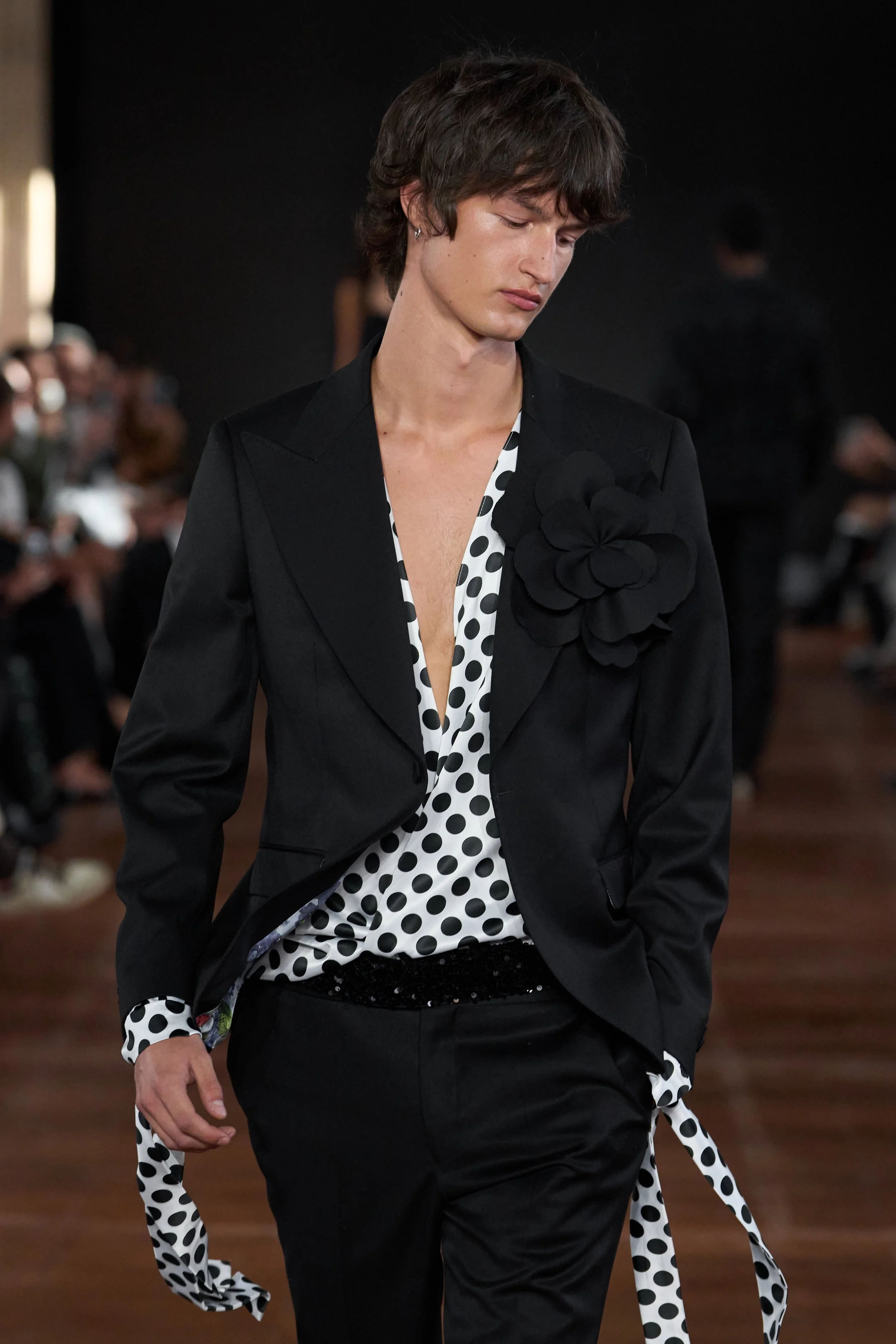
Architectural cuts establish the body through clean, minimal lines, while sculptural interventions interrupt that discipline. Flowers emerge directly from lapels, shoulders, necklines and waists, no longer operating as conventional botanical prints but as three-dimensional objects integrated into the clothes themselves.
There is something compelling in that contradiction. Rigour meets softness. Geometry meets something organic. A colour frequently associated with severity becomes the setting for garments concerned with movement, transparency and delicacy.
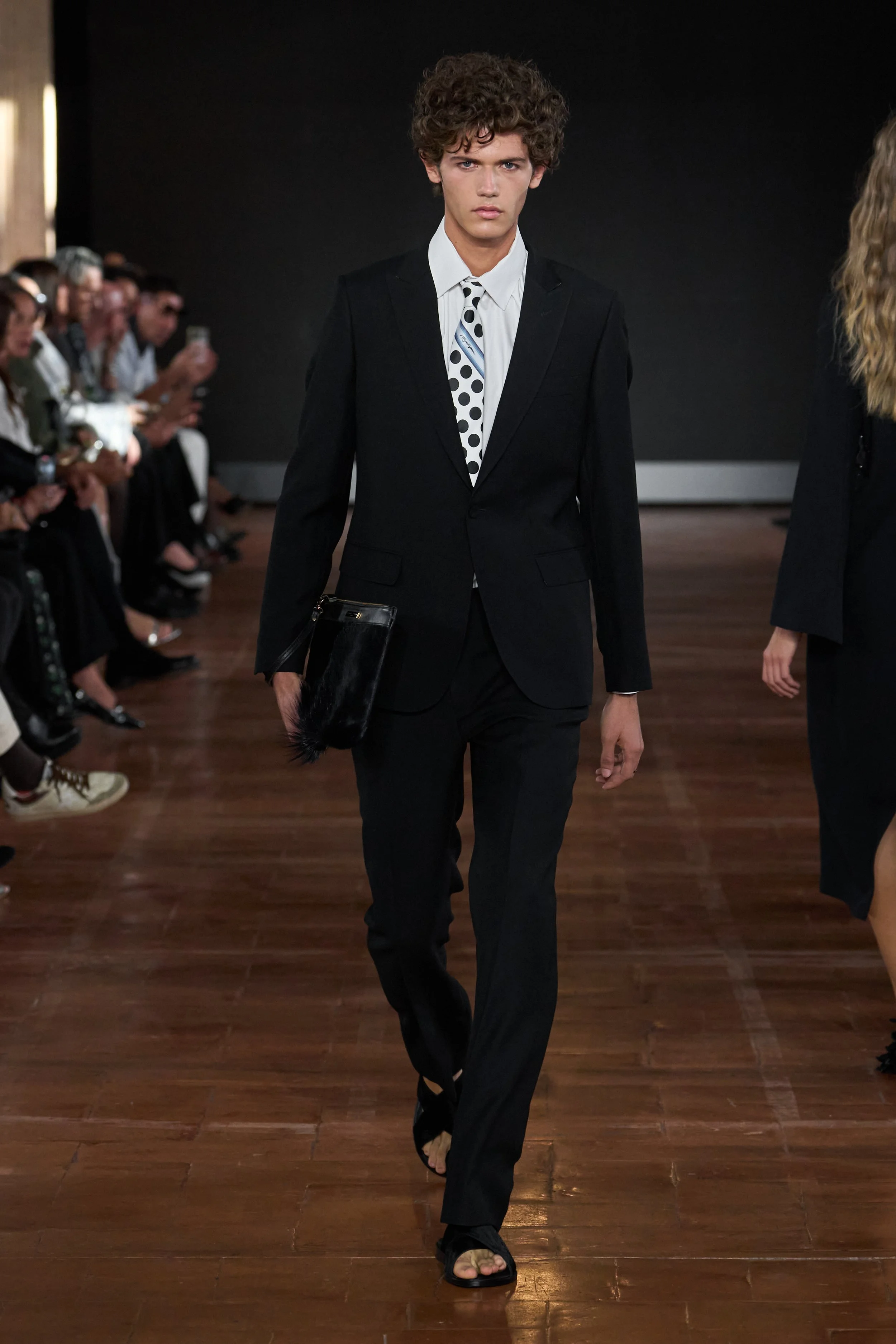
That same vocabulary continues through accessories and footwear, where floral forms wrap around the objects rather than simply decorating their surfaces. Scarves, ties and bags expand the language beyond the clothing, creating a collection in which the silhouette does not necessarily end at the garment.
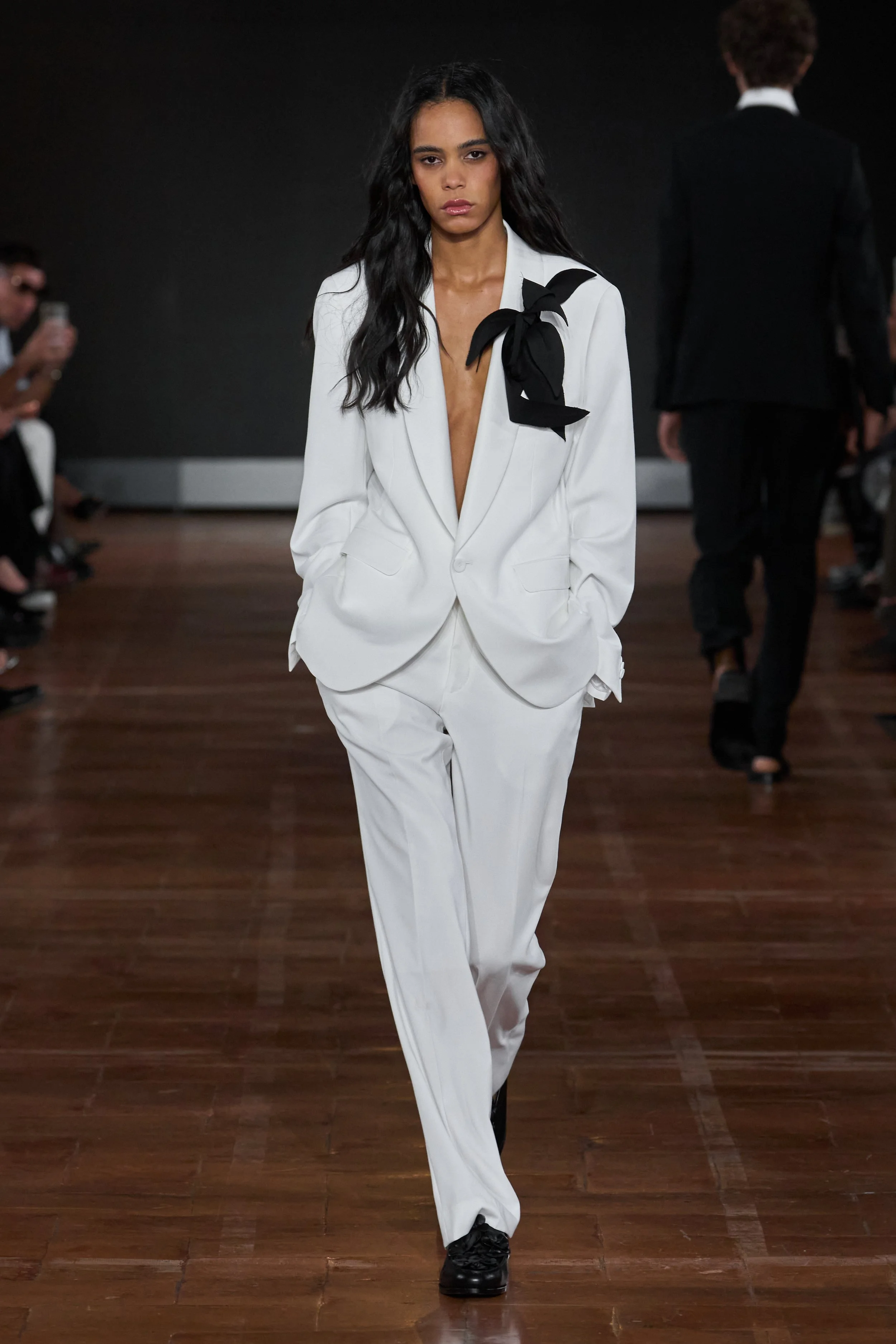
That same vocabulary continues through accessories and footwear, where floral forms wrap around the objects rather than simply decorating their surfaces. Scarves, ties and bags expand the language beyond the clothing, creating a collection in which the silhouette does not necessarily end at the garment.
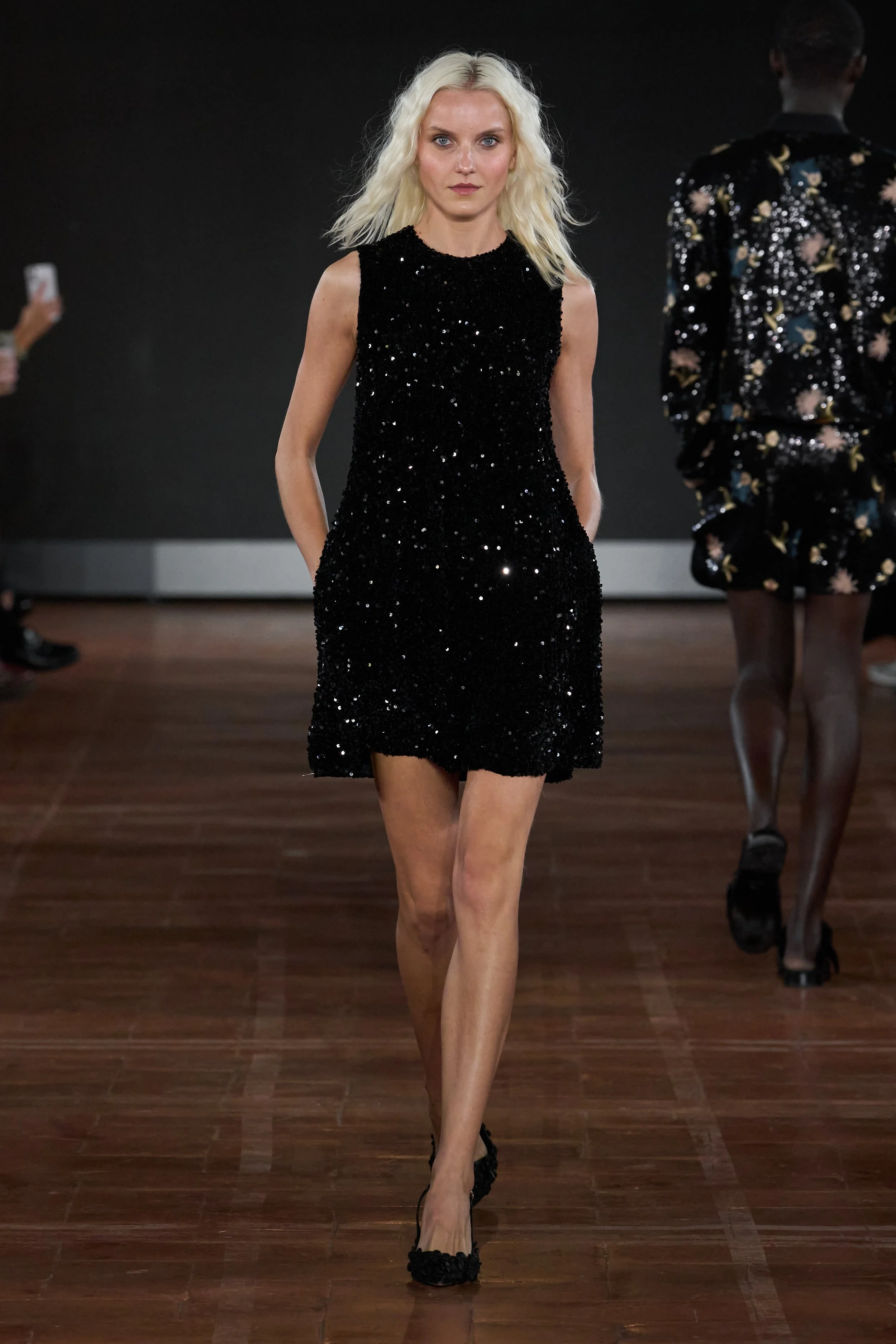
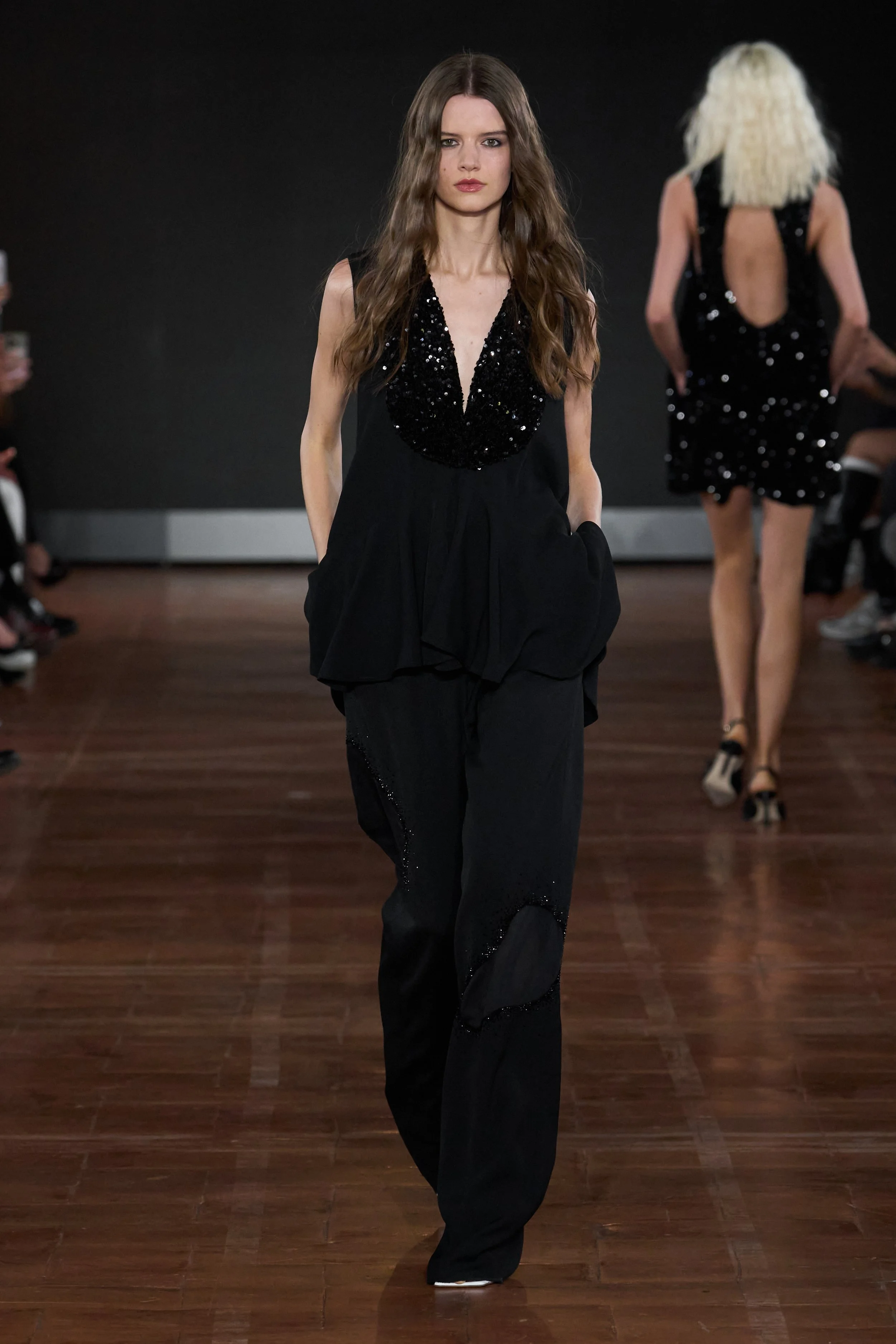
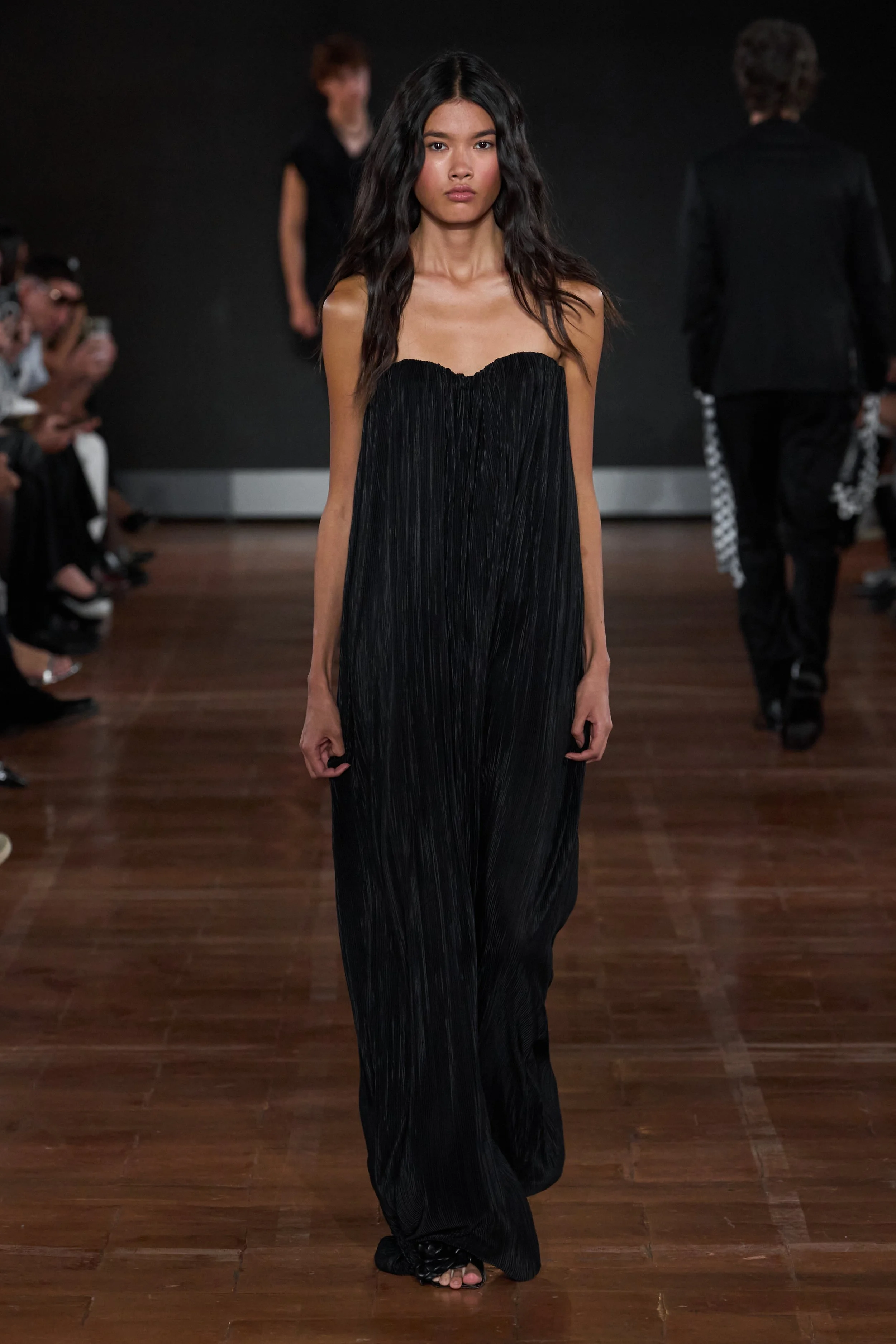
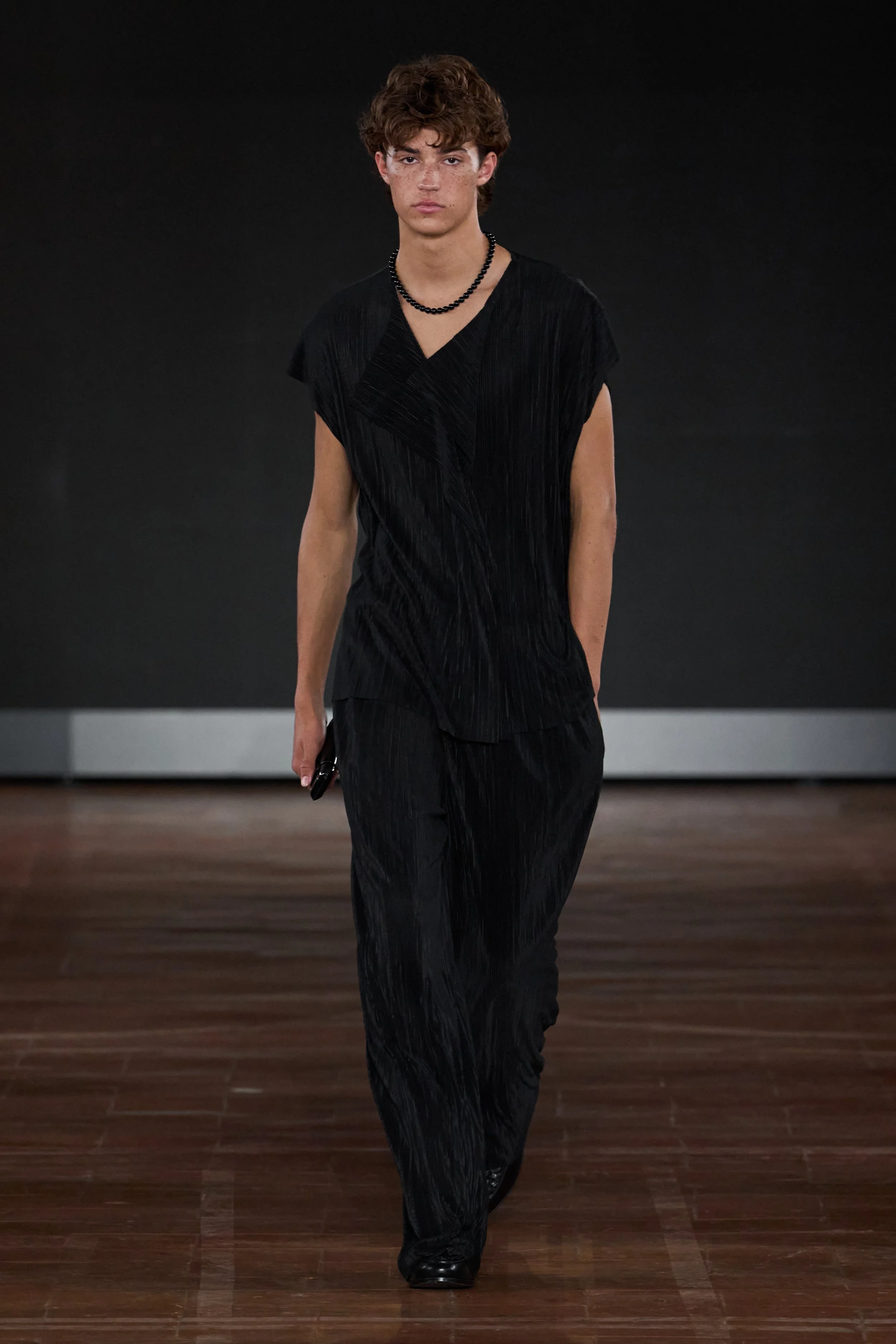
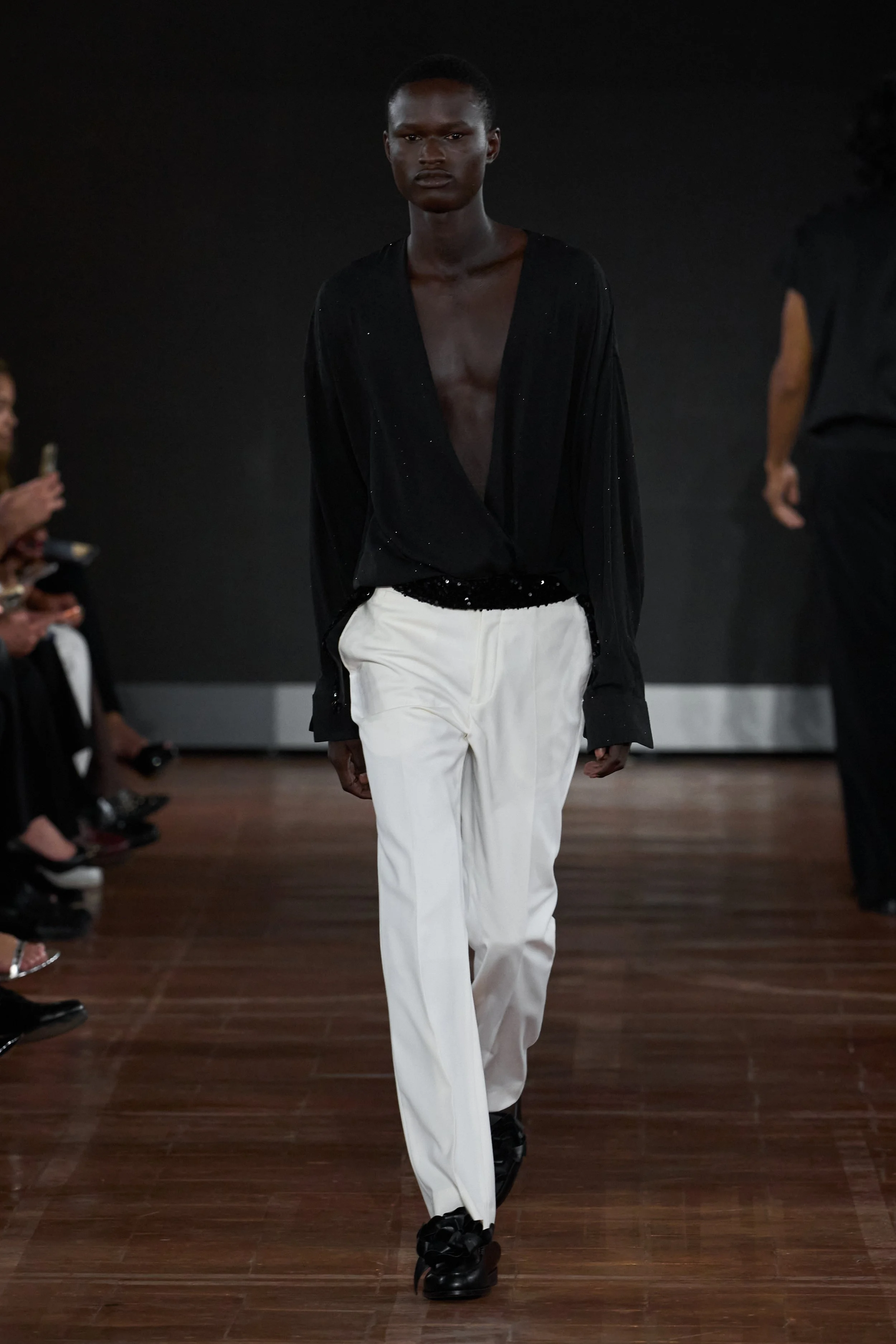
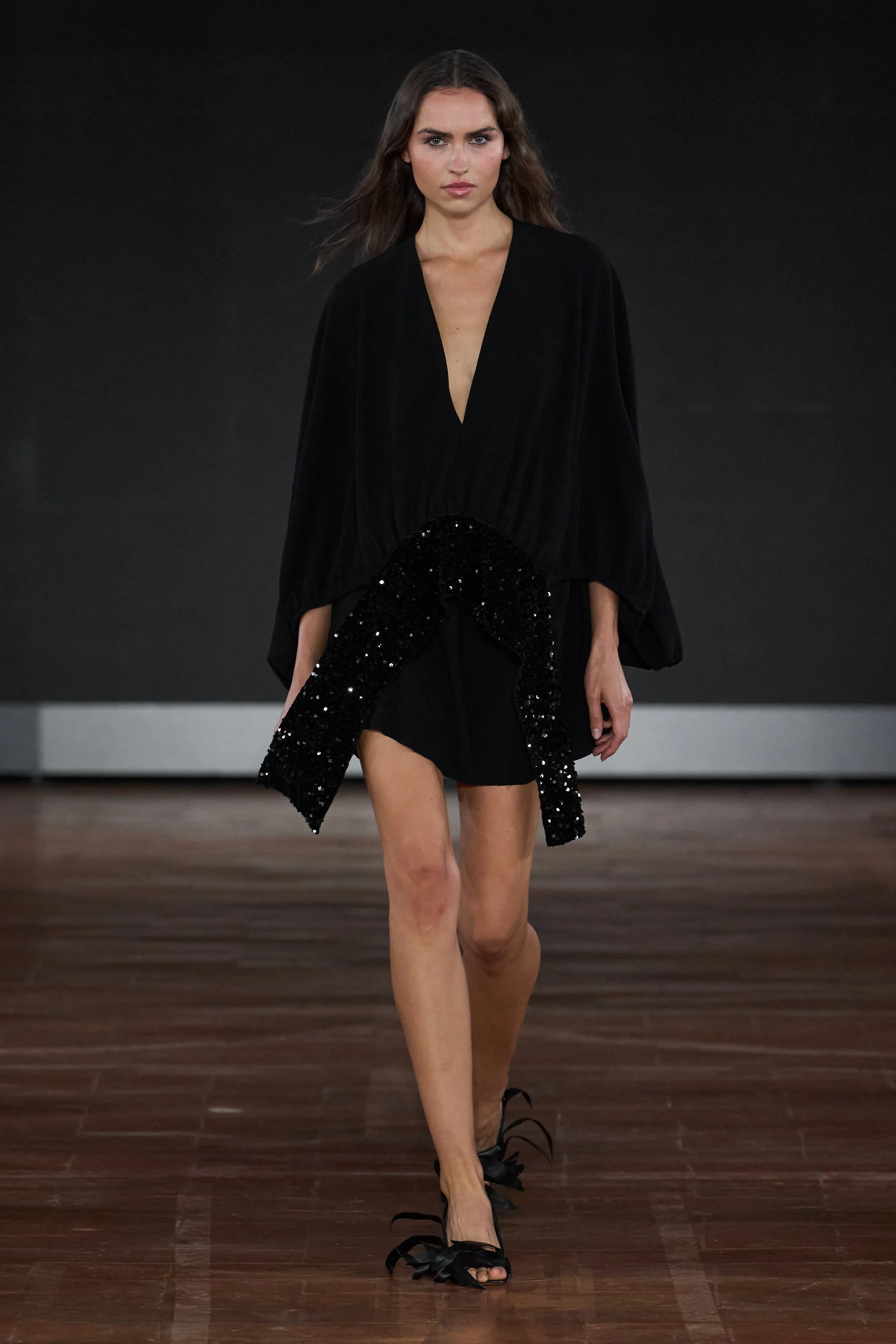
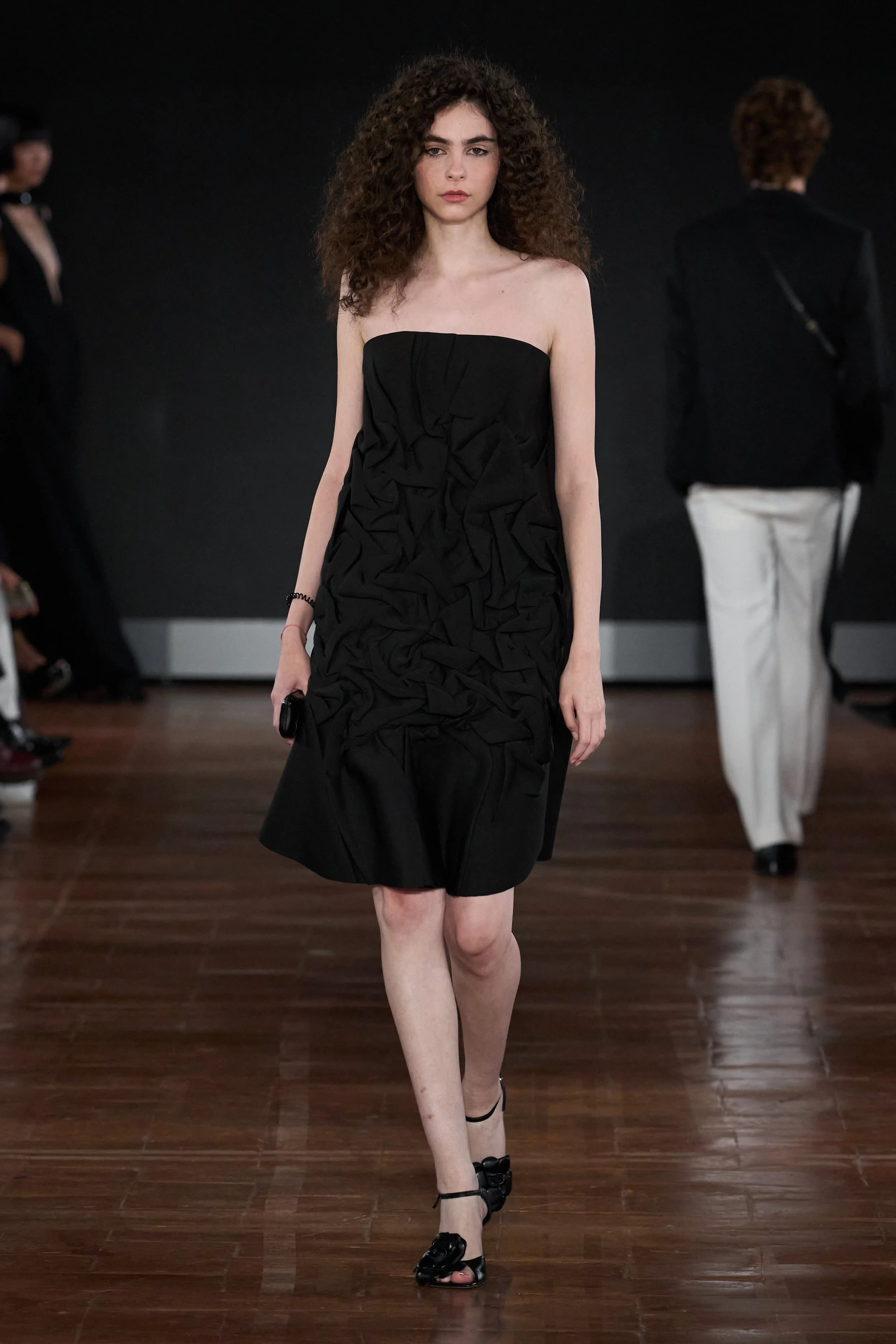
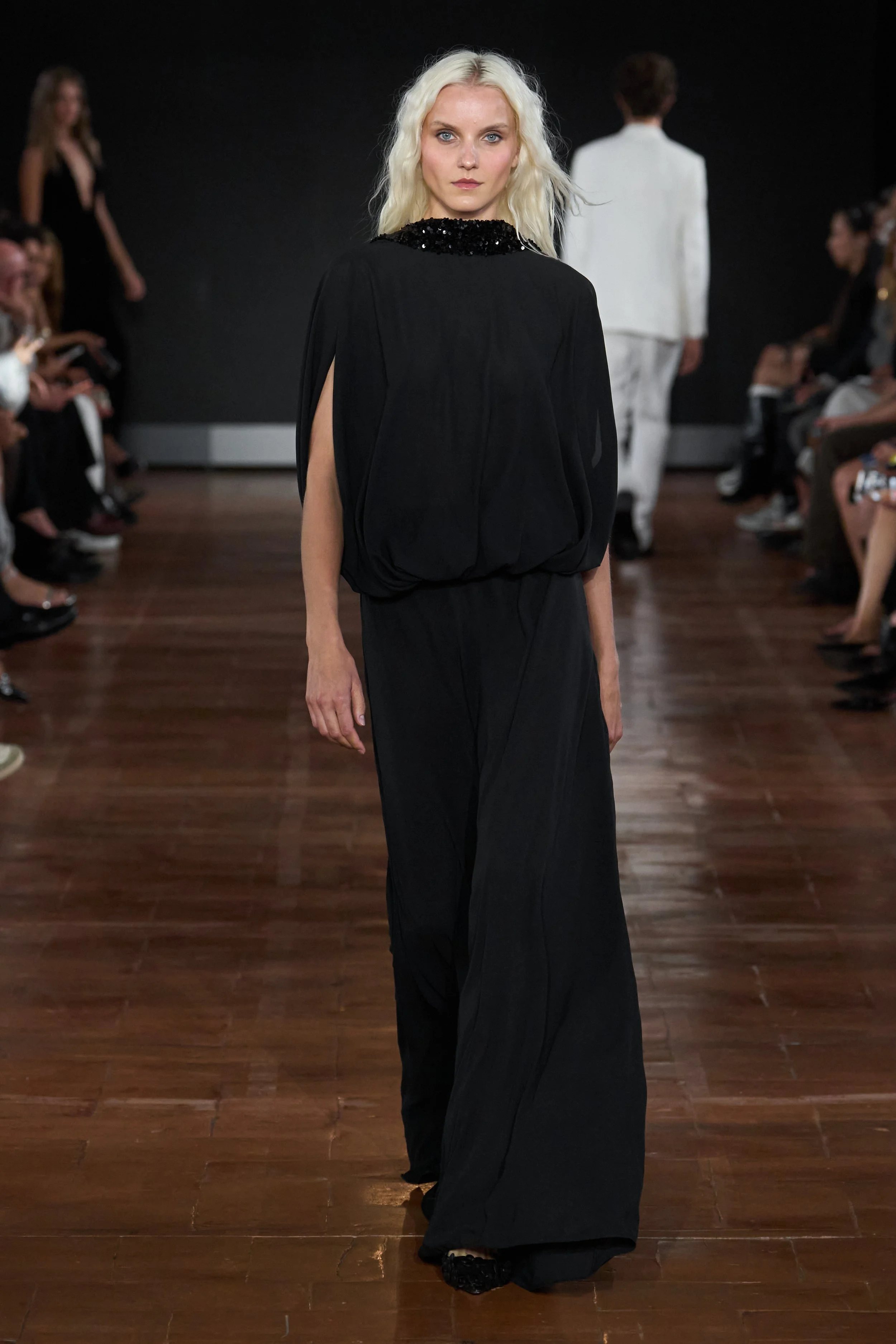
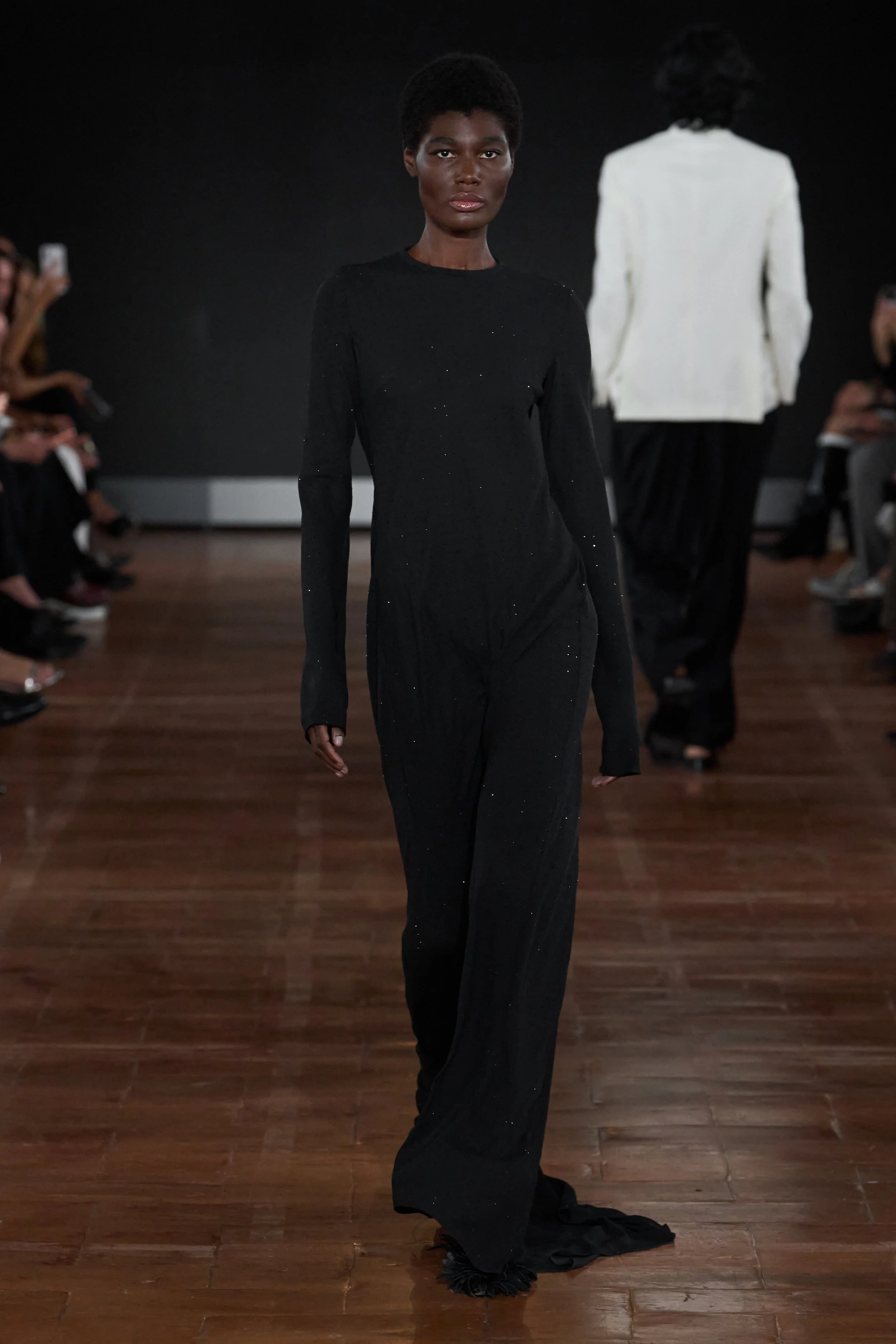
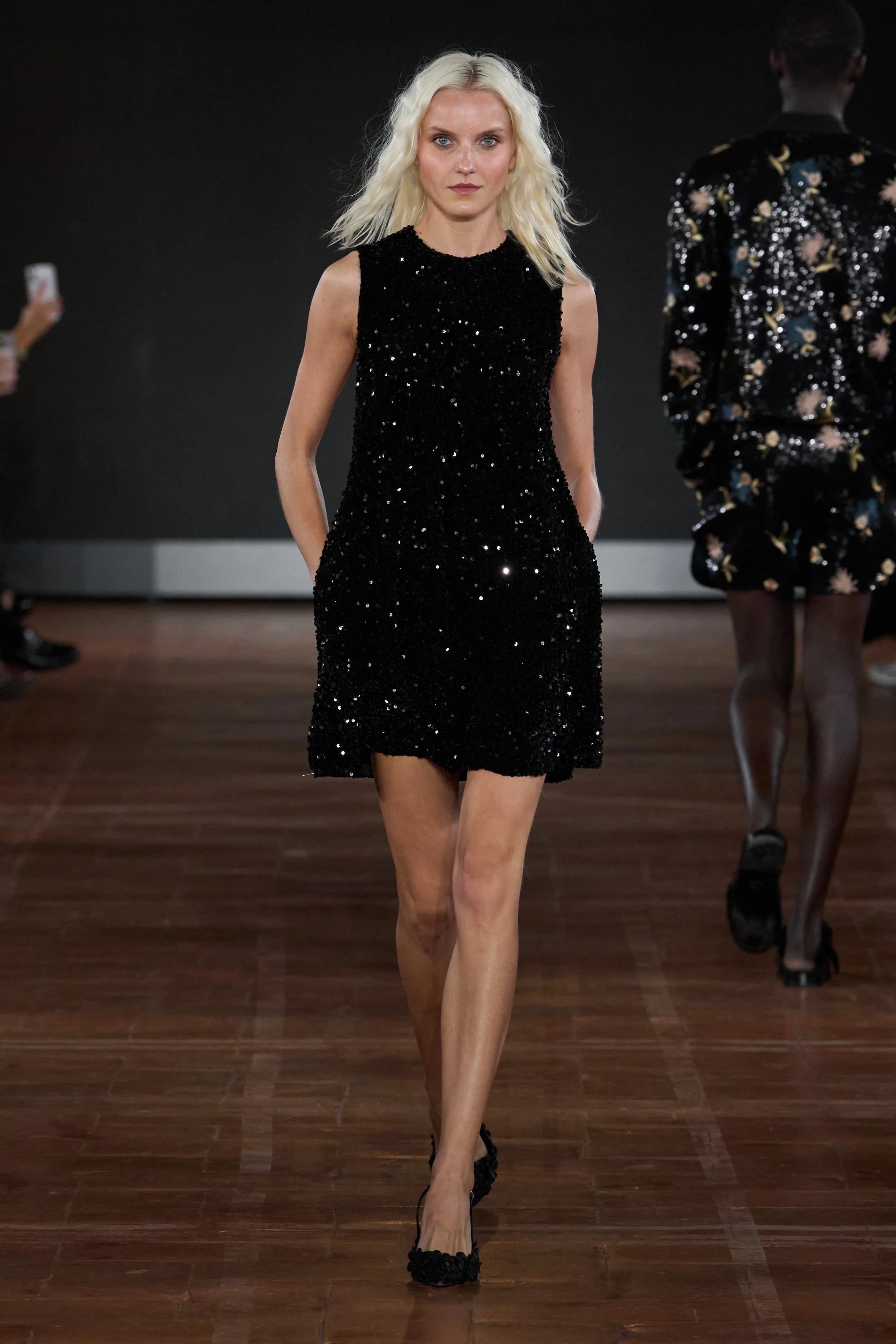
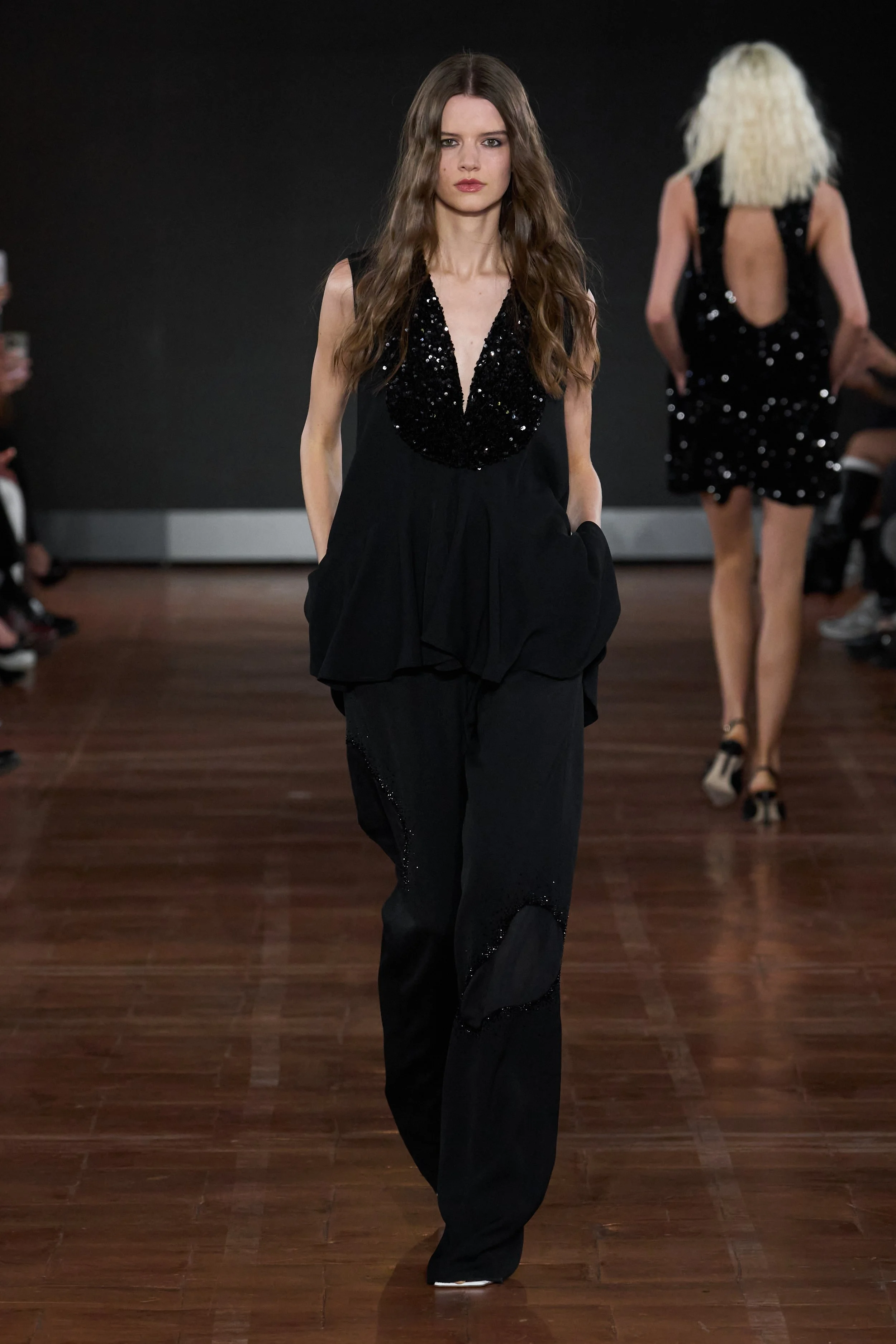
Material becomes particularly important when colour is deliberately restricted. Silk brings fluidity. Cool wool provides definition and weight. Sequins introduce reflected light, while lighter fabrics allow moments of transparency against the skin. Without a broad palette competing for attention, the differences between matte and shine, density and air, opacity and exposure become increasingly visible. This is where Back to Black moves beyond monochrome as an aesthetic exercise.
Black has rarely been neutral. Across art, fashion and subculture it has represented mourning, rebellion, authority, eroticism, anonymity and sophistication, sometimes simultaneously. Its meaning changes according to who wears it, how it is cut and what surrounds it.
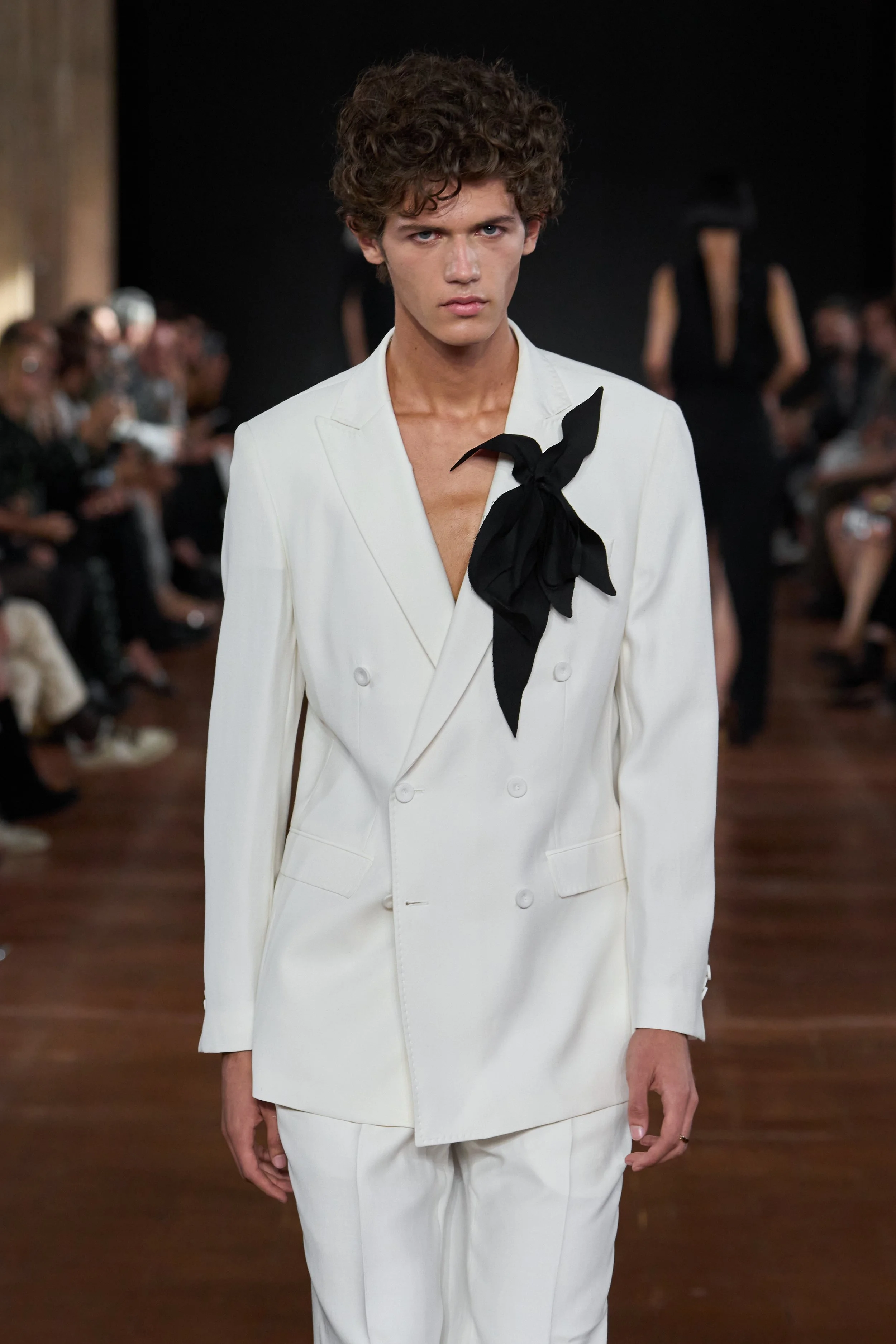
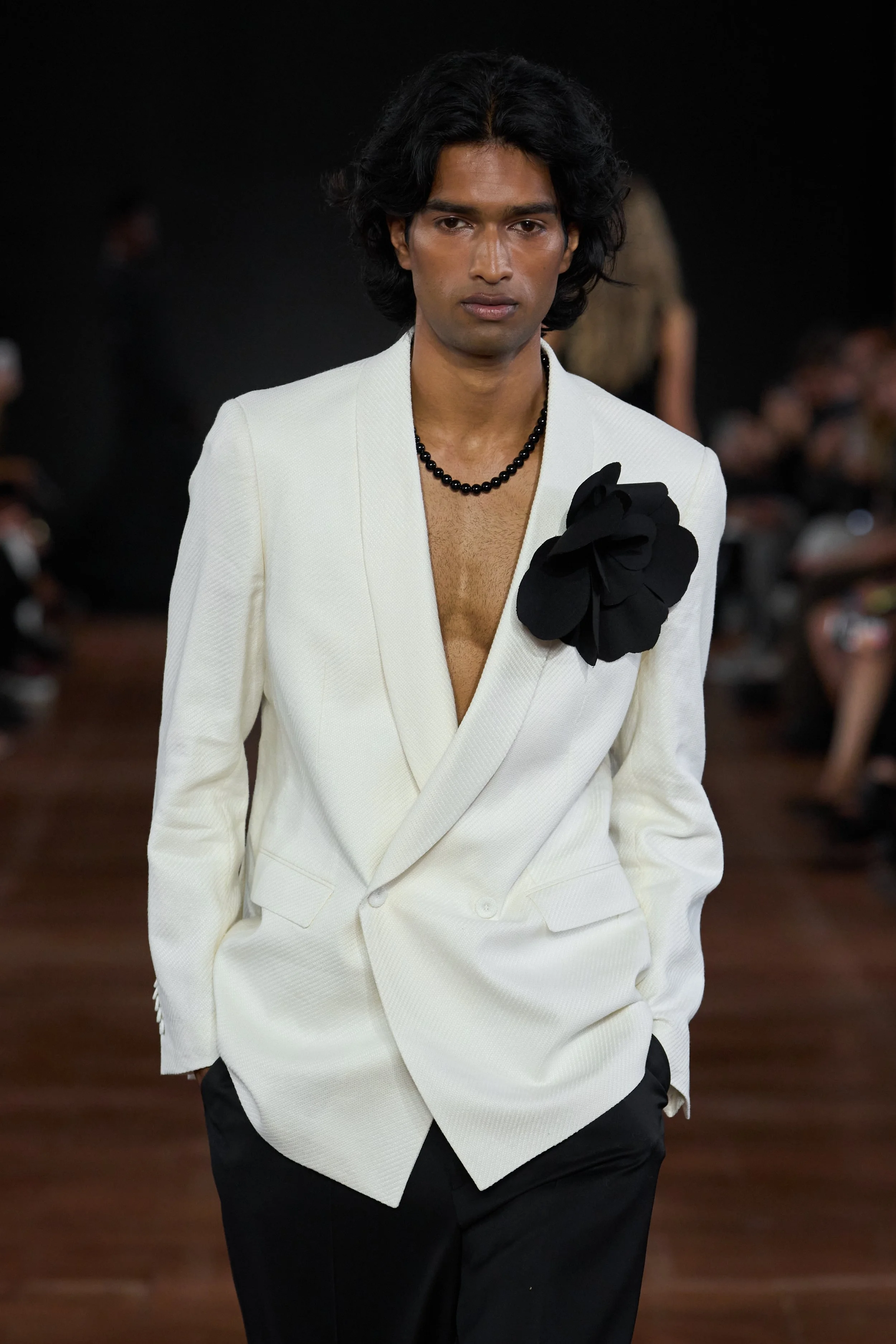
Vieira's SS27 proposition understands that ambiguity.
Rather than using black to flatten the collection, it allows the absence of colour to exaggerate everything else. A flower becomes more sculptural. A transparent layer becomes more fragile. A sharply constructed shoulder feels harder. The smallest shift in texture becomes noticeable.
Even the collection's handmade fabric and leather flowers participate in that tension. Florals traditionally belong to the familiar visual language of spring, yet here they are stripped of the colour usually responsible for their romanticism. What remains is their physical form. The flower becomes architecture.
There is a quiet confidence in refusing the predictable signals of a season. Summer does not have to mean brightness. Femininity does not have to arrive through softness alone. Minimalism does not require the disappearance of ornament.
Instead, Miguel Vieira creates a world where ornament grows directly from structure. In Back to Black, darkness is not presented as an absence. It becomes the condition that allows everything else to be seen.