The Body Is Not a Boundary: Enola Papis’ inhabitants
Working with wool, silk, water, pigment and salt, the Milan-based designer builds a graduate collection around the invisible systems connecting body, landscape and memory.
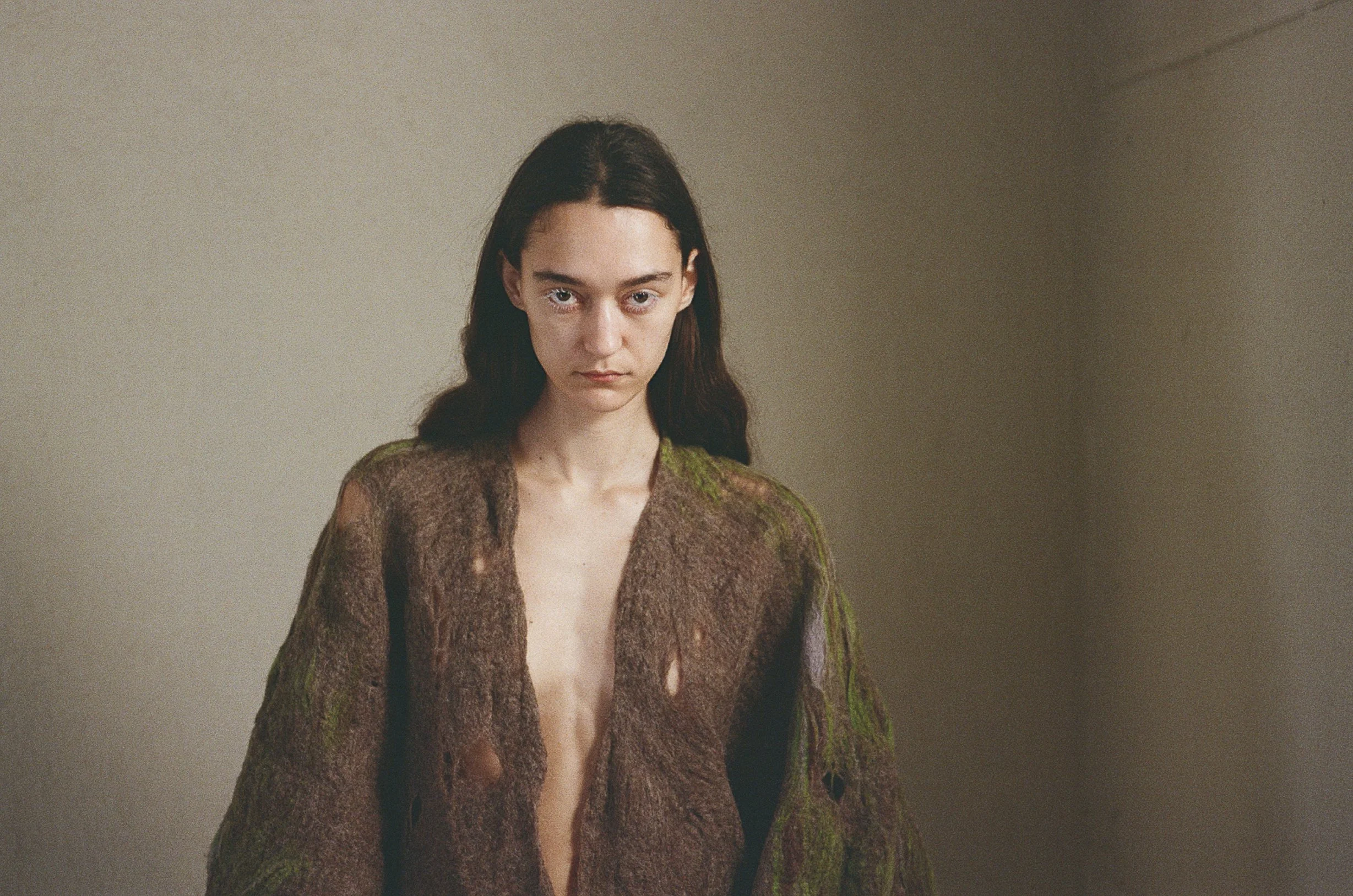
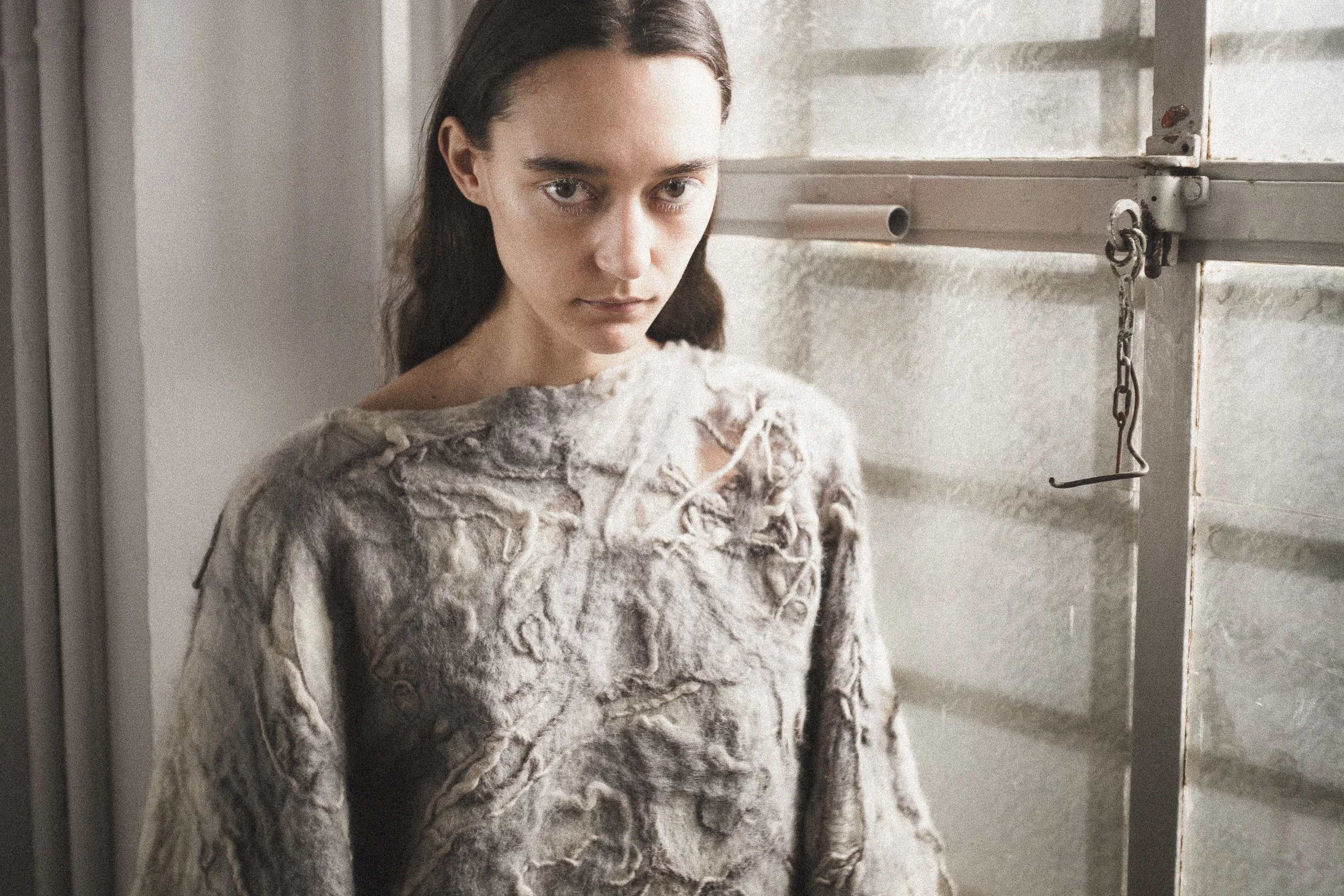
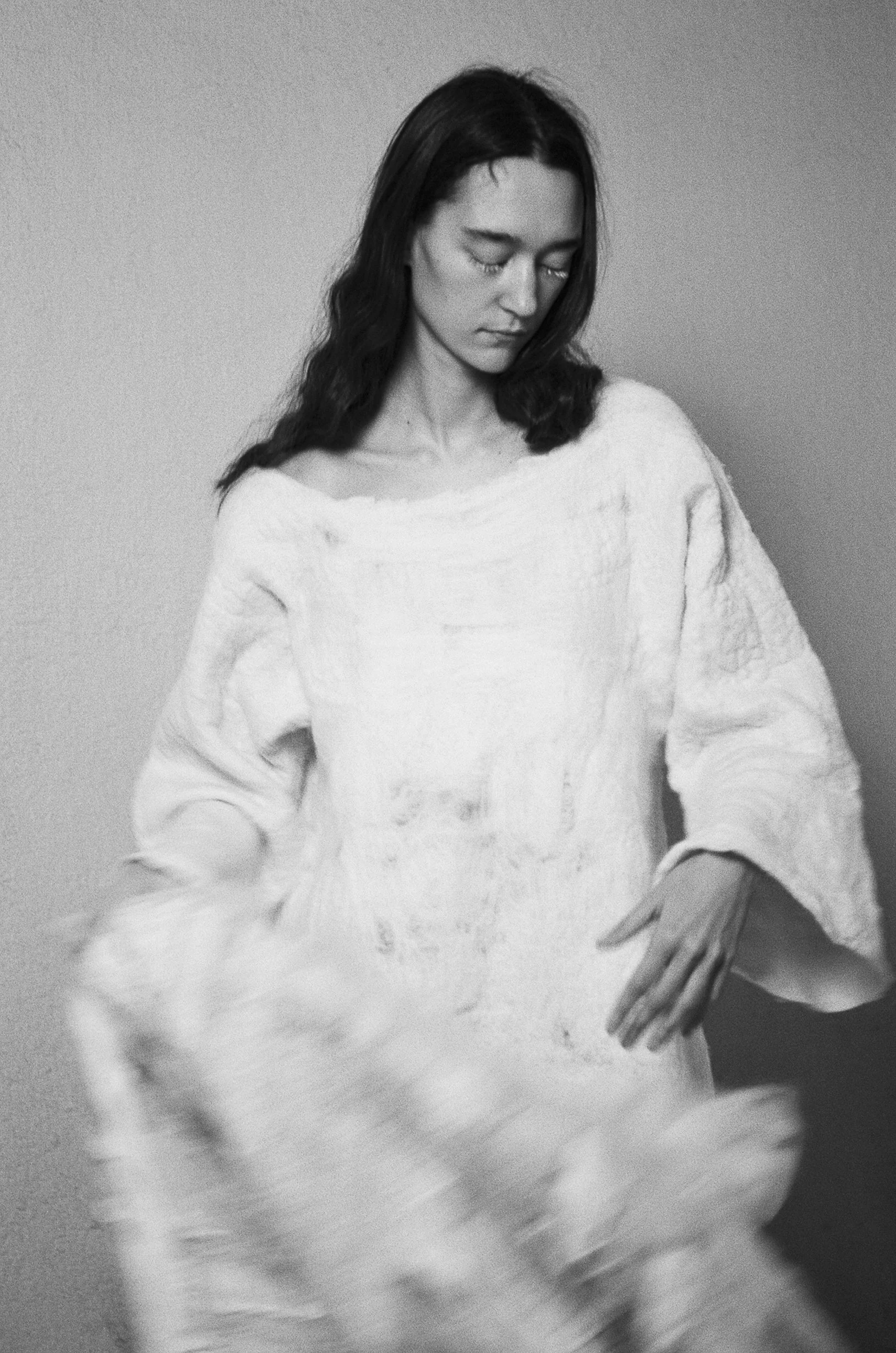
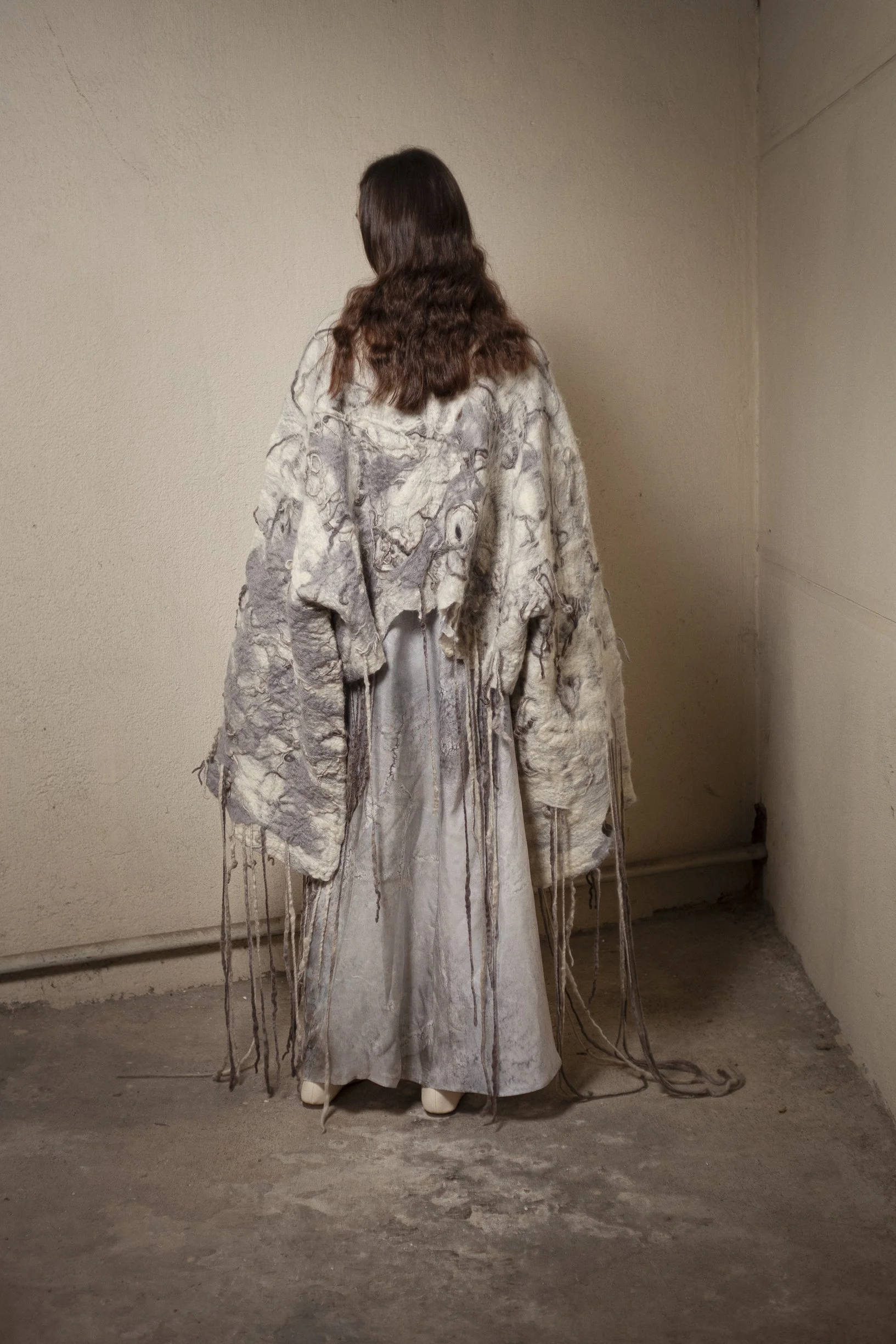
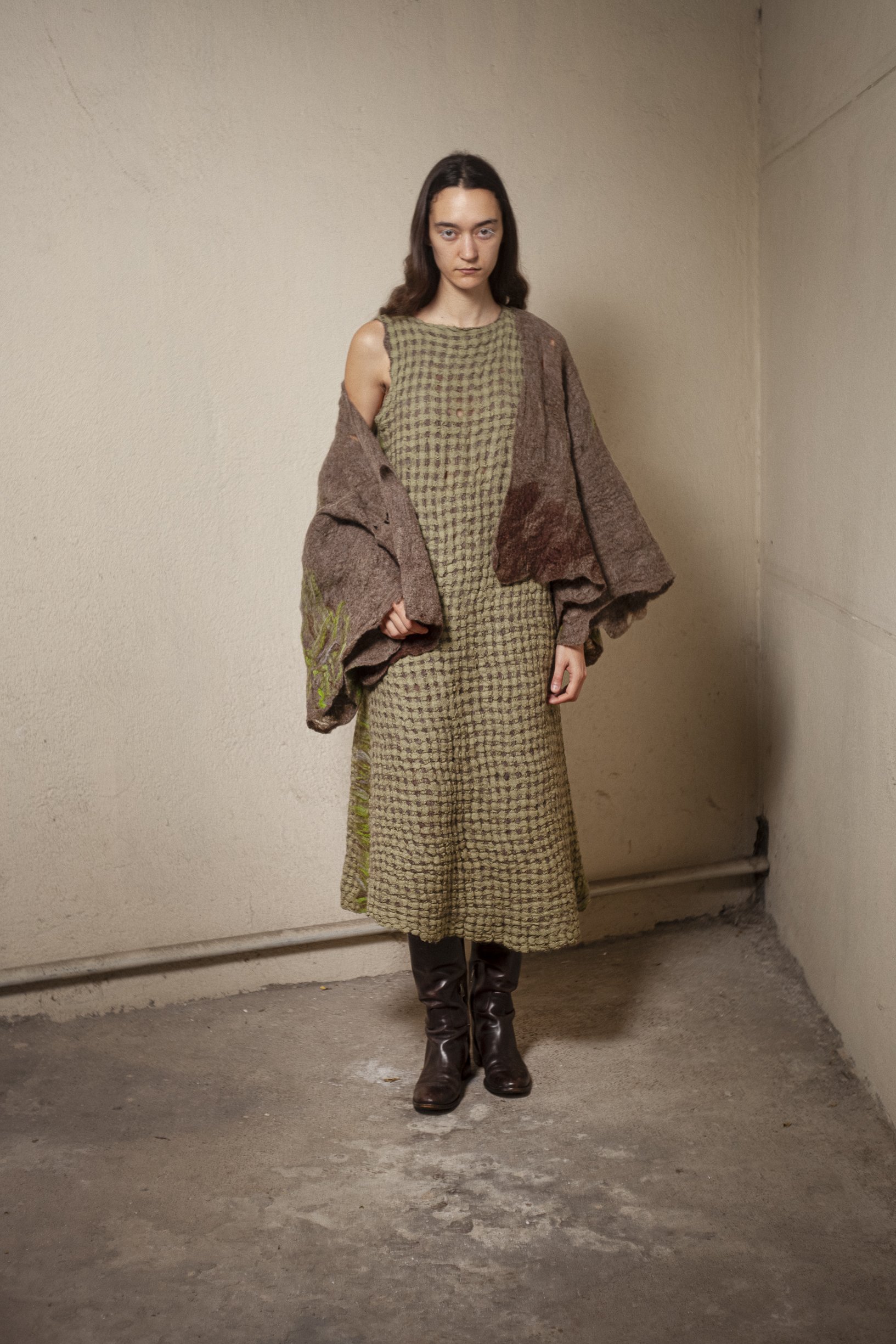
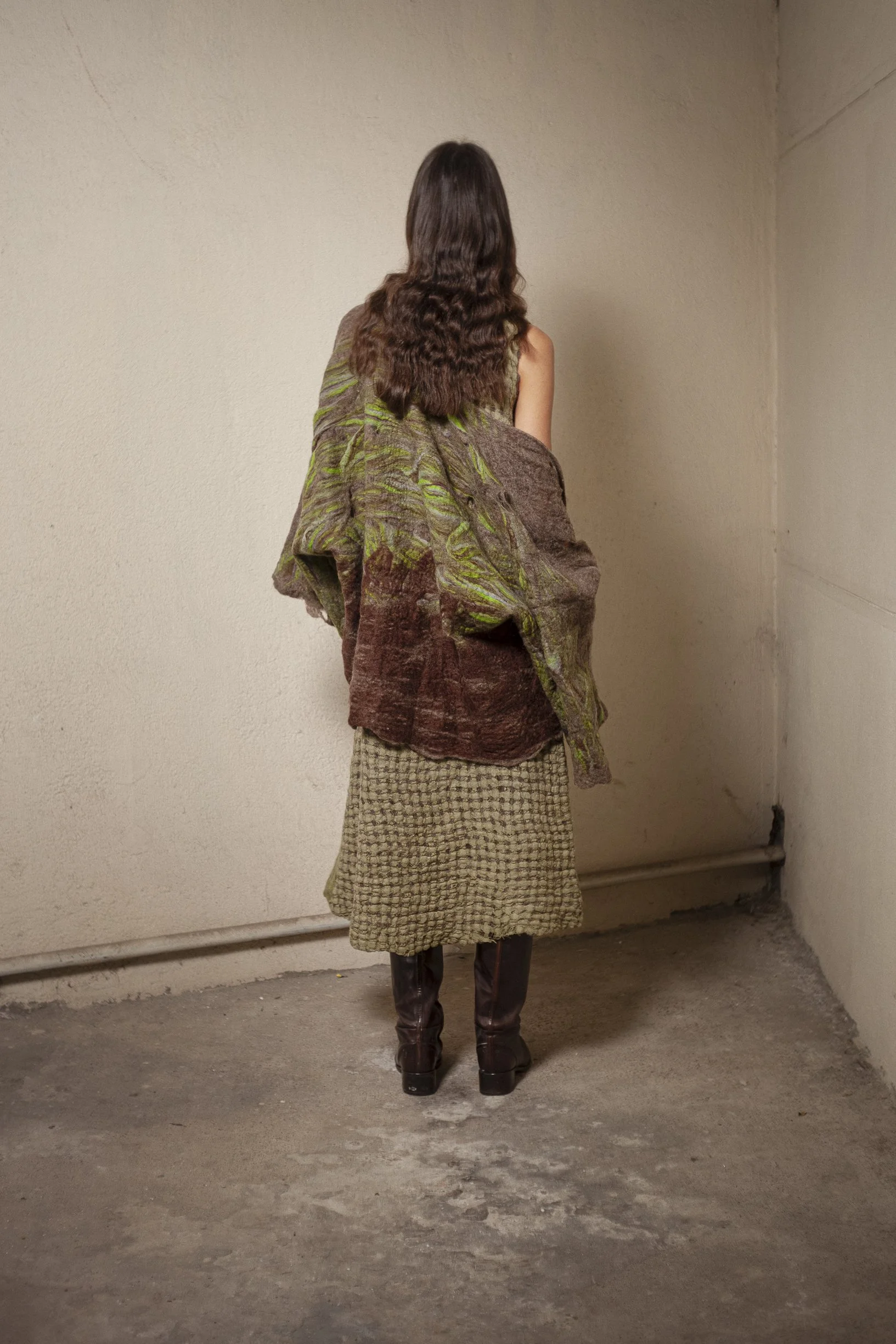
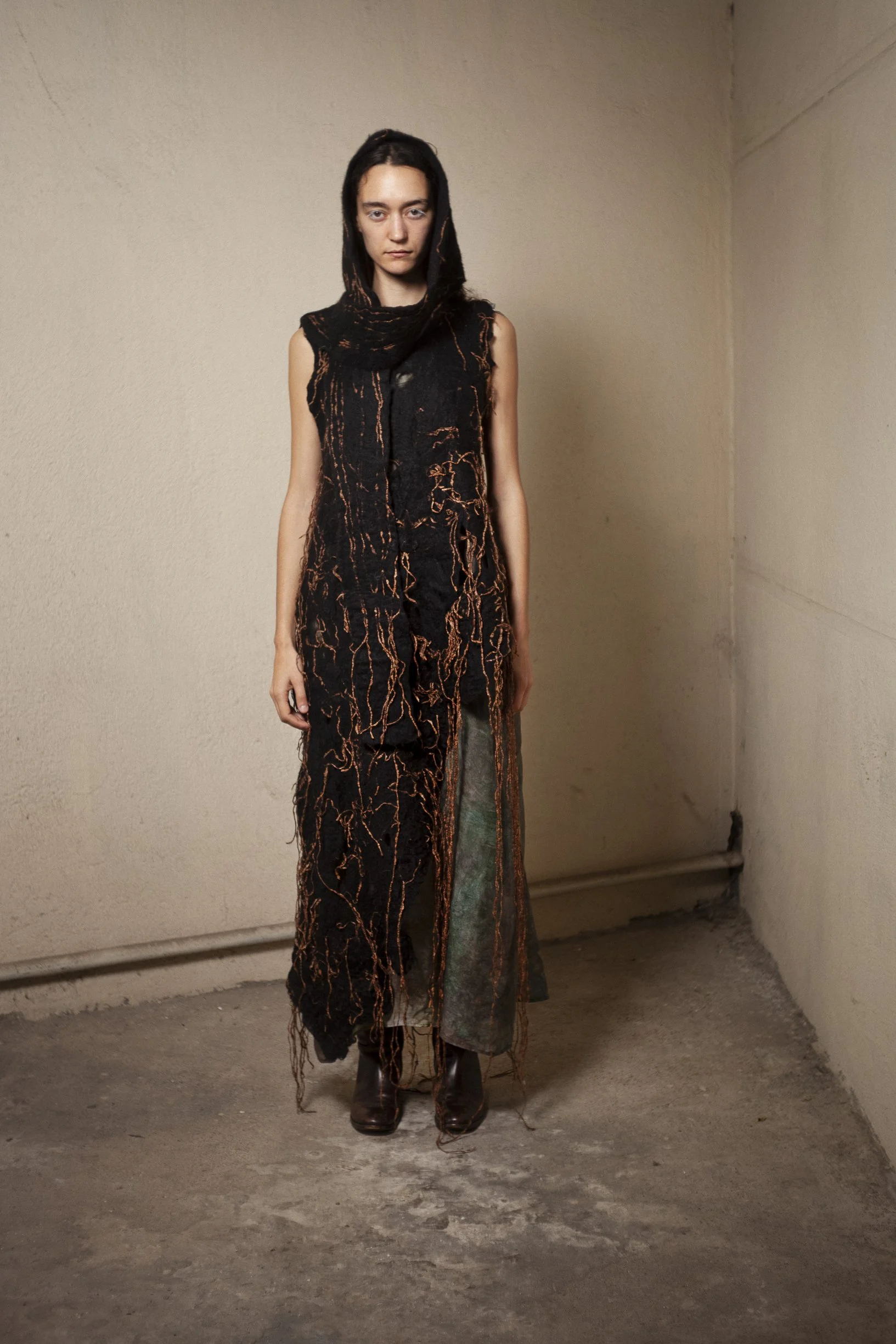
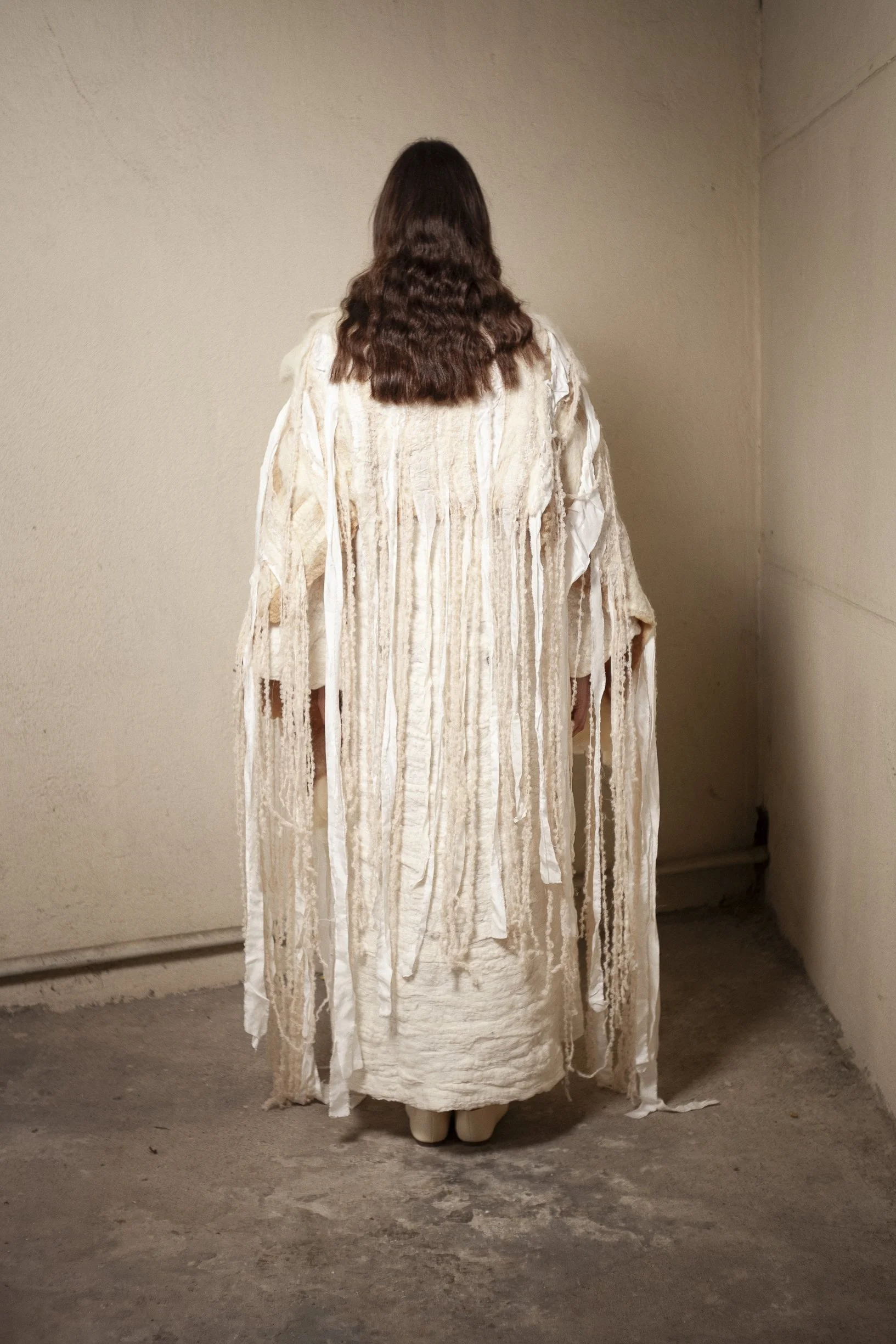
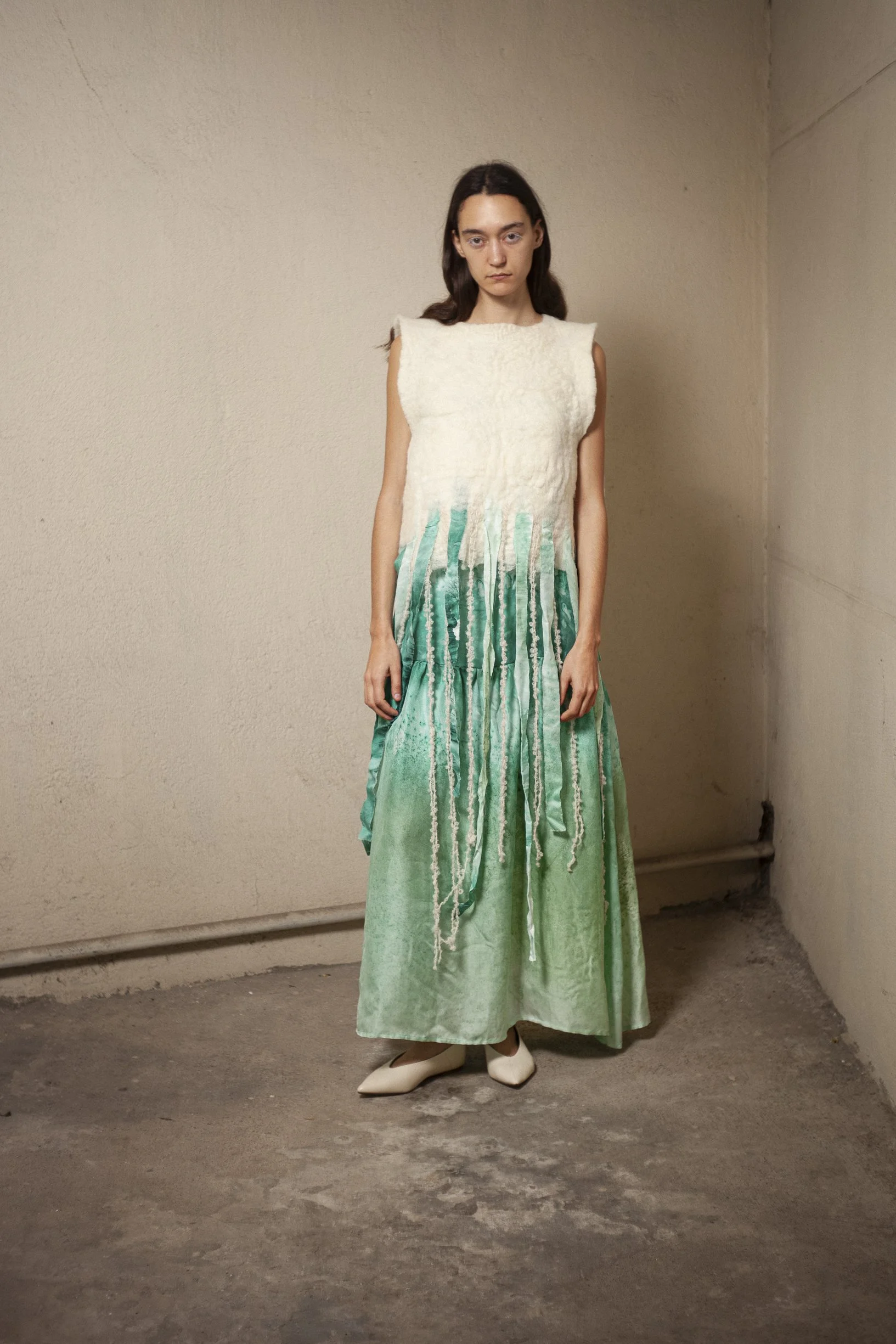
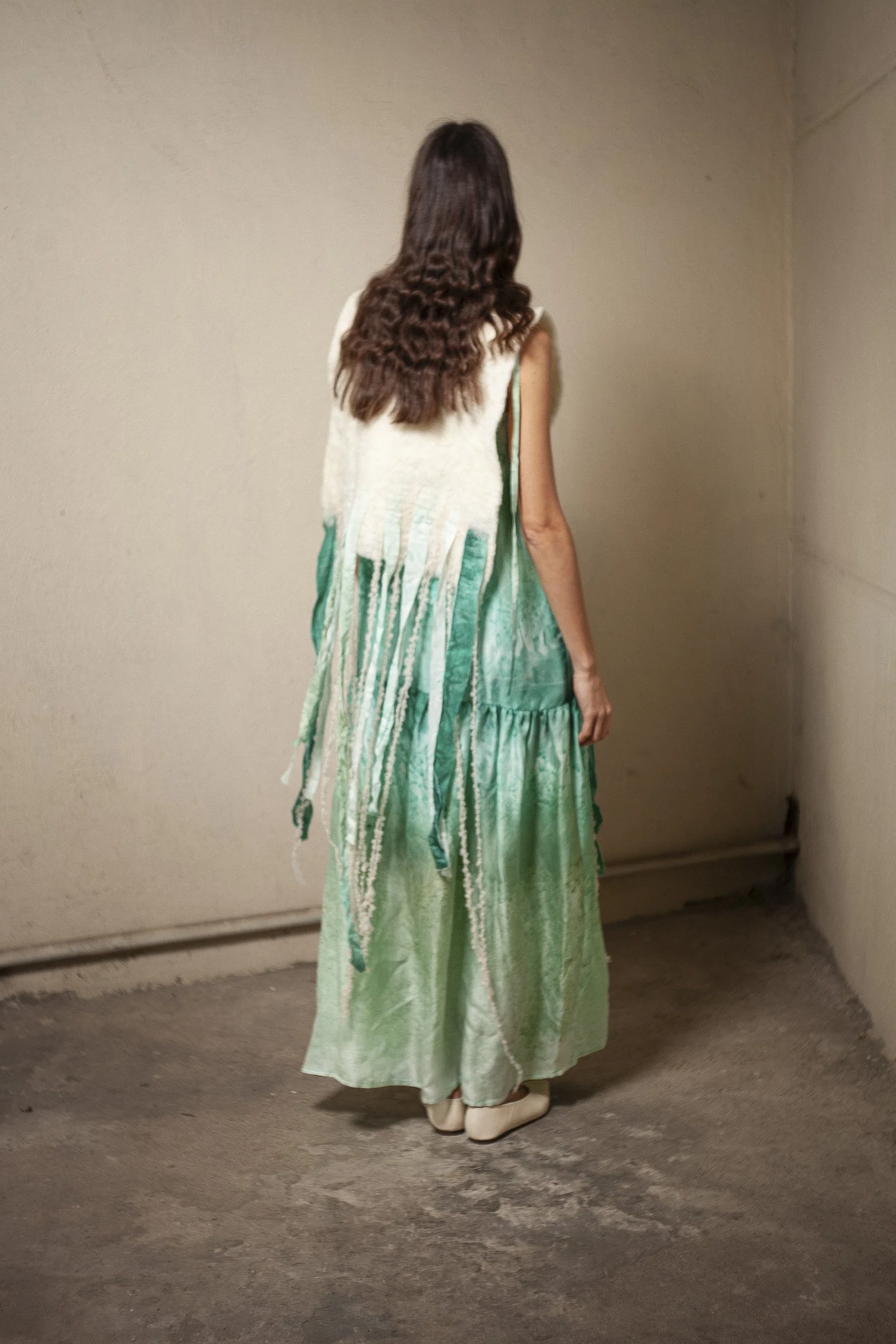
inhabitants by Enola Papis. Photography by Federico Bozzi.
A forest is never only what appears above ground. Beneath the visible landscape, roots, fungi and microorganisms form hidden systems of exchange. They transfer nutrients, respond to pressure and sustain forms of life that seem separate only when viewed from the surface.
For Enola Papis, this underground intelligence becomes a way of thinking about clothing. Her graduate collection, inhabitants, begins with the proposition that a body is not a closed or independent form. It is porous, responsive and continuously shaped by contact with everything around it.
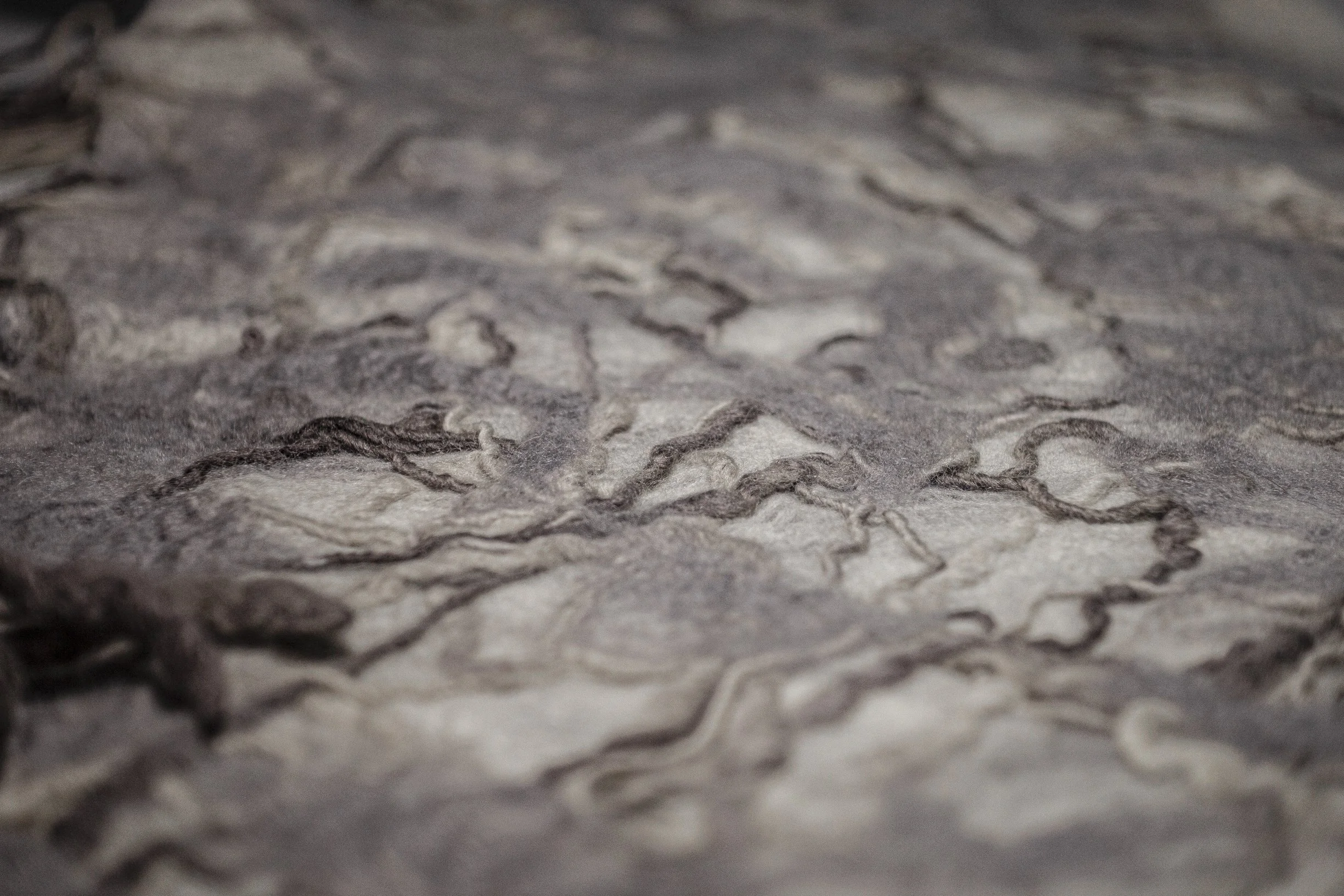
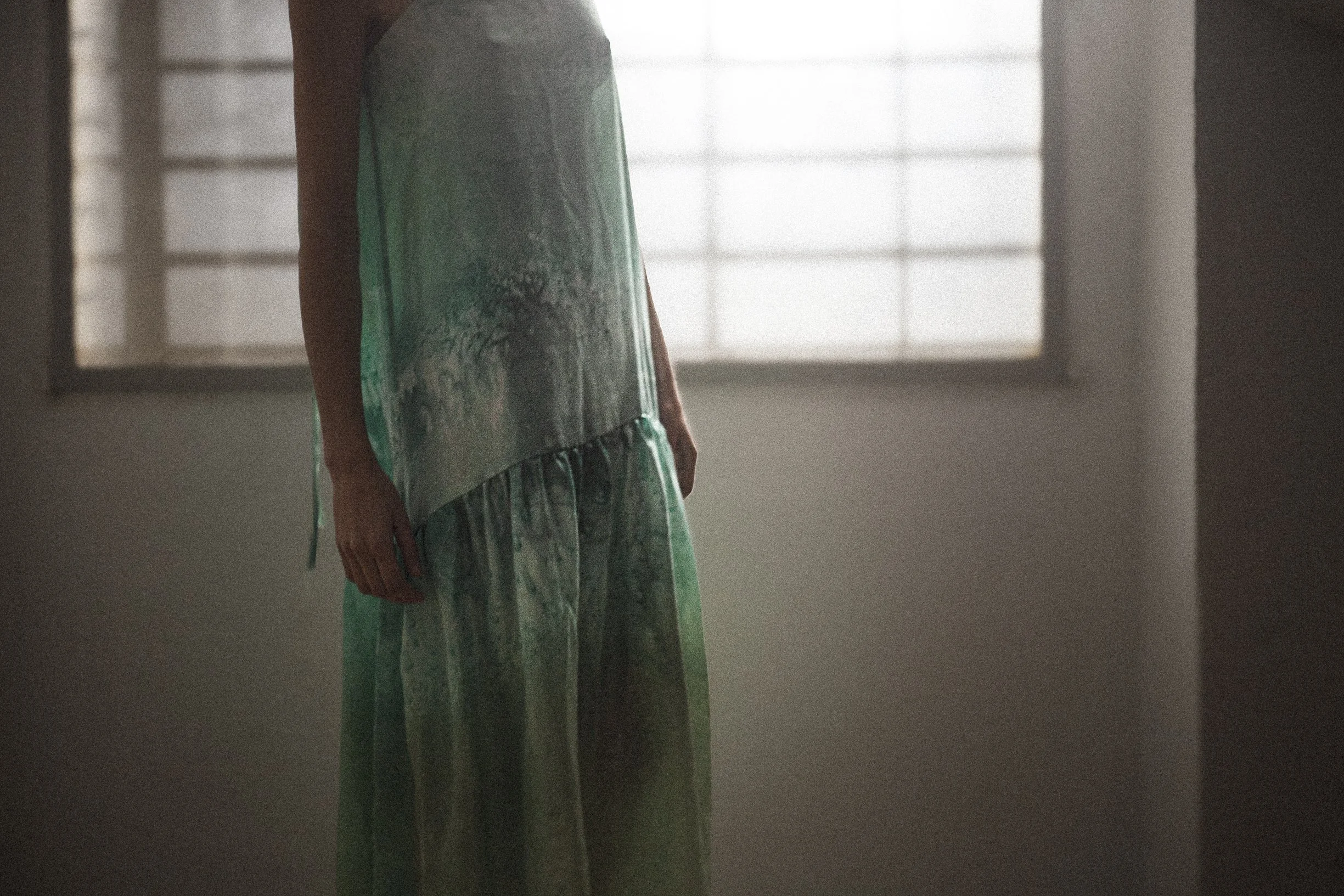
The garments that emerge from this idea feel less like finished objects than living territories. Wool contracts beneath water and pressure. Silk absorbs pigment unevenly. Salt draws colour away from wet fabric, leaving mineral blooms, pale centres and irregular edges. The designer initiates each process, but the material is allowed to answer.
The invisible becomes structure
At the centre of inhabitants is Papis’ idea of the human as an “Entangled Being”. Identity, in this reading, does not exist neatly beneath the skin. It is formed through relationships, environments, memories and continuous exchanges with the world.
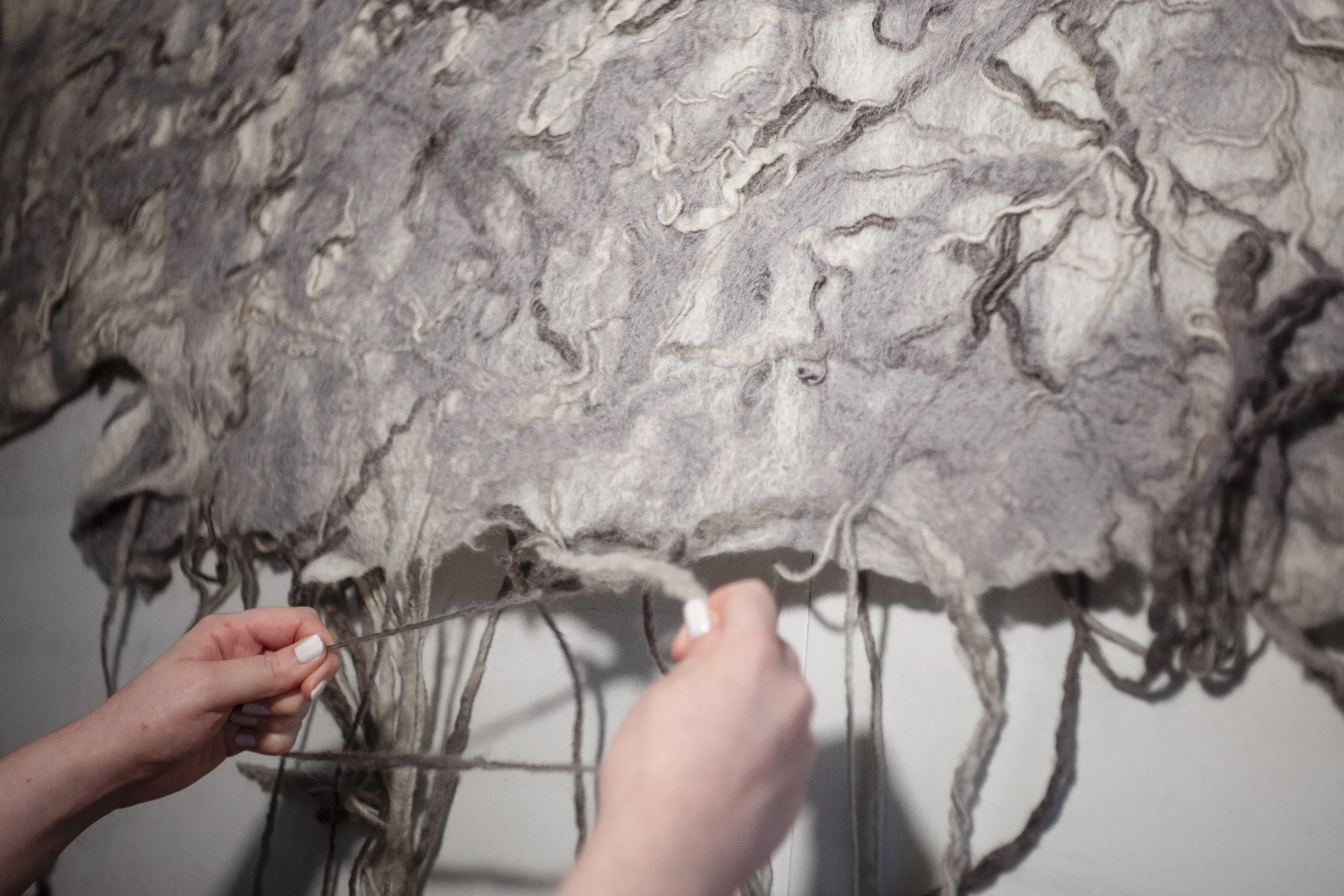
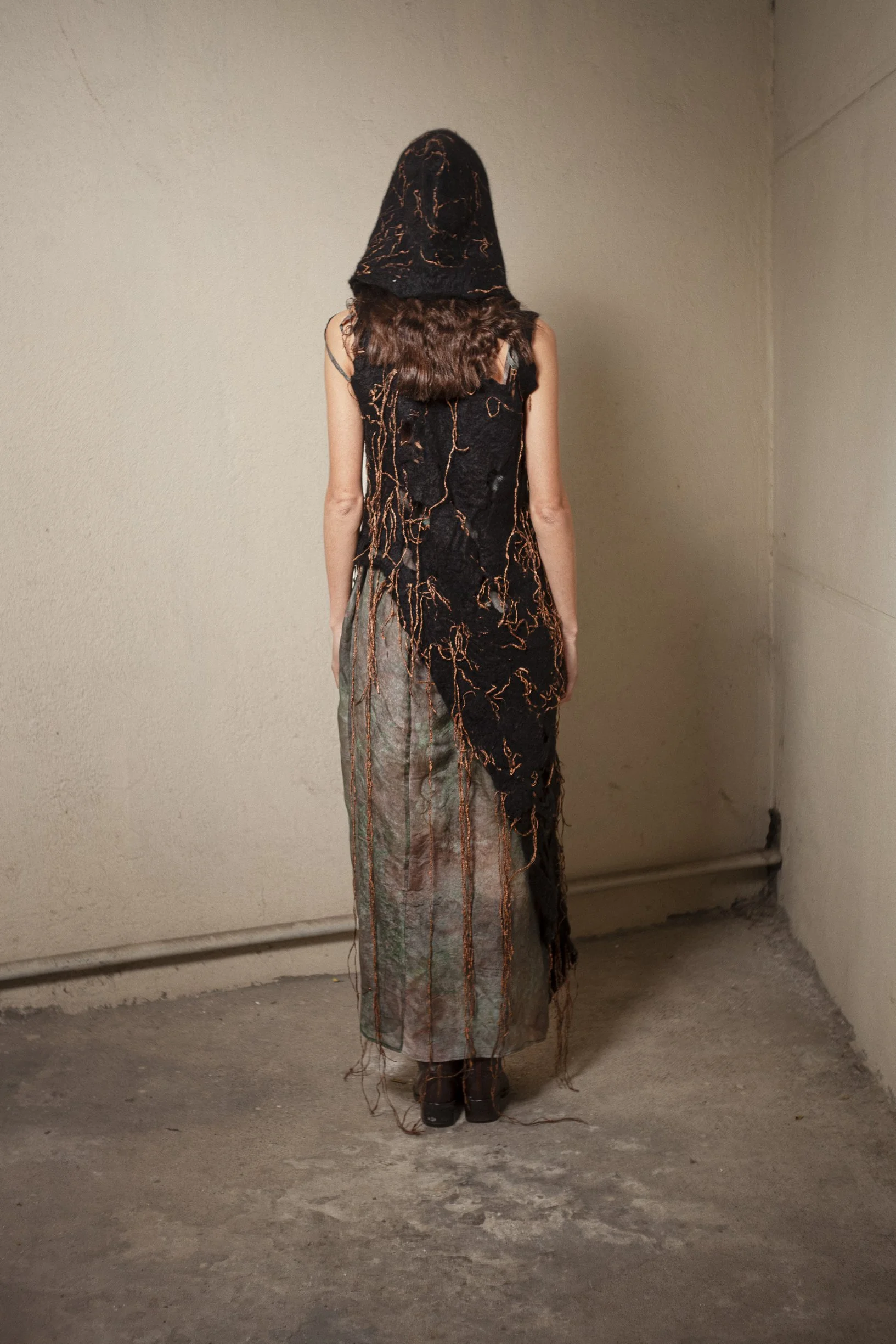
The collection’s research moves through philosophy, biology and visual culture, drawing particular inspiration from the Wood Wide Web, the term commonly used for the underground mycorrhizal networks connecting fungi and plants. For Papis, these structures offer both an image and a design method. What remains invisible beneath the soil becomes visible across the body through branching yarns, accumulated fibres, porous layers and surfaces that appear to spread beyond the original silhouette.
“Each garment carries traces of gesture, accident and transformation, becoming a living surface between body, landscape and memory.”
The statement provides a clear framework for the collection. Its organic references are not applied as decoration. There are no conventional floral prints or literal reproductions of roots. Instead, processes of adhesion, growth, absorption and transformation become part of the construction itself.
From physics to textile matter
Born in Bosnia and Herzegovina, raised in Italy and now based in Milan, Papis graduated in Fashion Design from IED Milano in April 2026.
Before entering fashion, she studied physics. That earlier path remains visible in the way she observes material behaviour, interconnected systems and structures that cannot always be seen directly. Rather than treating fabric as a passive support for a predetermined idea, Papis approaches wool, silk, water and pigment as active participants.
The change in discipline was therefore not a rejection of her earlier interests. It was a change of scale and language. Scientific observation became textile experimentation. Systems became silhouettes. Invisible forces became surfaces that could be worn.
This approach gives inhabitants a sense of internal consistency. The conceptual research does not sit above the clothing as an explanation added afterwards. It determines how the pieces are made, how they fall around the body and how much control the designer is prepared to surrender.
Felt as a process of growth
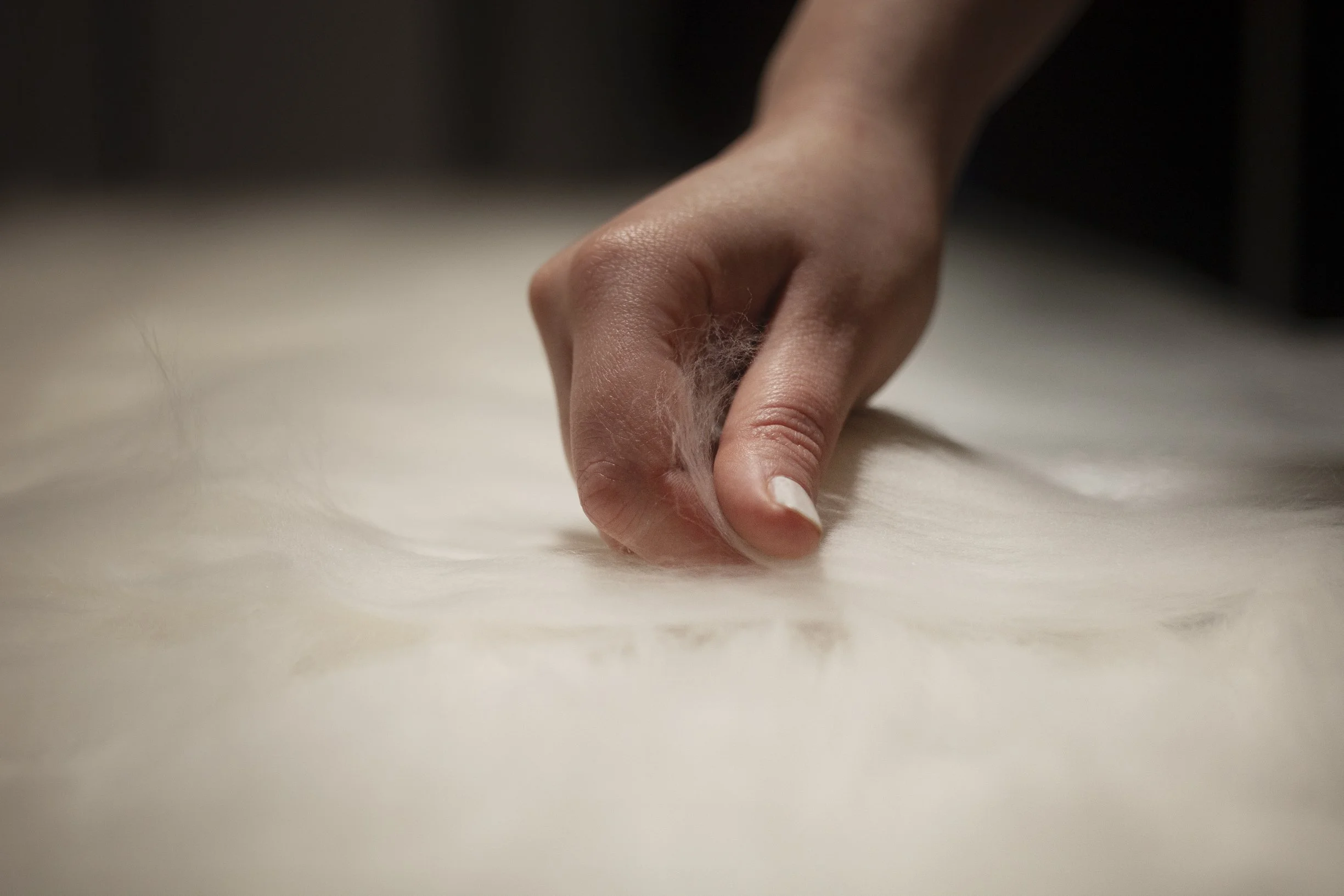
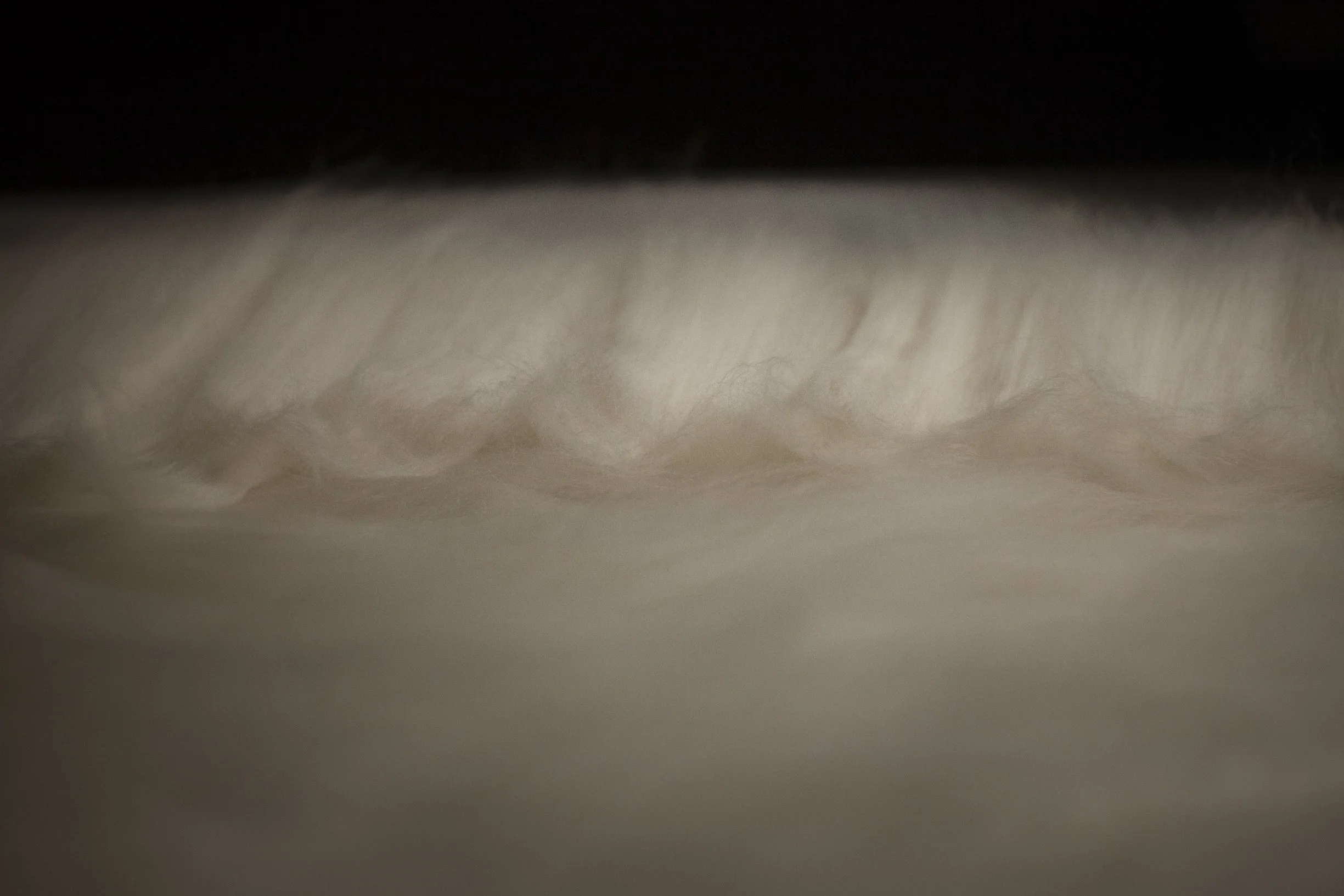
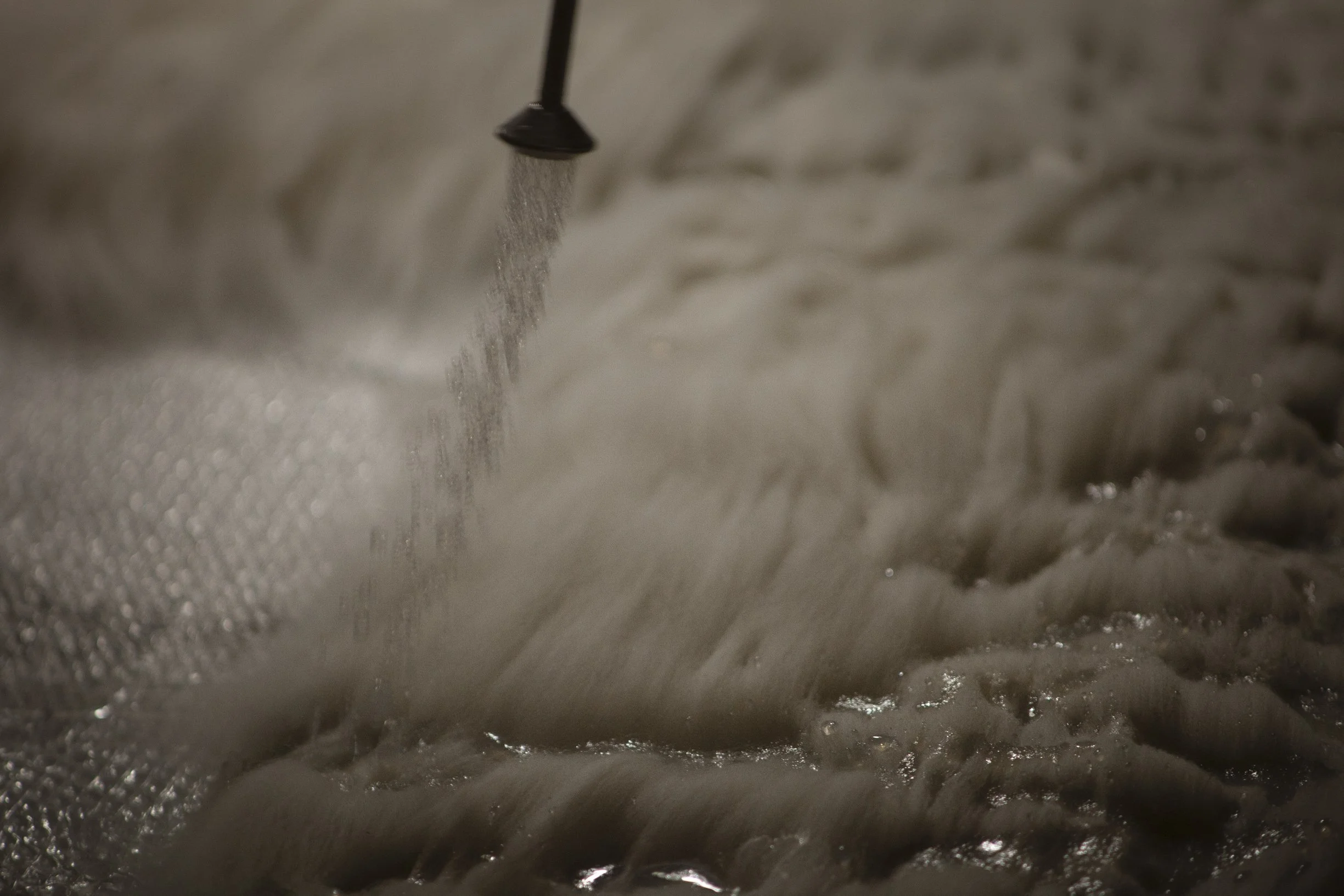
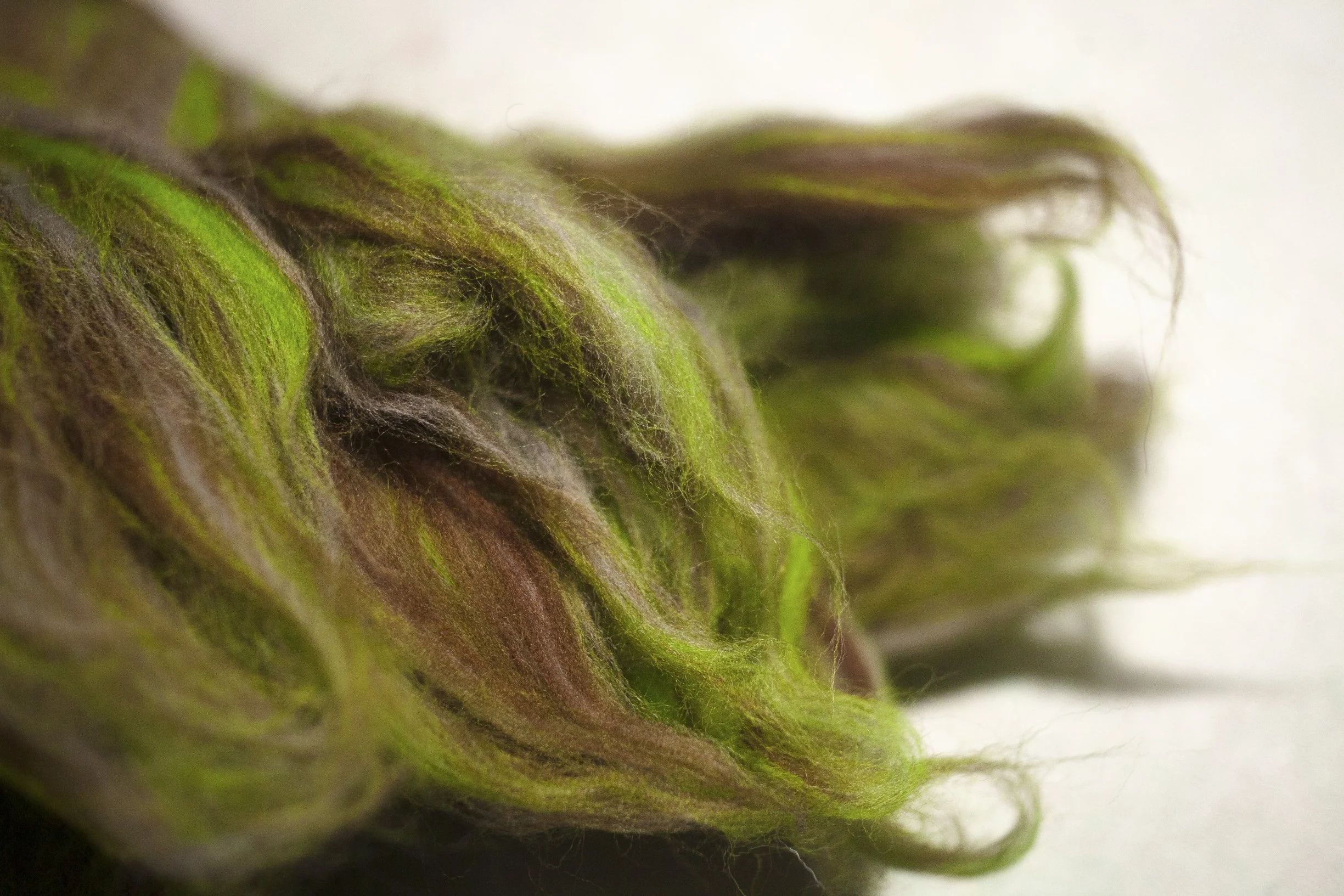
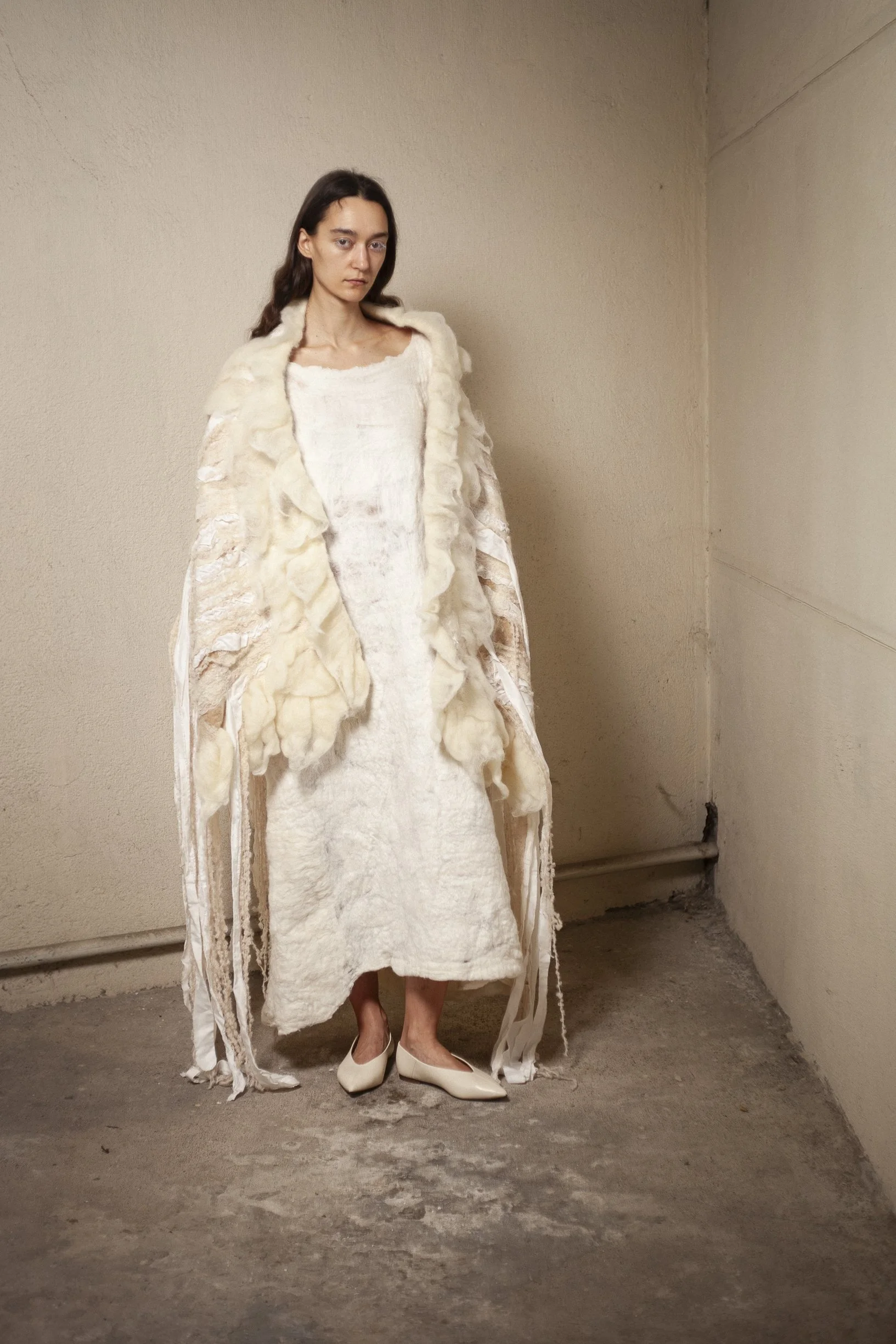
Several of the collection’s pieces are made through manual wet felting, a process in which carded wool is worked with water, soap, pressure and friction. The fibres gradually bind together, creating seamless forms with irregular, tactile surfaces.
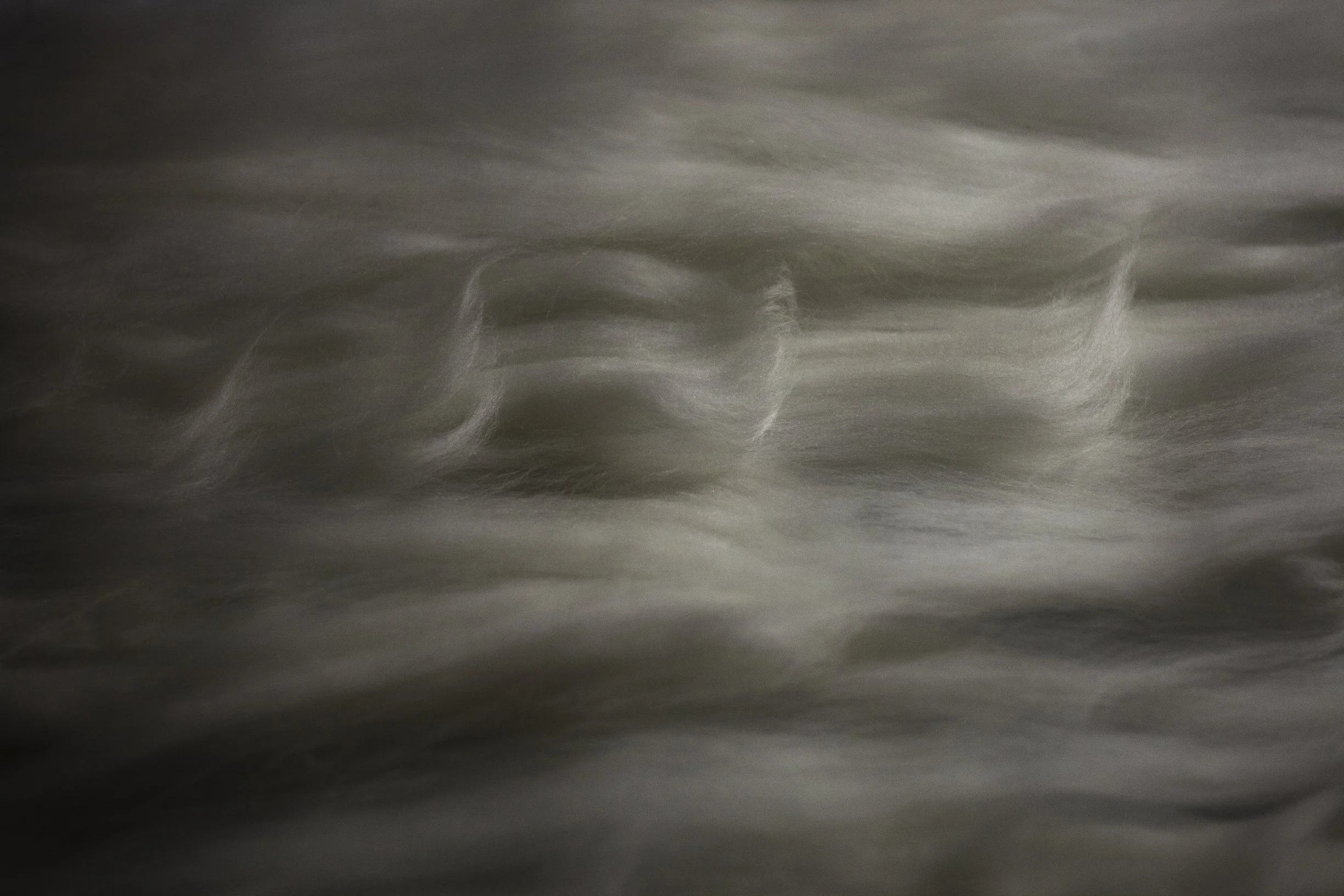
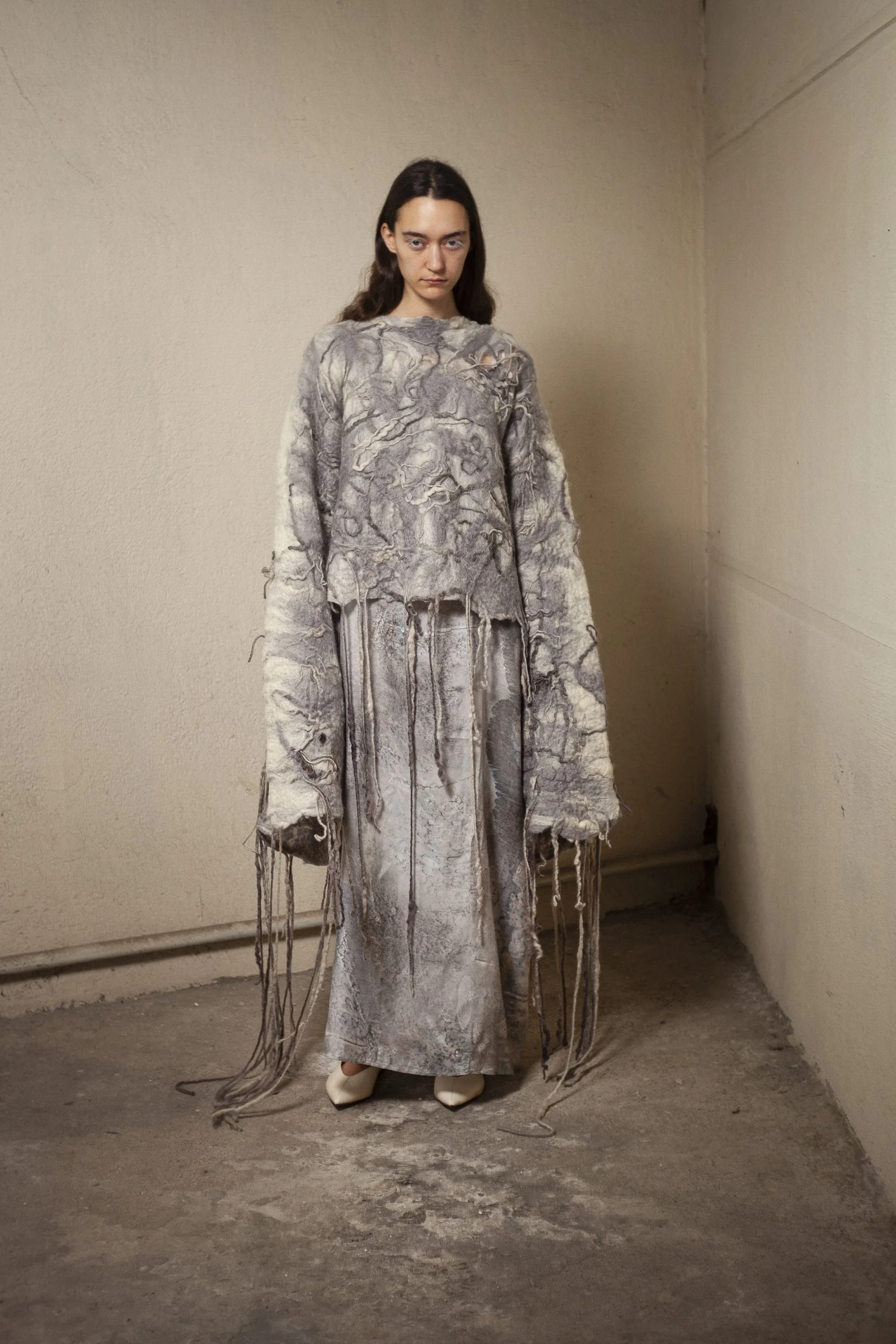
Because the material is shaped as a continuous structure, the resulting garments do not rely on conventional seams to define the body. They wrap, extend and accumulate. Their surfaces recall bark, moss, roots, lichen and mineral deposits without becoming direct imitations of any single natural form.
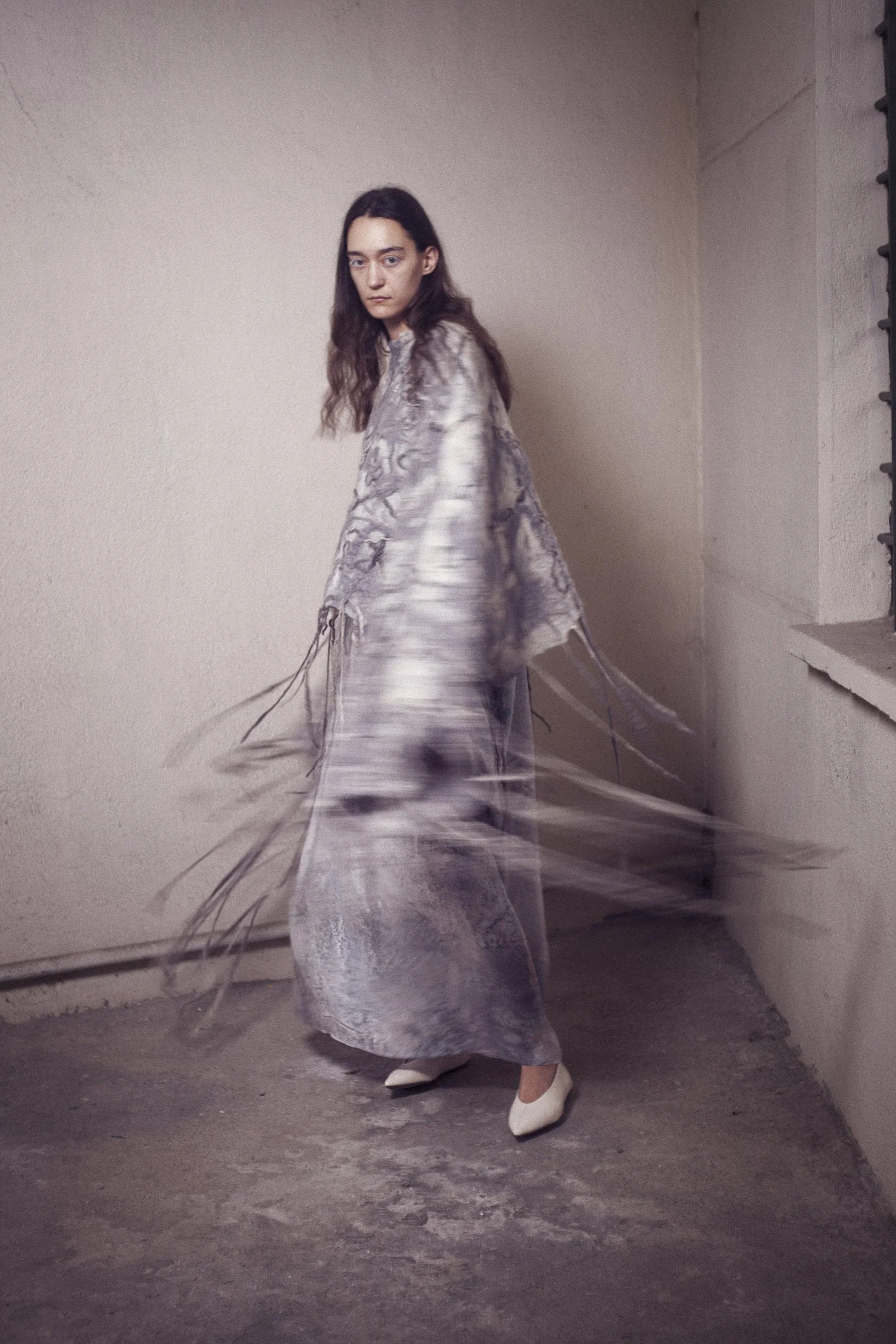
Nuno felting allows wool fibres to pass through and attach themselves to lightweight silk. The two materials become physically intertwined, producing translucent areas, compressed sections and delicate fringes. What begins as separate matter becomes difficult to divide.
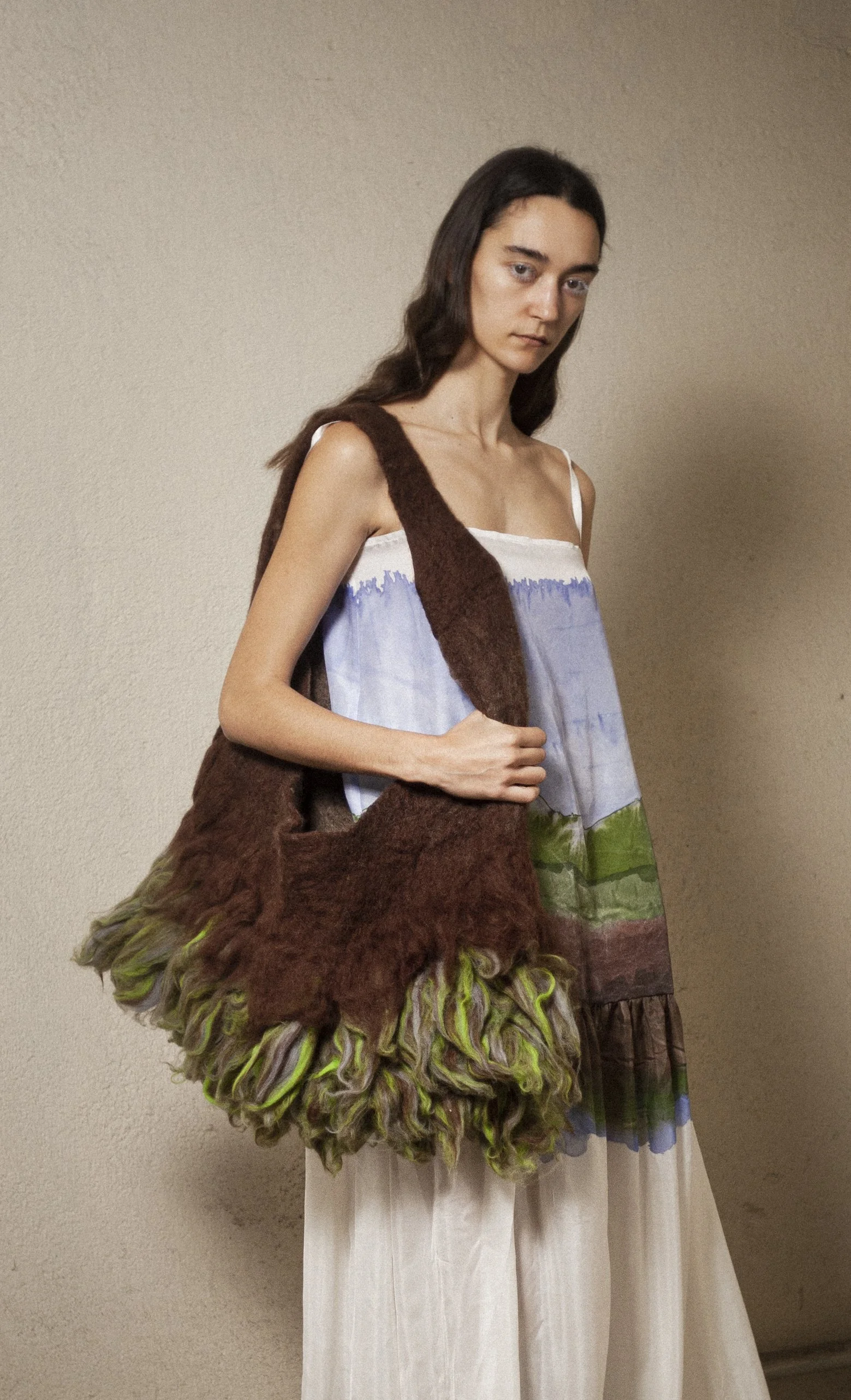
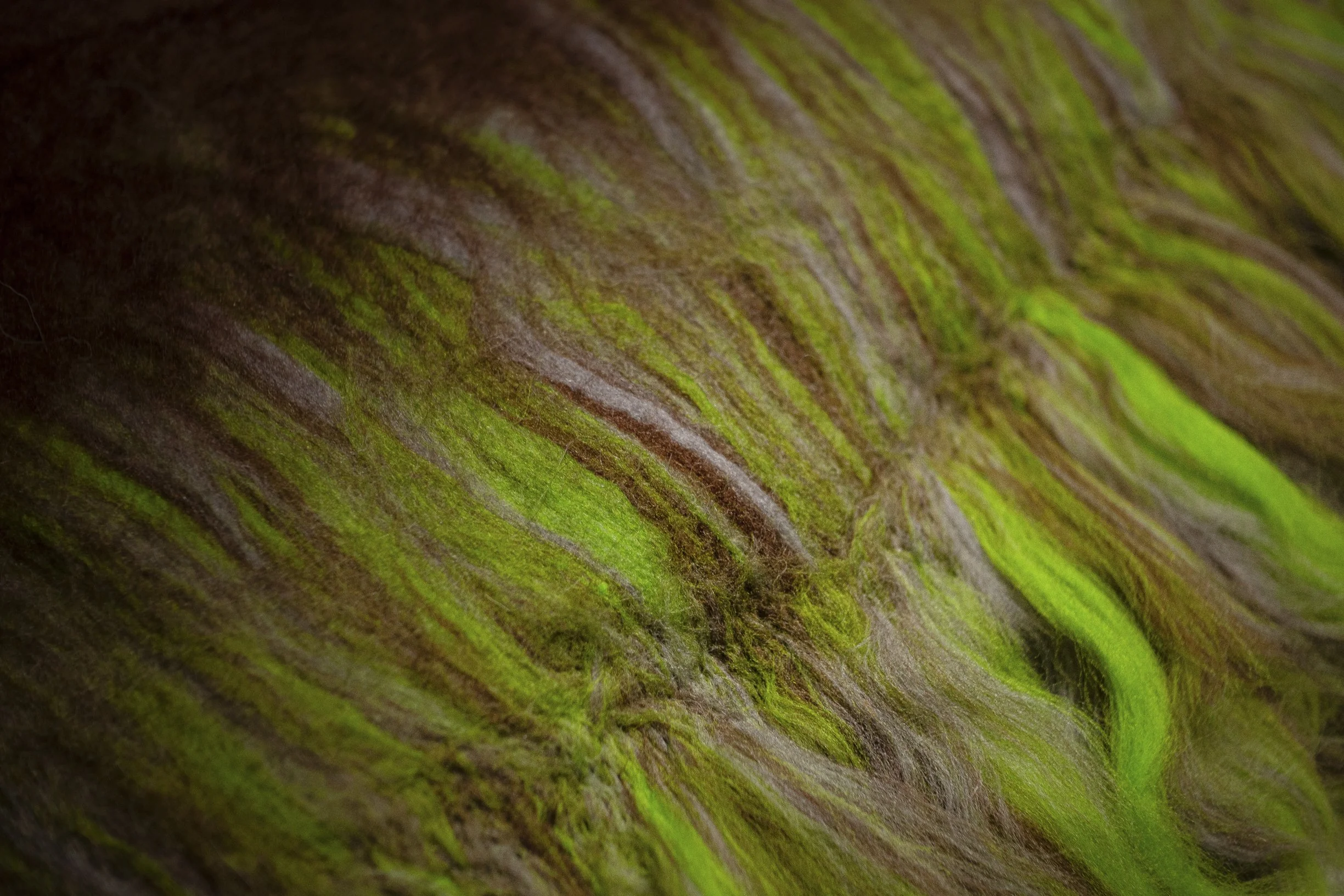
Needle felting introduces further density. Additional fibres are applied to an existing felted base, generating raised textures and soft, filamentous areas with an eco-fur effect. The pressure of the hand remains visible within each surface.
Silk as weather
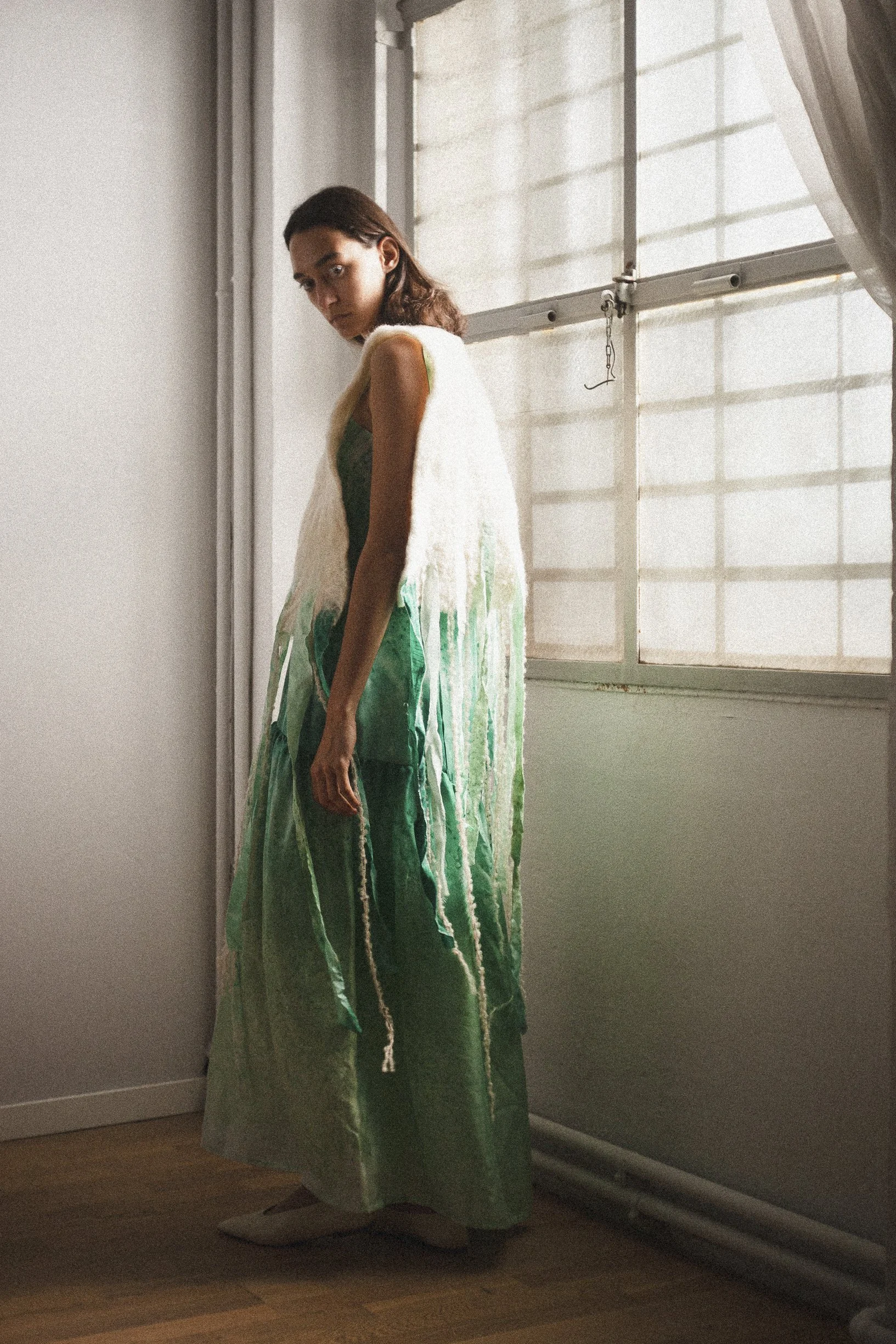
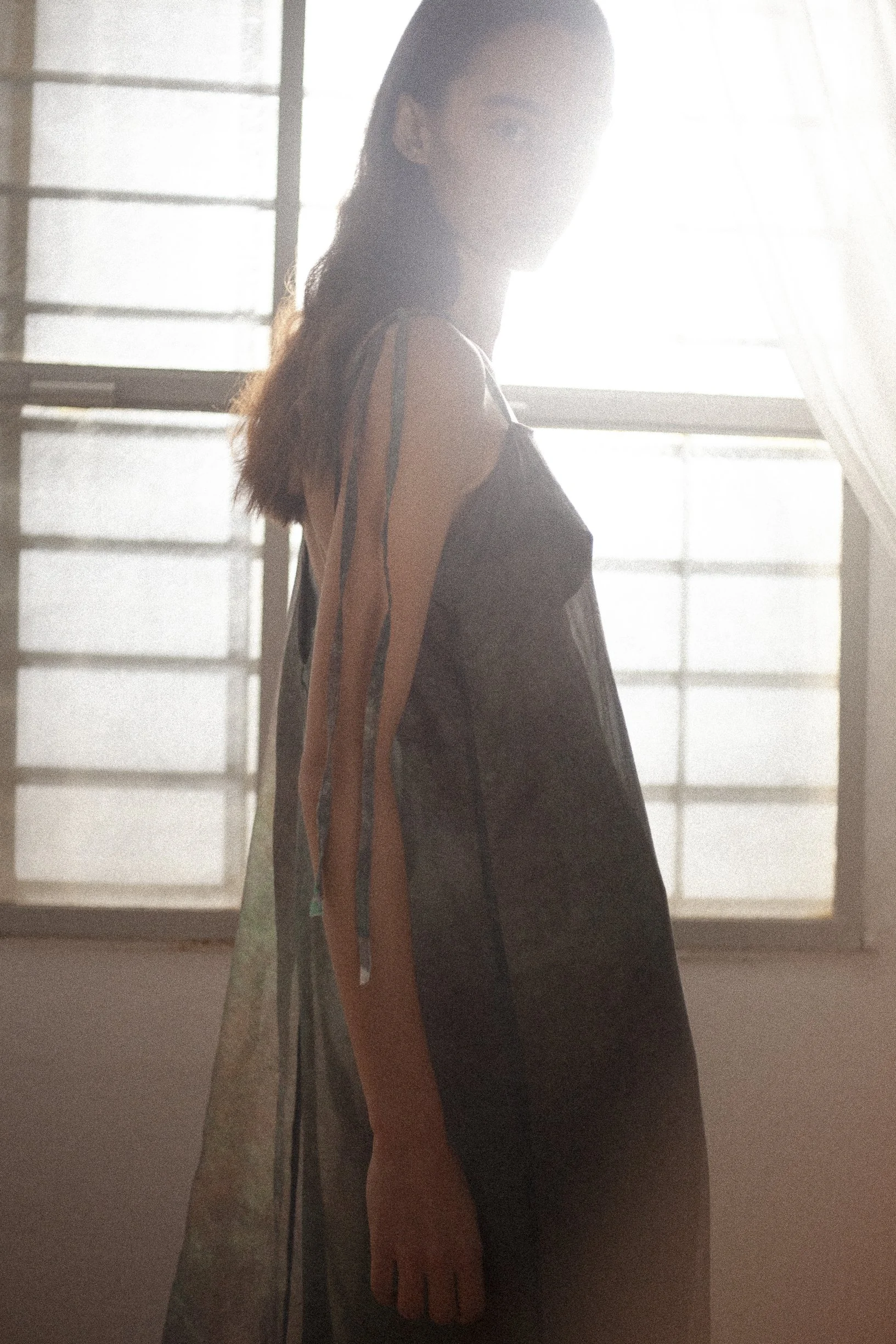
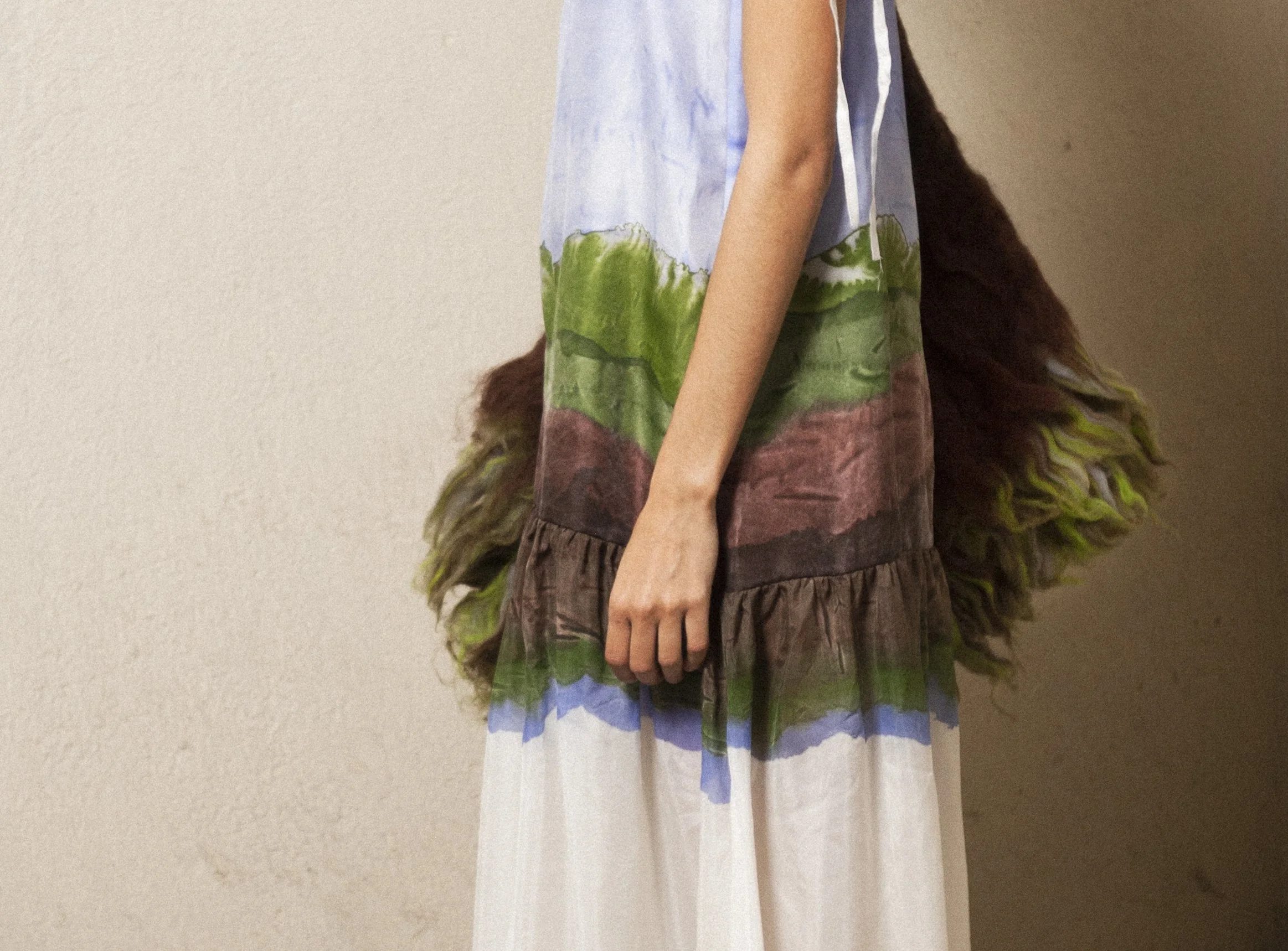
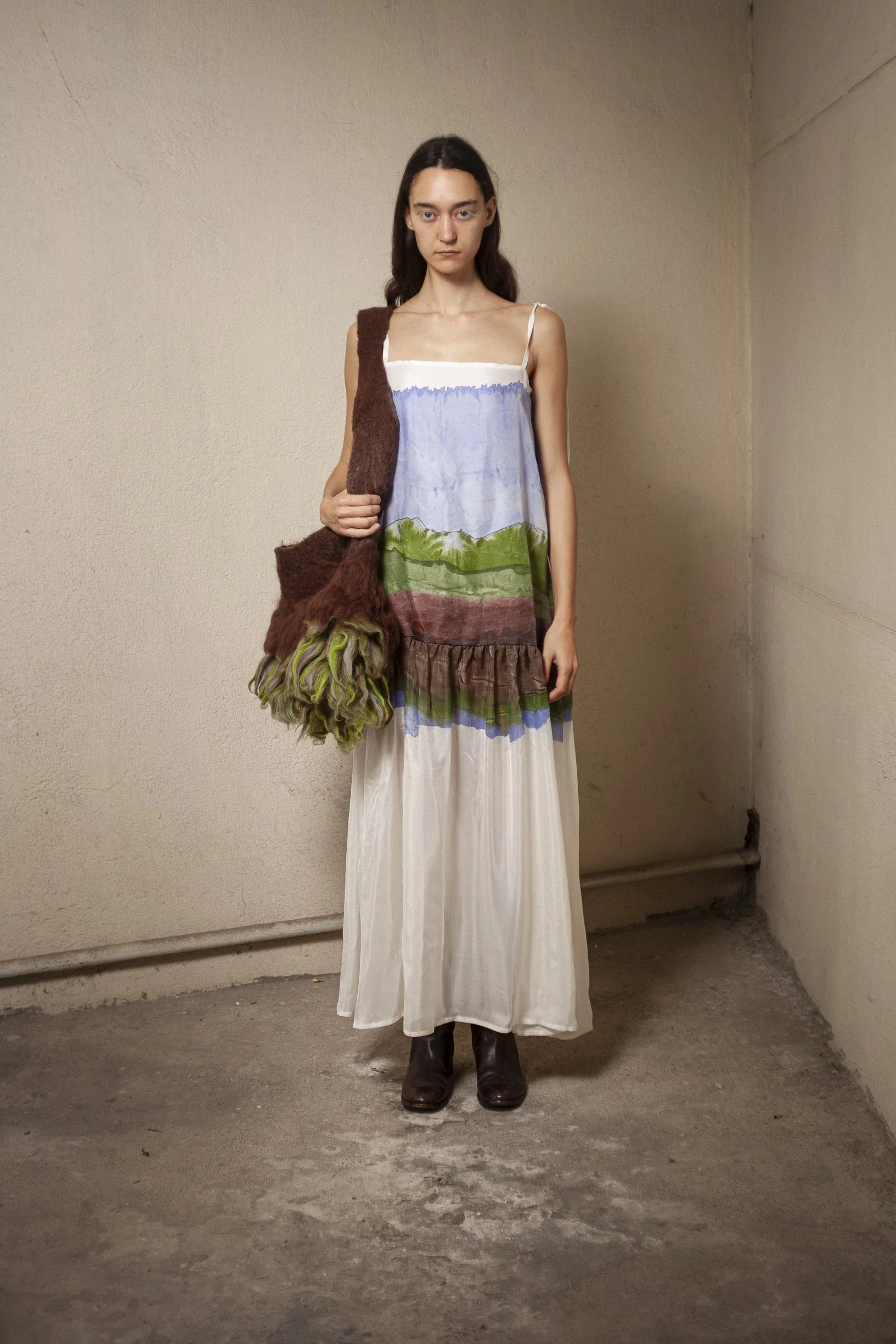
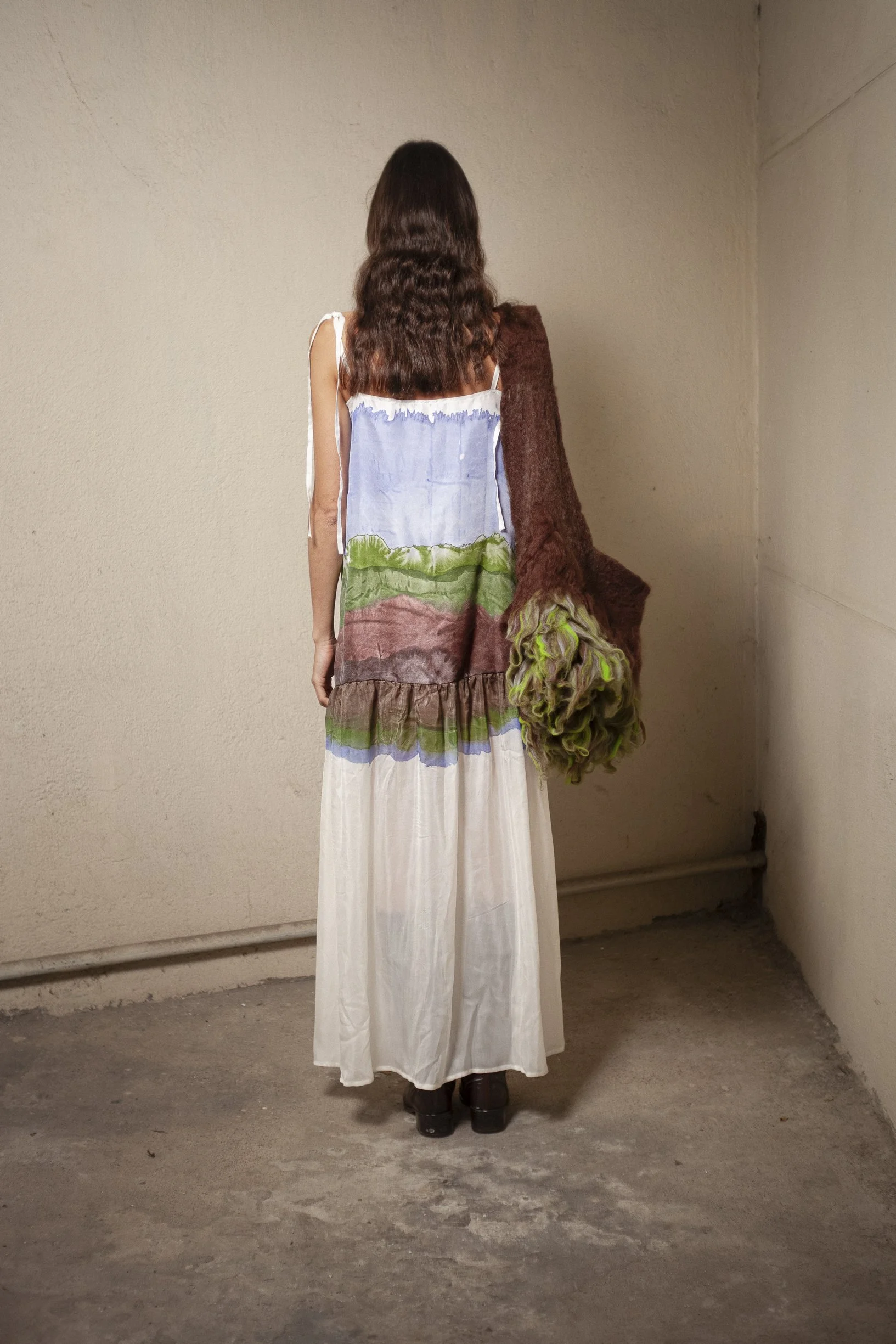
The silk pieces introduce a different kind of instability. Papis paints them by hand using silk watercolours, water and coarse salt. Once the pigment has been applied, salt crystals absorb and displace the colour while the surface is still wet.
The effect cannot be reproduced with complete precision. Pigment gathers in some areas and disappears from others. Edges break apart. Pale marks form around darker concentrations. The final appearance depends on gesture, absorption, drying time and the movement of water through the fabric.
In the Mineral Dress, this process creates cloudy greys and soft interruptions that resemble stone, vapour and sediment. In the Landscape Dress, green, brown and blue move horizontally through the silk. The result does not depict a literal landscape. It behaves like one, shifting through zones of density, erosion and colour.
This controlled uncertainty is essential to the work. Papis does not disappear from the process, but neither does she force the material towards absolute uniformity. The garment becomes a record of collaboration between hand, fibre, water, pigment, salt and time.
Clothing as a form of relation
The strongest element of inhabitants is its refusal to separate concept from technique. Its theory is communicated through matter.
Pressure remains visible inside felt. Water leaves a direction within silk. Yarn moves between being absorbed into the surface and released from it. Each piece records the conditions through which it was made.
This gives the collection an emotional dimension beyond its ecological references. Identity is presented as something accumulated rather than fixed, shaped by origin, memory, environment and contact. A body is not erased by its surroundings, but neither is it entirely separate from them.
Within HUMBLE’s continuing focus on emerging designers, Papis represents a particularly compelling kind of graduate voice: one whose research, material process and visual language remain connected from beginning to end.
inhabitants does not simply make clothing resemble an organism. It proposes that clothing can participate in a living system of pressure, adaptation and exchange. The wearer is not placed above nature or outside it. They become one inhabitant among many.
Look book Images
Collection and Styling:
@enola_papis
Photography:
@federicobozzi
Video Direction and Production:
@federicobozzi
Model:
@kyleellou
Model Management:
@e2modelmgmt
Fashion Design:
IED Milano