Shipibo-Konibo: Portraits of My Blood
An evening of quiet intensity at the Embassy of Peru in London
Experience a contemplative and evocative showcase at the Embassy of Peru in London. This immersive event invites you to explore a blend of artistic expression and cultural depth set against the elegant backdrop of the Peruvian diplomatic residence. Join us for moments of stillness, reflection, and creative resonance.
Open from 4 December 2025 to 30 January 2026
An evening of quiet intensity at the Embassy of Peru in London
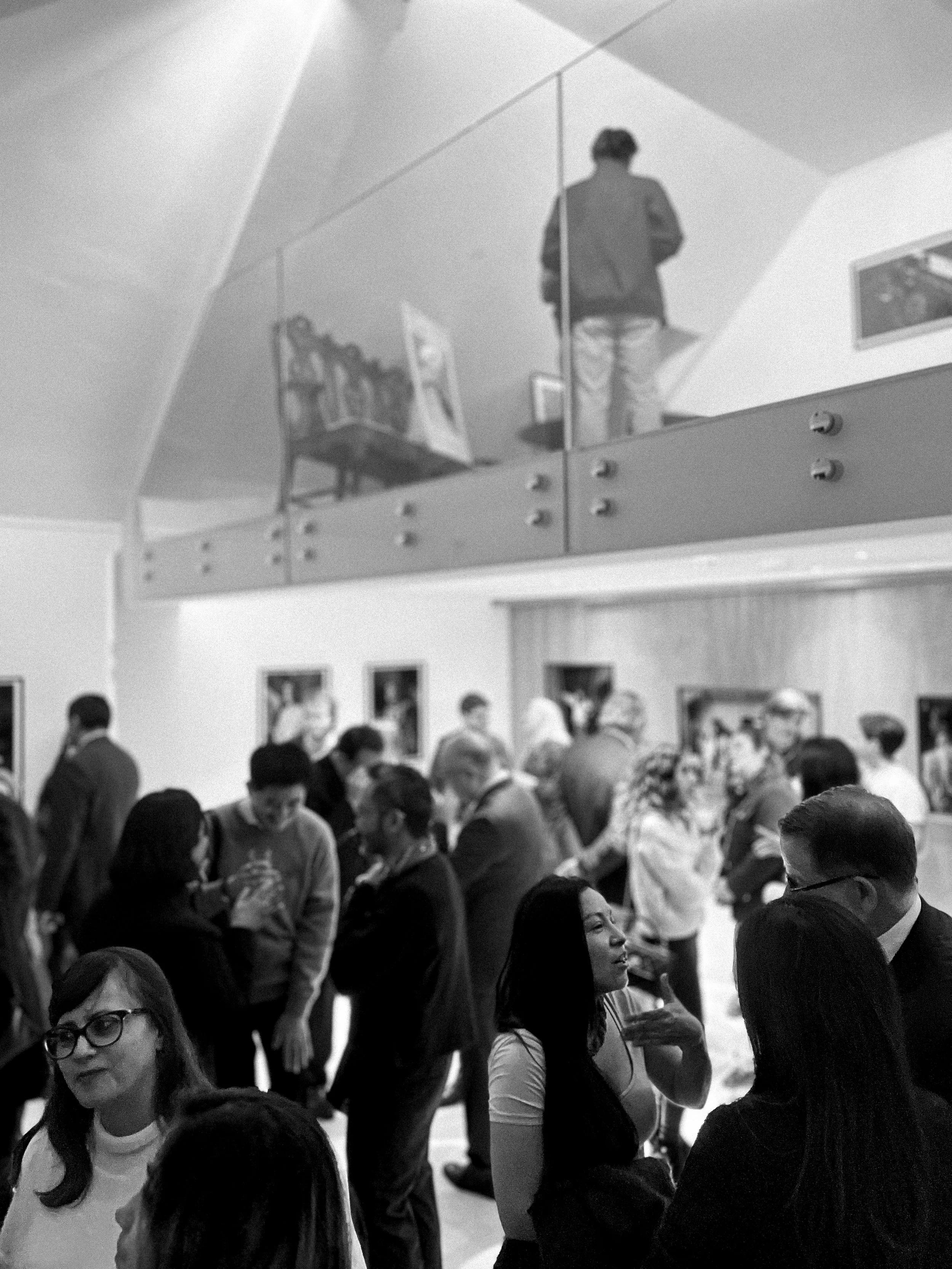
On a winter evening in London, the Embassy of Peru opened its doors not simply to an exhibition, but to an atmosphere of collective pause. The Inca Garcilaso Gallery filled gradually, softly, with diplomats, artists, curators, academics and members of London’s cultural community, all drawn into the opening of Shipibo-Konibo: Portraits of My Blood by Peruvian photographer David Díaz Gonzales.
The setting itself carried a ceremonial calm.
Conversations unfolded in low tones beneath white walls and warm lights, punctuated by the slow movement of guests navigating the space. From the mezzanine above, figures leaned quietly against glass balustrades, looking down at the crowd and the photographs below, as if the architecture itself encouraged reflection rather than spectacle.
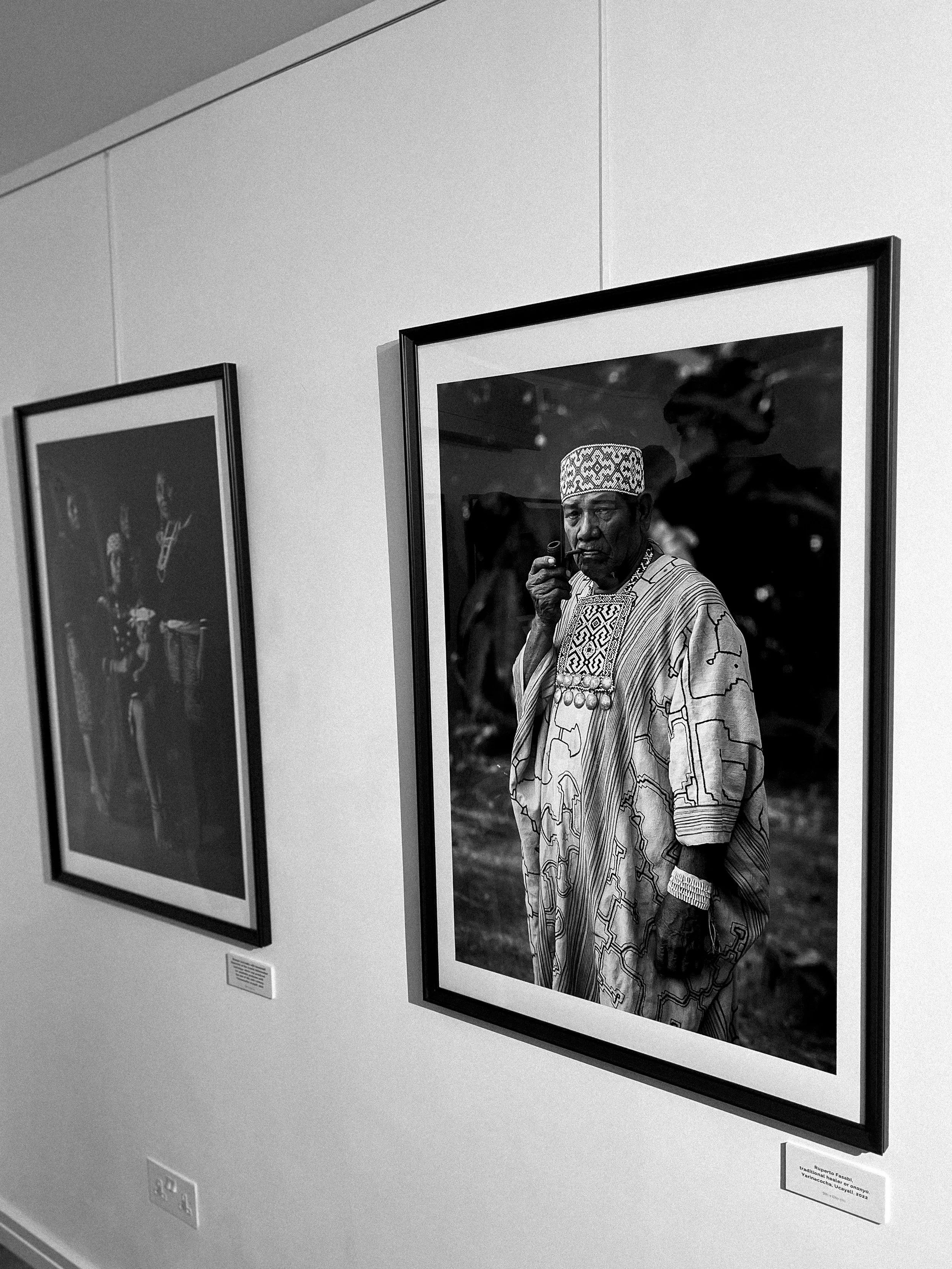
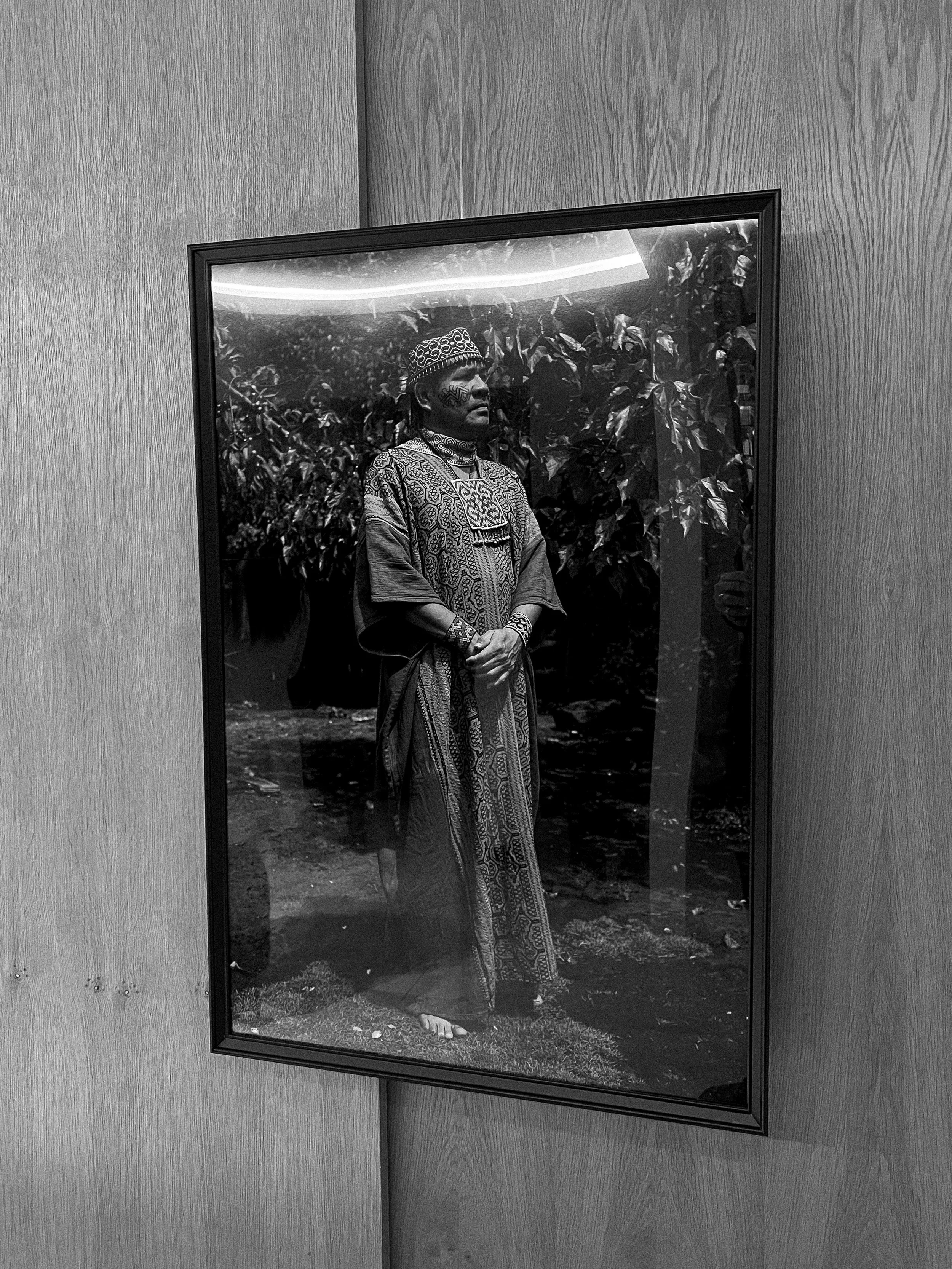
Díaz’s black-and-white photographs anchored the room with gravity. Hung with restraint, each portrait demanded time. Faces emerged from shadow and texture, meeting the viewer without performance or explanation. Elders stand with an unforced dignity, their expressions composed, their presence absolute. Traditional garments, patterned with Shipibo-Konibo visual language, are rendered in greyscale that amplifies form, rhythm and memory rather than colour. Pipes are held, hands rest calmly, eyes look past the lens or directly through it. There is no dramatization, only presence.
The choice of black and white resonates powerfully in this context.
Removed from the expected chromatic intensity often associated with Amazonian imagery, the photographs resist exoticism. Instead, they draw attention to structure, lineage and continuity. Díaz does not frame his subjects as distant symbols. He photographs from within, as someone speaking his own language, translating intimacy into visual form. This sensibility was felt throughout the room, shaping the way viewers moved and looked. People lingered longer than usual, often returning to the same image twice.
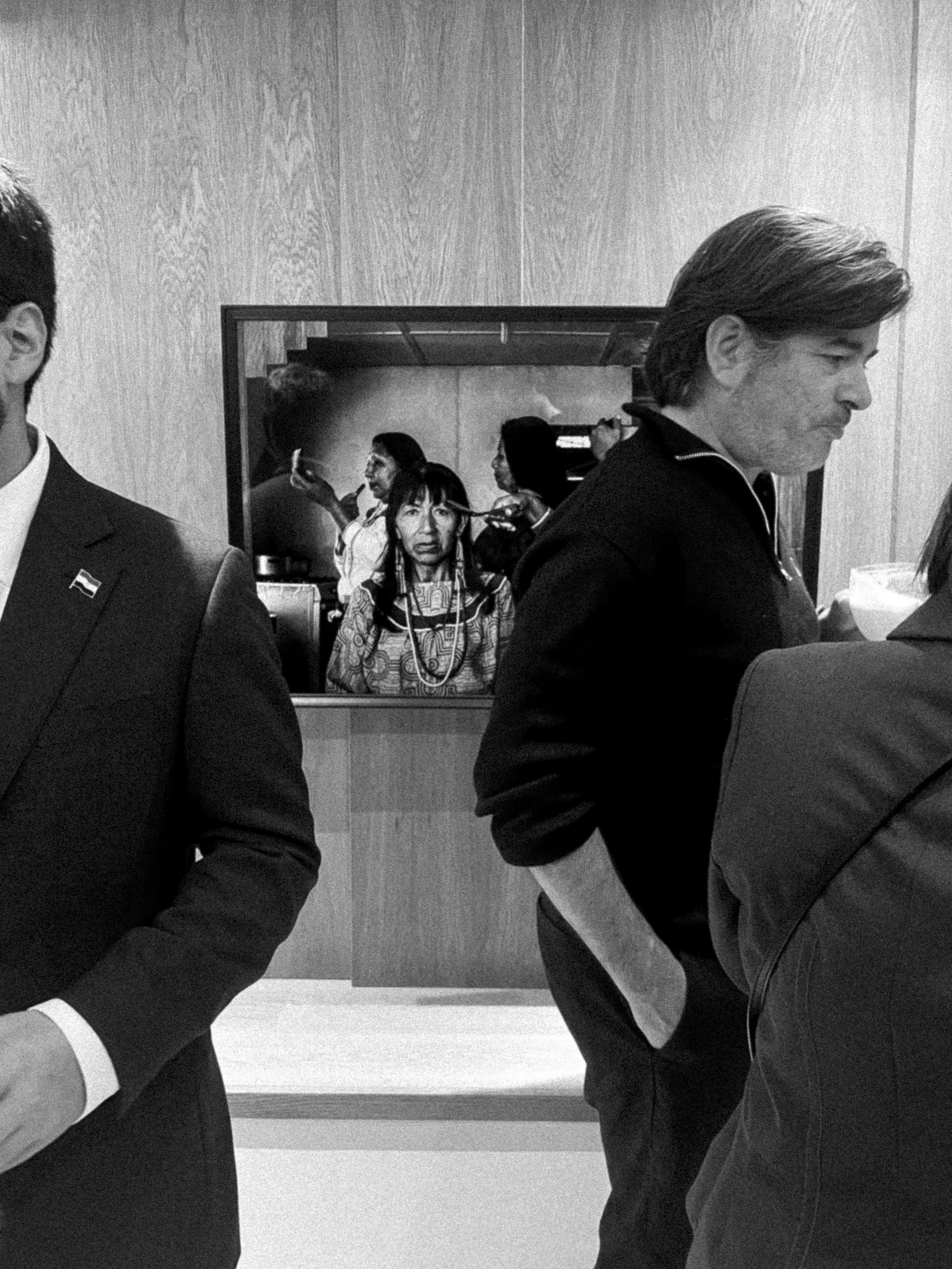
The embassy space itself became part of the narrative. Reflections of guests appeared faintly on the glass of framed works, momentarily merging contemporary London silhouettes with portraits rooted in Amazonian life. In one striking moment, a photograph of a Shipibo-Konibo woman seemed to gaze out from a wall behind passing attendees, her steady expression cutting through the hum of conversation. The contrast between tailored suits, evening dresses and traditional Shipibo attire heightened the exhibition’s quiet tension, not as opposition, but as coexistence.
Printed materials circulated discreetly.
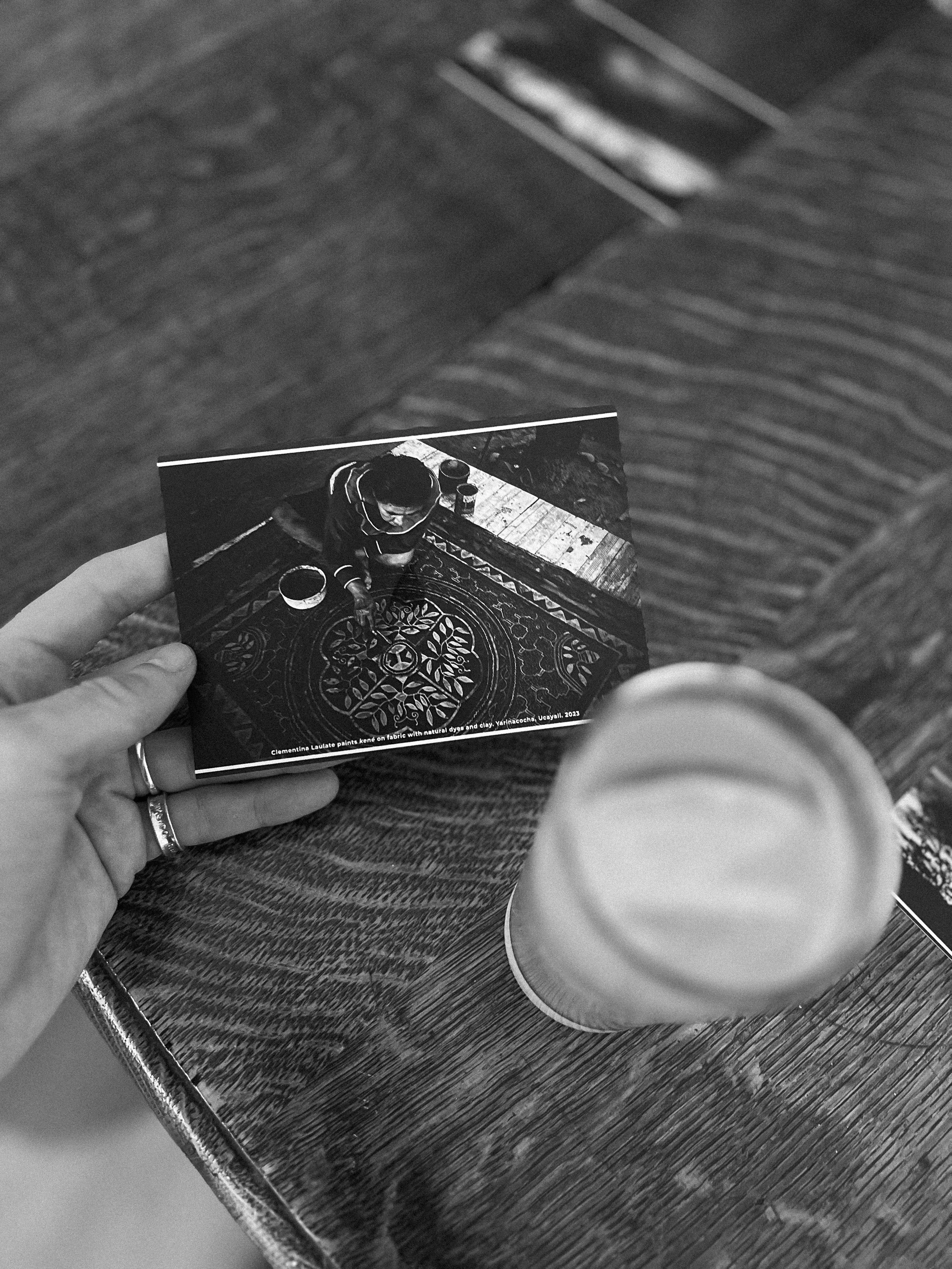
Small postcards featuring details from the series were picked up, held, turned over slowly, as if carrying something fragile. Nearby, a coffee cup rested beside one such card, the everyday brushing gently against the ceremonial. These small gestures mirrored the exhibition itself, where the personal and the political, the domestic and the ancestral, sit side by side without friction.
As the evening progressed, the crowd thickened but the mood remained contemplative. There was no rush, no performative networking energy. Instead, people spoke about lineage, about representation, about what it means to see Indigenous narratives framed on their own terms within a diplomatic space. For many, the exhibition felt less like an opening and more like a threshold.
By the time guests began to leave, the gallery retained a sense of stillness, as if the photographs themselves were holding the room together. Shipibo-Konibo: Portraits of My Blood does not overwhelm. It listens. And in doing so, it transforms the Embassy of Peru in London into a place not only of cultural exchange, but of shared attention, where photography becomes an act of continuity rather than display.