Daisy Doris May on Pregnancy, Queer Performance and Taking Up Space in BE MY BABY
Five domestic alter egos, one dream house in Margate and one DADDY. In BE MY BABY, character comedian Daisy Doris May transforms seven-month pregnancy into a surreal portrait of queer identity, motherhood, camp and creative freedom.
Pregnancy is so often given a visual language of softness. Quiet rooms, gentle light, restraint. BE MY BABY moves deliberately in the opposite direction.
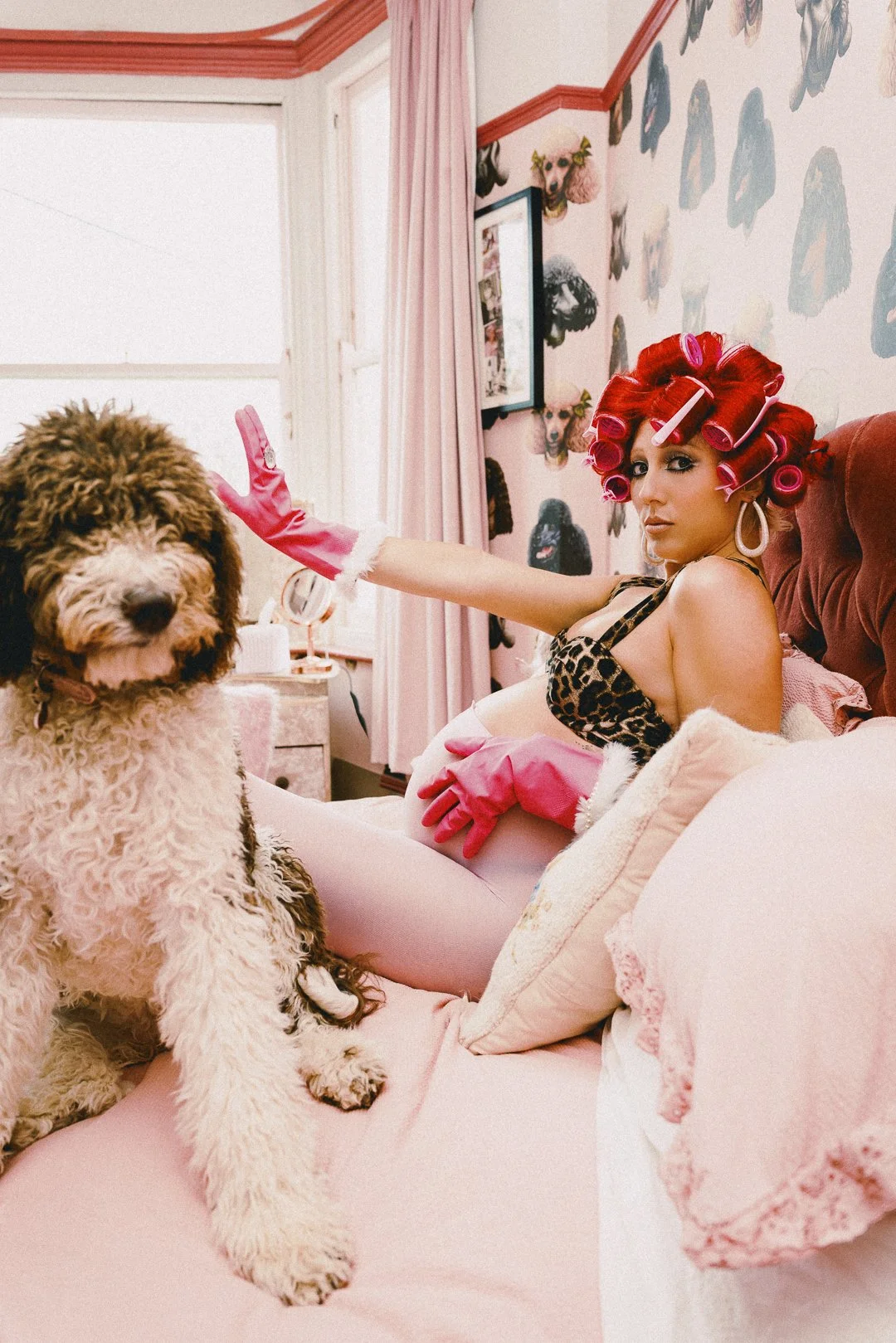
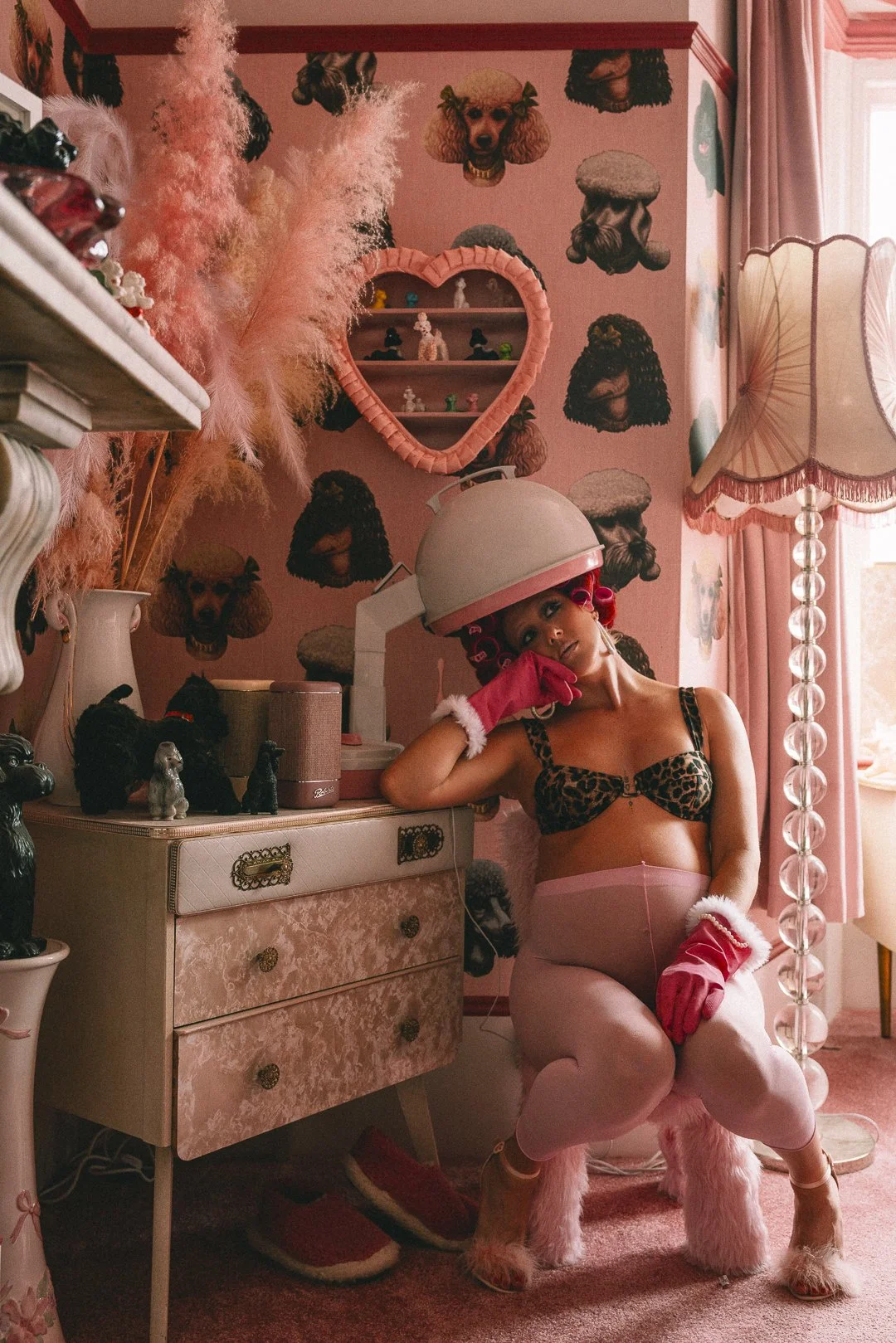
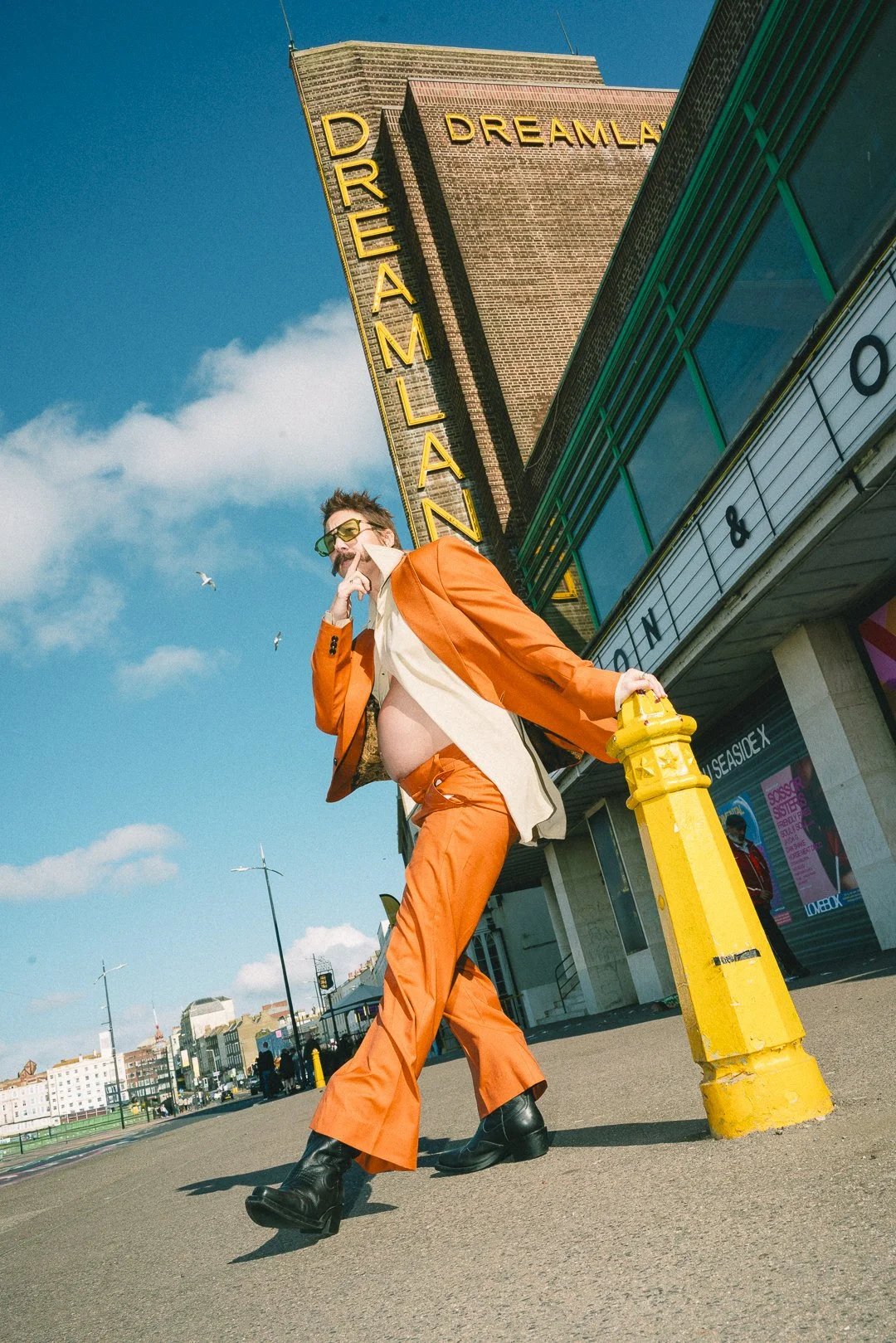
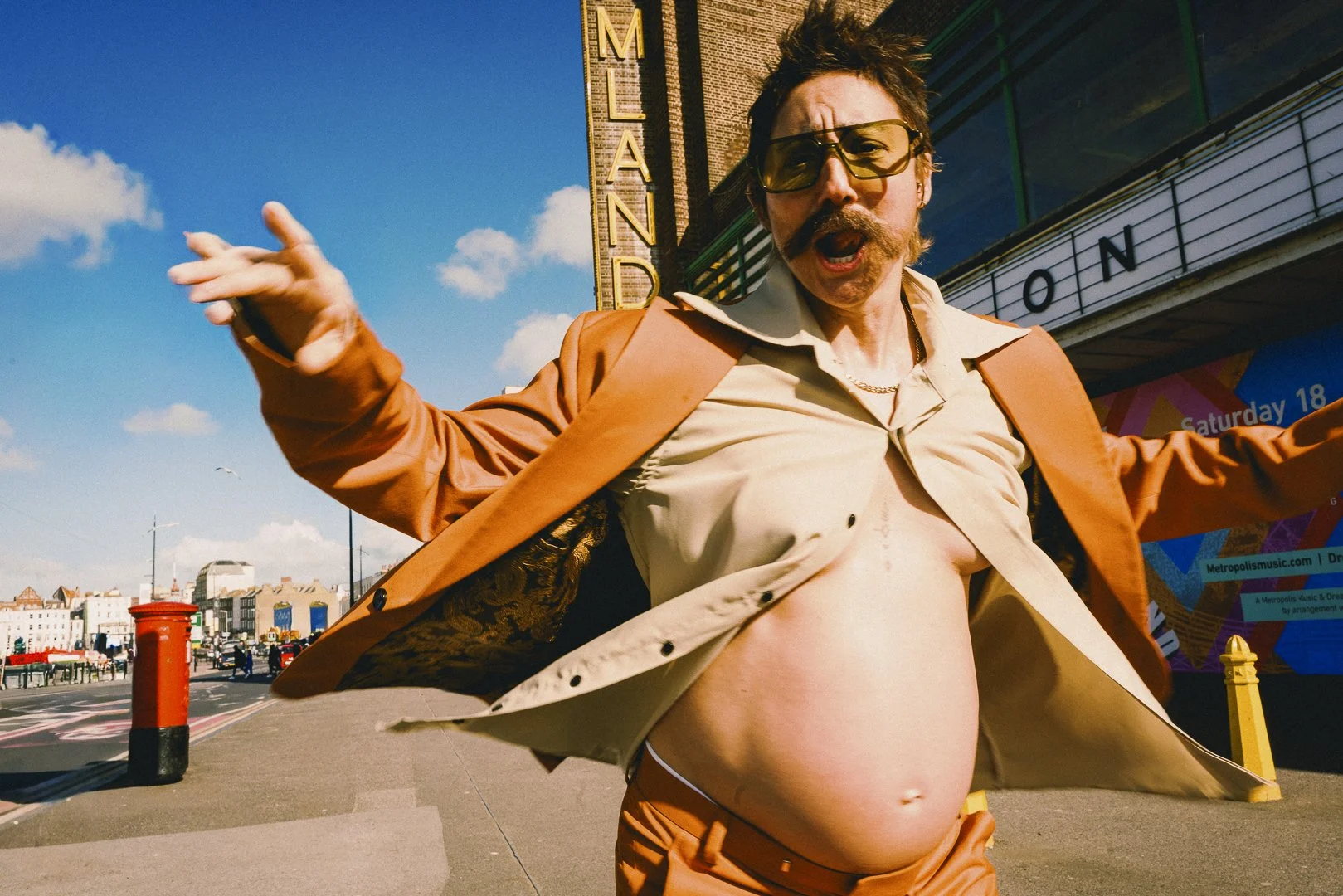
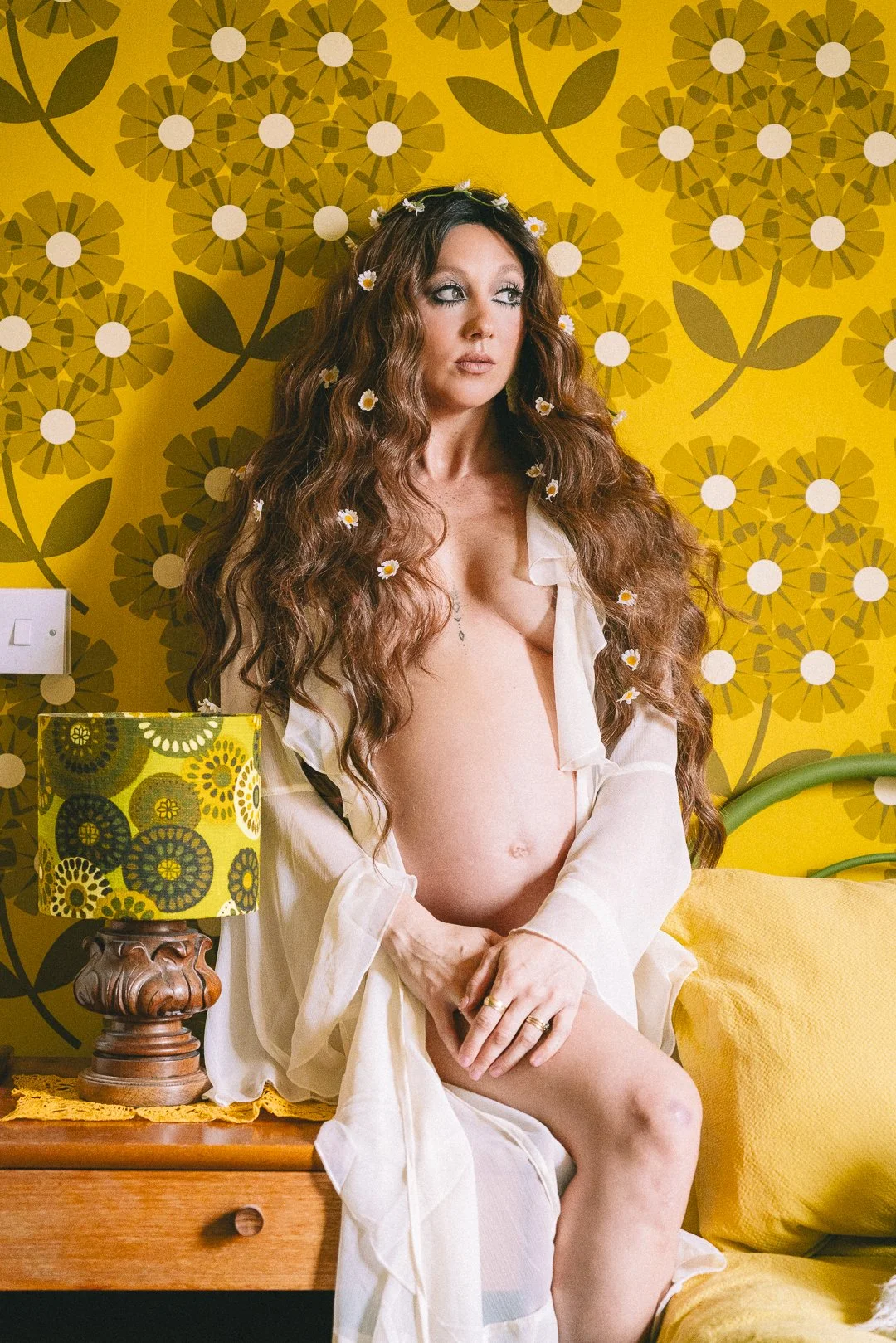
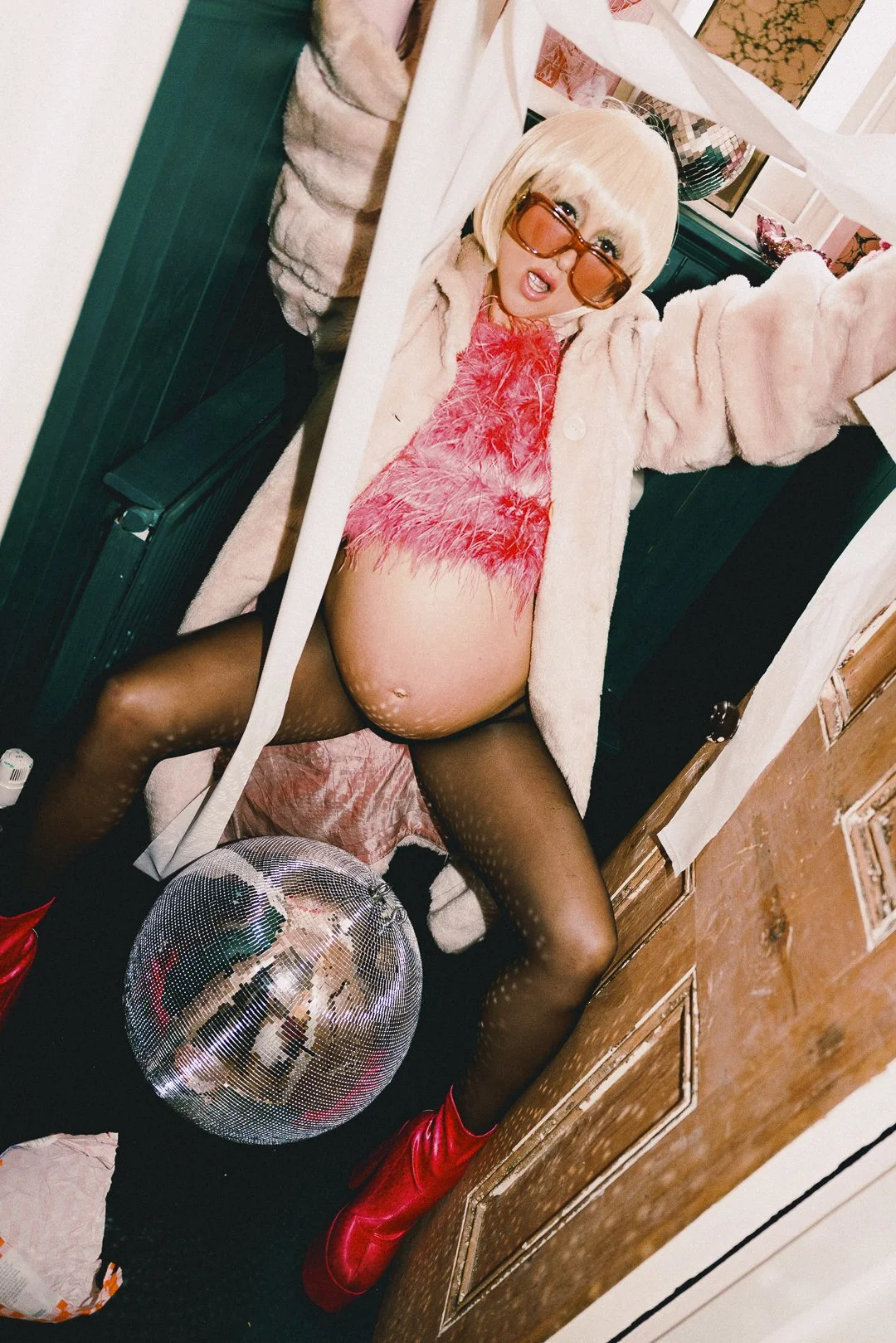
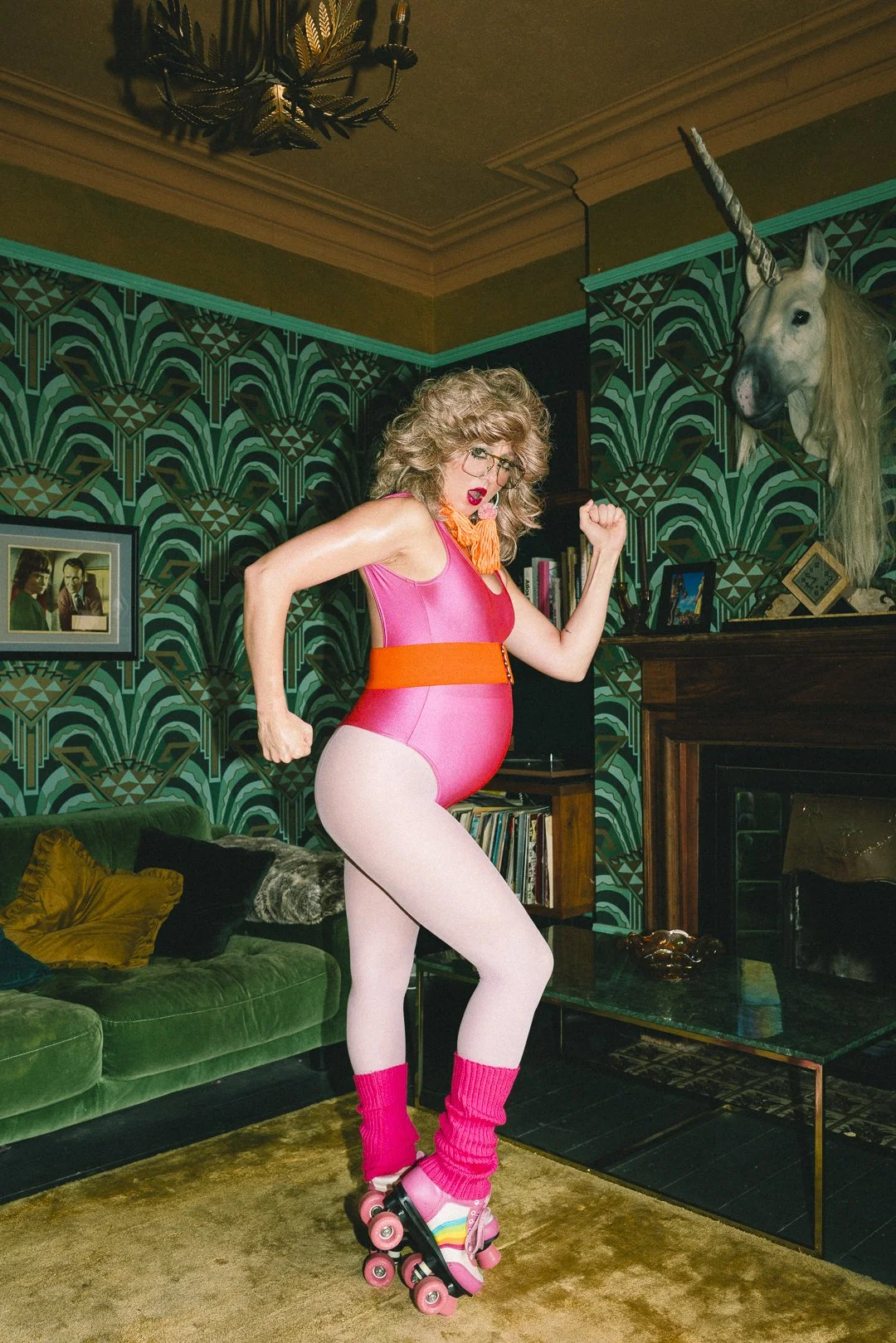
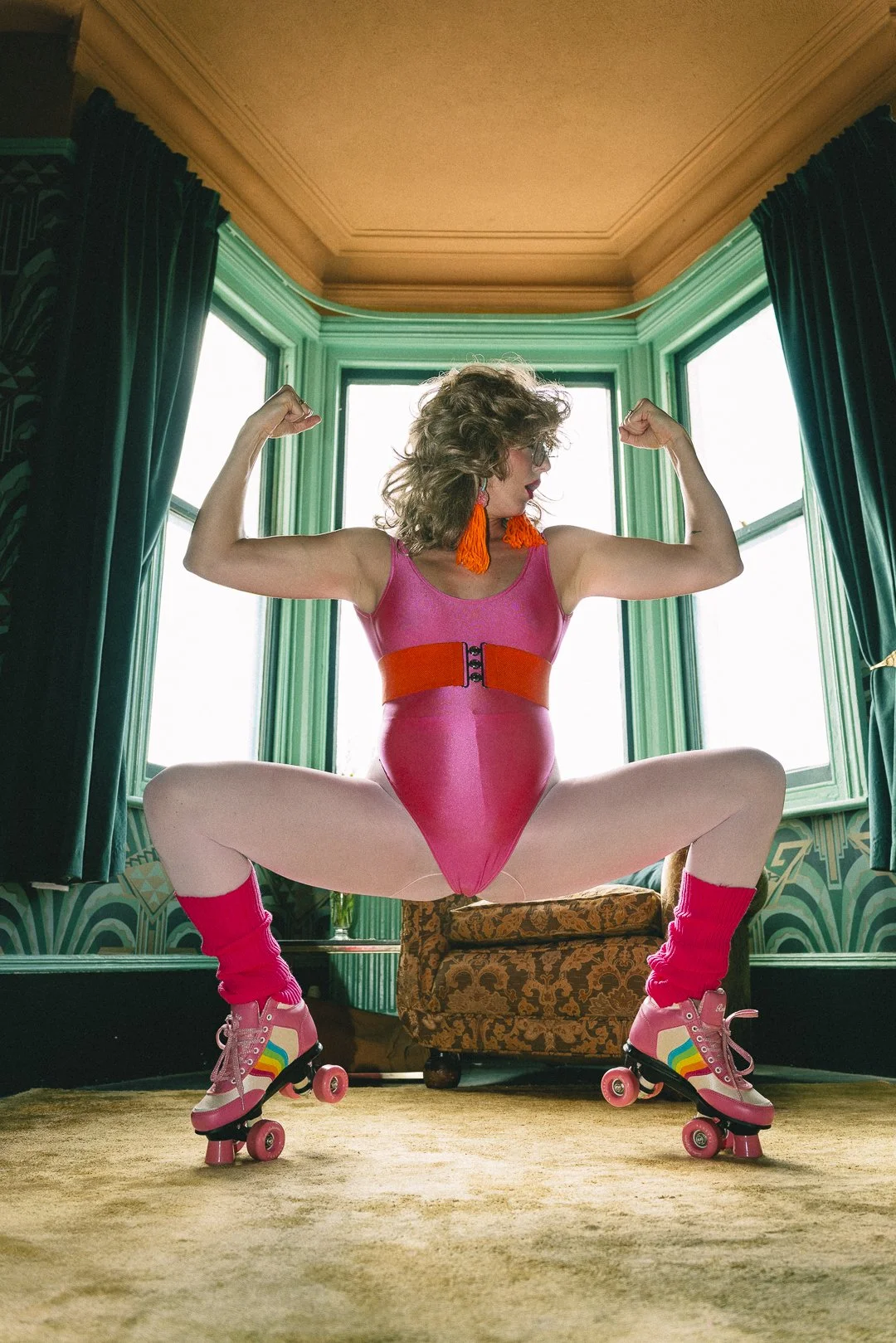
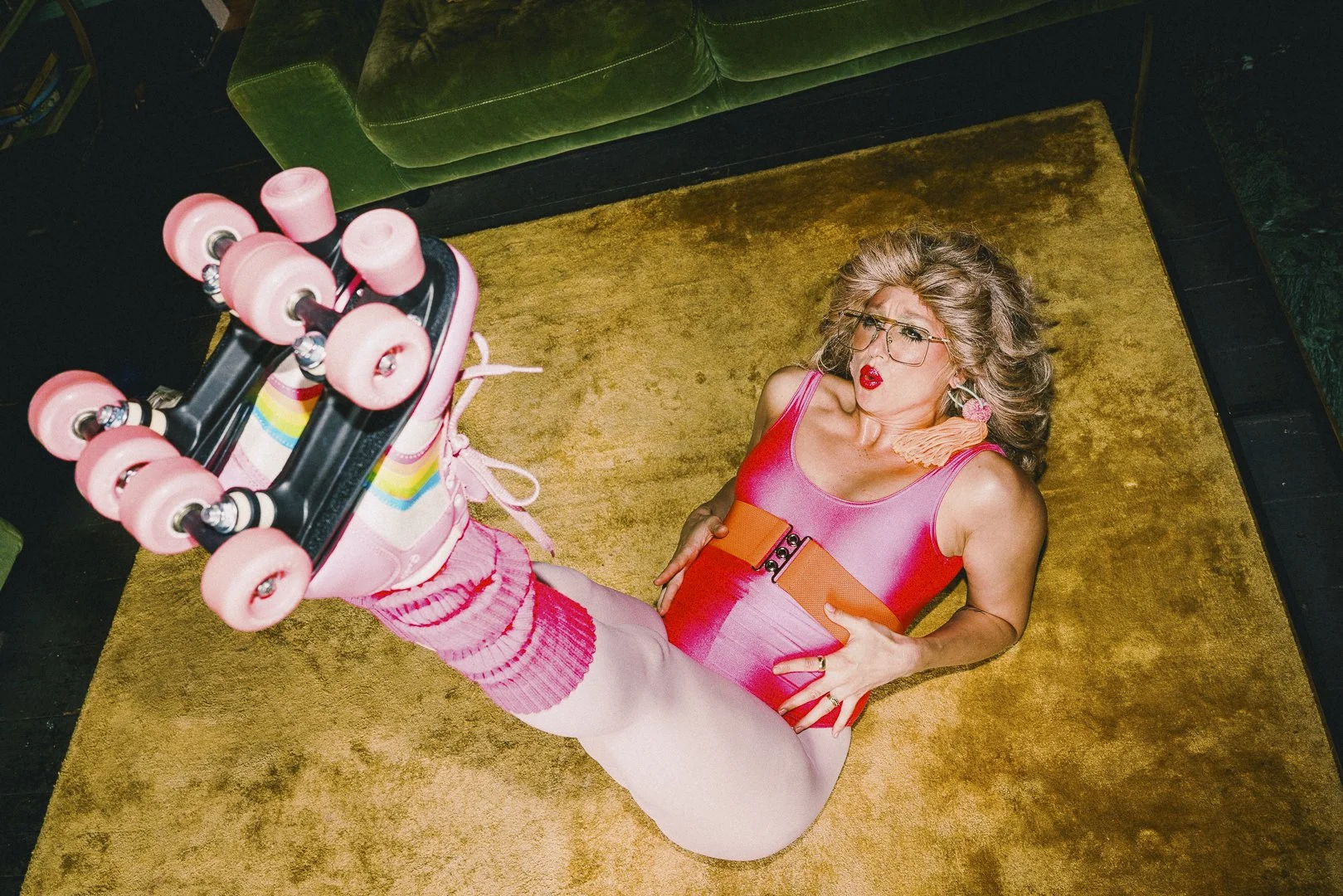
The retro-inspired portrait series starring Daisy Doris May turns the pregnant body into a stage for exaggeration, character and transformation. Photographed by Rosco Reckless inside a dreamlike house in Margate, the project brings together vintage Americana, suburban domestic fantasy and a heightened, deliberately artificial femininity. Across five alter egos, motherhood becomes less a fixed identity than another territory to perform, disturb and expand.
That distinction matters.
Daisy was seven months pregnant while continuing to work as a character comedian, touring the UK and performing at Soho Theatre. Rather than treating pregnancy as a point at which her creative life needed to contract, the experience appears to have pushed her further into it. The body changes, but so does its potential. Scale becomes character. Physicality becomes material. Taking up space becomes both literal and performative.
There is something particularly satisfying about locating that idea inside the visual language of the housewife. The domestic archetype has historically arrived loaded with expectations about femininity, behaviour, motherhood and respectability. Here, those codes are pushed into camp, colour and absurdity. The housewife becomes an alter ego rather than an instruction.
At the centre of every transformation, however, Daisy's pregnant body remains visible.
BE MY BABY is funny without treating its subject as a joke, theatrical without allowing the costume to obscure the person inside it. Instead, it asks what happens when pregnancy is approached not as a narrowing of identity, but as permission to become even more.
Five domestic alter egos.
One dream house in Margate.
One DADDY.
BECOMING THE CHARACTER
BE MY BABY sits somewhere between portraiture, performance and fantasy. How do you describe the world you created here?
- BE MY BABY is a retro-inspired portrait series featuring Daisy Doris May that reimagines pregnancy through my cast of playful domestic alter egos. Drawing on a (camp) vintage Americana, the work explores queer identity, motherhood and the pregnant body as a site of transformation.
You were still touring and performing while seven months pregnant. At what point did pregnancy stop feeling like something happening alongside your work and start becoming part of the work itself?
- The project grew out of my experience being pregnant while continuing to work as a character comedian. I toured the UK with my one man show featuring various alter egos and performed a week-long run at Soho Theatre while seven months pregnant. Rather than feeling the pressure to become quieter or more restrained, I found myself wanting to create even more. Working with photographer Rosco, stylist Betty, and hair and make-up artist Craig, we built a world where retro housewives, queer camp and character comedy collide, allowing pregnancy to become something theatrical and outrageous!
Pregnancy is often framed through ideas of softness, restraint and vulnerability. What did you want to push against in that familiar image?
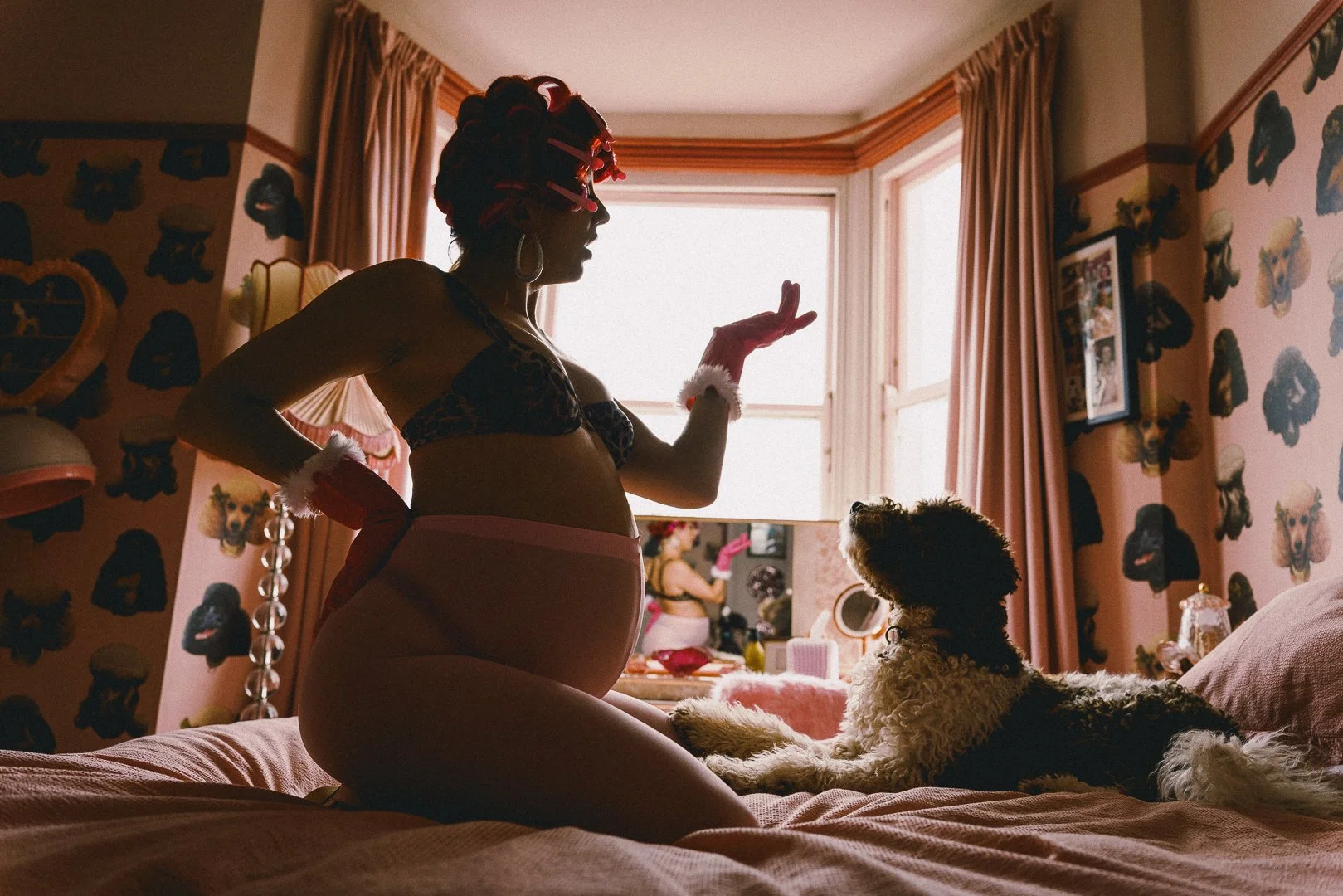
- I wanted to challenge the idea that pregnancy narrows who you can be. Instead of presenting it as delicate or limiting, I wanted to show it as expansive, joyful and creatively liberating... Being big bellied was a time where I quite literally took up more space!
BUILDING THE FANTASY
The series has the language of vintage advertising and suburban perfection, but everything feels slightly unruly. How did you construct that visual world around each character?
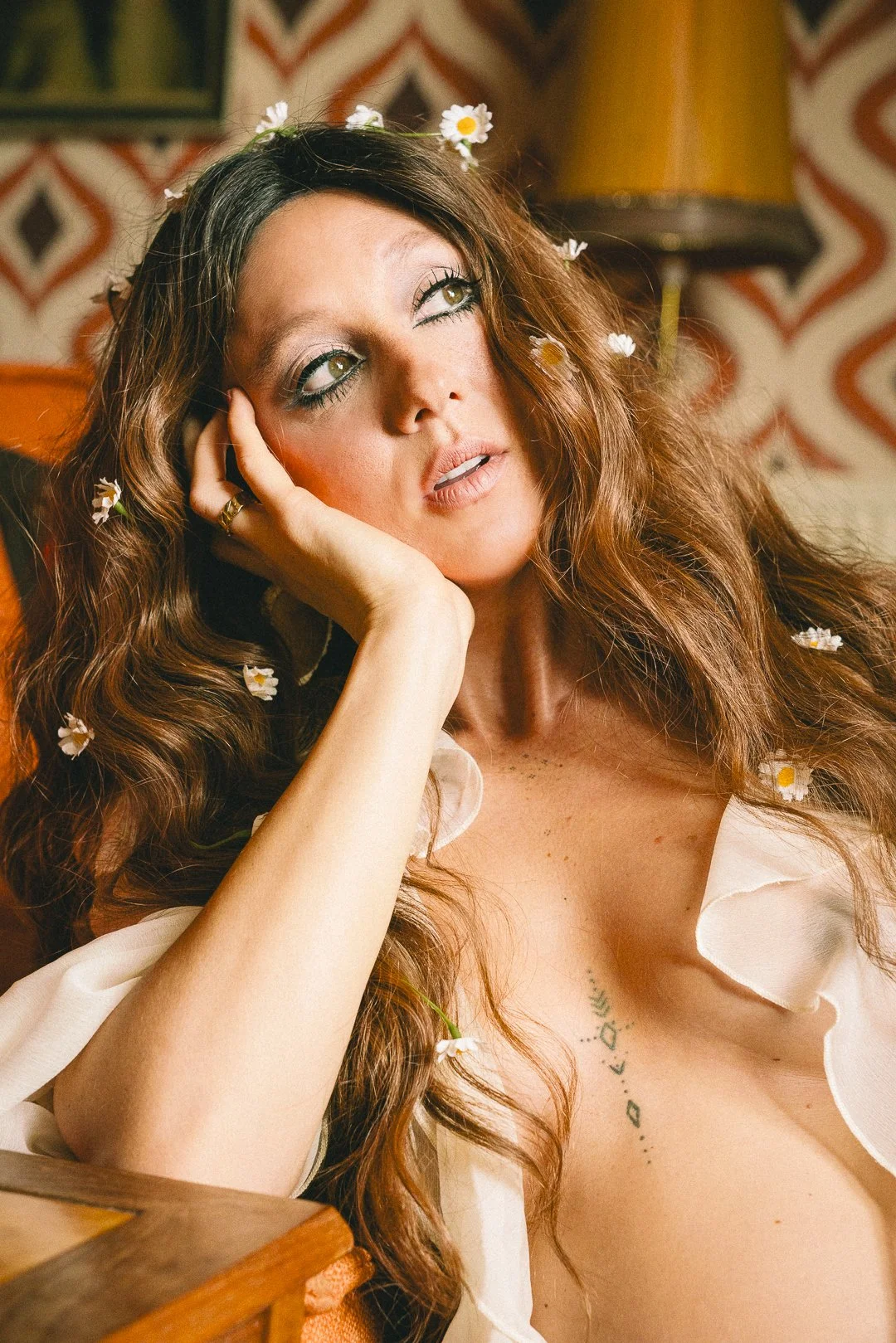
- We photographed the series in a dreamlike house in Margate, creating the setting for a nostalgic suburban fantasy. Each character was developed through costume, styling, hair and make-up, and props, with its own distinct personality and visual language. Inspired by retro advertising, vintage Americana, and exaggerated ideals of femininity, the images lean into artifice while using my seven-month-pregnant body as the anchor for every transformation.
Beneath all the styling and artifice, what feeling did you most want the images to leave with the viewer?
- I hope viewers feel the joy in the images… Pregnancy is often shown as soft and serene, but I wanted to show it as bold, funny, glamorous … and full of possibility.
Did working through pregnancy change the way you understood your own body as a tool for performance?
- The biggest surprise was realising that pregnancy didn't reduce my capacity to perform - it expanded it. It became another creative tool, opening up new ways of thinking about character, physicality, and transformation.
TAKING UP SPACE
Your wider practice has always moved through alter egos and transformation. What does BE MY BABY reveal about where that practice is heading now that lived experience and performance have become so closely intertwined?
- My work has always used character, costume and comedy to explore identity through transformation. BE MY BABY extends my work into a deeply personal chapter, where performance and lived experience became inseparable. It's a project about inhabiting multiple selves at once, and one day I can't wait to show my son what his mama (and occasionally "Daddy") was creating before he arrived!
The strongest message inside BE MY BABY may ultimately be the simplest: a body becoming larger while the possibilities surrounding it become larger too.
That reverses a familiar assumption about pregnancy. Rather than presenting transformation as something that temporarily interrupts a creative identity, Daisy folds it directly into her practice. Pregnancy becomes costume without being concealed by costume, performance without ceasing to be lived experience, and motherhood without requiring the disappearance of all the other selves that existed before it.
Within the artificial perfection of vintage Americana, that multiplicity feels particularly sharp. The immaculate domestic fantasy is interrupted by something unrulier: camp, comedy, queerness, physical change and a performer clearly enjoying the possibility of becoming several people at once.
BE MY BABY does not offer a quieter version of Daisy Doris May.
CREDITS